
At the start of 2026, China’s car market delivered a disappointing score: overall sales fell by 10.3% year-on-year. Yet amid the general gloom, Shanghai Automotive Industry Corporation (SAIC Motor) traced a steep upward curve — cumulative sales of 597,000 vehicles in January-February, a year-on-year increase of 6.8%, leading the industry in both wholesale and retail. But the true value of the story goes far beyond the numbers. A more pertinent question is: what is the real quality embedded in those nearly 600,000 sales? The answer lies in the 67.2% share of self-owned brands, in the 48.9% overseas growth rate, and in technology labels such as “Stellar Super Extended-Range”, “mass-produced steer-by-wire”, and “semi-solid state batteries on board”. If this performance is examined within the grand narrative of SAIC’s comprehensive reforms over the past two years, a clearer conclusion emerges: the prelude has been played, and the best is yet to come. The strong start in January-February is merely the opening passage of a much longer composition.
A cursory look at the 6.8% growth rate may not suggest an “explosive rise”. But dissecting the structure of the results reveals a more telling signal: SAIC’s growth is no longer the “scale-driven” expansion reliant on a single segment of the past; it is a “qualitative leap” supported by self-owned brands, new-energy technology and overseas markets together. Consider that as new-energy subsidies taper off, many upstarts have seen sales collapse. Even traditional powerhouses such as BYD and Geely managed only 400,000 and 476,000 units respectively in the first two months. The entire market contracted by 10.3% year-on-year. Against this backdrop, SAIC’s nearly 600,000 units and 6.8% growth represent a forceful outperformance — numbers that conceal a complete logic of shifting from old to new drivers of growth through “comprehensive deepening of reform”.
Local brands take the lead – from “volume filler” to “quality engine”
For a long time, the prevailing impression of SAIC was one of “strong joint ventures, following local brands”. But the data for early 2026 is rewriting that perception. In January-February, SAIC’s self-owned brand sales reached 401,000 units, up 14% year-on-year, lifting their share of the group’s total to 67.2%. That means for every three SAIC vehicles sold, two come from local brands. More crucially, the growth of local brands is not “volume in exchange for price cuts”; it is a structural shift characterised by “multiple growth points and deep penetration”. 67.2% matters not simply because it is a high number, but because it heralds the end of an era: SAIC has finally completed its historic turn from “joint-venture dependence” to “local-brand dominance”.
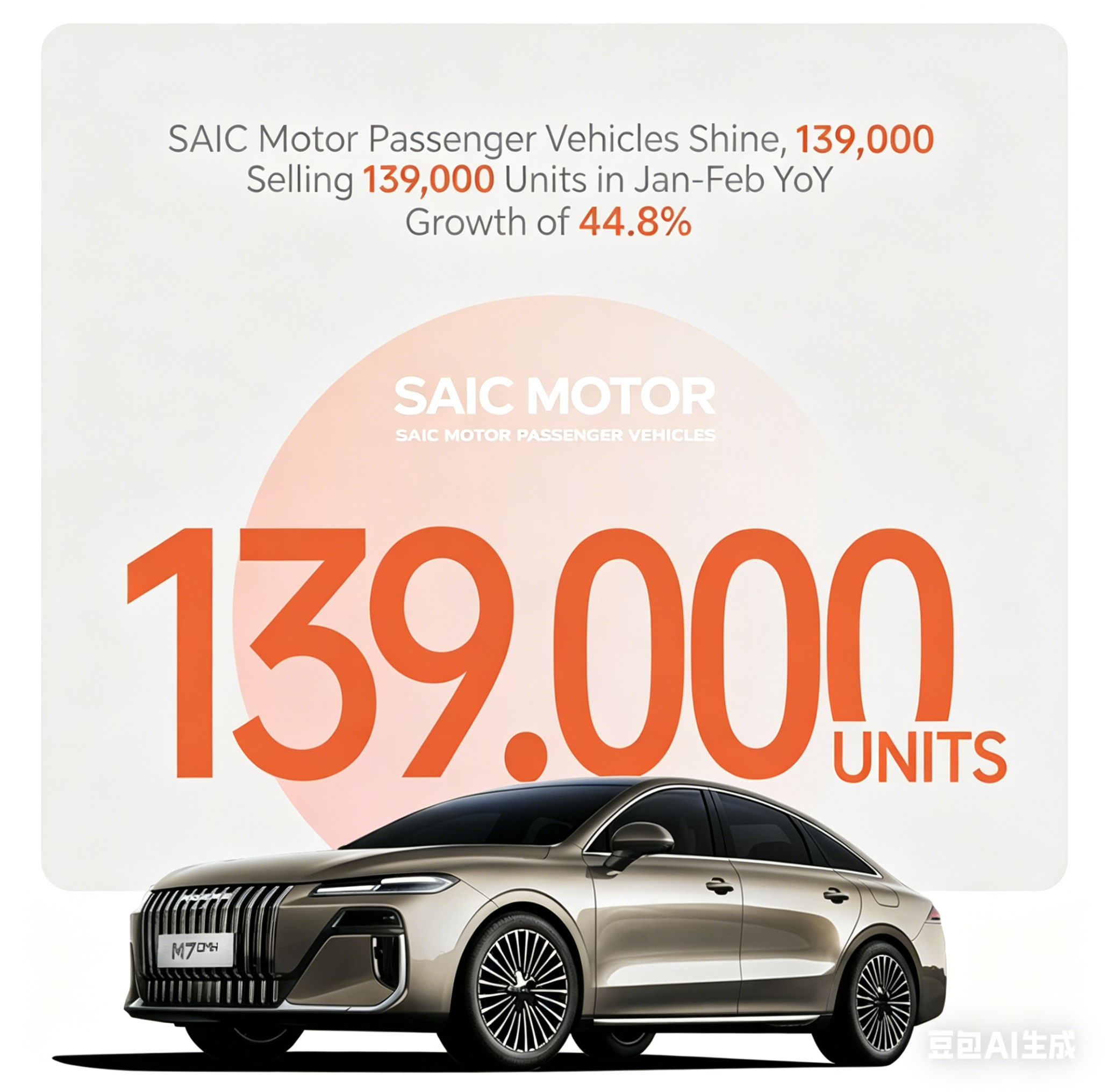
SAIC Passenger Vehicle has been particularly striking. With 139,000 vehicles sold in January-February, a dramatic increase of 44.8%, it has become the group’s main growth engine. Behind the figures lies the precise product definition and user insight of the Roewe and MG brands. Roewe’s upcoming all-new A+ sedan i6, with a length of 4,767mm and a wheelbase of 2,755mm, coupled with the only 1.5L direct-injection engine in its class, is redefining the value benchmark of “national family cars”. Meanwhile, MG, having consolidated its position in the sub-¥100,000 pure-electric market, is now moving up into the core ¥100,000–¥200,000 segment, with high hopes for the all-new energy coupe MG07 due in the second half.
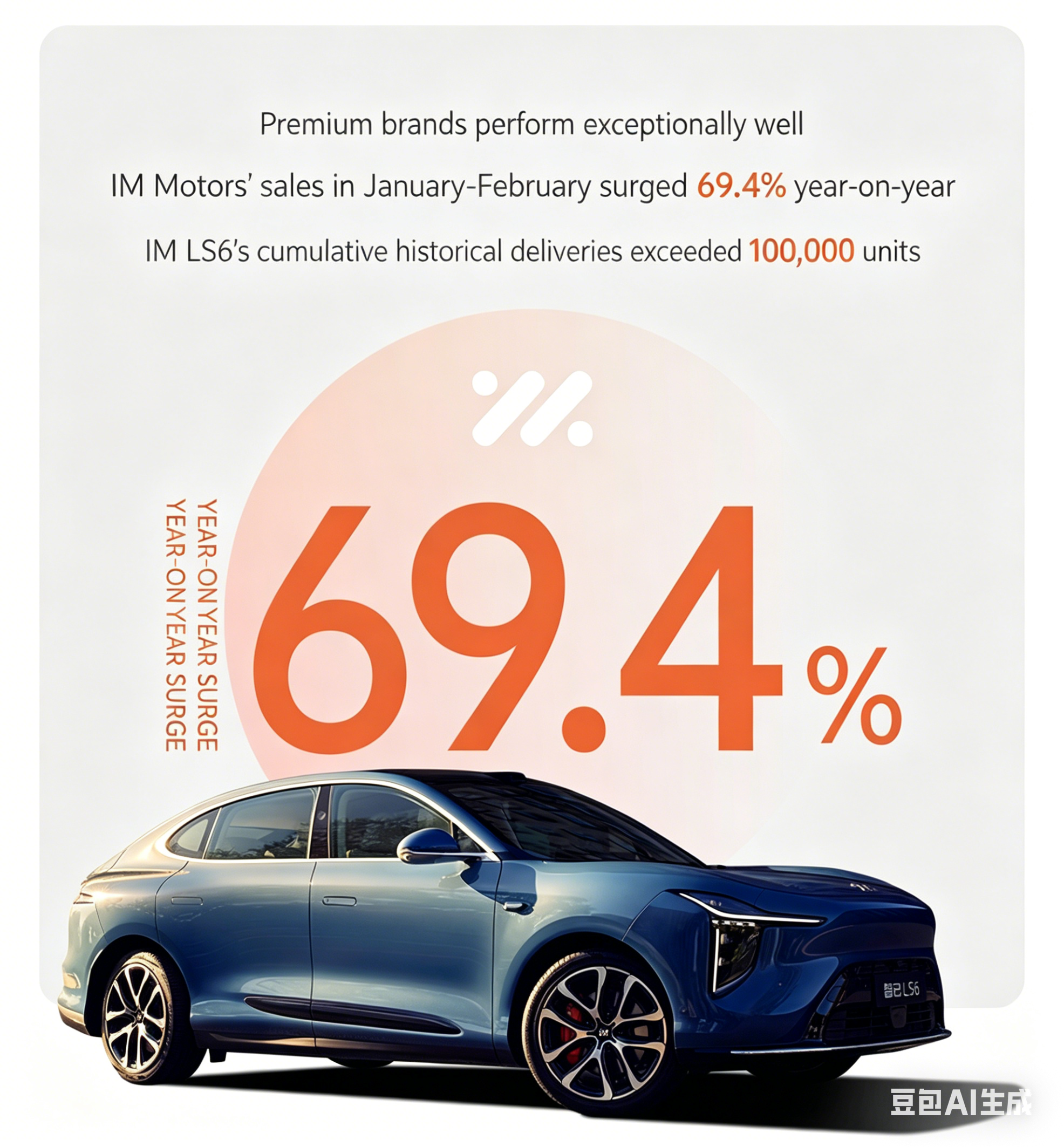
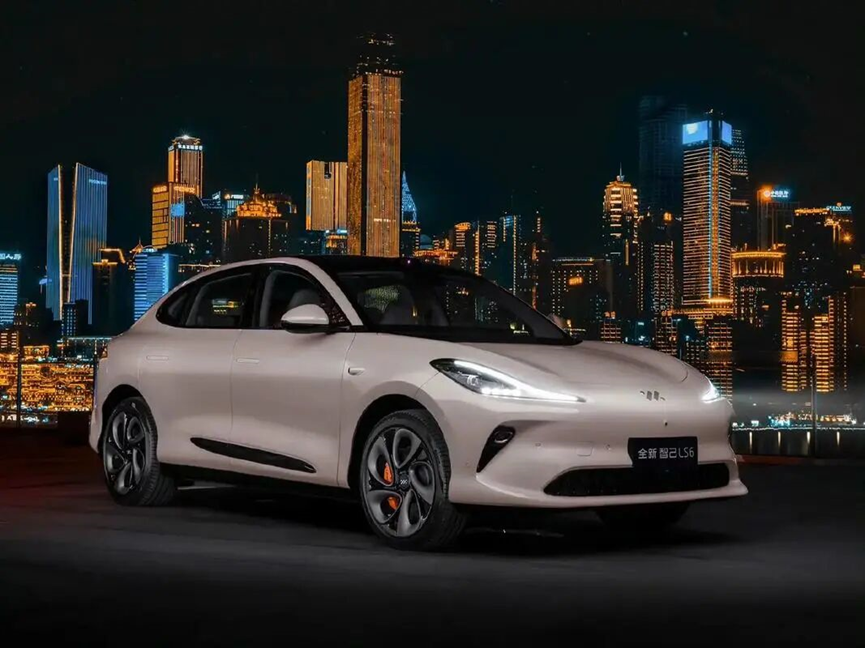
IM Motors’ explosive growth is the best illustration of SAIC’s premiumisation strategy. With a year-on-year surge of 69.4% in January-February sales, and cumulative deliveries of the LS6 exceeding 100,000 units, the launch of the LS9 Hyper Edition has sparked market buzz. As the industry’s first mass-produced SUV with four-wheel (full steer-by-wire), the LS9 Hyper Edition has not only secured authoritative certification but also carved out a niche above ¥300,000 with the label “the most enjoyable large six-seater”. This achievement shows that SAIC is now capable of going head-to-head with leading EV start-ups in the premium new-energy space. IM’s success is not just about how many vehicles it sells — it proves that traditional automakers can also create high-end intelligent EVs with technological sophistication and brand premium.
SAIC-GM-Wuling continues to grow steadily, selling 206,000 units in January-February. The “Huajing” brand, a joint project between Wuling and Huawei, will soon launch its first model S, which comes standard with Huawei’s Qiankun ADAS and HarmonyOS cockpit. This means SAIC is channelling top-tier intelligent technology into a mass-market brand to fuel new growth. From “volume filler” to “quality engine”, the rise of SAIC’s local brands is no accident — it is the culmination of nearly a decade of R&D investment totalling over RMB 150 billion, the concentrated realisation on production vehicles of technology labels such as “smart brain, robust body, powerful heart”, and the deep penetration of the user philosophy “understanding cars, understanding you better” throughout product definition. When a company is willing to spend a decade and RMB 150 billion refining its technology base, the day of its breakout is bound to come soon. From the Roewe i6’s class-defying launch, to the youthful advance of the MG07, from the IM LS9 Hyper Edition mass-producing steer-by-wire, to the Huajing S fully equipped with Qiankun — the grand game of local brands has only seen a few opening moves in January-February. The decisive battles lie ahead.
Technology turns tangible – from “lab reserves” to “market hits”
The auto industry often faces a dilemma: abundant technological reserves that consumers do not perceive; impressive lab data that fails to translate into showroom traffic. SAIC’s transformation over the past year lies in solving the puzzle of how to turn technology into blockbusters. Technology is only truly real when users feel it; a hit is only truly successful when the market validates it. SAIC is using one product after another to bridge the “last mile” from laboratory to parking lot. In January-February, SAIC sold 157,000 new-energy vehicles, up 6.4% year-on-year, firmly in the industry’s top tier. This performance is not the result of a single model standing out, but of “a hundred flowers blooming” across multiple brands and technology routes.
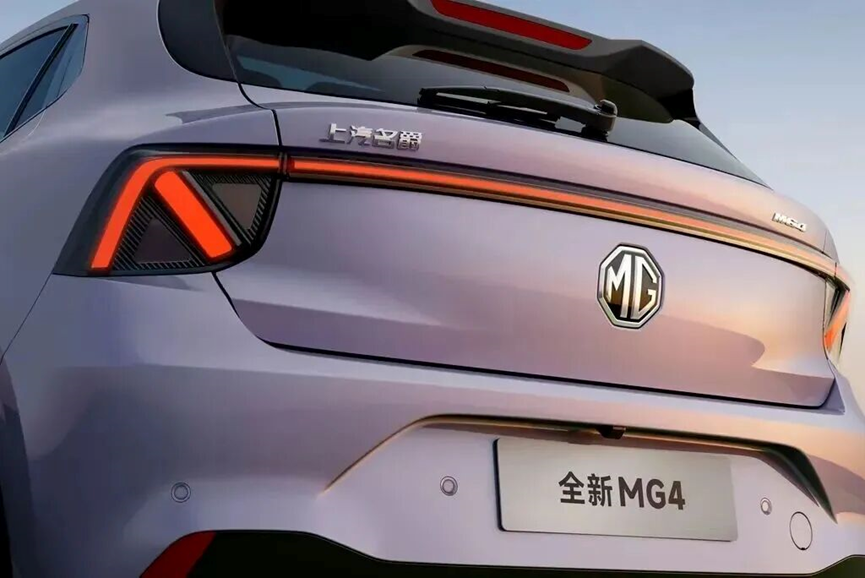
The enduring popularity of the IM LS6 is a classic case of “technology defining the product”. The model pioneered the standard fitment of LiDAR in the ¥200,000 class, becoming the first mid-to-large SUV with a full digital chassis and smart four-wheel steering. Later it became the first to feature “Stellar Super Extended-Range”, creating a new category of “EV with its own fast-charging pile”. This continuous iteration has enabled the LS6 to gain a firm foothold in the fiercely competitive ¥200,000 segment, with cumulative deliveries surpassing 100,000 units. The MG4’s explosion is equally noteworthy: with “semi-solid-state battery” and cell-to-body (CTB) technology as core selling points, it has established a distinctive “technology for all” label, selling over 10,000 units per month for four consecutive months and accumulating more than 75,000 firm orders. This shows that when technology truly addresses consumers’ range anxiety and safety concerns, the market responds with trust. The MG4’s success also proves a simple truth: consumers do not reject new technology; what they reject is “pseudo-innovation” that exists for technology’s sake without solving real problems.
The recovery of SAIC’s joint ventures is equally inseparable from technology empowerment. In January-February, SAIC-GM’s sales grew 9.4% year-on-year, while its new-energy vehicle sales surged over 216.9%. Buick Zhijing L7, with “True Dragon Extended-Range” and Momenta R6 large model, sets a new benchmark for “extended-range luxury”; Audi E5 Sportback, combining “German DNA with end-to-end large model”, has opened a new track in the premium EV market. These successes show that joint venture brands, by deeply integrating with the local technology ecosystem, can still wield strong market appeal. Moreover, the recovery of the joint ventures sends a powerful signal: in the age of intelligent electrification, whoever embraces China’s technology ecosystem will win the China market.
In 2026, SAIC’s technology conversion will accelerate further. Solid-state batteries, second-generation digital chassis, the DMH engine (thermal efficiency of 46.3%), “Stellar Super Extended-Range” (450km pure electric range) — these cutting-edge technologies will be intensively mass-produced in new models such as the Roewe i6, IM LS8, Shangjie Z7 and Huajing S. Once the conversion channel from “technology reserve” to “market blockbuster” is fully opened, SAIC’s product offensive will become even more intense. January-February new-energy sales of 157,000 units, up 6.4%, keep SAIC in the top tier. But more than the sales figures, the speed of technology deployment deserves attention: solid-state batteries, steer-by-wire, digital chassis, Stellar Super Extended-Range — these technologies once confined to laboratories are now being mass-produced. With the conversion channel open, the explosion of the new-energy segment may have only just begun.
Overseas expansion – from “going out” to “moving up”
If the domestic market is the “base”, then overseas growth is SAIC’s indispensable incremental driver. In January-February, SAIC sold 204,000 vehicles overseas, a year-on-year increase of 48.9%, ranking among the industry’s best. This growth rate means SAIC’s overseas business has entered the fast lane. More importantly, the quality of the growth is exceptionally high — the greater the share of mature markets like Europe, the higher the quality of that growth. MG’s cumulative historical sales in Europe have surpassed the one-million-vehicle mark — a true milestone. In January-February, MG sold 49,000 vehicles in Europe, up 16% year-on-year, remaining the top Chinese brand in Europe by sales for the 11th consecutive year. In December last year, MG rose to second place in monthly UK car sales, outperforming global mainstream brands such as Ford, Hyundai and Toyota. This is not market share bought with low prices, but a new image of “Intelligent Manufacturing in China” supported by product power, brand strength and service systems. When MG sells better in Britain than Ford and Toyota, a new chapter in the globalisation narrative of China’s auto industry is truly opened.
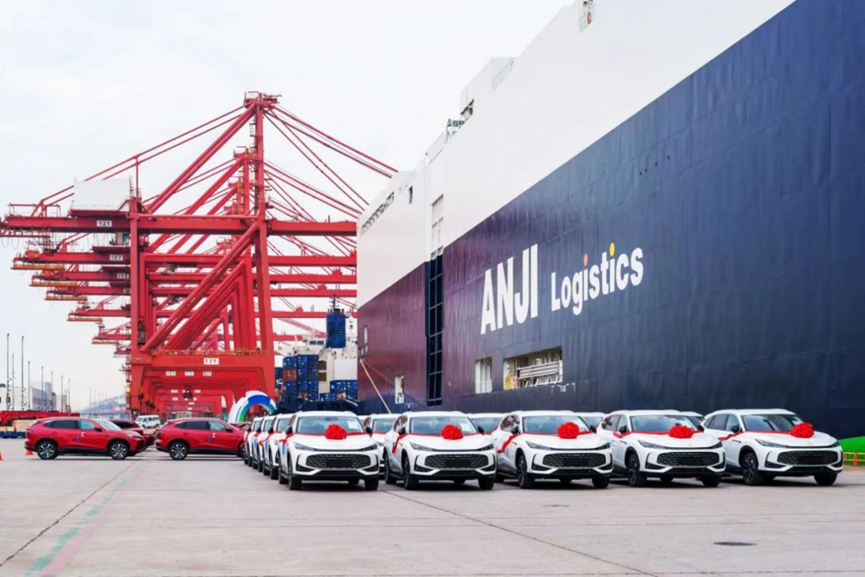
IM Motors’ overseas march is equally noteworthy. After achieving coverage across Asia, Europe, Africa, the Americas and Oceania, IM has recently entered the United Arab Emirates and Tunisia, marking a further deepening of its strategic layout in the Middle East and North Africa. Leveraging SAIC’s global resources, IM is bringing the high-end experience of “Chinese-style intelligent electric” to more overseas users. SAIC’s globalisation is no longer simple “product export”. Since officially releasing its Overseas Strategy 3.0 (Glocal strategy) in 2025, SAIC has explicitly pursued a “global + local” combination: innovation R&D centres in London, Silicon Valley and Tel Aviv; design centres in London, Munich and Tokyo;整车 manufacturing bases in Thailand, Indonesia and India; and a self-operated ocean-going fleet covering major international shipping routes. From R&D to production, sales and service, the full industrial chain going global has made SAIC a new calling card for Chinese automotive globalisation. True globalisation is not about selling cars to the world, but having the world produce, research and serve for you.
From “going out” to “moving up”, SAIC is proving with practice: Chinese cars can not only gain a foothold in the home market, but also compete head-on with giants in the world’s most mature auto markets. The overseas sales figures for January-February 2026 are only the interim results of this long-term strategy. MG’s cumulative European sales exceeding one million, IM entering the UAE and Tunisia, overseas sales up 48.9% — this report card is bright enough. But SAIC’s globalisation blueprint goes much further. From “product going out” to “ecosystem going out”, from “going out” to “moving up”, the true fruits of Glocal 3.0 strategy will take time to harvest. The overseas performance in January-February is just the opening passage of this grand narrative.
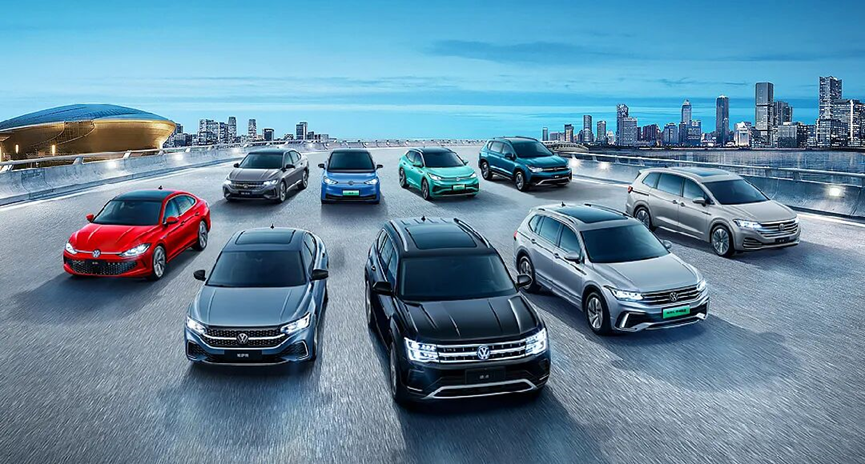
Observer’s notebook · What stands out most in SAIC’s January-February data is not the growth rate per se, but the structural transformation: local brands now contribute two-thirds of sales, overseas growth approaches 50%, and new-energy penetration rises steadily. The old pattern of relying on joint ventures for “blood transfusion” has disintegrated; technology-driven endogenous growth is becoming the new normal.
Conclusion: Prelude played, the best yet to come
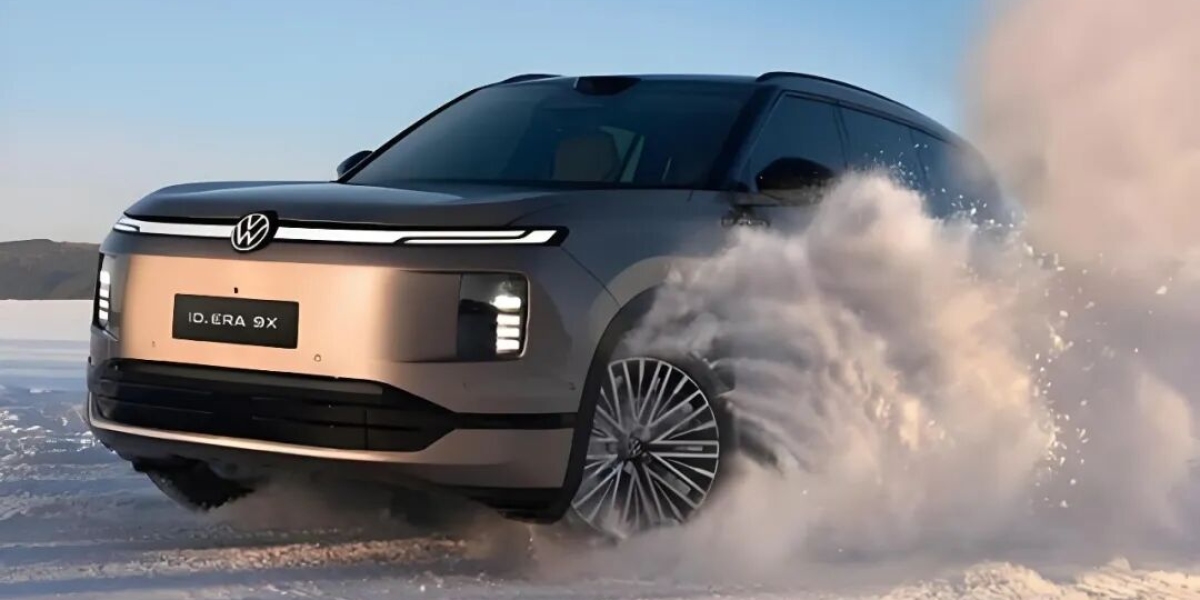
Returning to the initial question: how should one assess SAIC’s sales performance in January-February 2026? Every careful observer will have their answer. But what is worth emphasising is that true growth is not forced out by channel stuffing; it is reformed into existence. Behind this “quantitative increase with qualitative improvement” is the gradual release of dividends from the “comprehensive deepening of reform” that SAIC has pursued over the past two years. Reform is never achieved overnight, but once its dividends begin to flow, they tend to become unstoppable. Only two months of 2026 have passed; the real drama lies ahead. With a series of heavyweight new models set to hit the market — Roewe i6, MG07, IM LS8, Shangjie Z7, Huajing S, SAIC Volkswagen ID.ERA 9X, Cadillac VISTIQ — SAIC’s product matrix will cover the full spectrum of scenarios, from mainstream family sedans to premium flagships, from pure electric to plug-in hybrid and extended-range. For this automotive giant undergoing profound transformation, the “strong start” in January-February may be merely the prelude to a year-long story of excitement.