

One hundred million vehicles is not simply a production landmark. For SAIC Motor, it represents 100 million sources of data, 100 million acts of consumer trust and, increasingly, the foundation for a new phase of technology-led competition.
On May 26, 2026, China’s National Intellectual Property Administration published a SAIC patent for “an engine diagnosis method, device and controller”. Two days later, at Shanghai’s North Bund World Reception Hall, the group delivered its 100 millionth vehicle, an IM LS9 Hyper, to Cao Xudong, chief executive of autonomous-driving company Momenta.
That made SAIC the first Chinese automotive group to surpass 100 million vehicles in cumulative production and sales. The timing of the patent publication and the landmark delivery may not have been entirely coincidental.
Shortly before that milestone, SAIC’s 99,999,999th vehicle was the SAIC Volkswagen ID. ERA 9X. The model passed 7,000 deliveries in its first month on sale and, in April, ranked among the top three large premium extended-range SUVs priced above about $44,300 in China. For SAIC Volkswagen, it was presented as evidence of a strategy built around “in China, for China” and a combination of global engineering with Chinese speed.
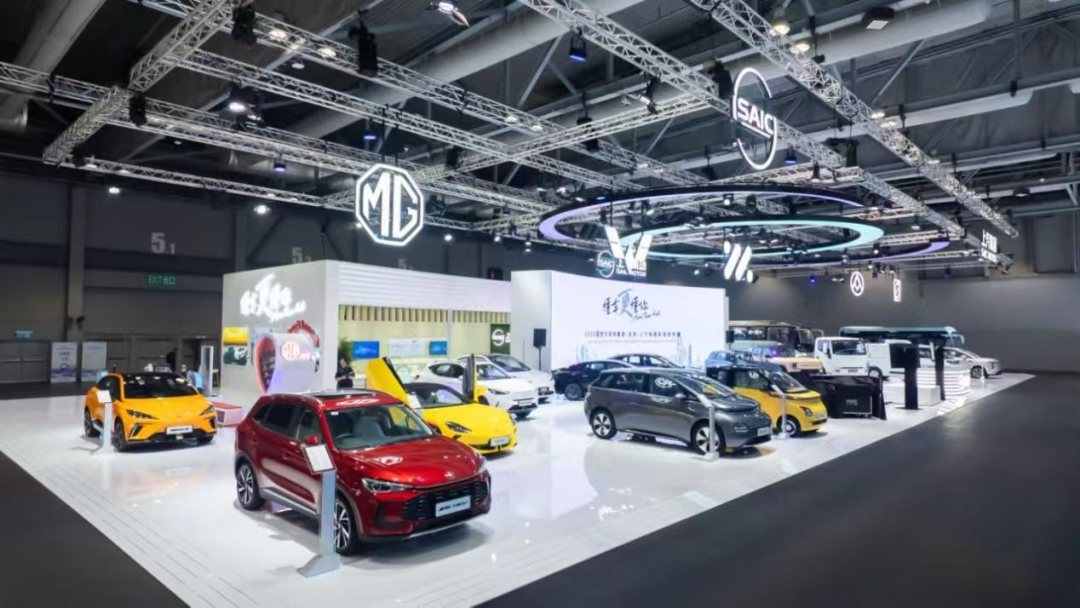
The larger question is what 100 million vehicles now mean. Over more than seven decades, SAIC has produced an average of nearly 4,000 vehicles a day. But the more important shift lies in the make-up of that fleet. In recent years, tens of millions of new vehicles have been fitted with proprietary electronic control systems and the ability to collect and upload operating data.
Those cars are now driving across more than 170 countries and regions, in traffic jams, on highways, at high altitude and in extreme cold. Every set of engine-operating data becomes a training sample for SAIC’s research system. No laboratory can fully replicate that kind of real-world fleet experience.
How SAIC Built the Scale
To understand the technical significance of 100 million vehicles, it is worth looking at how the number was reached.
In 1958, Shanghai workers built the first Fenghuang sedan largely by hand, marking the city’s entry into passenger-car manufacturing. In 1983, the first Santana was assembled manually, beginning SAIC’s era of joint ventures and helping create a modern local parts supply chain.
Over the following decades, SAIC developed deep partnerships with Volkswagen and General Motors. In the wave often described in China as “market access for technology”, it built up manufacturing systems, supply-chain management and engineering talent.
The more decisive shift came with the rise of its own brands. Roewe was launched in 2006. In 2016, the Roewe RX5 was billed as the world’s first internet-connected car. In 2020, SAIC created IM Motors, a premium smart electric-vehicle brand.
By the first four months of 2026, SAIC had sold 1.302 million vehicles, ranking first among Chinese carmakers for four consecutive months. Its own-brand sales had risen to almost 70% of the total, reversing a long period of dependence on joint ventures.
The company’s products and services now reach more than 170 countries and regions, with cumulative overseas deliveries exceeding 7 million vehicles. From the UK to Indonesia, and from Thailand to Pakistan, SAIC has four overseas manufacturing centres and three research and innovation centres. Its Anji Logistics unit operates 42 roll-on/roll-off vessels, with eight international routes covering Southeast Asia, Europe and the Americas.
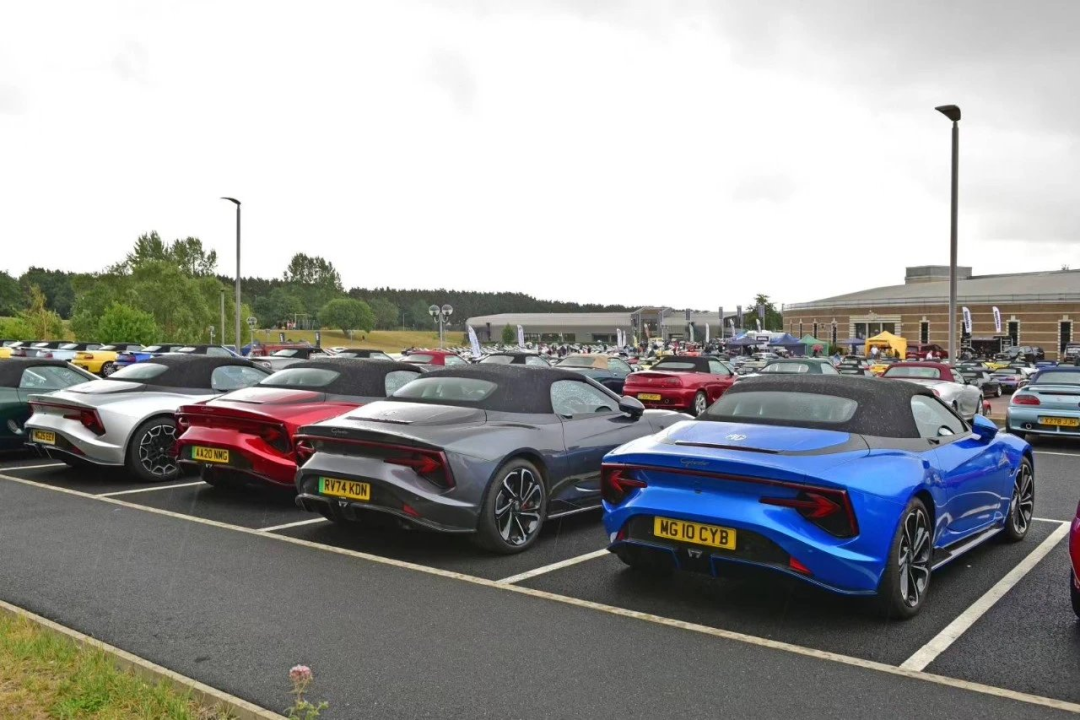
The most persuasive part of SAIC’s 100 million figure, however, is the structural change behind it. In 2015, SAIC’s own brands accounted for about 38% of sales, new-energy vehicles were still a negligible share and overseas sales made up around 10%. In the first four months of 2026, those figures had climbed to nearly 70%, 31.7% and 35.3%, respectively.
That means many of the tens of millions of vehicles added in recent years are not merely SAIC-built cars. They are vehicles running SAIC-controlled electronic systems, SAIC-designed data-collection architectures and SAIC-operated cloud platforms.
Over the past decade, SAIC says it has invested more than $22.2 billion in research and development and holds nearly 26,000 valid patents. Since the start of 2026 alone, it has received almost 100 new patent authorisations. Behind those numbers is an emerging model of data-driven development.
Put simply, SAIC’s 100 million vehicles form one of the world’s largest “mobile laboratories”. The company is moving from an engineering model in which designers try to predict what users might encounter to one in which real vehicle data tells engineers where problems are, how urgent they are and what the best solution might be.
The Data Mine Inside an Engine Patent
The newly published engine-diagnosis patent is not flashy. Its core idea is relatively straightforward: when two diagnostic strategies can be run during the same pre-set time window, the system sends only one fuel-cut request and performs both diagnostic checks during the same continuous fuel-cut period.
The benefit is twofold. First, it reduces the total number and total duration of fuel cuts, saving fuel. Second, it compresses diagnostic execution into the shortest feasible time window, reducing the risk that a prolonged fuel cut could affect safety or drivability.
Traditional engine diagnosis often works sequentially: one item is checked, then another. Each check may require a brief fuel cut. On older petrol vehicles, the effect may have been barely noticeable. In hybrids, where engines start and stop frequently, each fuel cut can create a small hesitation or delay in power delivery.
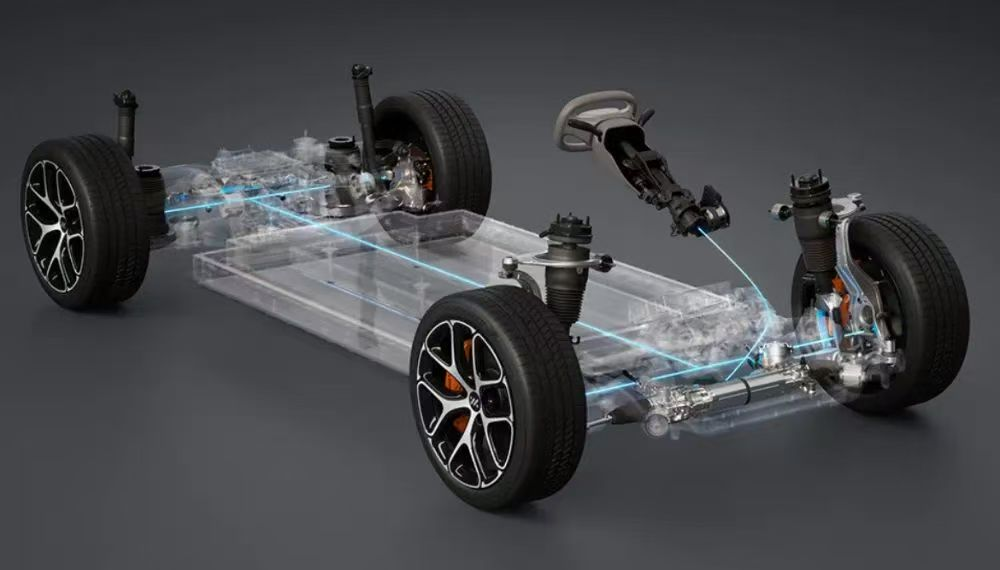
SAIC’s approach is essentially to combine several checks into a single fuel-cut event. But that is only possible if the company knows which diagnostic items can safely run in parallel and how short each fuel-cut window can be for different engine models and driving scenarios.
Both requirements depend on a vast pool of operating data. A laboratory can simulate many conditions, but not every real road, traffic pattern, temperature or driver behaviour. A fleet of 100 million vehicles can get much closer.
This is what “scale feeding technology” means in practice. Vehicles generate data continuously. Algorithms use that data to refine diagnostic strategies. Improved strategies can then be pushed to vehicles over the air, delivering lower fuel consumption, smoother driving and more accurate fault detection. The driver may barely notice the diagnostic process, but benefits from its improvement.
Why Hybrids Still Need Smarter Engines
As electric-vehicle penetration rises, it is reasonable to ask why an automaker investing heavily in electrification still cares about engine diagnosis.
The answer lies in the hybrid market. In 2025, SAIC unveiled an overseas “Glocal Strategy”, under which models using a new HEV hybrid system would cover mainstream global segments. In March 2026, MG held a technology day in Frankfurt, where it introduced SolidCore semi-solid-state battery technology and its Hybrid+ system. MG says overseas monthly sales of Hybrid+ models have exceeded 20,000 units.
SAIC’s DMH super-hybrid system has also been applied to several Roewe and MG models. Its dedicated hybrid engine has reached thermal efficiency of 46.3%, a figure that underlines how much engineering attention still sits inside the combustion unit.
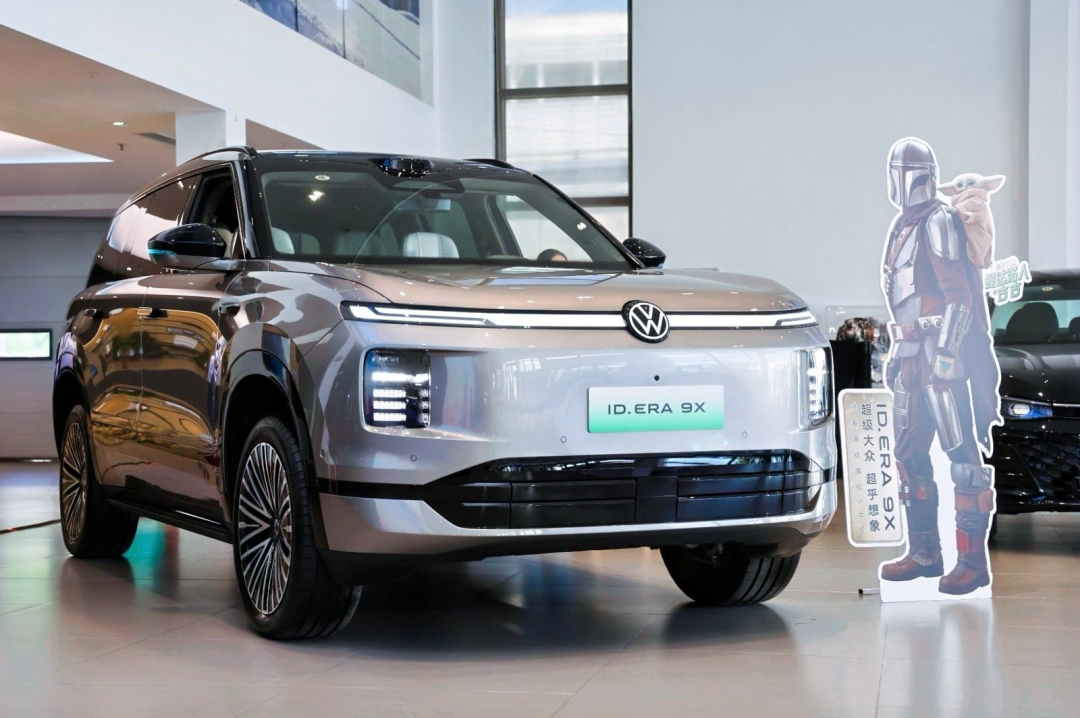
The same applies to extended-range vehicles. The SAIC Volkswagen ID. ERA 9X uses an EA211-based range-extender system, which is essentially a highly efficient engine-generator package. Its diagnostic strategy also needs precise control over the timing and duration of fuel cuts.
The ID. ERA 9X’s first-month deliveries of more than 7,000 vehicles suggest that Chinese consumers are willing to accept such range-extender solutions. It also means the engine-diagnosis logic behind them is being validated at scale.
One of the central technical challenges in hybrid vehicles is coordinating the engine and motor through frequent starts and stops. Each transition may involve diagnostic triggers. If the old sequential logic is used, repeated diagnostic fuel cuts can damage smoothness, producing unexplained jolts or delayed response.
Every fuel cut also means a moment in which the engine is not producing power, reducing fuel efficiency. That is why SAIC’s emphasis on cutting the number of fuel-cut events and shortening each event matters. The same logic applies to extended-range systems, where diagnostic efficiency directly affects how smoothly the generator operates.
More broadly, electrification does not mean the internal-combustion engine will disappear overnight. European demand for hybrids and Chinese enthusiasm for plug-in hybrids point in the same direction: the engine will remain, but it will become more intelligent.
That intelligence depends on data and diagnostics. Mechanical optimisation alone is already approaching its physical limits. To push further, automakers need precise diagnosis and calibration, both of which require large volumes of real-world operating data.
From Manufacturing Scale to a Data Barrier
SAIC now faces a straightforward test: can its vast data assets become a visible improvement in user experience and a lasting technology barrier?
The engine-diagnosis patent is only one small example, but it is a telling one. As automotive competition shifts from hardware strength to algorithms and data, the winners may not be the companies that build the best prototypes in the laboratory. They may be the companies whose algorithms prove more reliable in daily use.
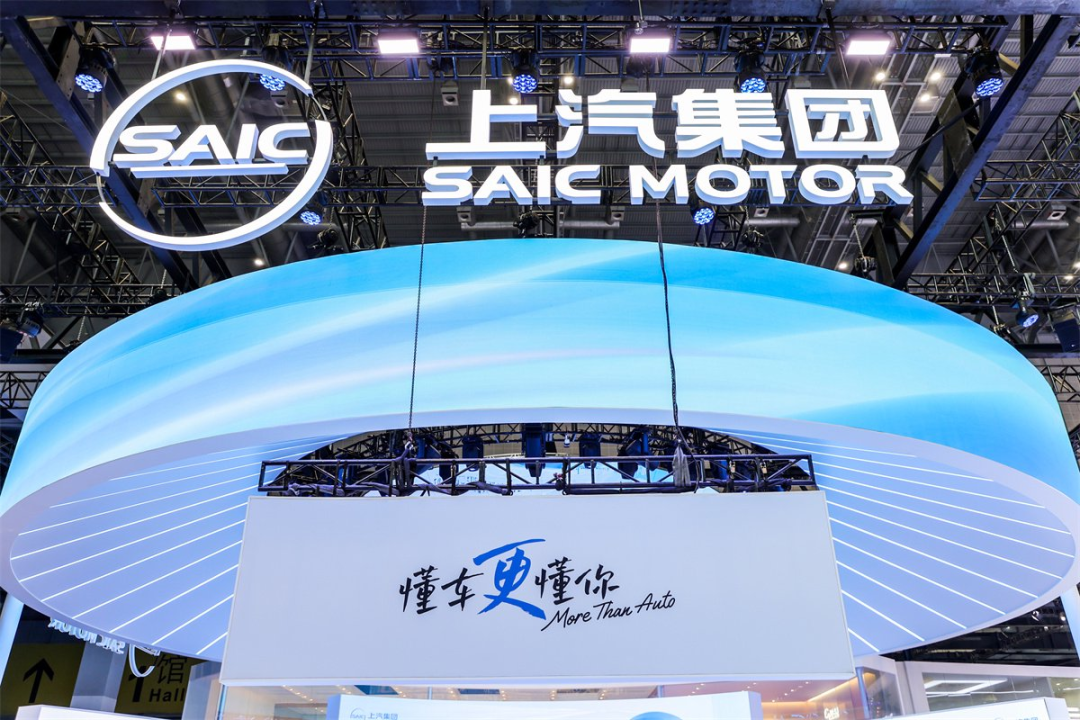
For SAIC, 100 million vehicles is not the end point. It is 100 million data sources, 100 million consumer relationships and the starting line for a different kind of automotive competition.
From 1955 to 2026, SAIC’s durability has not depended on a single hit model or one headline technology. Its advantage has been the ability to understand technology and, more importantly, to understand users. In the next phase of the car industry, that may matter more than ever.