
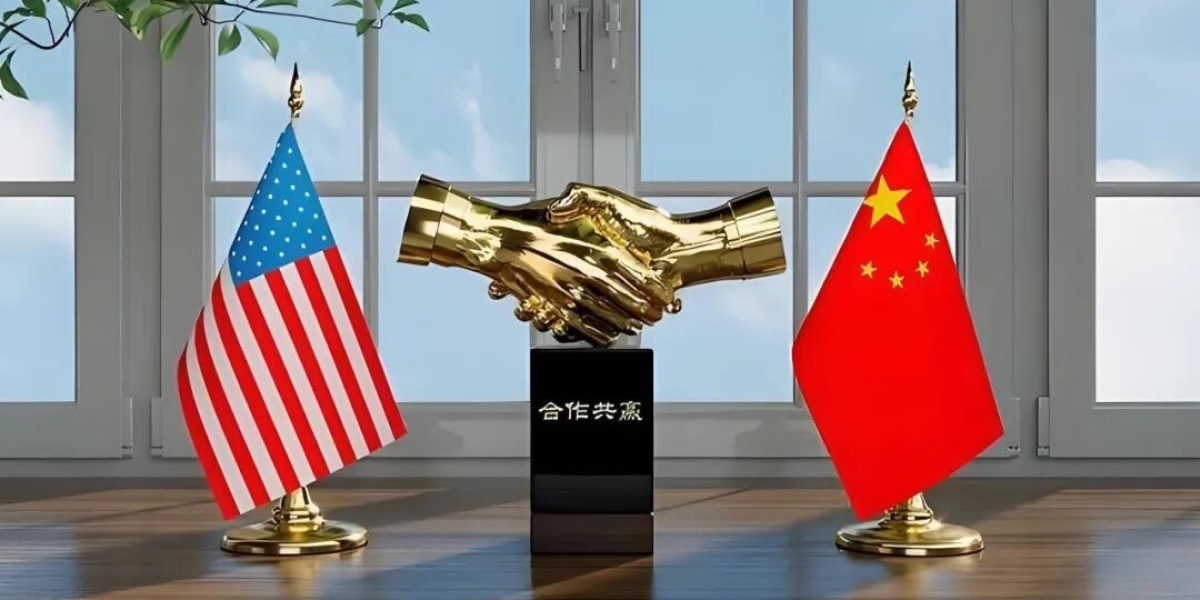
On the afternoon of 15 May, US President Donald Trump concluded his state visit to China and left Beijing aboard Air Force One. Trump’s previous visit to China dates back to 2017, when the Chinese car market was still in the final stage of an era dominated by joint-venture petrol vehicles.
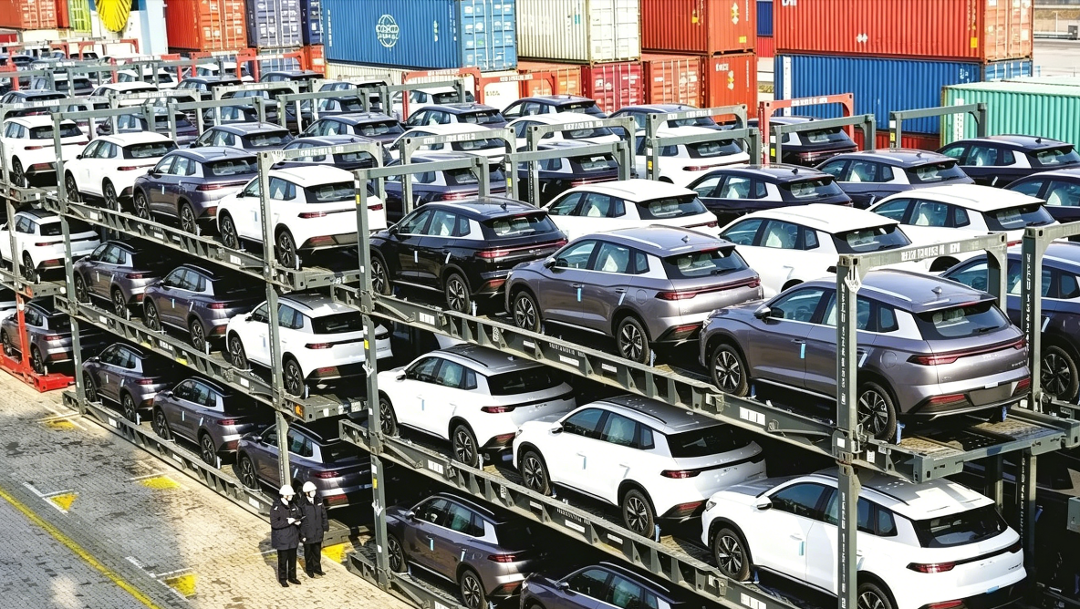
Nine years later, the global automotive map has been redrawn. China’s vehicle exports reached 8.324 million units in 2025, up by about 30% year on year, while the US market has kept most Chinese cars out with high tariff barriers.
On one side stands the world’s second-largest car market, with sales of roughly 15.4 million to 15.6 million vehicles in 2025. On the other stands a market in which Chinese cars have only a tiny presence: in 2024, their share was just 1.81%. In the automotive industry alone, the current situation already resembles a classic Thucydides trap. China’s rapidly rising car industry is reshaping the global order, while the United States is responding with barriers and restrictions. This visit, therefore, should be seen less as a negotiation over complete-vehicle imports and exports, and more as an exchange of interests over the reallocation of the global automotive supply chain.
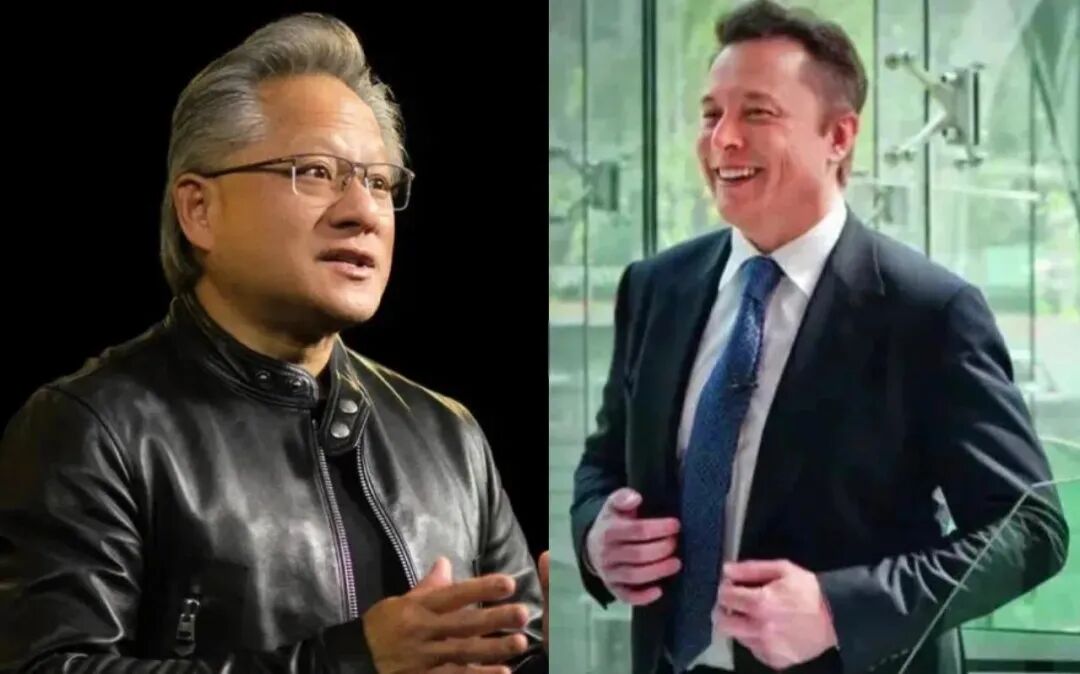
The business delegation accompanying Trump — Elon Musk, Tim Cook, Jensen Huang, the Boeing chief executive and others — was itself a concise map of American industrial demands: new energy, semiconductors, aviation manufacturing, consumer electronics and more. The presence of so many core corporate figures confirmed a simple reality: American companies cannot easily detach themselves from the Chinese market.
01. First guess: a partial loosening of tariff barriers
The door remains firmly shut. But that does not mean there are no windows to climb through.
The harsh reality is that, in the short to medium term, it is entirely impossible for Chinese-made complete vehicles to enter the US consumer market directly and at large scale. Under the Biden administration, an additional 100% tariff had already been imposed on Chinese electric vehicles. When combined with the basic 2.5% tariff, the total rate reached 102.5%. After Trump took office, he not only continued this policy but also, on 26 March 2025, signed an executive order imposing a further 25% tariff on all imported passenger cars and key components. Added to existing duties, the total tax burden on Chinese electric vehicles rose above 127.5%, with some model-based calculations putting the combined rate at more than 137.5%.
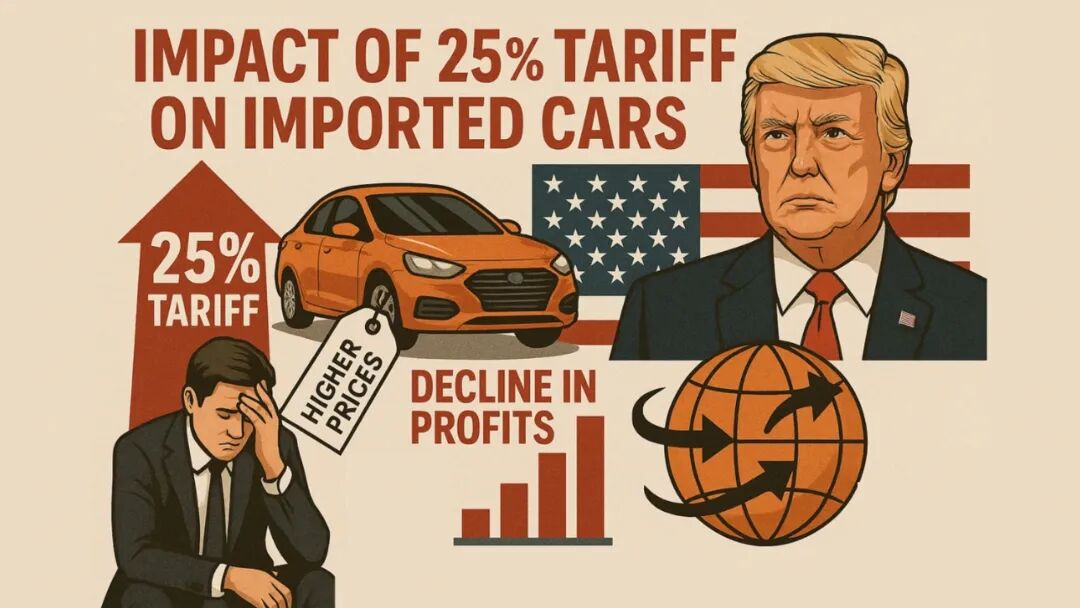
As of April 2026, the number of vehicles truly exported directly from China to the United States remains small. BYD’s direct exports are almost zero. Geely exports only a little more than 2,000 vehicles through the Polestar brand. Chery has not yet begun large-scale direct exports. Although China exported 116,000 complete vehicles to the US in 2024, accounting for just 1.81% of the market, these were mainly joint-venture brand models; the share of independent Chinese brands was extremely low.
Yet the structural vulnerability of the US car industry lies not in complete-vehicle imports, but in the components supply chain. America’s new-energy transition depends heavily on China’s advantages in processing critical minerals and battery materials such as lithium, cobalt and nickel. China controls 70% to 75% of global lithium and cobalt processing capacity, more than 90% of graphite refining capacity and more than 80% of cathode material production capacity.
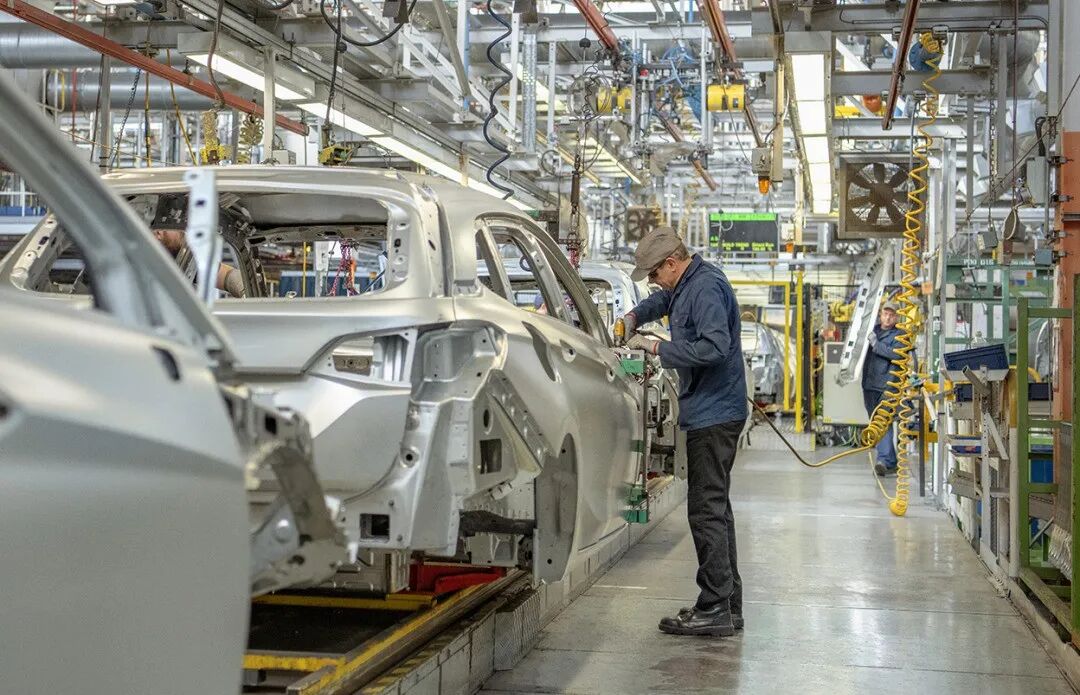
Data show that the pre-tax cost of power battery energy-storage systems exported from China to the United States in 2025 was about $95 per kilowatt hour, while the pre-tax cost of products assembled in the US was as high as $139 per kilowatt hour. In 2025, newly installed US battery storage reached 58 gigawatt hours, and another 70 gigawatt hours is expected to be added in 2026. Domestic capacity is far from sufficient to fill that gap.
This creates a delicate exchange of interests. The United States needs Chinese battery materials to maintain the appearance of progress in its new-energy transition. China, meanwhile, needs to find an opening through which part of its supply chain can connect with America’s, amid increasingly fierce industrial competition.
Recently, the US Supreme Court ruled that Trump’s global tariff policy under the International Emergency Economic Powers Act was unconstitutional. The White House then quickly turned to Section 122 of the Trade Act of 1974, imposing a 10% temporary global tariff on all countries for 150 days, while also considering more legally compliant tariff tools. On the eve of Trump’s visit to China, some analysts predicted that he might consider cancelling this newly added 10% temporary global tariff, or easing restrictions within the current legal framework on the use of Chinese-made battery cells in energy-storage systems.
China’s bargaining chips are equally concrete. In key rare-earth raw material exports, China controls about 90% of global permanent magnet and rare-earth metal alloy capacity. In 2025, Ford was once forced to halt production of its popular Explorer model because of a shortage of rare-earth magnets.
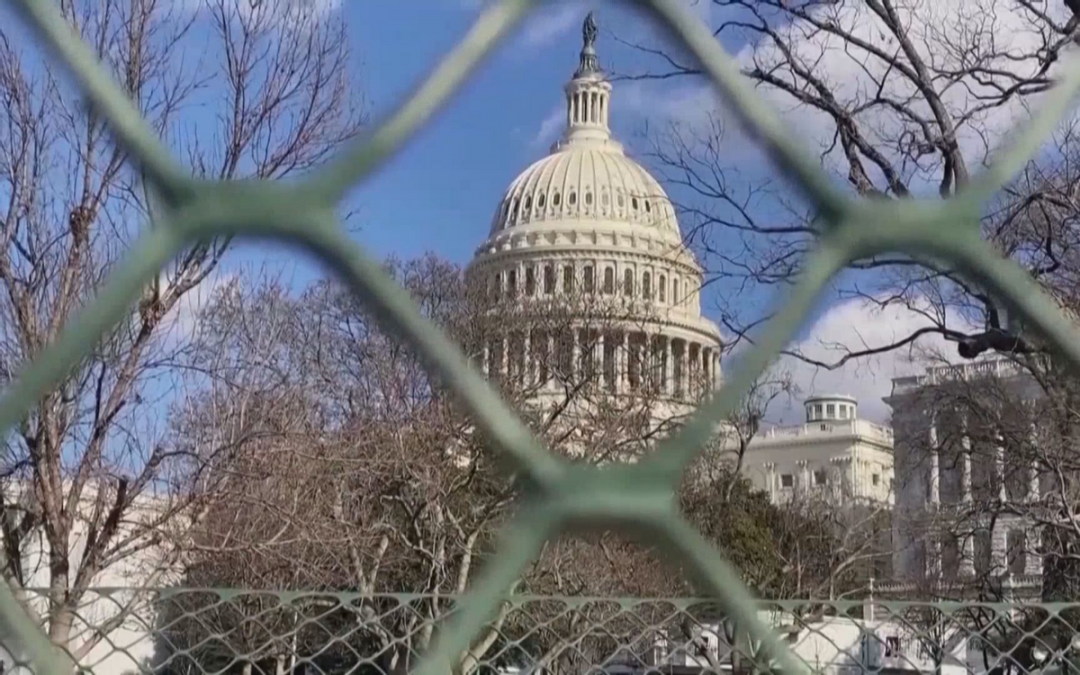
For that reason, the most likely consensus from this meeting may be precisely the kind of “component concessions” that are easy to overlook: the United States could reduce additional tariffs on Chinese-made power battery modules and energy-storage systems, allowing Chinese battery cells to enter non-vehicle US scenarios — such as energy-storage plants and grid equipment — at lower cost. China, in return, could stabilise rare-earth and critical-mineral supplies to the US, helping American carmakers avoid the panic of raw-material disruption.
On the surface, the high wall remains. But a series of side doors in the components sector may be where both sides find it easiest to nod in agreement.
02. Second guess: a thaw in intelligent connected-vehicle standards
If tariffs are an old issue, then the degree of openness in the field of intelligent connected-vehicle data may be the most imaginative variable in this visit.
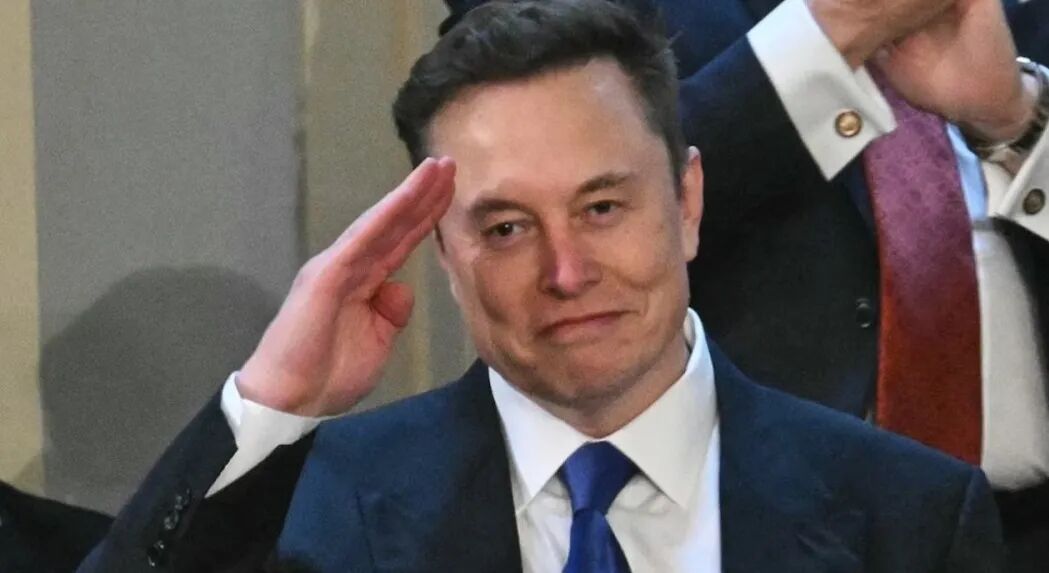
Musk’s presence in the delegation was especially striking. His core demand is clear: to push for the official launch of Tesla’s Full Self-Driving system in China. For FSD to be localised, Tesla would have to rely on its Shanghai-based data centre and transfer road-test and driving-behaviour data collected in China back to the United States to train autonomous-driving algorithms. That touches directly on the regulatory boundary for cross-border flows of automotive data.
At the legal level, China has already sent a clear policy signal. In June 2025, eight Chinese departments, including the Ministry of Industry and Information Technology, jointly released the Guidelines on the Security of Cross-Border Automotive Data Transfers (2025 edition) for public comment. The draft laid out a clearer compliance route for automotive data leaving the country. It stated that data used for autonomous-driving or advanced driver-assistance training constitutes “important data” and must undergo security assessment and obtain approval from the relevant authorities before it can be transferred abroad in compliance with regulations.
At the same time, the US Department of Commerce issued final rules in 2025 for connected vehicles, restricting the entry into the American market of connected-vehicle software and hardware developed, designed or supplied by China.
It is not hard to see that both China and the United States remain cautious on automotive data security and intelligent connected vehicles. But both also have an incentive to break the ice. A complete decoupling would not benefit the iteration of autonomous-driving technology on either side. During this meeting, the two sides could announce the launch of a pilot programme for cross-border flows of autonomous-driving data. One possible arrangement would be targeted exchange of de-identified and desensitised non-core road-test data between Shanghai’s Lingang Special Area and Silicon Valley in California.
03. Third guess: the amplified “catfish effect” behind FSD’s entry into China
Roll the clock back to 2018, when the news that Tesla would build a wholly owned factory in Shanghai briefly caused anxiety across the industry. At the time, China’s new-energy vehicle companies were still dependent on subsidies. Tesla’s localisation was like a catfish thrown into the pond.
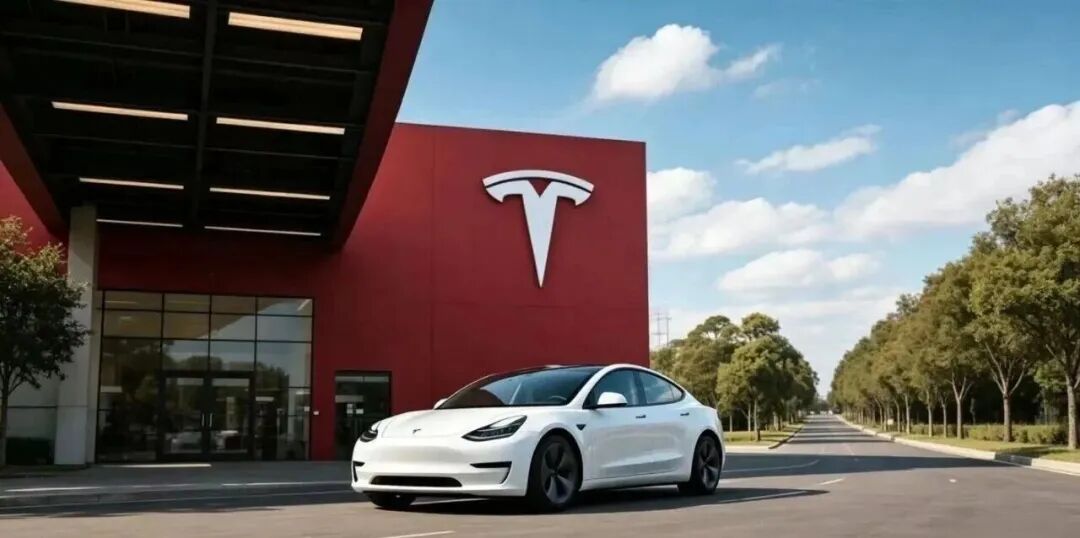
The result was that local Chinese brands were forced to chase hard. Within just a few years, BYD, Nio and Li Auto grew rapidly, while domestic new-energy penetration surged from single digits to more than 40%. If FSD formally enters China, it may recreate that same catfish effect.
This time, the stakes are clearly higher. FSD V12 has fully adopted an end-to-end neural-network architecture. It no longer relies heavily on traditional manually written rules. Instead, it uses vast quantities of real driving data to train a decision-making model that comes close to human driving habits.
The speed of this technological route depends on the completeness of the data loop and the abundance of computing power. The complexity of China’s road conditions and the diversity of its urban roads are precisely the most valuable fuel for training such a model. Musk himself has said that Tesla’s fleet can collect more than 20 million kilometres of real driving data worldwide every day, and the contribution from the Chinese market is rising rapidly.
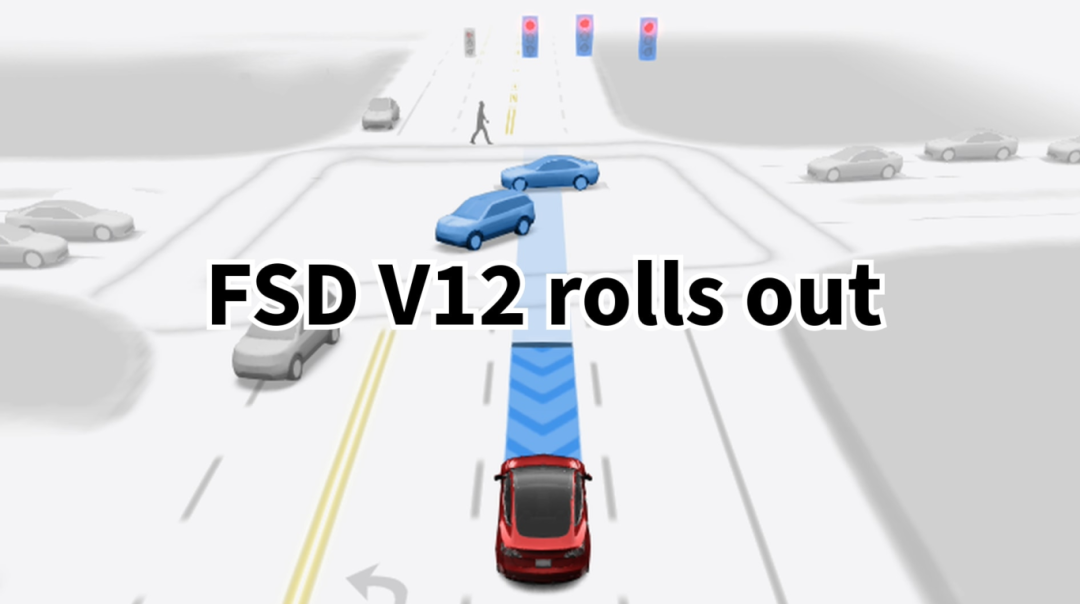
FSD’s entry into China is therefore not merely a matter of product launch. It is also a contest over data sovereignty. Tesla’s willingness to build a local data centre in China and accept audits and desensitisation requirements from Chinese regulators is itself a signal. Whether China is willing, while ensuring security, to allow some desensitised data to be used for cross-border algorithm iteration will be a key point to watch in this meeting.
If progress is smooth, Tesla’s FSD may receive formal permission to operate on Chinese roads before the end of 2026. By then, China’s intelligent-driving market would shift from a hardware race — over the number of lidars and the computing power of chips — to a software race over data loops and algorithm iteration. For Chinese players such as Huawei, Xpeng and Li Auto, which have already invested in full-stack self-development, that would be the real stress test.
04. Conclusion
During his visit to China, Trump publicly stated that relations between China and the United States would be “the best they have ever been”. But sobriety is still needed. One high-level meeting is unlikely to shake the overall framework of America’s high automotive tariffs and technology restrictions on China. In the short term, the two sides are likely to reach only limited and partial policy adjustments. That is already the industry’s broad consensus.
Trump has long had a habit of applying tough pressure first and bargaining later. It cannot be ruled out that, after the meeting ends, he may suddenly send new signals about additional tariffs in order to raise the stakes of the negotiation.
For those working in the automotive industry, it may be better to focus less on the hope that China-US auto trade and technology barriers will collapse altogether, and more on the low-profile but practical areas of co-operation. Those smaller fields may be where China and the United States can truly “do business” in the automotive sector for some time to come.