
At a time when much of China’s automotive industry is tightening its belt, one company is doing the opposite.
Leapmotor has raised its annual sales target to 1.05 million vehicles — a bold upward revision from the one-million goal it announced only weeks earlier. In an industry entering what many describe as an era of “stock competition”, where growth is no longer guaranteed, such ambition stands out.
The move was underscored by a striking public message from the company’s chief operating officer, Xu Jun, who declared that 1.05 million deliveries in 2026 were non-negotiable. The tone was less internal encouragement, more public statement — directed at competitors, customers and capital markets alike.
But ambition alone is not strategy. Can Leapmotor deliver?
From Challenger to Contender
The numbers explain the confidence — at least in part.
In 2025, Leapmotor delivered 596,600 vehicles, more than doubling its annual sales and topping China’s “new forces” electric vehicle rankings. That momentum, however, now sets a formidable benchmark. To reach 1.05 million units in 2026, the company must grow by roughly 76% year-on-year.
January’s figures offer a mixed picture. Deliveries reached 32,059 vehicles, up 27% compared with the previous year — an impressive pace in a market grappling with tax policy adjustments and seasonal distortions. Yet month-on-month sales fell sharply from December’s 60,423 units.

Such fluctuations are not uncommon at the start of the year. More telling is that Leapmotor remains among the fastest-growing EV start-ups, suggesting consumer confidence has not materially weakened. Still, achieving an average monthly delivery of 87,500 vehicles — necessary to meet the annual target — will require sustained acceleration.
Behind the headline numbers lies a more structural shift. In 2025, Leapmotor not only doubled sales but also transitioned from loss-making to consecutive quarterly profitability, becoming the second Chinese EV start-up to achieve that milestone. Its cumulative deliveries have now exceeded 1.2 million vehicles, providing a growing installed base and strengthening brand recognition.
In a market clouded by caution, Leapmotor’s upward revision is less bravado than a statement of belief in its own foundations.
The Machinery Behind the Ambition
Unlike many EV start-ups that favour asset-light models and outsourced supply chains, Leapmotor has taken a different route: vertical integration.
he company has built 17 component factories and now manufactures roughly 65% of its core parts in-house. From vehicle platforms and electronic architecture to motors, battery systems and thermal management, much of the technology is developed internally.
Industry estimates suggest such integration can reduce vehicle costs by around 10% compared with external procurement. That cost control underpins Leapmotor’s high-specification, value-for-money positioning — a strategy that has fuelled its rapid expansion.
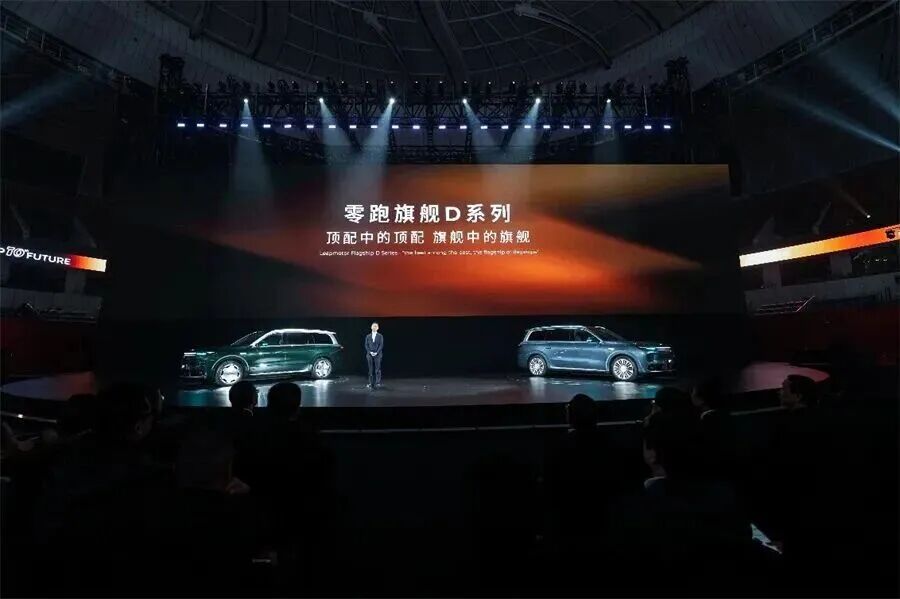
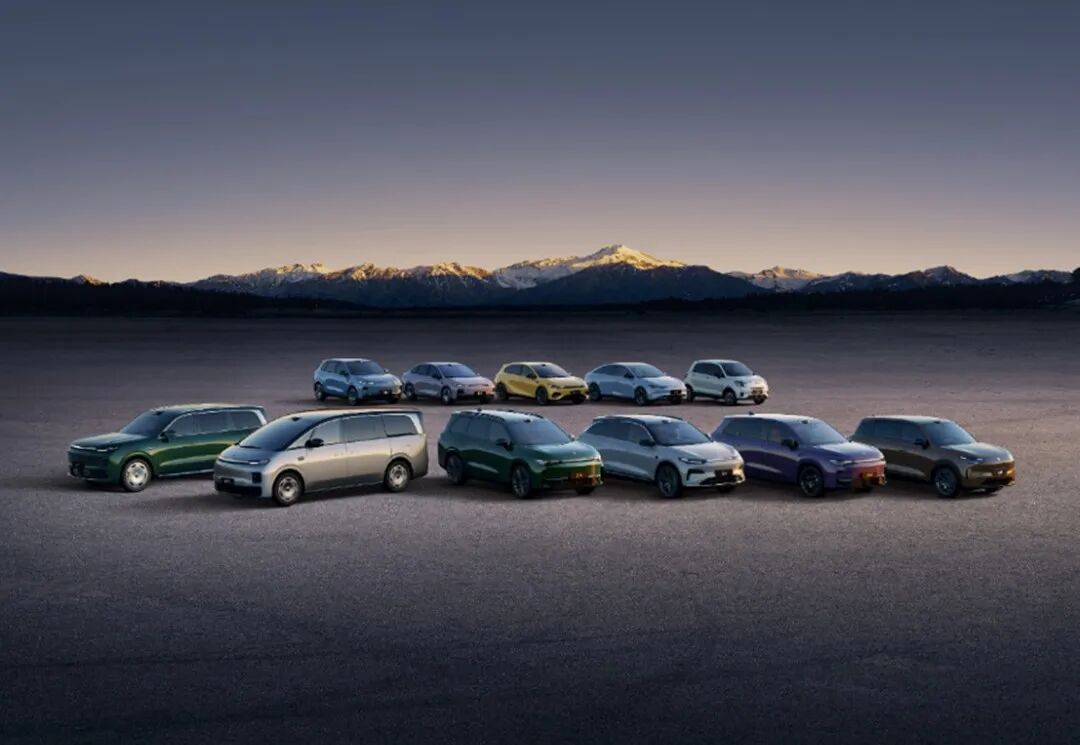
The product roadmap is equally expansive. In 2026, Leapmotor plans to complete four distinct series — A, B, C and D — spanning price points from RMB 60,000 to RMB 300,000 and covering sedans, SUVs and MPVs.
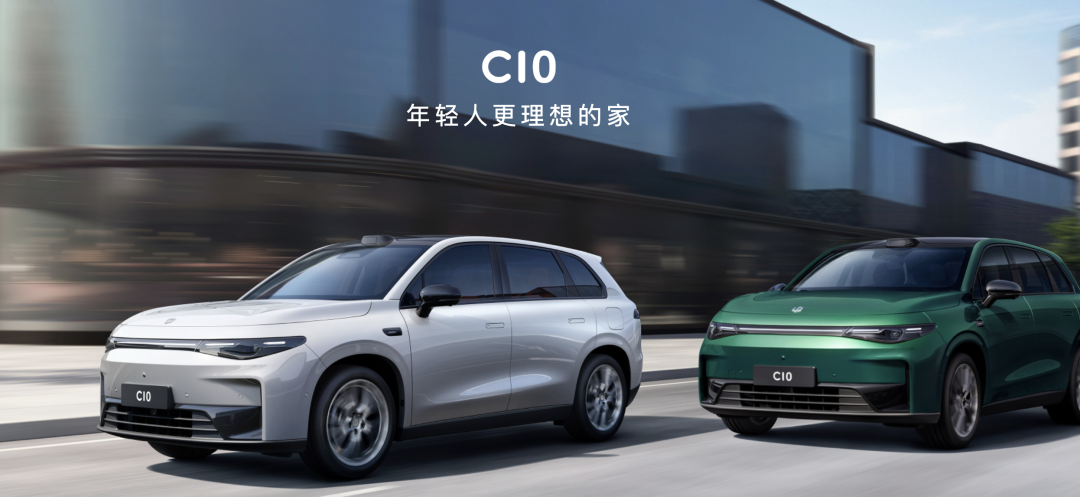
The C series remains the volume backbone. The B series targets family buyers with space and smart features. The A series aims to democratise advanced technologies such as lidar-assisted driving. The D series marks the company’s formal entry into the premium segment — a strategic attempt to raise margins and elevate brand perception.
International expansion forms a second growth curve. In partnership with Stellantis, Leapmotor established Leapmotor International, entering 35 countries and 800 overseas outlets in 2025. Exports surged 839% year-on-year to 67,000 vehicles. The 2026 overseas target exceeds 100,000 units, supported by local production initiatives in Spain and Malaysia.
Domestically, the dealership network is set to expand to more than 1,500 outlets, with a focus on lower-tier cities — an area where the brand has historically found success.
Scale, it seems, is being pursued with industrial discipline rather than pure optimism.
The Premium Question
Yet the real test may not lie in volume alone.
Leapmotor’s push into the RMB 300,000 segment — through its D series — represents both opportunity and risk. Moving upmarket can expand margins and reposition the brand. But it also exposes the company to new competitive pressures and a different type of customer expectation.
For much of the past decade, Leapmotor’s appeal has rested on affordability and technological inclusivity. Premium buyers, however, demand more than hardware. Brand equity, service quality and emotional resonance play a larger role.
The company has attempted to close that gap through research investment. Between 2022 and 2024, it spent roughly RMB 6.2 billion on R&D, with spending in 2024 alone rising 51% year-on-year to RMB 2.9 billion. Focus areas include advanced driver assistance systems, 800-volt high-voltage platforms and battery-chassis integration — technologies now central to its flagship models.
China’s broader EV market may offer favourable timing. Domestic brands are increasingly encroaching on the premium space once dominated by joint ventures and foreign marques. The success of players such as Aito and Li Auto has demonstrated that Chinese manufacturers can command higher price points.
Still, scaling up while moving upmarket is a delicate balancing act.
A Calculated Storm
Leapmotor’s founder, Zhu Jiangming, has acknowledged that the million-unit goal will be “very difficult”. But difficulty, in his view, is precisely the point. In a recent internal letter, he described the company’s ambition as becoming “the anchor in the storm”.
Whether that anchor holds will depend not only on production capacity and product cadence, but also on market sentiment, consumer confidence and the broader economic climate.
For Leapmotor, 2026 will not simply be a year of expansion. It may prove to be a year of transformation — one in which a fast-growing start-up attempts to cement its place among China’s automotive mainstream.
The verdict, as ever in the car industry, will be delivered not in rhetoric but in registrations.