
BYD has announced price increases for several of its models, while a number of other new-energy vehicle makers have joined the same trend. The cost pressure facing the sector has now been laid bare. It also suggests that a turning point in the industry’s value system may be close at hand.
From 1 May, some BYD models sold through its Dynasty, Ocean and Fangchengbao networks will see the optional God’s Eye B assisted-driving laser package rise from about $1,500 to about $1,800. As the company with the largest share of China’s new-energy vehicle market, BYD’s price adjustment has acted like a signal flare, pushing the recent discussion about collective EV price rises - and what they mean - to a new peak.
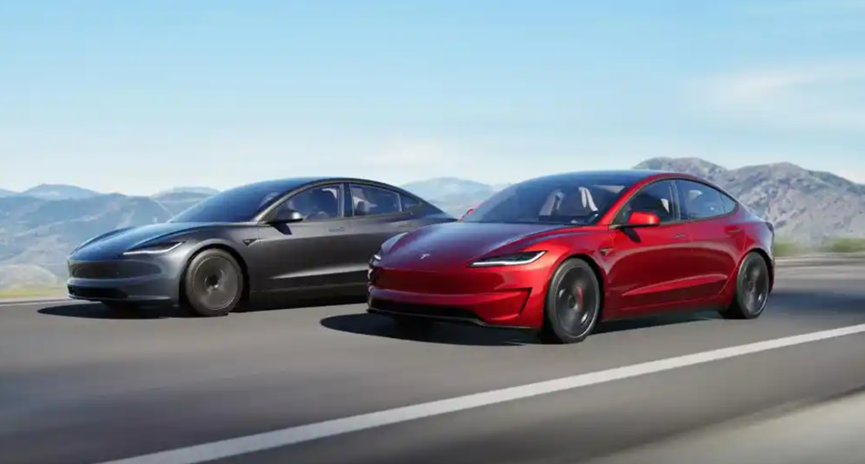
It comes alongside other increases. Xiaomi’s new SU7 range is about $600 more expensive than the previous generation. Avatr has lifted the pre-sale threshold for the Avatr 12 by about $4,400. Chery’s Exeed ET5 high-end version is up by about $700. Tesla has raised the Model Y Long Range from about $52,600 to about $55,300, while the Performance version has moved from about $58,500 to about $61,400. Taken together, these moves make the question of whether the price war is nearing its end appear increasingly urgent.
Until recently, China’s new-energy vehicle market had been trapped in a long cycle of price competition. Carmakers relied on discounts to drive sales volumes and trade price for market share. Low-cost city EVs worth only several thousand dollars, and family cars with discounts running into thousands of dollars, became common. Consumers also became used to waiting on the sidelines, expecting manufacturers to cut prices to boost sales and hit performance targets before buying a new car.
Since the start of this year, a number of new-energy vehicle makers have proposed price increases. The trend points to a clear reality: the latest round of increases is a public sign that the industry’s cost pressure in 2026 is being passed on to consumers. As discounts are withdrawn and official guide prices rise, the sector is beginning to look very different from the price-war period of the previous two years, when companies cut prices to seize market share.
In essence, this round of price increases reflects the inevitable shift of the electric vehicle industry from a phase of scale expansion to one of value-based competition. But does the participation of BYD and other carmakers mean EVs are entering an era of across-the-board price rises? And will the rules of the new-energy vehicle industry change from here?
Is the AI boom the real force behind the squeeze?
“Since the second half of 2025, the prices of core battery materials such as lithium carbonate and automotive-grade memory chips have continued to rise, with some memory chips nearly tripling in price.”
“The increase is affected by the sharp rise in global memory hardware costs.”
Whether in public comments from Lu Fang, chairman of Voyah, or in BYD’s explanation for its latest price change, the real reason behind the current wave of increases is not hard to find. Price rises and falls are normal in the car industry. But in the EV sector, which has had to deal with stock competition and has been stuck in a price war for years, raising prices now seems abrupt. So why are so many mainstream carmakers lifting EV prices at the same time?

Objectively, this is not a case of carmakers simply wanting to charge more. It is the result of surging upstream supply-chain costs being pushed downstream. One central factor is the capacity squeeze caused by the global AI boom. Capacity allocation in the global memory-chip industry is uneven. Samsung, SK Hynix and Micron, the world’s three largest memory makers, have put almost 70% to 80% of their advanced capacity into HBM and DDR5 chips used in AI servers. That has left far less mature-process capacity for the automotive industry than in 2025.
The automotive sector is also in a weaker position in the supply chain. Cars account for less than 5% of global DRAM demand. AI server companies buy in much larger volumes and have stronger bargaining power. For the same chips, AI companies are generally willing to pay 20% to 30% more than carmakers. Suppliers naturally prioritise the AI sector.
Carmakers could, in theory, respond by changing suppliers. But the practical problem is that automotive-grade chips need about 18 months to pass certification. Manufacturers cannot switch suppliers quickly, creating a major gap between supply and demand. When demand is greater than supply, prices rise.
The numbers underline the problem. In the first quarter of 2026, mainstream DRAM prices rose by 55% to 60%, while spot prices for high-end automotive-grade DDR5 tripled. For a car equipped with advanced assisted-driving functions, memory-chip costs alone are now about $400 to $700 higher than last year.
Rising raw-material prices for power batteries have added further pressure. Lithium carbonate has climbed from about $11,000 a tonne in July 2025 to about $25,000 a tonne in April 2026, an increase of 1.3 times. For a model fitted with a 50kWh battery, that translates into an additional battery cost of roughly $600. With copper, aluminium and other base metals also rising, the total hardware cost of a mainstream intelligent EV may now be about $1,200 to $1,800 higher than in the same period in 2025.
Profit data also show the difficulty facing the industry. In the first quarter of 2026, revenue across China’s automotive industry fell by 0.2% year on year, while operating costs rose by 0.7%. Total industry profit dropped by 18%, and the sales profit margin was only 3.2%, less than 60% of the average profit margin for industrial firms above a designated size. Even BYD, a leading player, saw first-quarter net profit fall by 55.38% year on year. The pressure on smaller and medium-sized carmakers is even more severe.
Under the race for smart technology, carmakers can no longer absorb the cost
Many people followed the 2026 Beijing auto show. It sent a clear message: smart technology is no longer a selling point for a few models, but a standard expectation for car buyers. According to data from the China Passenger Car Association, in the first quarter of 2026, vehicles in China with L2 or higher autonomous-driving functions accounted for 62% of the market. Among models priced above about $29,400, 38% were equipped with lidar. The installation rate of the 8155 cockpit chip exceeded 70%. Features that three years ago were found only in luxury cars priced above about $73,500 are now common in cars around the $29,400 level.
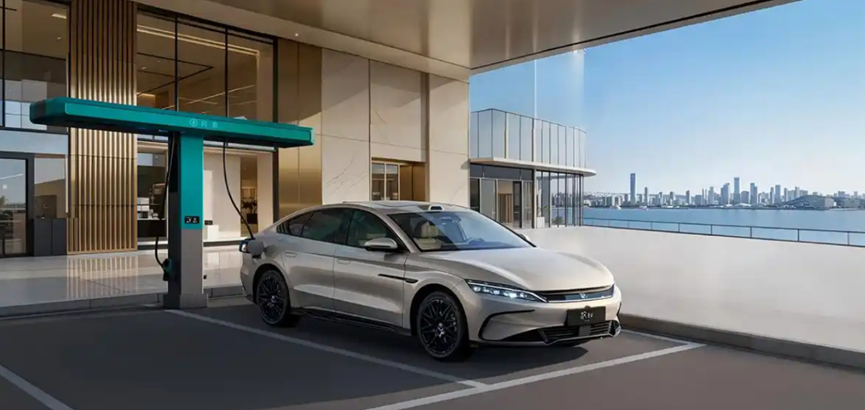
As the race for intelligent technology intensifies, the change in cost structure has become more obvious. Traditional fuel cars and today’s intelligent EVs are in completely different categories when it comes to computing power and storage needs. To protect their market share, carmakers have to keep upgrading their configurations, and costs naturally continue to rise.
If rising supply-chain costs are the external pressure, the industry-wide race for smart features is the internal pressure. Together, they have pushed the cost base of new-energy vehicles sharply higher. Carmakers can no longer absorb the pressure, and price rises have become the response.
For now, whether at BYD or other companies, the models affected by price increases are largely those with assisted-driving functions. On the surface, this allows manufacturers to pass the extra cost of intelligent features on to customers willing to pay for them, easing cost pressure without losing too many buyers. In reality, it is also a difficult step away from an irrational price war and towards a more long-term approach.
The low-price era is ending, and the rules have changed
Price rises may bring short-term pain in sales, but the industry’s bubble has to clear eventually. Higher prices are also a necessary step towards sustainable development. In the previous two years, new-energy vehicle makers expanded production aggressively, leading to high inventories. To clear stock, many had little choice but to cut prices repeatedly. Reports of dealers selling cars at a loss became common.
But the low-price competition of the past two years was never a sustainable normality. As carmakers gradually return to rational behaviour and regulators begin to standardise price competition, prices are bound to return to a more reasonable range. Cui Dongshu, secretary-general of the China Passenger Car Association, has said that the past two years of price competition left carmakers with paper-thin profits. Under the dual pressure of costs and regulation, raising prices has become a necessary choice for survival.
Although the current wave of increases suggests that the low-price era for new-energy vehicles may be ending, a full-scale rise across all models is unlikely. In the mass-market segment below about $29,400, consumers are highly price-sensitive. Blindly raising prices would make it easier for carmakers to lose hard-won market share.
That does not mean carmakers will still have to rely on low prices to defend their position. From another perspective, consumers still make purchase decisions based on whether the price matches what they receive. If product strength does not improve, a simple price increase will not win buyers over. But if the value of the product rises, more consumers may be willing to accept higher purchase costs. Judging from the direction of mainstream carmakers, a structure of “low-spec models for volume and high-spec models for profit” is likely to remain a better way to absorb part of the cost pressure in the period ahead.
What is clear is that the change in rules will also reshape the market. The industry is moving from a contest over who can cut prices the most to a technological competition over who can deliver the highest product value. Leading companies with full-stack research and development capabilities and the ability to integrate supply chains can use technological innovation to spread costs and have more room to adjust prices. Smaller companies without core technology and those overly dependent on external supply chains will struggle under the dual pressure of rising costs and market-share losses.
Conclusion
BYD’s latest adjustment, along with similar moves by other mainstream carmakers, is a signal that the new-energy vehicle industry has reached a critical turning point. It suggests that the price war that lasted for several years is beginning to fade, and that the rough expansion phase of losing money to seize market share is coming to an end. The industry is formally entering a more mature stage of competition based on technology, service and value.
For the sector as a whole, this round of price rises is also a test. Companies with real technological advantages, strong cost control and the ability to create value for users are more likely to survive the industry reshuffle. Those relying only on low prices, without core competitiveness, will be eliminated more quickly. When the tide of cheap pricing goes out, the next round of competition in the new-energy vehicle industry will truly begin. In the process of survival of the fittest, the companies that can create value for users may be the ones that last.