
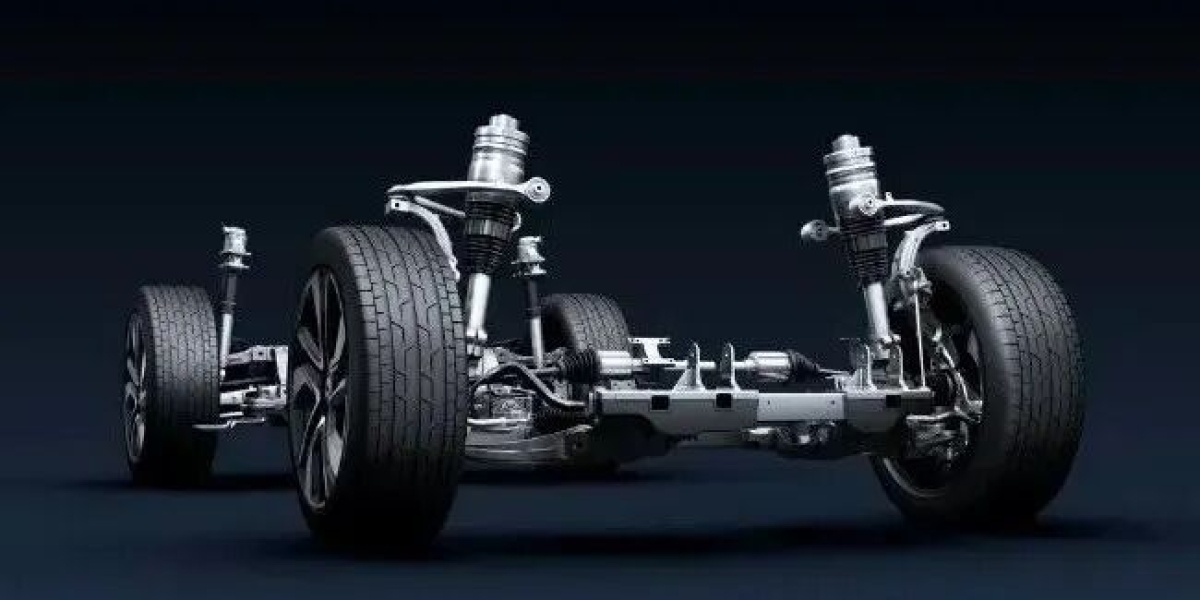
BYD has shown a vehicle driving on three wheels. Nio has made a car appear to dance. Behind these attention-grabbing demonstrations lies a deeper shift in automotive engineering: the rapid rise of the intelligent chassis, a technology built around digital control rather than purely mechanical tuning.
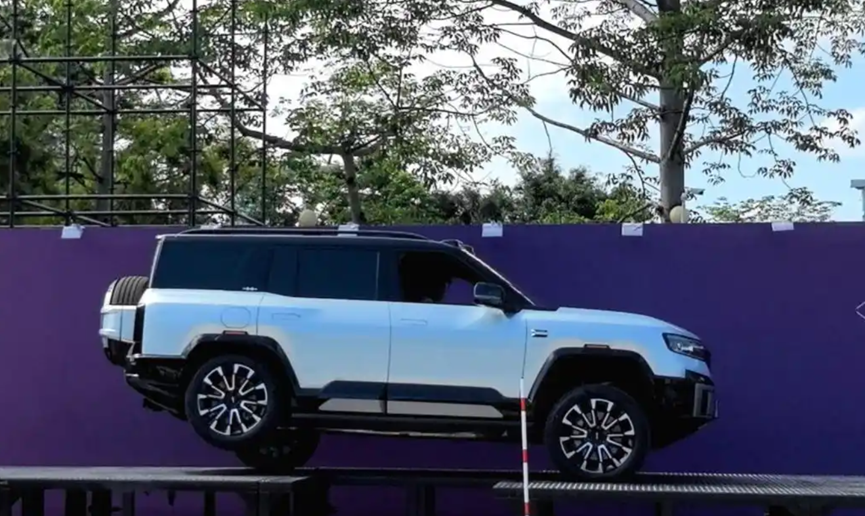
In one demonstration, Fangchengbao's Bao 8 removed one of its wheels and still travelled steadily for 100 metres over a rough washboard-style road. In another, the Nio ET9 moved in time with a violin melody while a six-tier champagne tower on its bonnet remained intact. These scenes, still widely discussed, would have seemed almost unimaginable a decade ago.
Today, however, such demonstrations are no longer just theatrical displays. For some carmakers, they are increasingly presented as proof of normal technical capability. Manufacturers are not, of course, trying to encourage drivers to perform stunts on public roads. The point is to signal confidence in a new generation of intelligent chassis systems.
The reason for that confidence can be found in the technology itself. A conventional mechanical chassis is rather like a feature phone: its functions are largely fixed at the factory and it can only respond passively to driver input. However good the tuning, it remains constrained by the limits of mechanical hardware. An intelligent chassis is closer to a smartphone. It is fitted with sensors, computing units and software, forming a digital system that can perceive, decide and act. It can assess road conditions, calculate a control strategy, adjust parameters and receive new functions through over-the-air updates.
In the intelligent vehicle era, upgrading chassis technology is a natural step. But several questions remain. What exactly is the intelligent chassis that so many carmakers are now pursuing? And from a technical perspective, does it truly match the needs of intelligent driving? The answer can be explored through three dimensions of control: vertical, lateral and longitudinal.
Vertical Control: Breaking the Ceiling of Mechanical Suspension
In the internal-combustion era, traditional chassis tuning faced a familiar dilemma. A car tuned for handling usually needed firmer suspension, but that could make speed bumps feel punishing. A car tuned for comfort could use softer suspension, but then body roll in corners might unsettle passengers. The physical limits of mechanical structures meant drivers often had to accept a compromise.
The intelligent era changes that equation. Intelligent vertical control aims to offer both comfort and control, pushing beyond the limits of conventional suspension.
BYD's three-wheel driving demonstration offers a useful example. Its DiSus-P Ultra system follows this vertical-control logic. Instead of the single-valve structure found in traditional suspension, it uses independent dual-valve control, allowing compression and rebound damping to be adjusted separately through different oil circuits.
When one wheel is suspended in the air, the system can transfer hydraulic force from that wheel to the other three within 300 milliseconds. The system's maximum combined lifting load reaches nine tonnes, helping pull the vehicle body back from a potentially unstable position. During the process, the body angle reportedly stays within 0.5 degrees. Some movement remains, but it is largely negligible.
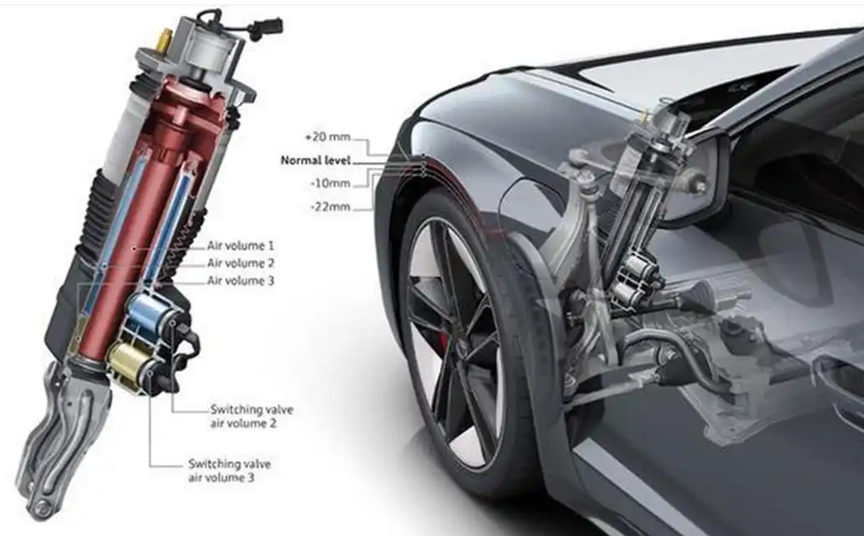
There is more than one route to fully active intelligent chassis control. Nio's ET9 uses a different approach with its SkyRide intelligent chassis, based on an integrated hydraulic fully active suspension system. Its suspension integrates the controller, motor and gear pump, with each damper fitted with an independent electro-hydraulic pump. The motor can adjust torque 1,000 times per second, the actuator response frequency reaches 40Hz, and the body adjustment speed is said to be 60 times that of a conventional air spring.
Combined with 4D AI road-preview technology, the system can detect road undulations in advance and adjust suspension force proactively. At 30km/h over a speed bump, the vehicle's vertical acceleration can be kept within 0.1g, producing the kind of stability shown in the champagne-tower demonstration.
The difference is clear. Mechanical suspension has performance largely fixed once it leaves the factory. Intelligent vertical control, by contrast, can continue to improve through software and algorithms. In essence, it uses a combination of perception, road preview, fully adjustable actuators and dynamic algorithms to break the old trade-off between handling and comfort. The upper limit of chassis performance shifts from mechanical constraints to algorithmic optimisation.
Lateral Control: Giving Advanced Driver Assistance Quicker Hands
The mechanical chassis belongs to the fuel-car era. The intelligent chassis belongs to the age of electric and software-defined vehicles. This is a technological shift driven by the times. Many manufacturers are now talking about the arrival of Level 3 automated driving, and the execution capability of the chassis will be central to whether that technology can work safely.
If an automated driving system asks a car to make an emergency evasive manoeuvre, but the steering hardware reacts too slowly, even the best algorithm will struggle. Intelligent lateral control is intended to close that gap.
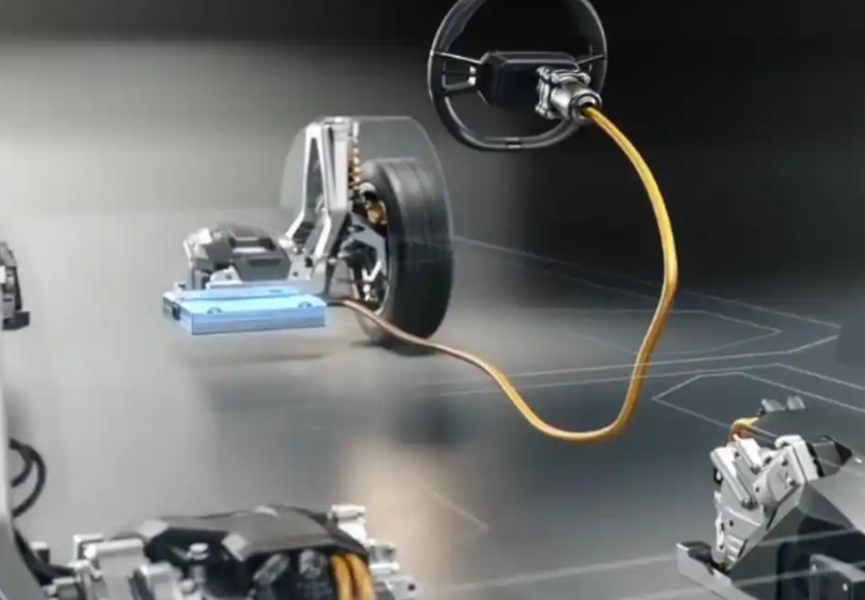
The term may sound unfamiliar, but steer-by-wire is a more recognisable example. This technology removes the traditional mechanical steering column and transmits commands through electrical signals. Its response is far faster than a mechanical steering system. It also allows the steering ratio to be adjusted continuously: slower and steadier at high speeds, sharper and easier to manoeuvre at low speeds.
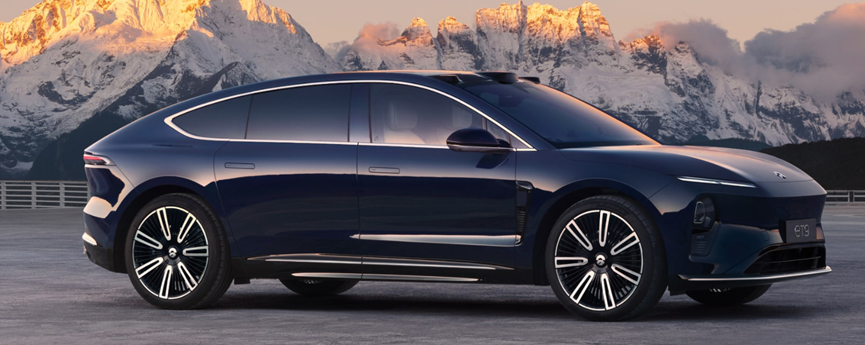
Nio's ET9 illustrates the benefit. Despite measuring about 5.3 metres in length, it has a turning diameter of just 10.9 metres, comparable to a Volkswagen Golf. That is achieved through the combination of steer-by-wire and active rear-wheel steering of up to 8.3 degrees.
More importantly, intelligent lateral control is no longer just a steering function. It can coordinate steering, suspension, electric drive and braking. In the past, during emergency avoidance, an electronic stability programme might apply braking to one side of the vehicle, a method that could be slow and might increase the risk of fishtailing. Now, at 80km/h, steer-by-wire can begin changing direction within 10 milliseconds, the rear wheels can turn in the opposite direction to counter oversteer, the suspension can stiffen to reduce body roll, and the electric drive system can add torque to the outer wheels. Four systems act together, raising the vehicle's lateral stability limit.
Overall, lateral control is built around steer-by-wire, digitising and adding redundancy to the steering system. Through multi-system coordination, it also improves side-to-side stability. That helps overcome the physical limits of traditional steering and provides an essential execution layer for more advanced automated driving.
Longitudinal Control: Rewriting the Old Rules of Braking and Acceleration
Drivers of petrol cars often recognise a familiar pattern. Press the brake pedal and there may be a brief delay before braking force arrives abruptly, causing the car to nod forward. Accelerate hard and the gearbox may take a moment to respond before the surge arrives. From a technical point of view, this is because braking and power delivery in a traditional vehicle are two largely separate systems linked through mechanical structures. Slow response is built into the design.
The intelligent chassis rewrites those old rules through intelligent longitudinal control. The idea is to connect braking and propulsion under a unified control logic.
There are currently two mainstream forms of brake-by-wire. One is electro-hydraulic braking, or EHB, which retains part of the hydraulic system and can respond in about 150 milliseconds, roughly twice as fast as traditional hydraulic braking. The other is electro-mechanical braking, or EMB, which removes hydraulic pipes completely and uses motors to clamp the brake pads directly. It offers even shorter response times and more precise braking force.
For example, where a vehicle might once have needed 40 metres to stop from 100km/h, brake-by-wire combined with coordinated electric-drive braking can bring that distance below 37 metres. The difference of three metres is roughly the length of a car body, and in an emergency it can be decisive.
Longitudinal control systems also prioritise motor braking. In everyday deceleration, the motor generates electricity while slowing the car, recovering energy and reducing the jerkiness associated with mechanical braking. This improves energy recovery and can support driving range. On wet or slippery roads, the system can control braking force at each wheel more precisely, helping prevent lock-up and potentially shortening stopping distances compared with traditional anti-lock braking systems.
The same logic also helps in following traffic. Full-speed adaptive cruising from 0 to 150km/h can become smoother, with acceleration and deceleration less prone to the surging feel of older cruise-control systems.
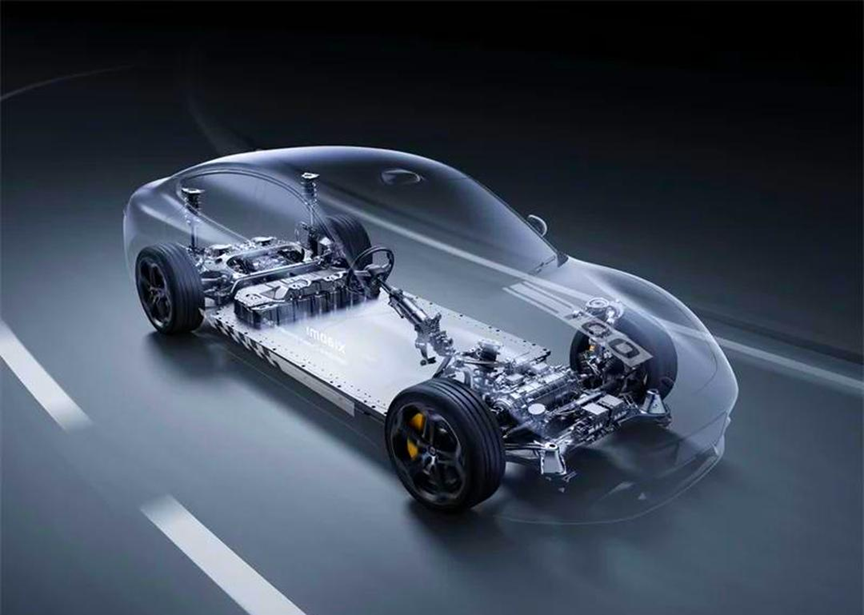
Put simply, longitudinal control coordinates brake-by-wire and the powertrain across the whole driving range. It improves response speed and control accuracy, maximises energy recovery, and meets the redundancy requirements that advanced automated driving places on braking systems. It is one of the intelligent chassis's most important safety lines.
China's new national standard, due to take effect in 2026, makes this direction clearer by requiring vehicles above Level 3 automated driving to be equipped with redundant brake-by-wire systems. The aim is to ensure that if one system fails, another can still intervene. Even if a single actuator fails, the vehicle should retain 70% of braking force and be able to stop safely.
Domestic Chinese suppliers are also gaining ground quickly in brake-by-wire. Companies such as Bethel are increasingly competitive with global suppliers such as Bosch. It is likely that in the near future, many more new cars will be fitted with brake-by-wire systems.
Why the Intelligent Chassis Matters
As the core execution platform for advanced automated driving, the intelligent chassis and the upper-level driving-assistance system depend on each other. Its three dimensions are not isolated. Vertical, lateral and longitudinal control form an integrated system, and only through coordination can the full performance potential be released.
From an industry perspective, Chinese carmakers spent decades trying to catch up in chassis tuning during the fuel-car era. In the future, that traditional experience may no longer carry the same weight. The intelligent chassis changes the playing field. Competition shifts from who has the deepest mechanical tuning know-how to who has better algorithms, lower supply-chain costs and faster iteration.
Those are areas where Chinese companies already have notable advantages. Intelligent chassis systems are no longer merely high-end showpieces. If development continues, the technology is likely to become more widely available. For Chinese carmakers, the rapid rise of the intelligent chassis may represent another opportunity to change lanes and overtake.