
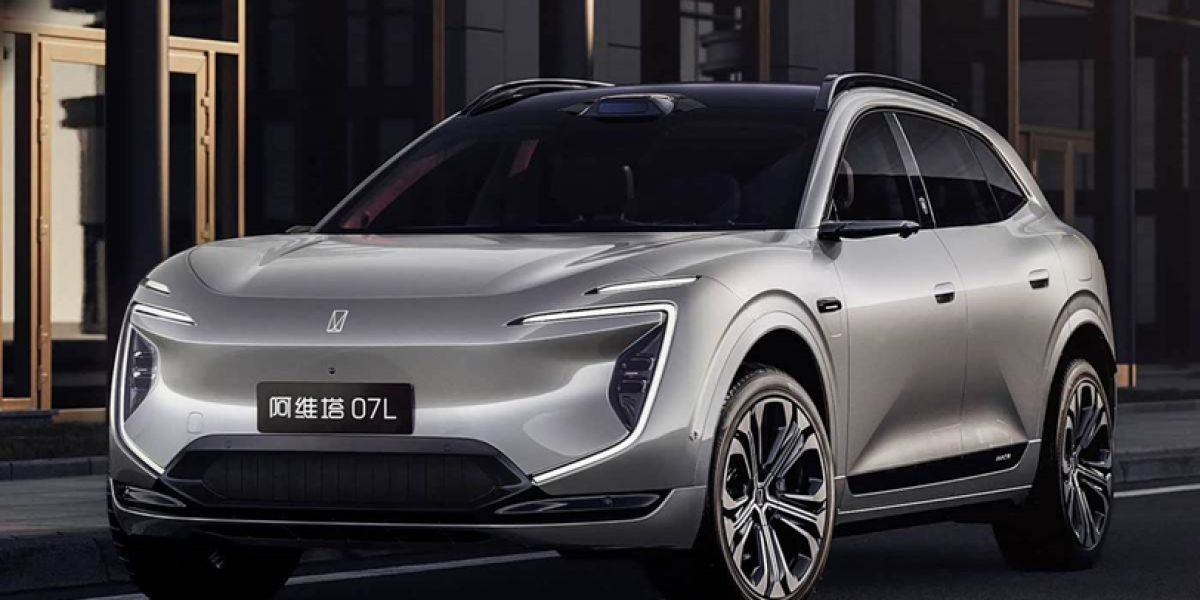
A single remark was enough to push Avatr into an uncomfortable debate about what, exactly, defines the Chinese premium electric-vehicle brand.
At a media briefing for the Avatr 07L on August 8, vice-president Yong Jun said he did not regard one form of cooperation with Huawei as a “necessary” option. Avatr moved quickly to clarify the comment, saying it had been misinterpreted: Yong was referring specifically to whether Yinwang needed to develop an exclusive assisted-driving version for the brand, rather than questioning the value of Avatr’s broader partnership with Huawei.
The clarification did little to end the discussion. The more important question was already in the open. If some of a carmaker’s most recognisable technologies and consumer-facing features come from an external technology partner, where does the supplier’s value end and the automaker’s own brand equity begin?
That question has become more sensitive because Avatr is also trying to revive its initial public offering in Hong Kong. Its second prospectus makes the Huawei relationship difficult to overlook. The document mentions Huawei 66 times and Yinwang 77 times, or 143 references in total. Yinwang is identified as an associate, while plans for jointly developed new vehicles in the fourth quarter of 2026 and in 2027 are also included.
Avatr is therefore trying to manage two narratives at once. To consumers, it increasingly wants to present itself as a premium marque with an identity beyond Huawei. To prospective investors, Huawei and Yinwang remain central to the case for Avatr’s technology, differentiation and future valuation.
The Huawei Label Is No Longer Exclusive
For much of Avatr’s short history, deep cooperation with Huawei was one of its strongest selling points. That advantage is becoming less distinctive.
By 2026, Huawei’s Qiankun intelligent-driving ecosystem had expanded to more than 25 automotive brands. More than 50 models were already using its ADS technology, with the total expected to exceed 80 during the year. The ecosystem now stretches across Harmony Intelligent Mobility brands such as Aito, Luxeed and Stelato, as well as a growing number of automakers using Huawei’s technology through other partnership structures.
For Avatr, the consequence is straightforward. Technology that once helped make the brand unusual is gradually becoming part of a wider industry platform.
There is another complication. Not every Huawei automotive partnership is built on the same model. The Harmony Intelligent Mobility brands operate under a deeper “smart selection” arrangement, while Avatr has historically followed the HI technology-cooperation route. As Huawei’s automotive ecosystem expands, differences in access to resources, product development, retail channels and consumer visibility can become increasingly significant.
The sales gap illustrates the challenge. Aito delivered far more vehicles than Avatr in the first half of 2026, reinforcing a broader point: association with Huawei does not guarantee the same commercial outcome for every partner.
That makes the old “Huawei inside” proposition less powerful as a standalone premium-brand strategy. If multiple vehicles offer Huawei Qiankun ADS and HarmonyOS-based cockpit technologies, consumers need another reason to choose Avatr.
Yong’s answer is that Avatr’s differentiation comes from two sources. Huawei supplies intelligent-driving capability, while Changan Automobile contributes vehicle engineering, manufacturing and its own research in intelligent driving. His broader argument is that Huawei should increasingly function as a common technology platform, leaving Avatr to build differentiation on top of it.
The ambition is clear: Avatr does not want to be perceived simply as “a Huawei car”. It wants to become an Avatr that happens to use Huawei technology.
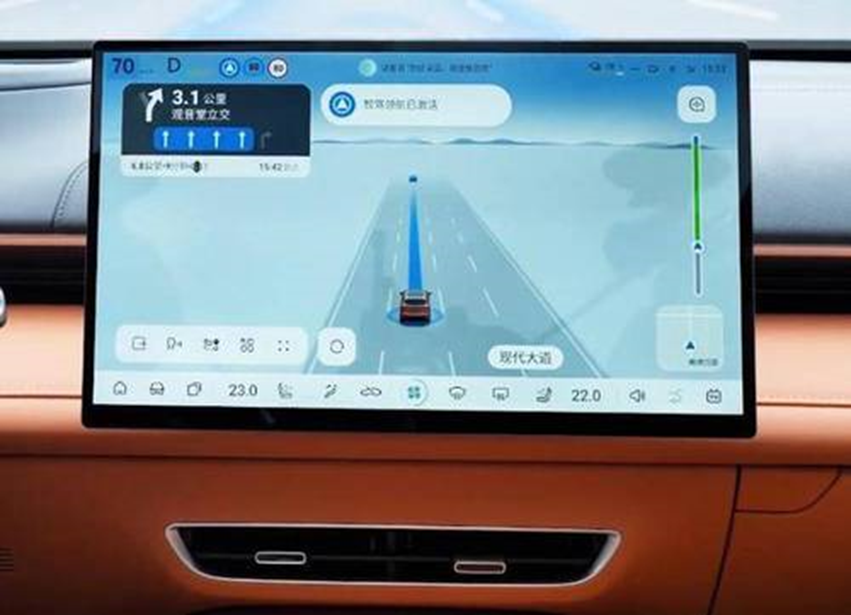
That distinction is easier to describe than to establish. The Avatr 07L still carries the Huawei Qiankun logo on its B-pillar, while ADS 5 and the Harmony cockpit remain among the vehicle’s most visible selling points. The brand therefore needs to reconcile a new story of independence with a product proposition that remains deeply tied to Huawei.
The real test will come from future products. If the proportion of technology, design, software experience and vehicle dynamics that consumers identify specifically with Avatr continues to grow, the brand may be able to redraw that boundary. If not, the “independent Avatr” narrative will remain largely rhetorical.
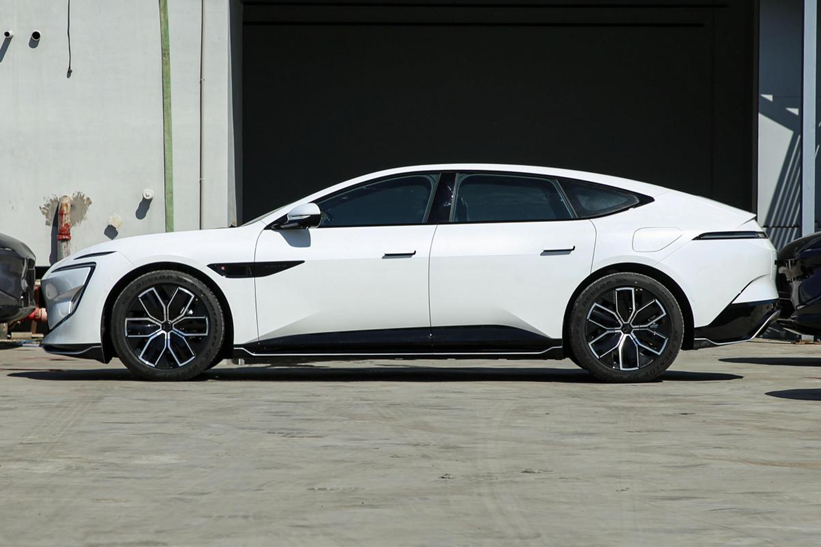
An IPO Creates Two Different Stories
The timing makes the shift in messaging more complicated.
Avatr first filed for a Hong Kong listing on November 27, 2025. The application lapsed six months later after the company failed to complete the listing hearing within the validity period. It submitted a second application on June 30, 2026.
The new filing places even more emphasis on Huawei and Yinwang. References to Huawei increased from 49 in the first prospectus to 66 in the second, while Yinwang appears 77 times. Joint product plans for late 2026 and 2027 are spelled out in the document, strengthening rather than weakening the impression of a close relationship.
There is a financial reason for that emphasis.
Avatr delivered 27,619 vehicles in the first half of 2026, down 51.3% from a year earlier. From 2022 through 2025, the company accumulated losses of more than $1,949,404,000 on a converted basis. Cash and cash equivalents had fallen to about $922,866,000 by the end of April 2026, from roughly $2,853,662,000 at the end of 2024.
For investors assessing a premium EV company selling fewer than 30,000 vehicles in six months and still generating substantial losses, the Huawei relationship is not a peripheral detail. It is one of the most recognisable elements of Avatr’s investment case.
This explains the apparent contradiction. In capital markets, Avatr has an incentive to highlight its links with Huawei technology and its equity relationship with Yinwang. In consumer marketing, it has an incentive to show that the brand can stand on its own.
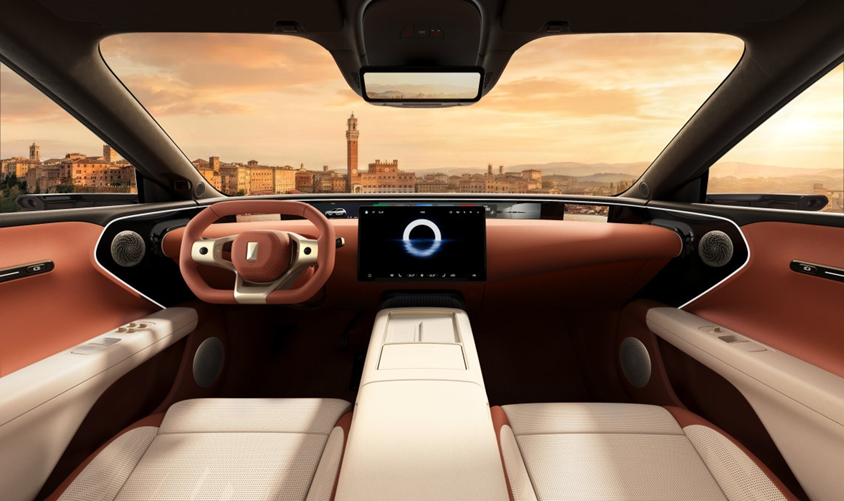
Both messages are rational. Running them at the same time is more difficult.
Avatr reported a net loss of about $515,263,000 in 2025, alongside heavy spending on sales and research. With cash of roughly $922,866,000 at the end of April and losses still substantial, the company has limited room for a prolonged financing delay.
The second listing attempt is therefore more than a capital-markets exercise. It is tied to how much time Avatr has to invest in products, software, brand building and internal capabilities before financial constraints begin to narrow its choices.
If the IPO proceeds, fresh capital could give Avatr time to build a more independent identity through subsequent product cycles. If the process stalls again while cash continues to fall, the dual narrative could become harder to sustain: too dependent on Huawei to appear genuinely independent, yet not commercially strong enough for the Huawei relationship alone to support the valuation investors expect.
This is not unique to Avatr. Any automaker deeply integrated with a large technology company faces a similar question when approaching public markets: what should it use to persuade investors, and what should it use to define itself?
If Huawei Is Not the Brand, What Is?
Ultimately, Avatr needs an answer that goes beyond partnership structure.
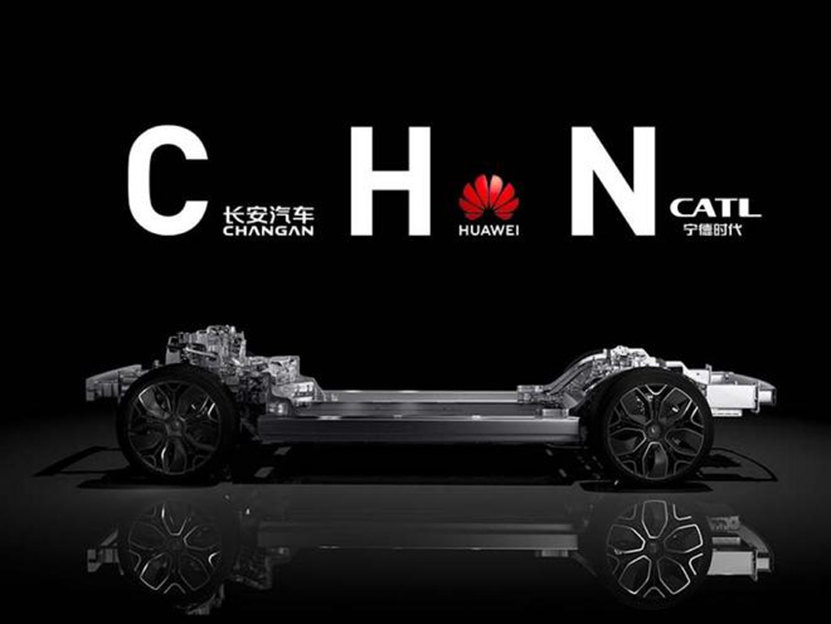
The company sits at the centre of an unusual three-way industrial arrangement. Changan’s contribution includes the CHN platform, chassis and body engineering, vehicle manufacturing, electric powertrain systems and the Taihang intelligent chassis. CATL supplies battery technologies including Shenxing 5C fast-charging batteries and the Qilin battery.
Huawei supplies many of the technologies that are most visible to customers: Qiankun ADS 5, the Harmony intelligent cockpit, high-resolution lidar hardware and the CAS 5.0 collision-avoidance system.
That division of labour creates both strength and vulnerability. Avatr can combine established capabilities from three of China’s most important automotive and technology groups without having to build every layer itself. But it also means that some of the features with the greatest influence on purchase decisions are not uniquely Avatr’s.
This matters more in the premium EV market than it might have in the traditional supplier model. Intelligent-driving systems and cockpit software are now central parts of the user experience. Huawei is also not a conventional Tier 1 supplier. It brings its own technology ecosystem, channels, brand recognition and consumer mindshare.
That makes the partnership unusually valuable — and unusually difficult to replace.
Reducing dependence on Huawei in intelligent driving would require far more than a management commitment to “increase investment”. It would be a multi-year engineering programme involving software, algorithms, data, computing infrastructure, validation and vehicle integration.
Avatr spent about $308,065,000 on research and development in 2025, an increase of 71.8% from the previous year. The prospectus does not provide a detailed breakdown of that spending, and the existing CHN division of responsibilities suggests that a large-scale independent intelligent-driving stack would still require a significant step-up in resources.
There are signs that Avatr is trying to improve its position. In April, Changan pushed Avatr and Deepal towards deeper strategic integration across research, procurement, manufacturing and other back-end functions, with expected overall cost reductions of 20% to 30%. Such savings could create more room for proprietary development.
Avatr also has leverage that ordinary Huawei customers do not. In 2024, it invested about $1,698,344,000 to acquire a 10% stake in Yinwang, making it the company’s second-largest shareholder after Huawei. Yinwang contributed about $26,878,000 in profit to Avatr in 2025. Relative to the size of the investment, that financial return remains modest, but the strategic value may be more important.
Equity ownership gives Avatr a seat closer to the table when product road maps, technology strategy and long-term cooperation are discussed. It does not make Avatr independent of Huawei, but it reduces the relationship to something more complex than a conventional supplier contract.
The broader principle behind Avatr’s latest messaging is reasonable: today’s optimal technology partner does not have to become a permanent dependency. Relying on a single external provider for a core capability can expose an automaker to risks around cost, development cadence, product planning and strategic control.
The problem is that meaningful independence is expensive. Building a credible alternative intelligent-driving system would require investment on the scale of roughly $1,476,821,000 or more over time, not simply a new marketing line. Whether Avatr can sustain the required R&D spending for three to five years while also funding new vehicles, retail operations and international expansion will be one of the most important questions surrounding the company.
Avatr’s Real Test Is Brand Ownership
In the combustion-engine era, few premium manufacturers would have allowed an outside partner to define such a large share of the vehicle technologies most closely associated with the customer experience.
Software-defined vehicles have blurred that boundary. Carmakers increasingly rely on specialist providers for chips, operating systems, driver-assistance software and digital services. But the underlying logic of premium branding has not disappeared: customers still need to know what they are paying the automaker itself for.
Huawei gives Avatr more than a component or a software package. It supplies some of the experiences that carry the greatest weight in the purchase decision. As long as that remains true, Avatr’s claim to technological and brand independence will be incomplete.
Yong Jun’s disputed remark should therefore be viewed less as evidence of a break with Huawei than as a signal that Avatr understands the strategic problem. The company needs Huawei today, perhaps more visibly than its new brand narrative would suggest. Yet the wider Huawei ecosystem is becoming less exclusive, its IPO timetable is tightening and Avatr still needs to prove that customers can identify something valuable that belongs unmistakably to Avatr itself.
That is the harder task. Clarifying one executive’s wording takes hours. Building a premium brand that can retain the benefits of a powerful technology partner without being defined by it can take years.