
Changan Automobile's first half-year report after becoming a first-tier central state-owned enterprise captures a wider dilemma across China's auto industry: vehicles are selling, but earnings are being squeezed by price competition, technology spending and the shift from petrol cars to new-energy models.
Revenue and profit fall despite higher volume
The company reported first-half revenue of about $10.1bn, down 5.25 per cent from a year earlier. Attributable net profit fell 19.09 per cent to roughly $318mn. That decline came even as sales rose 1.6 per cent to 1.355mn vehicles.
The mismatch points to pricing pressure. Estimates cited in the article suggest Changan's average vehicle price fell from about $8,000 in the same period last year to roughly $7,000, a decline of 6.8 per cent. In a market where manufacturers are trading price for share, Changan has not been able to escape the squeeze.
The headline profit decline masks stronger core earnings
Changan's report is not uniformly weak. First-half recurring net profit after excluding non-operating items reached about $205mn, up 26.36 per cent. That suggests the company's core business has improved even as headline profit fell.
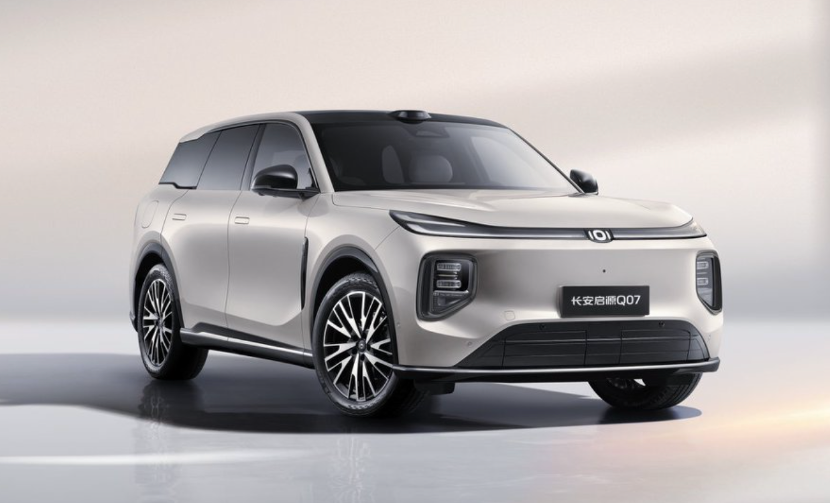
Part of the improvement reflects a better product mix and tighter cost control. Changan sold 452,000 new-energy vehicles in the first half, up 49.1 per cent. It has built three digital new-energy brands: Avatr, Deepal and Qiyuan. Deepal's cumulative global deliveries have exceeded 500,000 units, and Qiyuan Q07 orders topped 31,000 in the first month after launch.
Gross margin also improved, rising from 13.87 per cent a year earlier to 14.58 per cent. The main drag on headline profit was lower government support. Subsidies fell from about $204mn in the first half of 2024 to roughly $64mn in the same period of 2025, a drop of about $140mn.
Cash flow is the harder problem
The more important warning sign is cash flow. Net operating cash flow was negative by about $1.2bn at the end of the reporting period, compared with a positive inflow of roughly $477mn a year earlier.
The article attributes part of the change to Changan's effort to shorten supplier payment periods in line with national policy goals. As a newly elevated central SOE, Changan faces pressure to support smaller upstream suppliers and build a healthier supply-chain ecosystem.
That reform carries a short-term cash cost. Accounts payable and bills payable fell about 31 per cent from the start of the year, and turnover days were reduced by 50 days. The shift may improve supplier resilience, but it places more immediate strain on Changan's own liquidity.
Price wars and technology spending collide
Changan's pressures mirror the wider market. Traditional fuel-vehicle domestic sales reached 981,000 units in July, up 8.4 per cent and rising for a second consecutive month. Across the first seven months, though, fuel-vehicle sales fell 1.8 per cent to 7.676mn units, with a market share of 52.62 per cent.
New-energy vehicles are growing much faster, with industry sales up 38.5 per cent in the first seven months. That transition has increased pressure on both petrol and electric models. Petrol vehicles face heavy discounting, with some joint-venture sedans and SUVs selling below official guide prices. Joint-venture brands have stabilised their market share at 36 per cent in the first seven months, partly by using discounts to stop the slide.
New-energy brands are also cutting prices as raw-material costs fluctuate and capacity exceeds demand in some segments. The result is a market where every manufacturer must spend more on technology while accepting lower transaction prices.
Intelligent driving raises the investment bar
The technology race is moving especially fast in assisted driving. Data cited from China EV100 showed overall L2 assisted-driving penetration in China above 50 per cent, ahead of the 35 to 40 per cent level seen in Europe and the US at the same stage.
In new-energy passenger cars, the installation rate of L2 and higher assisted driving reached 77.8 per cent from January to April 2025, according to passenger-car association data cited in the article. In lower-priced new-energy models below about $22,000, penetration rose 21 percentage points year on year. Even among traditional fuel vehicles, L2 and higher installation exceeded 52 per cent, up 9 percentage points from full-year 2024.
That shift changes the competitive basis of the market. Scale and price still matter, but intelligent-driving systems, smart cockpits and electrified platforms are becoming decisive. Changan must keep investing in those areas while defending margins in a fierce retail market.
A larger group brings both resources and complexity
Changan's transformation is now tied to the newly formed China Changan Automobile Group. The group has integrated 117 branches and subsidiaries, with total assets of about $42.9bn and registered capital of roughly $2.8bn.
That larger structure gives Changan more resources for technology, procurement and strategic coordination. It also creates a heavier management challenge across capital allocation, brand positioning and operational efficiency. The company's new central-SOE status will bring more attention from investors, suppliers and policymakers.
The most difficult allocation question is between fuel vehicles and new-energy vehicles. Petrol cars still accounted for about 66.6 per cent of first-half sales and 75.5 per cent of first-quarter revenue. They remain essential for scale and cash generation. Yet Changan's patent activity shows a clear pivot: invention patents rose from 38 per cent of authorised patents last year to 61 per cent in 2025, with 47 per cent focused on new-energy platforms and 28 per cent on intelligent driving.
Three EV brands need a clearer combined role
Changan's new-energy portfolio covers Qiyuan, Deepal and Avatr, but the brands have not yet formed a fully coordinated system. Qiyuan has gained quick volume through lower pricing, though its technology identity remains less distinct. Deepal's sales grew strongly after price adjustments, but cost pressure remains high. Avatr, positioned higher, is still constrained by brand awareness and product-cycle speed, with monthly sales below 5,000 units.
The strategic question is whether Changan can focus resources strongly enough to turn its new central-SOE status into technical and commercial advantage. It has scale, assets and policy relevance. What remains uncertain is whether it can concentrate those advantages into a sharper electric and intelligent-vehicle strategy.