
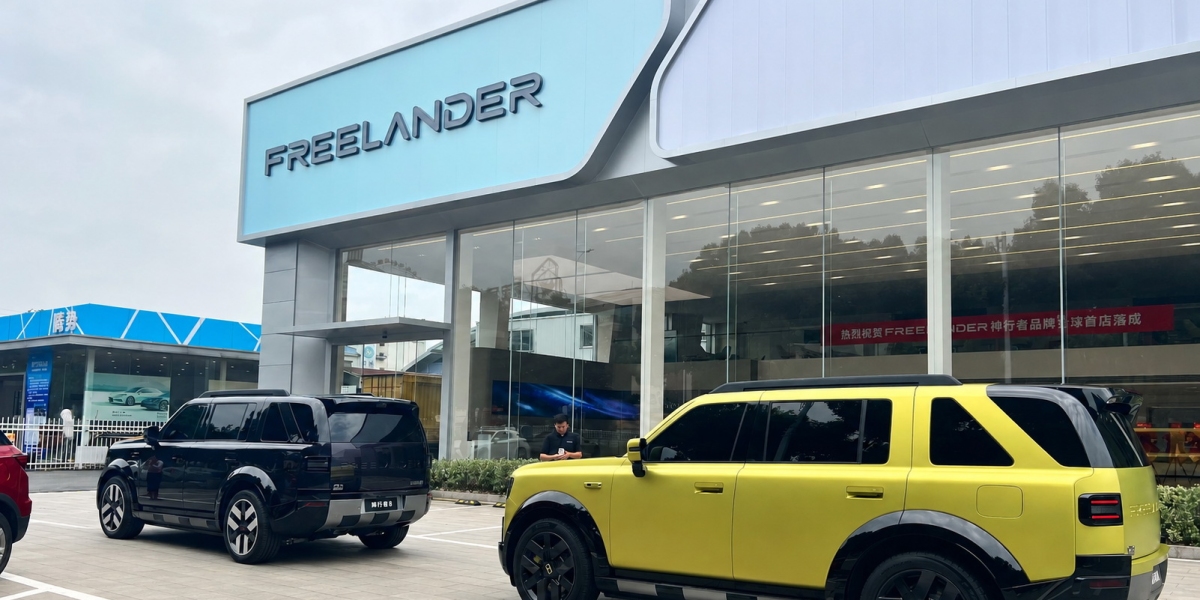
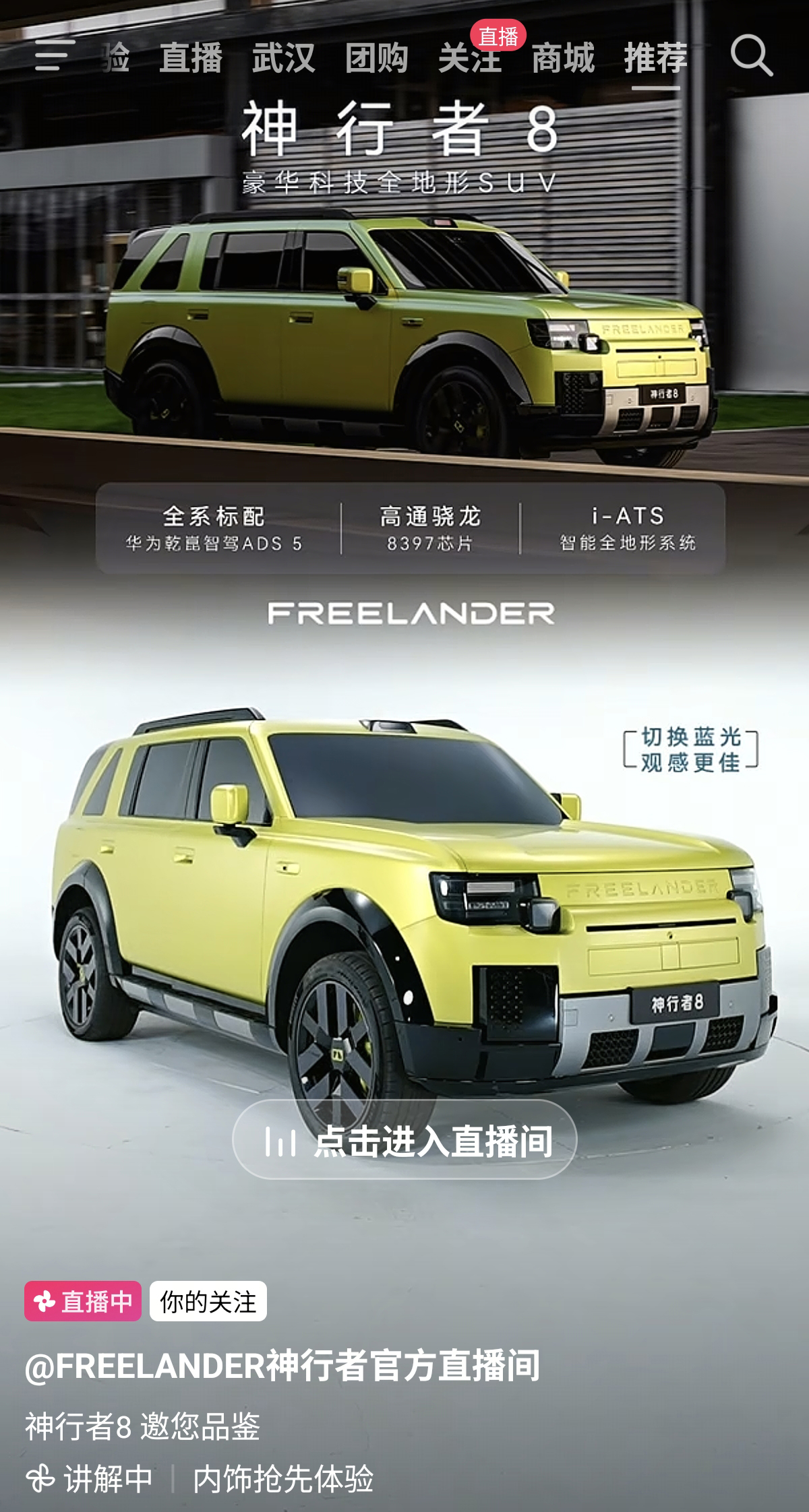
Freelander, the revived vehicle name being developed through the long-running partnership between Chery and Jaguar Land Rover, has begun livestream-based pre-launch promotion for its first model, the Freelander 8.
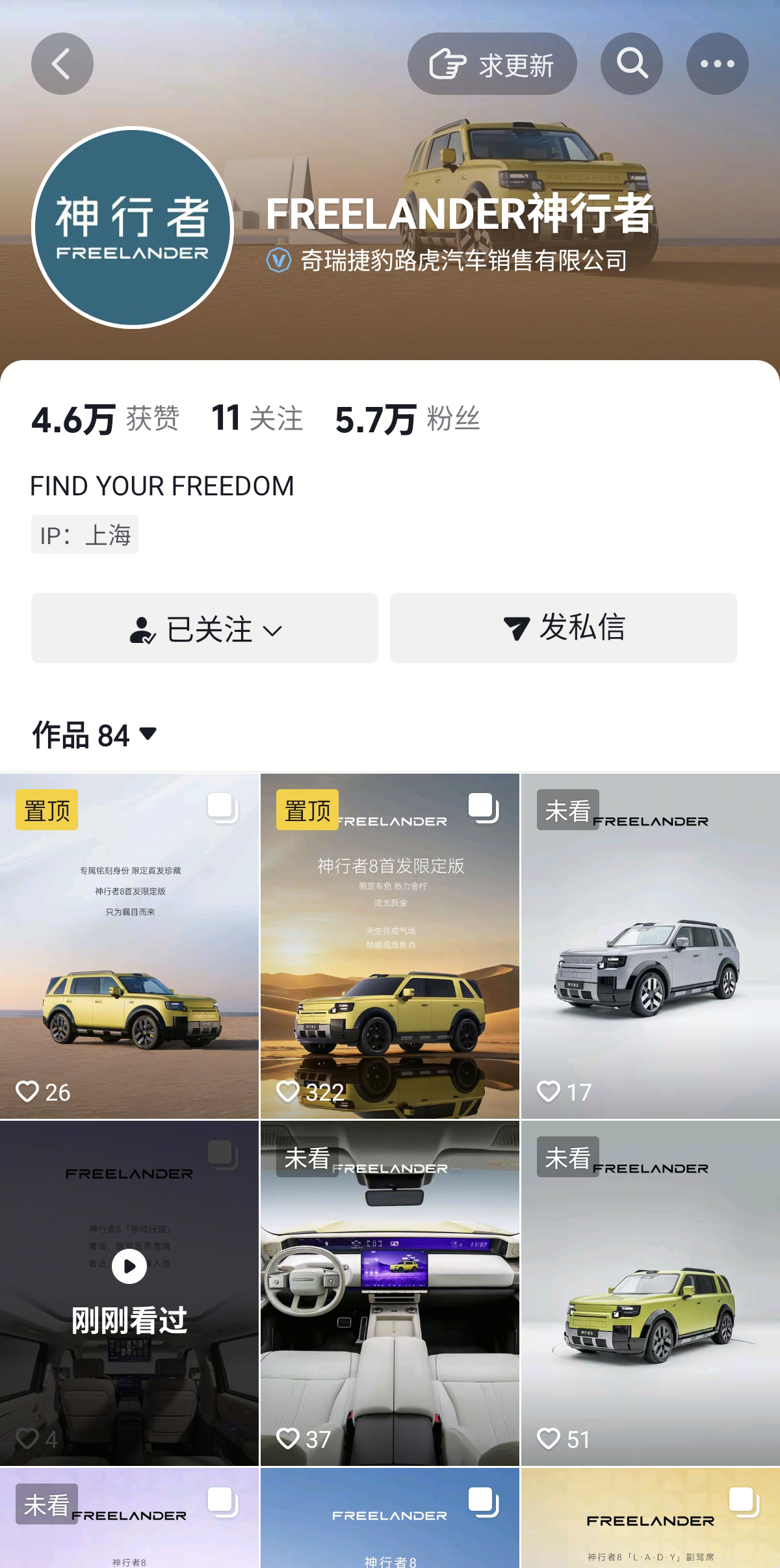
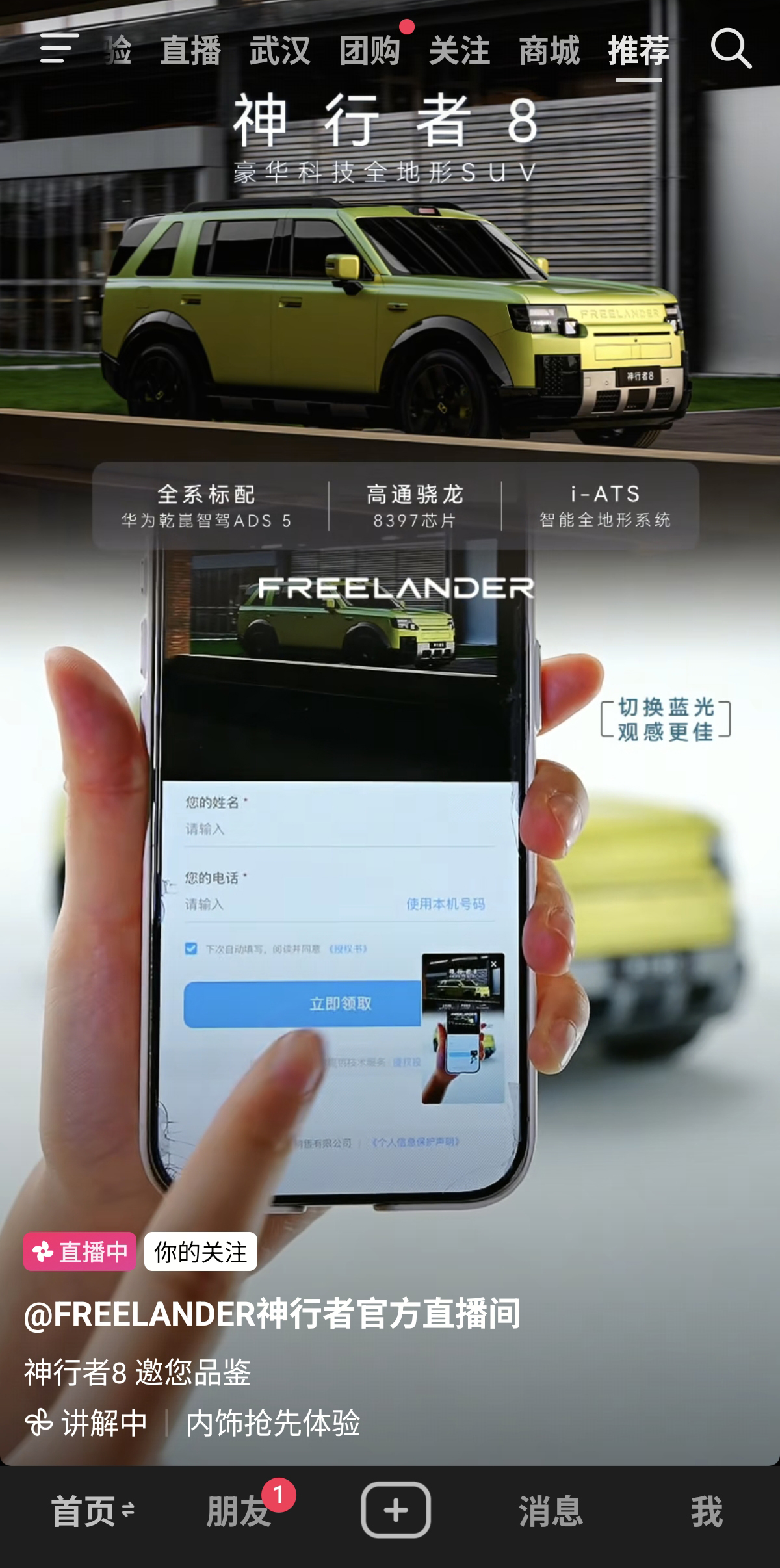
The brand’s official account on Douyin, China’s domestic version of TikTok, has started hosting product broadcasts and accepting test-drive reservations as the first display vehicles arrive at selected dealerships. Images from the campaign show a showroom-led rollout supported by short-form video, livestream demonstrations and direct booking tools, placing digital retail at the centre of the model’s early marketing strategy.
A Familiar Name Returns in a Different Form
The return of the Freelander name is not being presented as a direct recreation of the compact Land Rover sold in earlier decades. Instead, Chery and Jaguar Land Rover are positioning it as a separate technology-focused electrified brand, distinct from Chery’s own model range and from Jaguar Land Rover’s existing Range Rover, Defender, Discovery and Jaguar marques.
That structure gives the venture room to pursue buyers outside the traditional boundaries of either parent company. The official positioning describes Freelander as a “global intelligent electric vehicle brand”, signalling that the badge is intended to carry more than a single model or a nostalgia-led revival.
The Freelander 8 is the first test of that strategy. Its design combines a squared-off SUV profile with a more digitally driven cabin and chassis package, targeting customers who want the visual presence of a large off-roader without abandoning the software, connectivity and electrified powertrains now expected in China’s premium vehicle market.
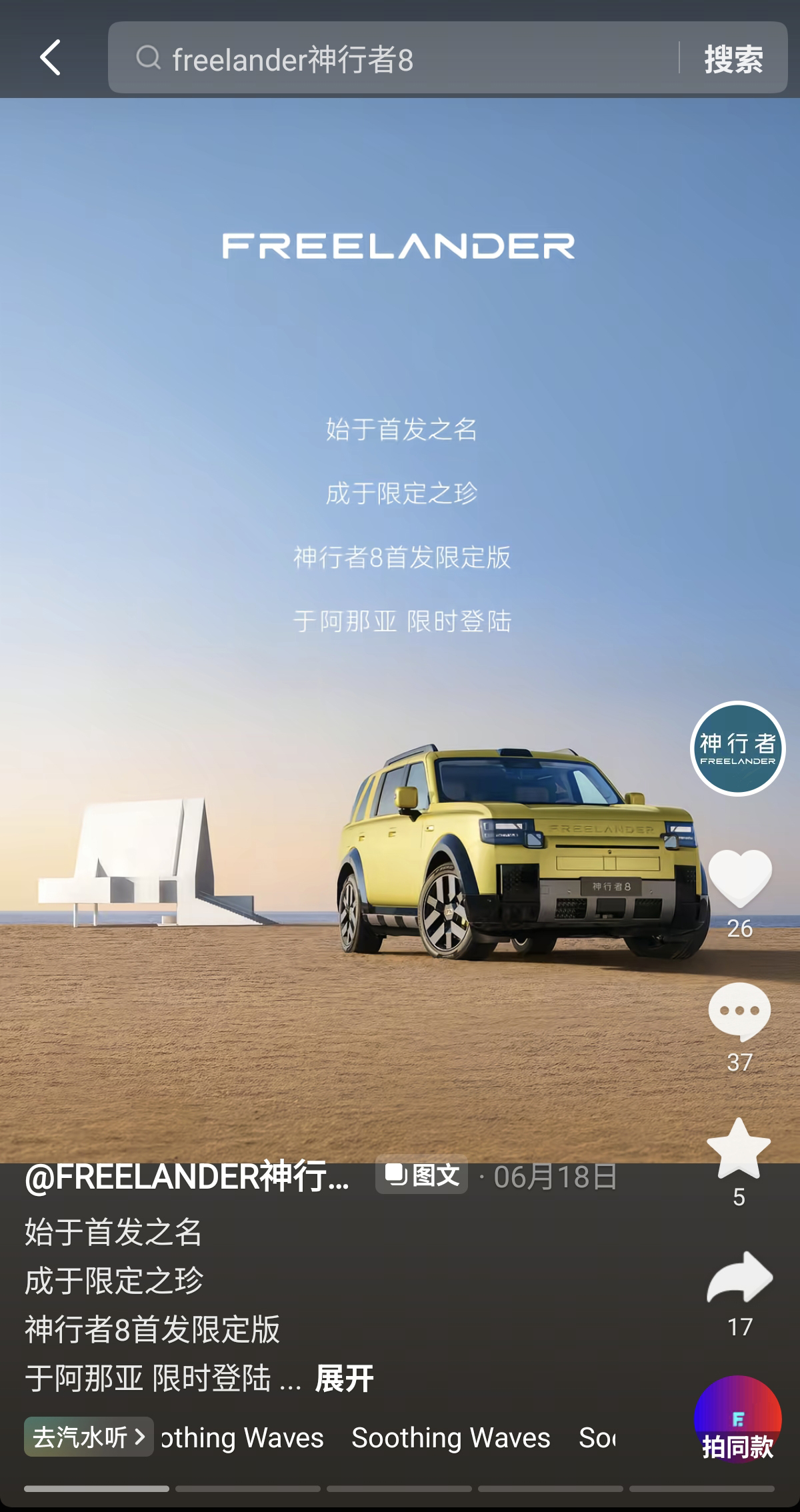
Douyin Becomes the First Showroom
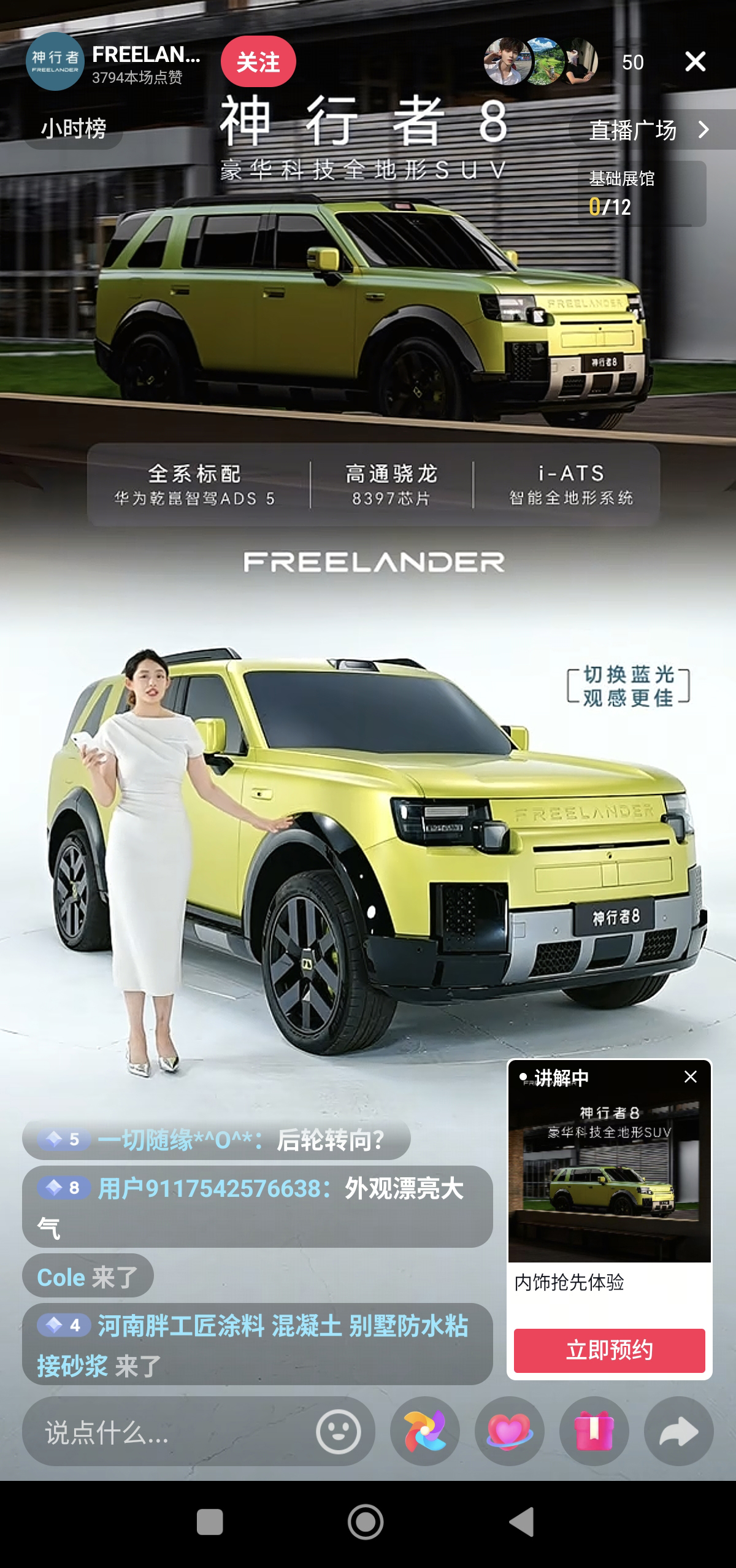
The livestream campaign illustrates how car launches in China are increasingly beginning on mobile screens rather than at motor shows. In the broadcasts, presenters walk viewers through exterior details, cabin functions and reservation options while potential buyers can submit contact information or arrange a test drive without leaving the platform.
This approach allows Freelander to build an audience before full-scale retail deliveries begin. It also gives the joint venture a fast feedback loop, with viewer comments and booking activity providing an early indication of which features attract the most interest.
For an unfamiliar standalone brand carrying a familiar name, that digital reach matters. Freelander must explain not only what the new SUV offers, but also how the revived badge fits between Chery’s fast-expanding technology portfolio and Jaguar Land Rover’s established premium identity.
A Large Six-Seat SUV With Huawei Technology
According to the pre-launch material, the Freelander 8 measures about 5,118 mm in length, 2,050 mm in width and 1,898 mm in height, with a 3,040 mm wheelbase. The cabin uses a 2+2+2 six-seat layout, placing it firmly in the large family-SUV segment rather than the compact territory historically associated with the Freelander name.
The vehicle is being promoted with Huawei’s Qiankun intelligent-driving system, described in the material as ADS 4.1 or ADS 5.0 depending on specification. The campaign also cites a Qualcomm Snapdragon 8397 cockpit chip and an advanced sensor suite, though final market specifications may vary by version and country.
Power is expected to come from a range-extender hybrid system using a 1.5-litre turbocharged engine as a generator. The launch information lists a 60.331 kWh battery and a WLTC-rated electric driving range of 221 km. Chassis equipment is said to include a front mechanical differential lock, a rear electronic limited-slip differential and dual-chamber air suspension.
Taken together, those features suggest the Freelander 8 is being pitched as more than an urban luxury SUV. Its combination of a large battery, off-road hardware and electronically controlled suspension is designed to support long-distance travel and rough-road use while retaining the convenience of electric driving in cities.
A Broader Product Plan Behind the First Model
Freelander’s development plan extends beyond the launch vehicle. The brand has outlined a “1+3+3+X” product strategy and says it intends to introduce six models over the next five years, with a new vehicle planned roughly every six months.
The supporting platform is designed around wheelbases ranging from 2,850 mm to 3,250 mm, allowing the company to cover vehicles from mid-size SUVs to full-size models. Battery-electric, range-extended and plug-in hybrid powertrains are all expected to be offered.
The Middle East is set to become the Freelander 8’s first major overseas destination, followed by a broader international rollout over the next five years. That sequence reflects the model’s size, upright design and off-road positioning, which may be well suited to Gulf markets where large premium SUVs remain in strong demand.
A Test of Chery-JLR’s Global Ambitions
The Freelander project arrives as Chinese carmakers and their international partners search for new ways to combine local technology development with globally recognised branding. Chery brings scale, software integration and electrified-vehicle engineering, while Jaguar Land Rover contributes manufacturing experience, brand history and an established international network.
The challenge will be to make the partnership legible to consumers. Freelander must appear sufficiently independent to build its own identity, while retaining enough of the Land Rover association to justify the revival of the name. It must also compete in a crowded field of large electrified SUVs from Chinese manufacturers offering rapid product cycles and increasingly sophisticated driver-assistance systems.
The current livestream campaign is therefore more than a marketing warm-up. It is the opening stage of a broader experiment in how an Anglo-Chinese automotive venture can launch a new global brand, using China’s digital retail ecosystem as its first proving ground.