
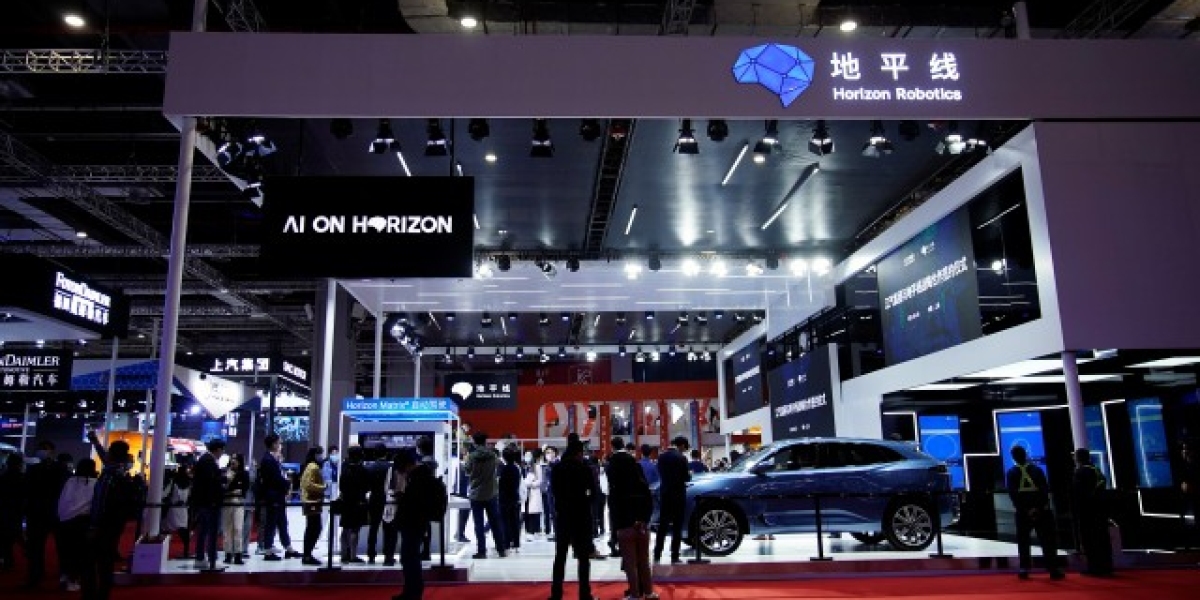
Horizon Robotics appears to have delivered one of the sharpest financial turnarounds in China’s autonomous-driving sector.
The Beijing-based chip and software company expects to report a first-half profit of between $517 million and $591 million, reversing a loss of about $768 million a year earlier.
That headline looks remarkable for a company still investing heavily in automotive artificial intelligence. It also risks giving investors the wrong impression.
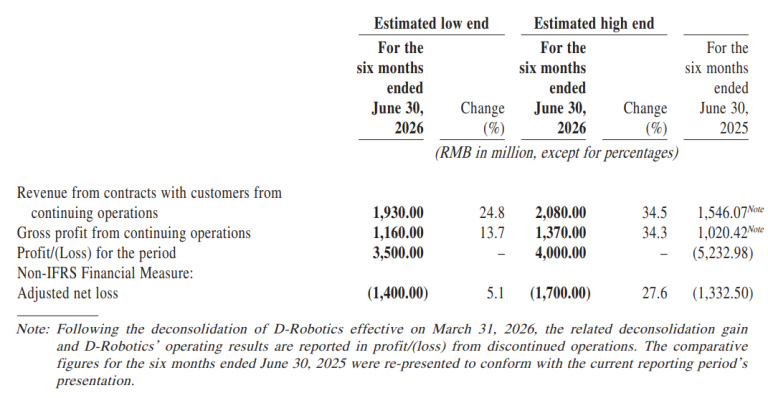
Most of the reported profit did not come from selling more chips, deploying more driver-assistance systems or collecting software licensing fees. It came from a large non-cash accounting gain linked to a convertible loan issued to Volkswagen’s software subsidiary CARIAD. As Horizon Robotics’ share price rose, the fair value of that financial instrument changed, producing a substantial paper gain.
Strip out such items and the picture is far less flattering. Horizon expects an adjusted net loss of between $207 million and $251 million for the first half. The company is expanding, but its core operations remain loss-making.
Volkswagen’s Software Problems Give Horizon an Opening
The relationship with Volkswagen matters because it places Horizon at the centre of the German carmaker’s effort to repair its troubled software strategy in China.
Volkswagen removed almost the entire management board of CARIAD in 2023 after repeated delays and development problems disrupted new-model programmes across the group. The upheaval exposed how difficult it had become for one of the world’s largest carmakers to build a unified software architecture while competing with faster-moving electric-vehicle companies.
CARIAD has since undergone a broader restructuring. German media have reported plans to cut about 2,000 positions from a workforce of more than 6,000, underlining the scale of Volkswagen’s attempt to reset the division.
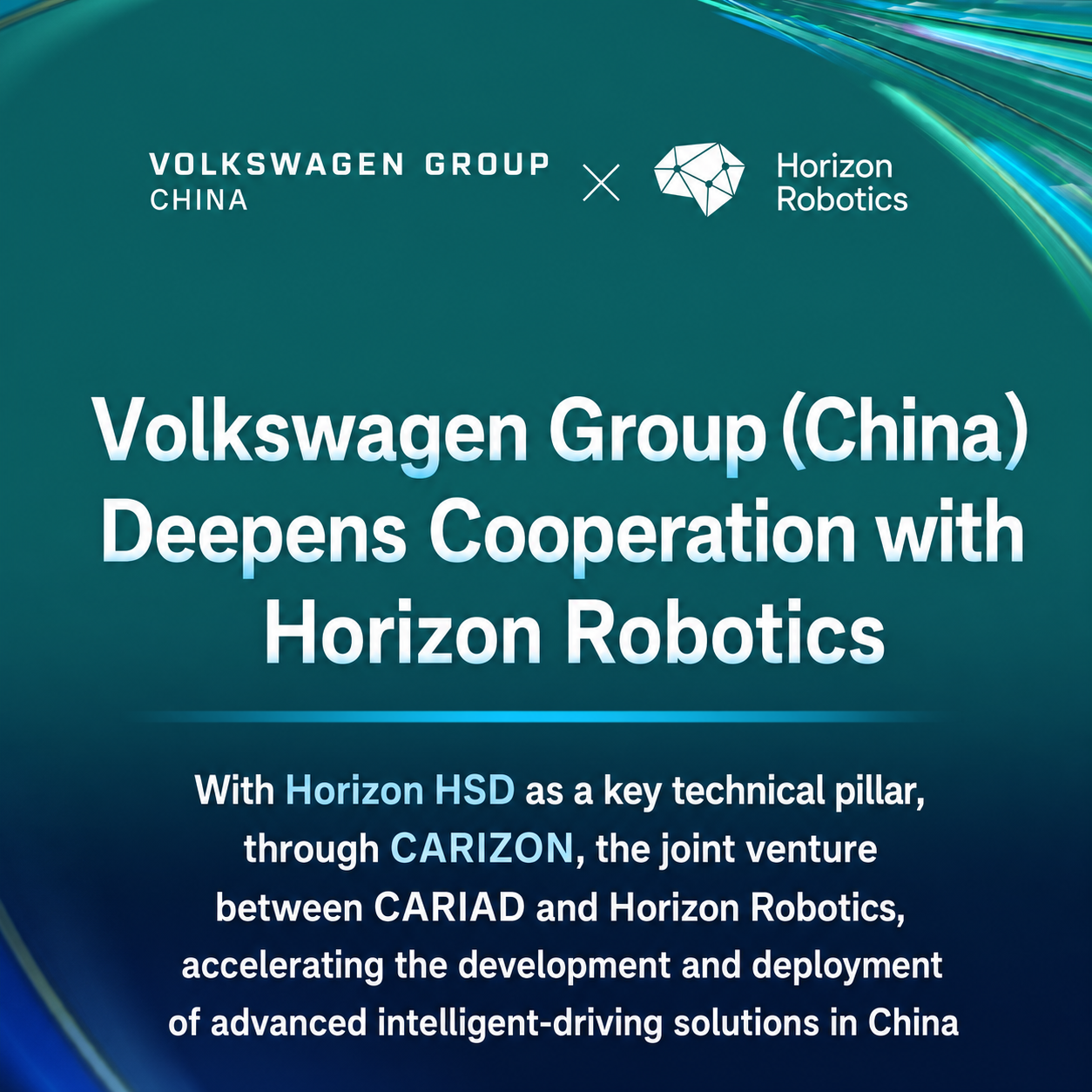
In China, Volkswagen has taken a different route: working with local technology suppliers rather than relying entirely on software developed in Germany. Its joint venture with Horizon Robotics, known as CARIZON, is intended to create a China-specific intelligent-driving platform that can move more quickly from development to mass production.
The cooperation extends beyond adding a single supplier’s chip to a Volkswagen vehicle. Horizon’s foundation AI models are being developed alongside CARIZON’s C7H system-on-chip and the GAIA world-model data platform. Horizon provides the underlying perception and decision-making technology, while CARIZON is expected to turn those capabilities into a unified driving system for Volkswagen’s China portfolio.
The longer-term ambition reaches beyond today’s assisted-driving functions. The partners are laying the technical foundations for more advanced Level 3 and Level 4 systems, with potential applications in both passenger vehicles and robotaxis.
The Revenue Growth Is Real
The accounting gain may dominate the profit line, but Horizon’s operating momentum should not be dismissed. Revenue from continuing operations is expected to reach between $285 million and $307 million in the first half, an increase of roughly 25% to 34.5% from a year earlier.
Gross margin could reach about 66% at the upper end of the company’s forecast. That is a strong level for an automotive technology supplier and reflects Horizon’s attempt to earn revenue from both hardware and intellectual property.
Growth is coming from two main areas. The first is the mass-market deployment of Horizon SuperDrive, or HSD, its full-scenario urban navigation-on-autopilot system. The second is licensing its underlying technology, including its Brain Processing Unit architecture, AI models and development toolchains, to a wider group of customers.
This mixed model distinguishes Horizon from companies that rely mainly on chip shipments. It sells processors, but it also seeks to become an embedded technology platform across the automotive industry. The company has described the approach as combining elements of Arm’s chip-licensing model with Android’s role as a widely adopted software foundation.
HSD Is Horizon’s Most Important Bet
HSD is the clearest test of whether Horizon can convert technical credibility into a durable commercial position. The system entered mass production in November 2025 and has helped bring urban assisted-driving functions into vehicles priced around $22,000, a segment where advanced driver assistance was previously difficult to offer at scale.
Horizon introduced HSD 2.0 at the end of June. The company says the updated system increased intervention-free driving distance by 56% and improved its ability to negotiate complex road interactions by 167%.
Those claims will need to be tested across a larger vehicle fleet, but early customer adoption appears encouraging. Horizon says 77% of buyers offered HSD as an option selected the equipped version, while assisted-driving functions accounted for close to half of the mileage travelled by those users.
A take-up rate of 77% is unusually high in a market where optional driver-assistance packages often struggle to move beyond the 30% to 40% range. It suggests that HSD is not merely being added as a marketing feature. Owners appear to be using it regularly.
Chief executive Yu Kai expects about 20 vehicle models equipped with Horizon’s Journey processors and HSD software to have reached customers by the end of 2026. A broader rollout is planned for 2027.

A Strong Position Is Not Yet a Moat
Horizon has secured an early position in China’s lower-priced intelligent-vehicle market, but the competitive pressure is rising quickly.
Huawei is expanding its own assisted-driving ecosystem across multiple carmakers. Mobileye remains a significant international supplier, while Nvidia is pushing more powerful computing platforms into premium and next-generation vehicles. Chinese manufacturers are also increasingly reluctant to depend on a single technology provider, preferring multi-supplier strategies that improve bargaining power and reduce technical risk.
That leaves Horizon with a difficult task. It must keep improving performance while lowering system costs, supporting more vehicle platforms and funding heavy research and development. Its alliance with Volkswagen gives it scale and international validation, but it does not guarantee long-term pricing power.
The first-half results therefore deserve neither applause nor dismissal. The paper profit says little about the health of the underlying business. The more meaningful indicators are rising revenue, strong gross margins, HSD adoption and the pace at which new models enter production.
Horizon is gaining ground in one of the most important segments of China’s automotive technology market. Whether that position becomes a defensible platform business will be decided by vehicle deliveries and real-world usage over the next two years, not by a one-off accounting gain.