
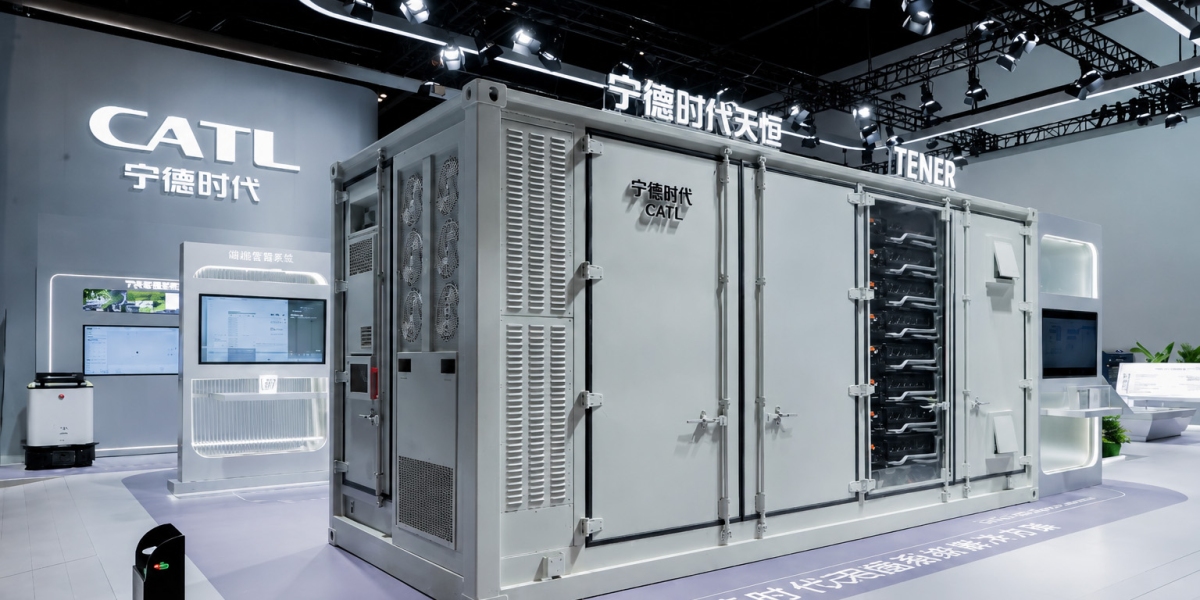
CATL earned more in the first half of 2026 than eight of China’s largest automotive groups combined, highlighting how the centre of profitability in the country’s electric-vehicle industry is shifting away from carmakers and towards the companies that supply their most critical technology.
The world’s largest battery manufacturer reported net profit attributable to shareholders of about $6.39 billion for the six months to June, an increase of 41.98% from a year earlier. Revenue rose 54.8% to roughly $40.88 billion, supported by strong growth in both electric-vehicle batteries and energy-storage systems.
That equates to an average daily profit of about $35 million — a level of earnings that stands in sharp contrast with the financial pressure facing much of China’s car industry.
One Battery Supplier, Eight Automotive Groups
Based on publicly available results and earnings estimates cited in the source material, BYD, Geely, Chery, SAIC Motor, Great Wall Motor, Changan Automobile, Seres and GAC Group generated combined attributable net profit of approximately $4.78 billion during the same period.
CATL therefore earned about $1.59 billion more than the eight automotive groups combined. The comparison is particularly striking because those companies collectively sell millions of vehicles across China and overseas, while CATL operates primarily as a supplier to the industry.
The total was depressed by weaker performances at some manufacturers. GAC warned of a first-half loss exceeding about $590 million, while Seres was reported to have moved from profit into a substantial loss. Even excluding the loss-making companies, the combined earnings of the remaining six groups were still estimated to be below CATL’s profit.
The figures underline an uncomfortable reality for automakers: vehicle sales volumes are expanding, but a significant share of the industry’s economic value is being captured by suppliers controlling batteries, power electronics, semiconductors and software.
China’s Price War Is Squeezing Carmakers
China’s passenger-car market remains locked in an aggressive price war as established manufacturers, electric-vehicle start-ups and foreign joint ventures compete for market share. Discounts have helped sustain sales, but they have also eroded margins across much of the sector.
The average profit margin in China’s passenger-vehicle manufacturing industry has fallen to about 1.5%, according to the source material. Carmakers are contending with lower transaction prices while spending heavily on product launches, intelligent-driving systems, retail networks and overseas expansion.
For many brands, higher volumes no longer translate into proportionately higher earnings. The need to refresh model line-ups more quickly has shortened vehicle development cycles and increased capital requirements, while competition has made it harder to pass rising costs on to consumers.
CATL occupies a different position. Batteries remain one of the largest cost components in an electric vehicle, giving leading suppliers considerable influence over technology, production scale and purchasing economics. CATL’s broad customer base also limits its dependence on the fortunes of any single carmaker.
Energy Storage Becomes CATL’s Second Engine
CATL’s power-battery division generated first-half revenue of approximately $28.36 billion, up 46.02% year on year. The company supplies most of China’s leading electric-vehicle manufacturers as well as international groups including BMW, Volkswagen, Stellantis and Toyota.
Its fastest growth came from energy storage. Revenue from storage-battery systems climbed 87.54% to about $7.86 billion, reflecting rising investment in renewable-energy infrastructure, electricity grids and data centres.
The expansion of energy storage is strategically important because it reduces CATL’s exposure to the increasingly volatile automotive market. Demand for grid-scale batteries is being driven by the need to balance intermittent wind and solar generation, while the rapid build-out of artificial-intelligence infrastructure is increasing pressure on power systems in several major markets.
CATL’s scale gives it an advantage in both sectors. The company held an estimated 40.2% share of the global electric-vehicle battery market during the first five months of 2026 and ranked first globally in energy-storage battery shipments during the first half.
A Balance Sheet Few Carmakers Can Match
CATL also has financial resources that many vehicle manufacturers would struggle to replicate. The company holds more than $50 billion in cash and announced plans to repurchase and cancel between approximately $3 billion and $5.9 billion of shares, alongside a substantial cash dividend.
That balance-sheet strength allows it to fund overseas factories, battery-swapping infrastructure, new chemistries and supply-chain investments without relying heavily on short-term vehicle-market conditions.
Automakers face a more difficult allocation problem. They must continue investing in electrification, intelligent driving and international production while protecting sales in a market where price reductions can quickly become permanent. Those investments are essential for long-term competitiveness, but they place further pressure on near-term profitability.
The EV Value Chain Is Being Redrawn
The divergence between CATL and China’s carmakers is unlikely to disappear quickly. Competition in the vehicle market is intensifying as domestic brands add capacity, foreign manufacturers defend their positions and weaker companies fight to remain relevant.
Battery demand, by comparison, is supported by two large growth markets: electric transport and stationary energy storage. The leading suppliers also benefit from technological barriers, purchasing scale, manufacturing expertise and long-term customer relationships that are difficult for smaller competitors to reproduce.
CATL’s first-half performance does not mean automakers are becoming strategically unimportant. The strongest vehicle groups still control brands, distribution, customer relationships and product design. But the earnings gap shows that market power within the electric-vehicle industry is no longer concentrated mainly with the companies assembling and selling cars.
As the global auto sector becomes more dependent on batteries and energy systems, the suppliers controlling those technologies are taking a larger share of the profits. CATL’s $6.39 billion first-half result offers one of the clearest signs yet that the economics of the automotive industry are being rewritten.