
Jeep is once again trying to find its way back to China. But this time, it is not returning to a market where a vehicle could sell simply because it carried the Jeep badge.
On 15 May, a signing ceremony worth more than US$1.11bn put a familiar name back on the Chinese automotive chessboard. Jeep, long regarded as a totem of the off-road world, is preparing for what many in China are calling its “third entry”.
On that day in Wuhan, Dongfeng Motor and Stellantis formally signed a strategic co-operation agreement. Together with Yangtze River Industrial Investment Group, Wuhan Financial Holdings Group, Wuhan Economic and Technological Development Zone Industrial Investment Group and other partners, the six parties will inject more than US$1.11bn into Dongfeng Peugeot-Citroën Automobile, known as DPCA, to push the company towards smart, international and green transformation. Under the plan, DPCA’s Wuhan plant will begin production in 2027 of two new-energy off-road models under the Jeep brand, with vehicles sold both in China and overseas.

This matters because it will be Jeep’s third attempt at local production in China. From Beijing Jeep in 1983, which wrote the first page of China’s automotive joint-venture history, to GAC Fiat Chrysler, founded in 2010 and eventually brought down after a decade of turbulence, and now to its attempted revival through DPCA, Jeep’s China story has resembled a homecoming with no clear destination. Behind it this time is Stellantis, the world’s fourth-largest carmaker, holder of 14 core automotive brands, but a group whose record in China has been close to a wipeout. Chinese internet users have sometimes mocked it as a “losers’ alliance”.
Can an US$1.11bn wager reignite the off-road icon? Are Jeep and its troubled alliance here to stage a turnaround, or merely to make up the numbers once again?
01. Two Failed Entries into China
Jeep’s story in China is, in many ways, a history of repeated falls and attempted recoveries. Each fall, moreover, was far from graceful.
The first chapter began in 1983. On 5 May that year, Beijing Automobile Works and American Motors Corporation established Beijing Jeep Corporation, China’s first complete-vehicle joint venture. From that point on, the Chinese word for Jeep became almost synonymous with off-road vehicles. In an era when even private cars were scarce, the Jeep-badged Cherokee and the BJ212 became, for many Chinese men, early symbols of freedom and distance.
But the good times did not last. Jeep’s foreign shareholder went through more than a decade of mergers and acquisitions in the United States. American Motors was swallowed by Chrysler, and Chrysler later merged with Daimler-Benz. Beijing Jeep’s foreign backer kept changing. Product updates slowed, management responsibilities became blurred, and the once high-flying company fell into prolonged losses around the turn of the century. In 2003, it was restructured and liquidated, leaving the stage of history.
The second opportunity came around 2015, when GAC Fiat Chrysler brought Jeep back to China, betting on a fast-expanding SUV market. With a sharply defined brand image and the slogan “not every SUV is called Jeep”, locally produced Jeep sales once exceeded 200,000 units a year, making the brand one of the brightest dark horses in China’s car market.
Yet behind the impressive numbers, cracks were already forming. Product renewal was slow. The shift to electrification lagged badly. More damaging still, quality problems repeatedly erupted. In 2018, China Central Television’s annual consumer-rights programme exposed serious oil-burning problems in models including the Jeep Cherokee, causing consumer confidence to collapse almost overnight.
By 2022, the public dispute between the Chinese and foreign shareholders over equity control had torn away the remaining cover. Stellantis unilaterally announced a plan to raise its stake to 75%, while GAC Group quickly responded that the release had not been approved by its side. In October that year, GAC Fiat Chrysler’s operations stalled and all models were withdrawn from sale.
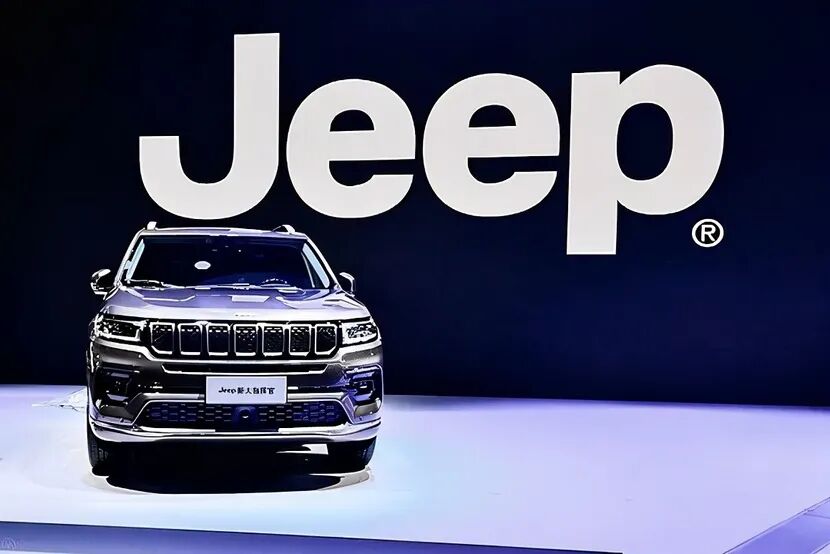
Two defeats revealed more than weak product competitiveness and poor local operations. They exposed a harsher truth: in China, the era in which a foreign brand halo and combustion-engine technology could deliver easy profits has gone. Jeep happened to stand right on the threshold of that change.
02. The Years Jeep Missed
Jeep exited China in 2022 and plans to return in 2027. The gap is four full years. Those four years, however, were precisely the period in which China’s off-road market was remade.
First, consider the size of the market. According to the Off-road Vehicle Market and Technology Development Trend White Paper jointly released by China Automotive Information Technology and Tsinghua University, China’s off-road vehicle sales exceeded 1.3m units in 2025, up 25.18% year on year and far ahead of the overall market’s growth rate. Sales are expected to pass 1.5m units in 2026. Off-roading, once a niche segment for a small group of enthusiasts, has grown into a fiercely contested market.
But although the cake has grown, much of it is already on the plates of domestic brands. Data show that independent Chinese brands hold more than 68% of the new-energy hard-core off-road segment, and as much as 84.2% of the wider hard-core off-road market. The penetration rate of new-energy off-road vehicles has exceeded 41%.
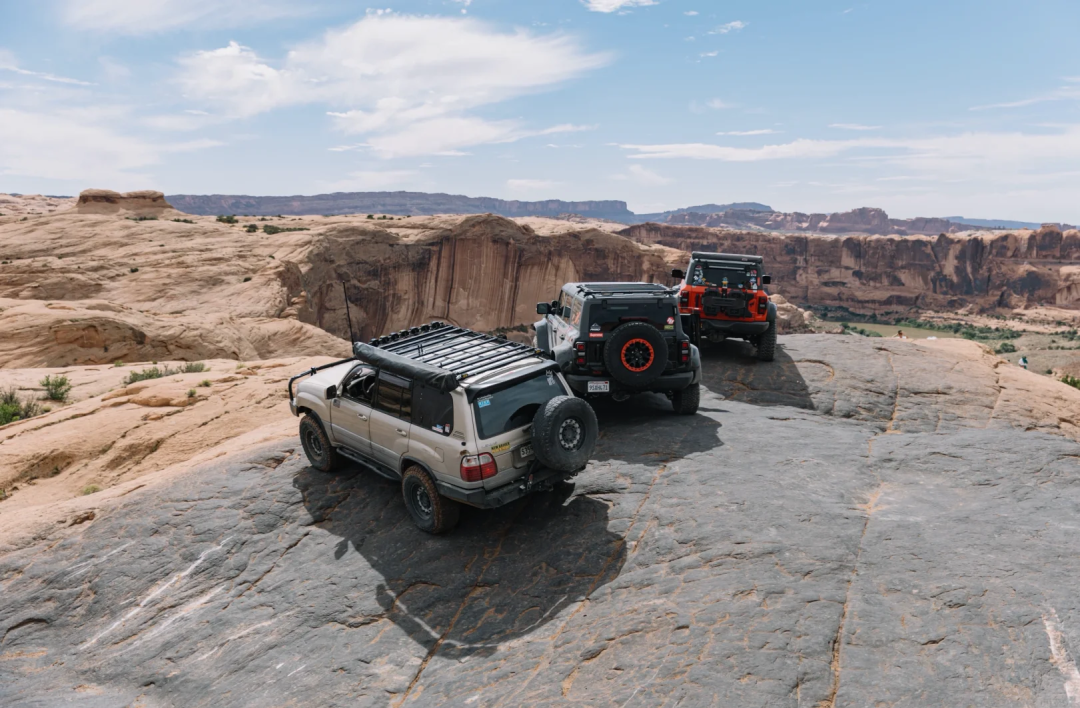
In this reshaped market, Chinese brands have used technology and product strength to eat into premium territory long cultivated by foreign carmakers. Great Wall Motor’s Tank brand sits firmly in first place with annual sales of 232,700 units and a market share above 40%. BYD’s Fangchengbao recorded 234,600 units for the year, up 316.1% year on year, making it the fastest-growing challenger. Among the top 10 hard-core SUV models by sales in 2025, only one foreign model, the Toyota Prado, barely made the list, ranking eighth with annual sales of about 21,900 units.
Electrification has not only reshaped the market. It has rewritten the rules of off-roading. The old “fuel tigers”, which could easily consume more than ten litres per 100km, have been softened by electric-drive systems. Complex terrain once reserved for experienced drivers can now be handled through intelligent electric four-wheel drive and electronic differential locks. Off-roading has moved from a hard-core hobby to something closer to everyday consumption. Jeep’s once-prized four-wheel-drive moat is being rapidly filled in by Chinese brands using electric technology.
During Jeep’s four-year absence, its own position in China deteriorated further. In 2025, Jeep’s terminal registrations in China were only 38,200 units, just 17.18% of its 2017 peak of 222,300 units. By March 2026, sales had fallen another 35% year on year. Even discounts of up to US$5,556 across the Wrangler range could not stop the decline. Over the past four years, imported sales channels have failed to save Jeep. Instead, the brand’s presence in the minds of Chinese consumers has become increasingly faint.
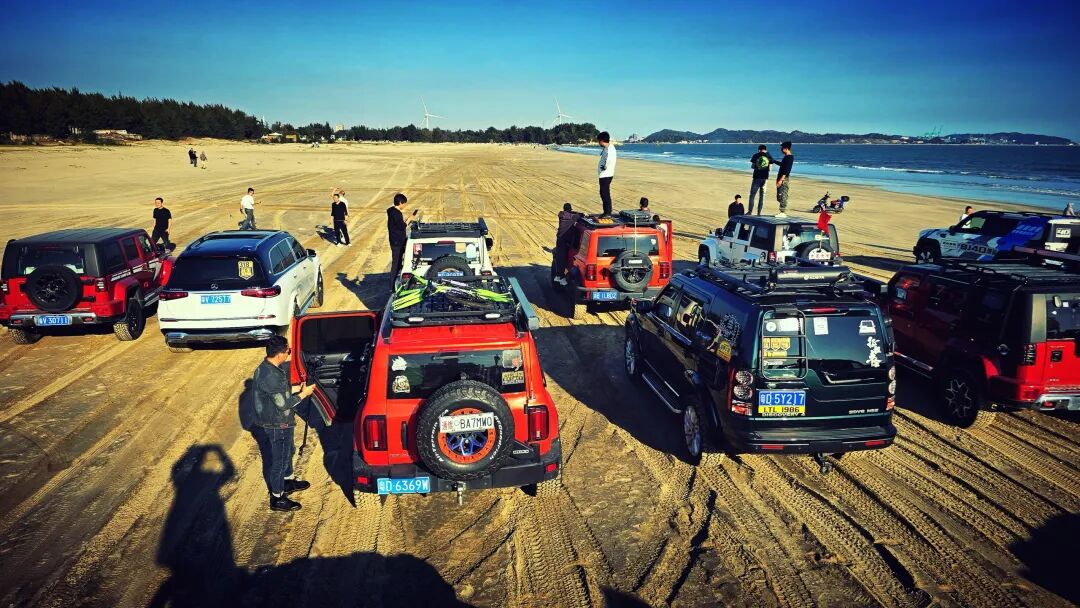
The battlefield Jeep is about to face is one surrounded by Tank, Fangchengbao and Beijing Off-road. In the key price range of 200,000 to US$55,556, Chinese brands have already built what looks like an iron wall. Price wars, technology wars and service competition are woven into a dense net. Any new or returning brand that wants to cut an opening will have to pay a high price. For Jeep, nostalgia for an “off-road icon” will no longer be enough.
03. The Beginning of a Reverse Joint Venture
The most notable aspect of Jeep’s return is the fundamental change in the partnership model. This is no longer the old formula in which the foreign side provides products and technology while the Chinese side provides the market and production base. Instead, it is a “reverse joint venture” in which the roles have been turned around. A closer look at the deal shows that Chinese capital accounts for about 87.5% of the US$1.11bn injection, while Stellantis is contributing only about €130m, or roughly US$0.14bn.
Why is this such a favourable arrangement for Stellantis? Because the group is going through its most difficult period in nearly a decade. Its 2025 financial report showed a net loss of €22.332bn, equivalent to about US$25.08bn, the worst result since the company was formed. Under such heavy financial pressure, using €130m to unlock US$1.11bn of Chinese resources and open a path back into the world’s largest new-energy vehicle market is a calculation that appears hard to reject.
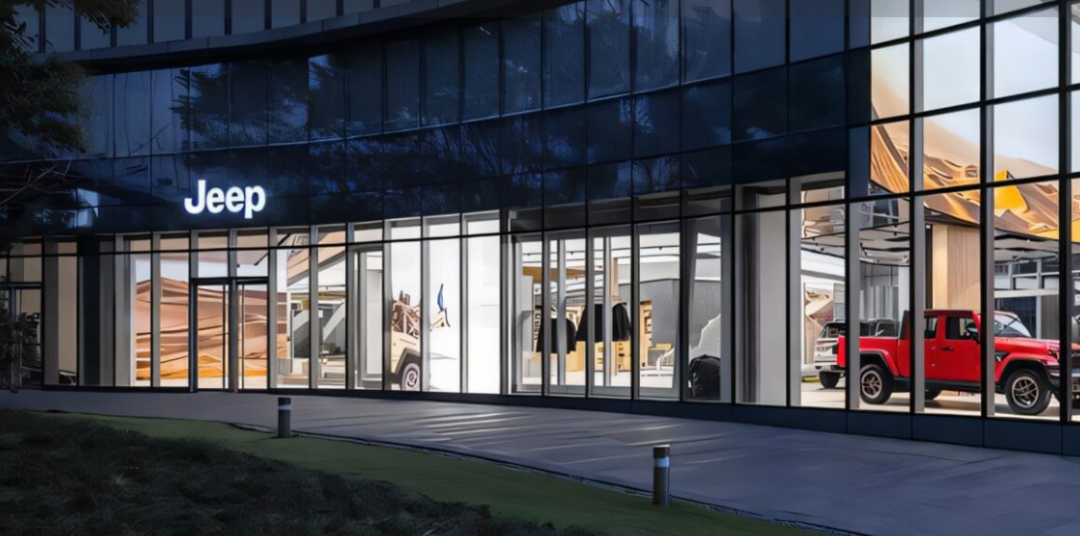
Under this partnership, Jeep’s new-energy models will be based on Dongfeng Mengshi Technology’s self-developed M-TECH electric off-road architecture. They will receive a full set of core technologies, including the MORA skateboard off-road platform, electric powertrain systems, smart cockpit and driver-assistance functions. Chinese carmakers were once the passive recipients in a “market for technology” bargain. This time, Chinese technology has become the supplier in a joint venture, providing core capabilities back to a foreign brand.
For DPCA, the US$1.11bn injection is also a timely lifeline. Years of low capacity utilisation have been one of the company’s most painful sources of financial bleeding. Its Chengdu plant has a registered annual capacity of 240,000 vehicles, but actual yearly output has been only 23,900 units, leaving much of the production line idle. Introducing Jeep’s new-energy models for export is aimed directly at finding work for idle capacity at the Wuhan plant and getting production lines moving again. For Dongfeng, using its own technology to feed back into the joint-venture system is also an attempt to explore a new model of Chinese-foreign co-operation.
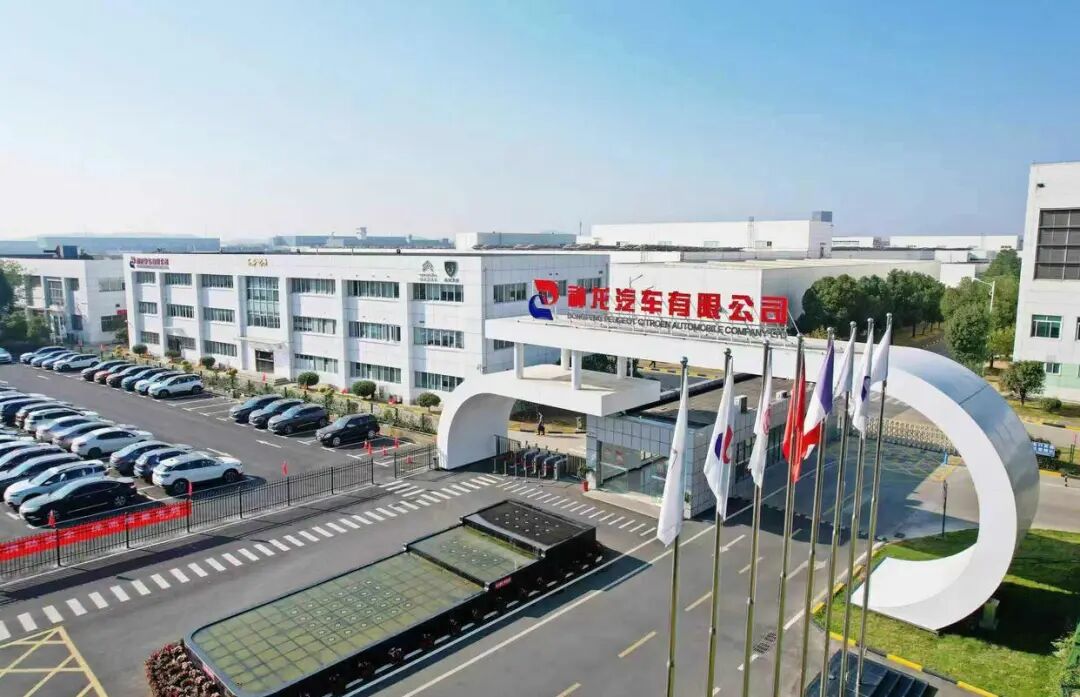
Some argue that Jeep’s third entry is Stellantis’s attempt to bottom-fish in China: to revive DPCA’s idle capacity at low cost while hitching a ride on China’s new-energy technology. Others see it as a more balanced case of mutual need: DPCA needs orders to survive, while Jeep needs a platform to return to the game.
Whichever interpretation one chooses, this third entry is unlike either of the first two. The roles have changed, the logic has shifted and the bargaining power has moved. As the off-road icon returns to this market, it will no longer face a China where a Jeep badge alone was enough to sell a vehicle. The question is whether consumers will still pay for sentiment.
The answer may lie in Stellantis’s telling phrase: “sharing the technology dividends with Chinese partners.” This time, whether Jeep can be revived may depend less on Jeep itself than on how much real vitality Chinese technology and the Chinese model can inject into a former off-road champion.