
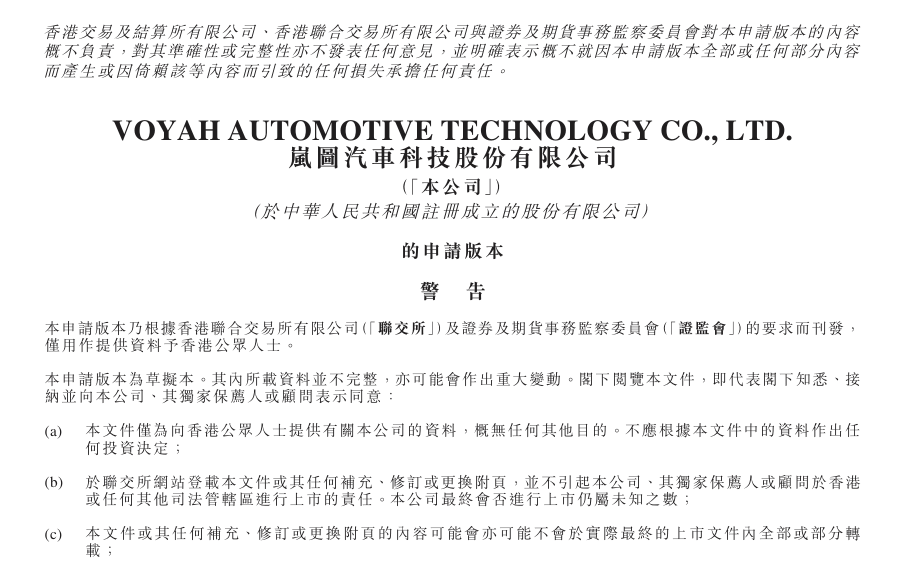
Voyah has formally submitted its listing application to the Hong Kong Stock Exchange, only 40 days after Dongfeng Group disclosed the listing plan.
A fast IPO timetable
The timing places it among a wave of Chinese new-energy automakers seeking Hong Kong capital-market access.
The headline numbers in the prospectus look strong. Sales rose from 19,400 vehicles in 2022 to 80,100 in 2024, with a two-year compound annual growth rate above 100 per cent. Gross margin climbed from 8.3 per cent in 2022 to 21.3 per cent in the first seven months of 2025.
Those figures explain why Voyah wants to enter the market now. They do not answer the harder question investors will ask: whether the company has a sustainable business model beyond recent margin improvement and short-term profitability.
The profit question
In the first seven months of 2025, Voyah reported revenue of about $2.2 billion, up 90.2 per cent from about $1.2 billion a year earlier. Net profit reached about $60 million, reversing losses of about $214 million in 2022, $208 million in 2023 and $126 million in 2024.
The gross-margin improvement was also striking. It rose from 8.3 per cent in 2022 to 21 per cent in 2024 and 21.3 per cent in the first seven months of 2025. The Dreamer MPV was a major contributor, with 47,000 deliveries in 2024.
But questions remain about profit quality. A Morgan Stanley report cited in the article said Voyah received about $89 million in government subsidies in the first seven months of 2025, more than its reported net profit. The bank estimated that, after capitalised expenses and tax adjustments, the company may have had an underlying net loss of about $278 million for the period.
That means the headline profit may not fully reflect operating strength. The prospectus also shows R&D spending of about $166 million in the first seven months of 2025, equal to 7.6 per cent of revenue, while sales expenses reached about $368 million.
Dongfeng's support also helped the balance sheet. On July 16, Dongfeng Group and Dongfeng Asset Management signed a capital increase agreement with Voyah and other shareholders. Dongfeng Asset Management agreed to invest about $139 million. That contributed to Voyah's debt ratio falling to 67 per cent by the end of July, meaning the improvement did not come only from internal cash generation.
The Dreamer dependence
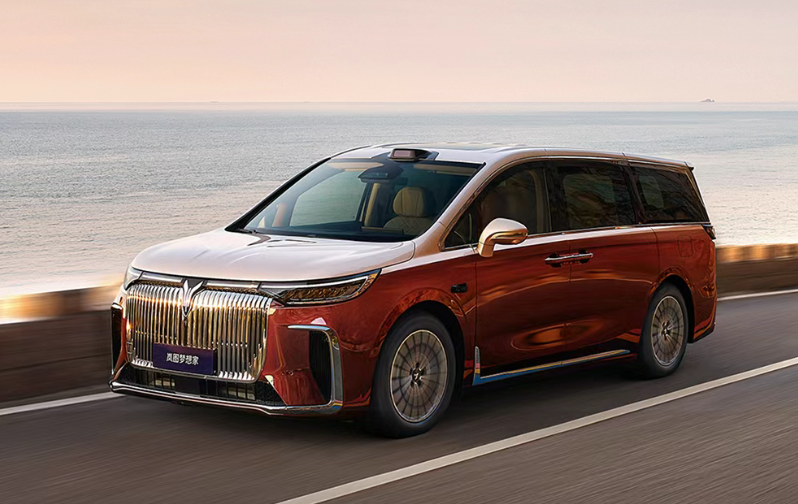
Voyah's product structure is another major issue. The Dreamer MPV sold 47,000 units in 2024, equal to 58.7 per cent of the company's annual volume. In the first seven months of 2025, its share rose above 60 per cent.
That leaves Voyah heavily dependent on one model and one body style. The MPV market is attractive but limited, and competition is intensifying. GAC Trumpchi M8 and Buick GL8 remain established players, Denza D9 has passed 10,000 monthly sales, and Li Auto MEGA has entered the high-end market.
Dreamer's recent success also owes much to Huawei technology. Huawei's assisted-driving and smart-cabin systems gave the model a useful technology endorsement. As Huawei deepens cooperation with BAIC, Changan and other automakers, that advantage may become less distinctive.
Voyah has tried to broaden its base with the FREE+. The company set a target of more than 20,000 monthly sales for the model, but after launching in July 2025, it sold 5,239 units in August. That placed it among the top three mid-to-large SUVs in the roughly $28,000 to $42,000 segment, but still far below the ambition.
The Zhui Guang electric sedan has struggled more severely. It sold fewer than 5,000 units in 2024 and only 1,768 in the first seven months of 2025, with monthly sales often between 200 and 600 over the past year.
Marketing outweighs R&D
Voyah's spending structure also raises concerns. In the first seven months of 2025, R&D spending accounted for 7.6 per cent of revenue, around an industry-average level and below some leading technology-focused EV makers.
Sales expenses were far higher. From 2022 to 2024, Voyah's sales expenses were about $256 million, $398 million and $521 million respectively. In the first seven months of 2025, they reached about $368 million. The sales-expense ratio has stayed around 20 per cent, nearly three times the R&D ratio.
In a market increasingly defined by intelligent driving, software, battery systems and user experience, that imbalance may become a constraint. Investors are likely to ask whether Voyah is buying growth through marketing rather than building enough technical depth.
A difficult listing route
The market backdrop is also unfavourable. Chery's recent Hong Kong listing has attracted significant investor attention, while Geely has announced a share buyback plan that some investors see as preparation for further capital-market moves. Hong Kong-listed new-energy automakers have also struggled, with several trading below issue price.
Voyah's chosen listing method adds another layer of complexity. On August 22, Dongfeng Group announced that Voyah would list by introduction while Dongfeng Group would privatise and delist from Hong Kong.
Unlike a conventional IPO, a listing by introduction issues no new shares and raises no fresh capital. It makes existing shares publicly tradable. Under the plan, each Dongfeng Group H share would receive 0.3552608 Voyah H shares and HK$6.68 in cash, after which Dongfeng Group would delist.
Analysts cited in the article argue that the structure reflects Dongfeng Group's long-standing valuation discount. As of July 31, 2025, Dongfeng Group's market value was about $5.0 billion and its price-to-book ratio only 0.25 times, limiting financing capacity. The transaction is designed to remove a holding-company discount and unlock value in Voyah.
For Voyah, the listing by introduction may provide a Hong Kong-listed identity and create a path for later financing. But it also brings risks. It does not provide immediate cash, and liquidity may be weak because no new investors are introduced at listing. If distributed shareholders sell quickly, the share price could come under pressure.
That matters because Voyah still needs capital. Its asset-liability ratio was 67.2 per cent, and future capacity expansion, product development and technology investment will require funding. If post-listing refinancing is delayed, pressure could rise.
What investors will test
Voyah's capital-market story is moving faster than its business fundamentals. Its margins and short-term profit have improved, but subsidy reliance, a concentrated product structure, high sales spending and a non-fundraising listing route all require scrutiny.
Hong Kong investors will not look only at the gross-margin line. They will ask whether Voyah can reduce dependence on Dreamer, build durable technology advantages, improve profit quality and raise capital on reasonable terms after listing.
For now, the company has shown progress. It has not yet shown a fully convincing answer to the sustainability question.