
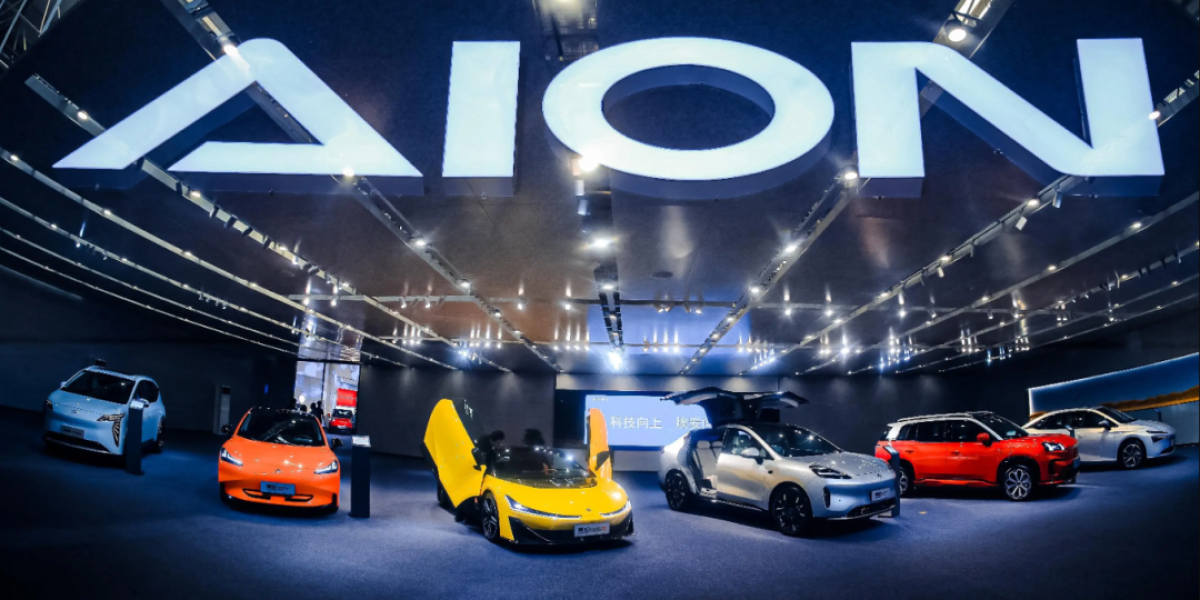
GAC Aion has recently faced online allegations about valuation decline, employee share purchases, delayed listing plans and management cash-outs.
Rumours add pressure to a brand already under strain
GAC responded on June 16 by calling the claims malicious rumours, saying Aion's operations were normal, its equity-incentive plan was proceeding lawfully and its IPO plan had not been rejected or abandoned. Aion's legal department said it had reported the matter to police, and former general manager Gu Huinan denied claims of executive cashing-out.
The controversy comes at a difficult time. Aion is already dealing with a tougher sales environment, brand-image pressure and the limits of its earlier reliance on ride-hailing demand.
The article's central argument is that Aion's opportunity is not to recover lost ground through another round of discounts, but to build new sources of growth.
Aion must escape the price-war trap
Aion's earlier growth was strongly tied to the ride-hailing market. In 2023, supported by models such as Aion S and Aion Y, the brand delivered 480,000 vehicles, up 77.8 per cent. Of about 850,000 new taxi and ride-hailing vehicles sold that year, Aion supplied roughly 220,000, equal to about 45 per cent of its own annual sales and 25 per cent of the total new ride-hailing market.
That reliance has become a risk. In 2025, transport authorities in several Chinese cities issued warnings about ride-hailing saturation, after earlier warnings in places such as Guangzhou, Shenzhen and Hangzhou. Demand changes have affected Aion S, one of the brand's core models.
Price pressure has also reduced profitability. In the first half of 2023, Aion's average vehicle price was about $15,000, down around $6,000 from the first half of 2022. BYD's average price in 2023 was about $22,000, leaving Aion with far less pricing room.
Blindly cutting prices would be risky. Aion does not have BYD's vertical supply-chain integration, from battery materials to core parts and vehicle manufacturing. It also lacks Geely Galaxy's scale advantages from SEA architecture, where parts commonality reportedly reaches 76 per cent.
Aion therefore needs a profit logic built around technology premiums. Ultra-fast-charging batteries and assisted driving could support higher-value products, while more precise pricing should separate mainstream and higher-end segments.
The product structure needs adjustment
Aion's sales are heavily concentrated below roughly $21,000, and its presence in the $21,000 to $42,000 mainstream consumption band is relatively weak. The brand should consider faster launches of hybrid sedans and SUVs around $14,000, as well as hybrid MPVs around $21,000.
GAC Trumpchi has a foundation in MPVs, with models such as Trumpchi M6 serving family buyers, but it has lacked a strong new-energy version. Aion could draw on that experience to enter the hybrid MPV market.
Pure EVs are well suited to ride-hailing because battery running costs can be low, and Aion has value strength in the roughly $14,000 pure-electric segment. Hybrids could lower cost further and allow the brand to compete more directly with low-priced BYD products.
Aion also reportedly plans a new pure-electric SUV. If it wants to build beyond its current base, the $28,000 to $42,000 range will be an important territory.
Overseas markets offer a second path
China's new-energy market has entered a stage of stock competition. From January to October 2024, domestic new-energy passenger-vehicle retail sales reached 8.217mn units, while total passenger-car retail sales reached 17.835mn. New-energy retail penetration was 46.1 per cent, and from July to October it exceeded 50 per cent for four straight months.
Overseas markets offer more room. Europe slowed in 2024, with new-energy sales across 31 markets reaching 2.944mn units, down 2.2 per cent. Germany fell 18.2 per cent to 573,000 and France fell 5.2 per cent to 437,000 as subsidies retreated.
South-east Asia looks more promising. Thailand, Malaysia and other markets have seen new-energy sales rise more than 200 per cent in some cases. The International Energy Agency said first-quarter 2025 EV sales in south-east Asia rose nearly 50 per cent despite a weak overall auto market.
Aion has already moved. Its Rayong plant in Thailand began production on July 17, 2024, with annual capacity of 50,000 units and a planned expansion to 100,000. It now has plants in Guangzhou, Changsha and Thailand, with an Indonesian plant in preparation. Five plants are expected to offer combined annual capacity of about 850,000 vehicles.
The next step is localisation. In Europe, Aion must meet consumer expectations around environmental certification and data privacy. In south-east Asia, it should optimise battery cooling and underbody rust protection for hot, humid conditions. Right-hand-drive versions could support the UK, Japan and other markets.
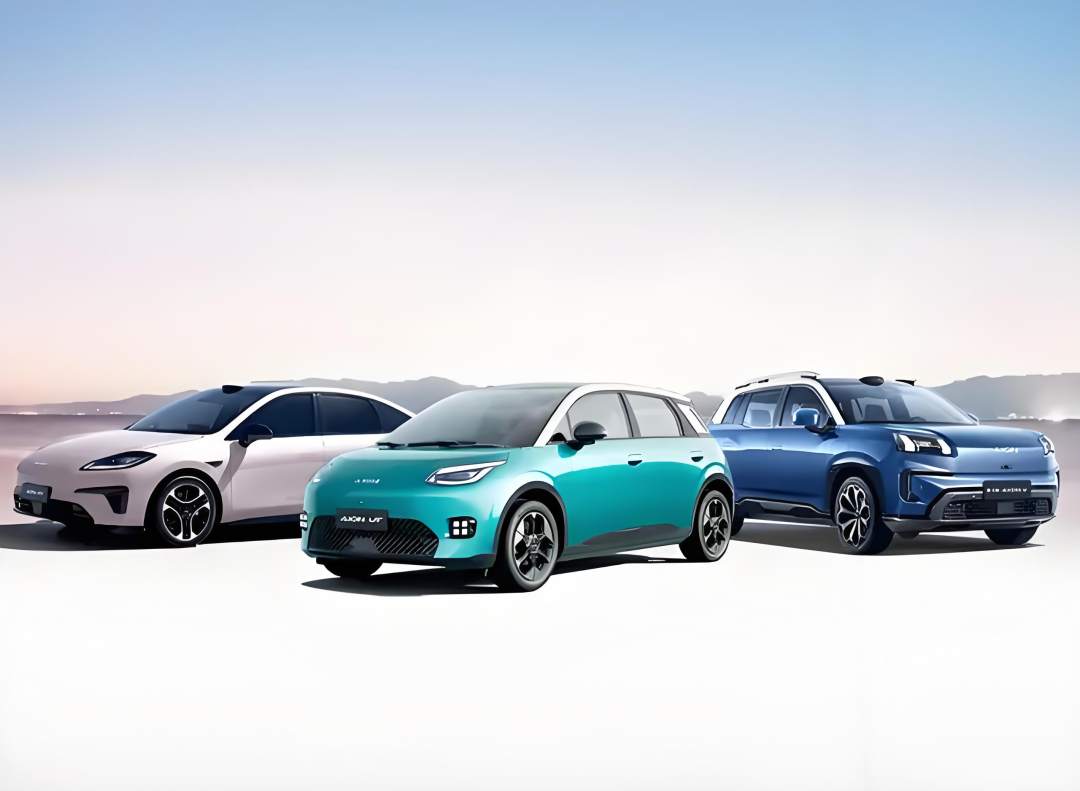
Aion must move beyond the ride-hailing label
Aion's biggest obstacle in the private-consumer market is its reputation as a ride-hailing specialist. More than 300,000 Aion vehicles are reportedly used in China's ride-hailing market, or about 25 per cent of that market, with particularly high visibility in Guangdong.
That creates hesitation among private buyers who do not want their family car associated with ride-hailing. A third-party survey cited in the article said 68 per cent of potential private buyers had avoided Aion because of that concern.
Hyper, Aion's higher-end brand, has not fully solved the issue. Hyper GT sold 2,003 units in its first month, then fell steadily, reaching only 435 units in October 2024.
Brand rebuilding must work on three fronts: technology narrative, user experience and channel reform. Aion needs to explain why its cars are desirable for private users, not only economical for commercial drivers.
Dealer morale also matters
Aion's dealer system faces inventory pressure and sales staff turnover. One dealer said even top salespeople had gone days without opening orders. Some sales staff reportedly earn less than about $1,000 a month, making it difficult to support a family.
Aion should rebuild incentives around profitability, not just volume. Higher-margin models could carry higher commissions. Quarterly sales winners could receive overseas training, purchase benefits or other meaningful rewards.
The company also needs profit improvement ahead of any capital-market move. With Hong Kong's market drawing interest from many mainland-listed companies seeking H-share listings, Aion will need better margins and clearer financial health if it wants investor confidence.
Aion's best answer is a new map
Aion cannot rely on another price war or the ride-hailing market that powered its first growth phase. It needs new product segments, overseas markets, stronger private-user branding and a more motivated retail network.
The brand still has scale, manufacturing capacity and early overseas movement. If it can turn those into technology premiums and differentiated use cases, it may recover share. If it stays trapped in low-price, ride-hailing-heavy competition, the pressure will only deepen.