
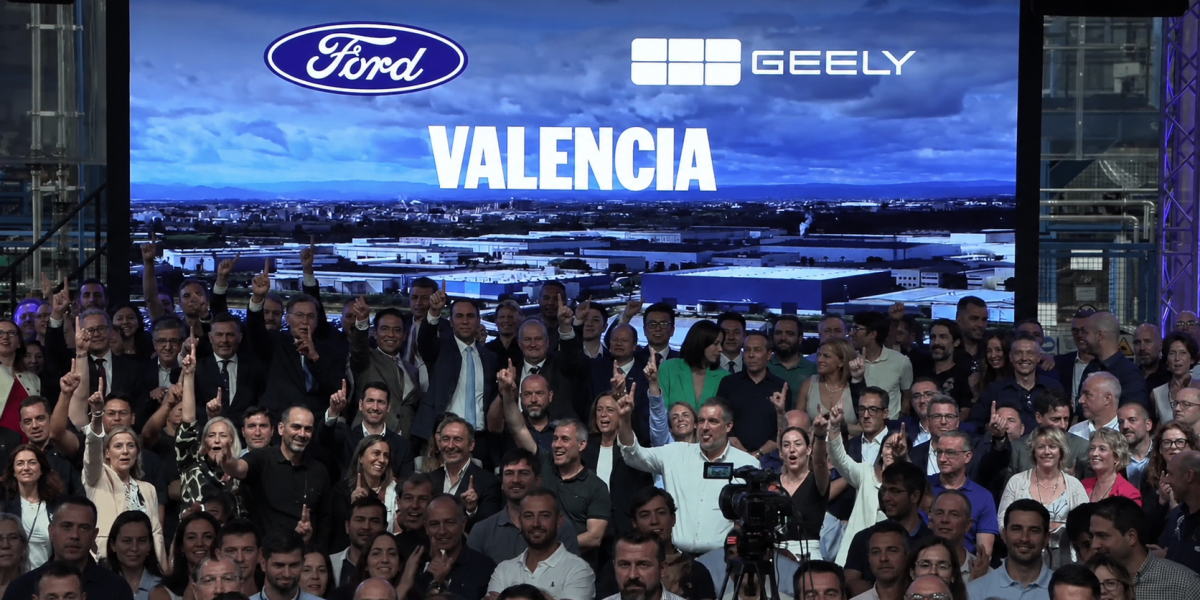
Ford’s decision to hand Geely a strategic role in its Valencia manufacturing hub may look like an unexpected alliance.
But behind the €221 million deal lies a deeper shift in the global automotive industry: technology, manufacturing capability and trust are becoming more valuable than traditional ownership structures.
Under the agreement announced on July 23, 2026, Geely will acquire a 34% stake in Ford’s Valencia plant in Spain, with new vehicles scheduled to roll off the production line from 2028. The partnership marks one of the clearest examples yet of a Western automaker turning to a Chinese technology partner to accelerate its electric vehicle transition.
The deal also represents a major change in how Chinese automakers are expanding overseas. Rather than simply exporting vehicles or building factories from scratch, Geely is pursuing a different playbook: providing technology, sharing industrial assets and embedding itself deeper into established automotive ecosystems.
Ford’s EV Search Leads It Back to Geely
Ford’s choice of Geely comes at a difficult moment for the American automaker’s European operations. The company has spent years searching for a competitive EV strategy, experimenting with partnerships ranging from Volkswagen’s MEB platform to Renault’s Ampere architecture.
Yet Europe’s electric vehicle market has moved faster than many traditional manufacturers expected. While battery-powered vehicles continue gaining share across the region, legacy automakers are facing rising development costs, shrinking margins and increasing competition from Chinese brands.
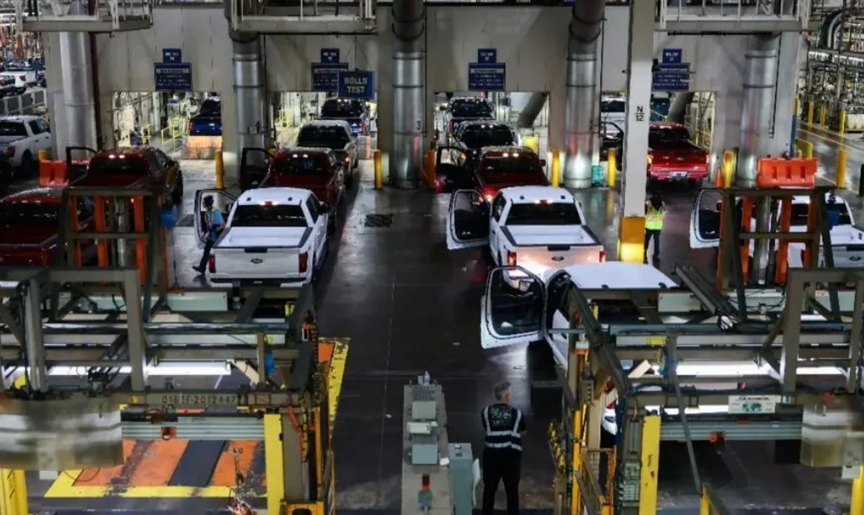
For Ford, Valencia represents both an industrial challenge and an opportunity. The plant, one of Europe’s largest automotive facilities, has faced declining utilization as several models reached the end of their lifecycle. The factory once produced popular models including the Fiesta, Focus and Mondeo, but recent product reductions left significant unused capacity.
Geely saw something different: not an outdated factory, but a ready-made European industrial platform.
Ten Years of EV Investment Put Geely in the Right Position
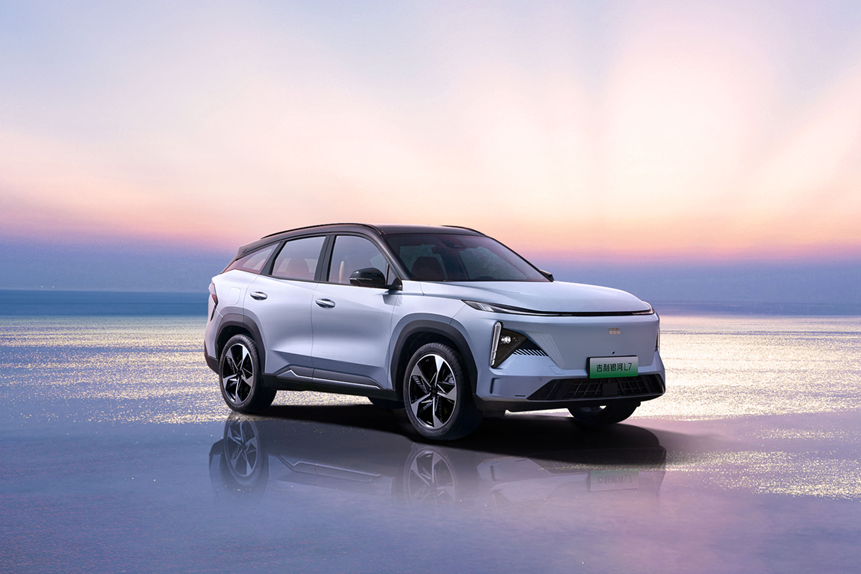
Geely’s emergence as Ford’s preferred partner was built over more than a decade of technology investment. The company began establishing its European research presence in Gothenburg in 2013 through the China Euro Vehicle Technology (CEVT) center, working with Volvo on next-generation vehicle architectures.
The development of the Compact Modular Architecture (CMA) platform later supported models across Geely’s global portfolio, including Lynk & Co and Volvo products. In 2020, Geely introduced the Sustainable Experience Architecture (SEA), which became the technical foundation for brands such as Zeekr, Smart and Polestar.
The platform later evolved into the Global Intelligent Electric Architecture (GEA), designed to support pure electric vehicles, plug-in hybrids and hybrid models. For global manufacturers looking to reduce EV development costs, such flexibility has become increasingly valuable.
When Geely began investing heavily in vehicle platforms and software-defined technologies years ago, the strategy was not considered an obvious industry choice. Many automakers were focused on short-term electrification targets, subsidy opportunities or incremental upgrades to existing combustion-engine businesses.
Geely instead focused on the underlying architecture that would define future vehicles. That long-term approach is now providing the company with an advantage as established automakers look for faster and lower-risk EV solutions.
From Vehicle Exports to Technology Exports
The Valencia partnership highlights a broader transformation in China’s automotive expansion overseas. For decades, international growth for Chinese automakers mainly meant exporting vehicles into foreign markets. Geely’s latest strategy points toward something different: exporting technological capability.
The agreement reportedly includes a new crossover model designed by Ford and jointly developed with Geely. Industry observers have also suggested that Ford’s upcoming European EV products could use Geely’s GEA architecture and manufacturing expertise.
If confirmed, this would represent a significant step. Chinese automotive technology would no longer simply compete against Western brands in overseas markets; it would become part of the engineering foundation behind those brands.
This model resembles Geely’s previous international moves. Instead of seeking full ownership of foreign operations, the company has increasingly pursued minority investments combined with access to local manufacturing networks and market infrastructure.
Why Valencia Matters: Activating Existing European Capacity
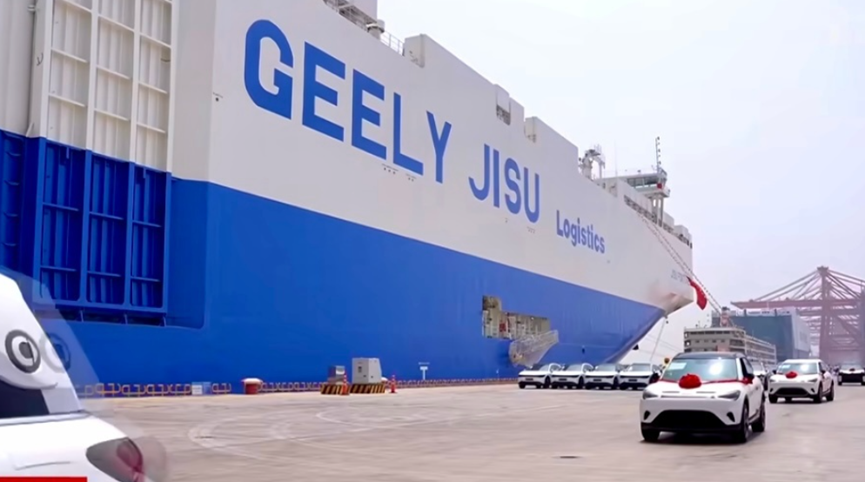
Building factories overseas has become the traditional expansion route for many Chinese automakers. BYD, Chery, SAIC and Leapmotor have all pursued different versions of local production strategies.
Geely’s Valencia approach takes another route: activating existing industrial assets.
The Valencia facility began production in 1976 and was designed for annual capacity of roughly 400,000 to 500,000 vehicles. It already has experienced workers, established suppliers and decades of manufacturing know-how.
For Geely, acquiring a minority stake provides access to a mature European production base without the long construction timelines and political challenges associated with building a new factory from the ground up.
The €221 million investment effectively gives Geely access to a major European industrial footprint while reducing one of the biggest barriers facing foreign automakers: time.
Geely’s Three-Layer Strategy: Capacity, Distribution and Influence
The Valencia agreement gives Geely more than manufacturing capacity. It also provides access to Ford’s decades-old European industrial ecosystem, including supplier relationships, logistics networks and market knowledge.
For Chinese automakers entering Europe, establishing sales and after-sales infrastructure has often been one of the most difficult challenges. Product competitiveness alone is not enough; customers, regulators and fleet buyers also require confidence in service networks and long-term support.
By working with Ford, Geely gains a shortcut into an established ecosystem that would otherwise require years and significant investment to build.
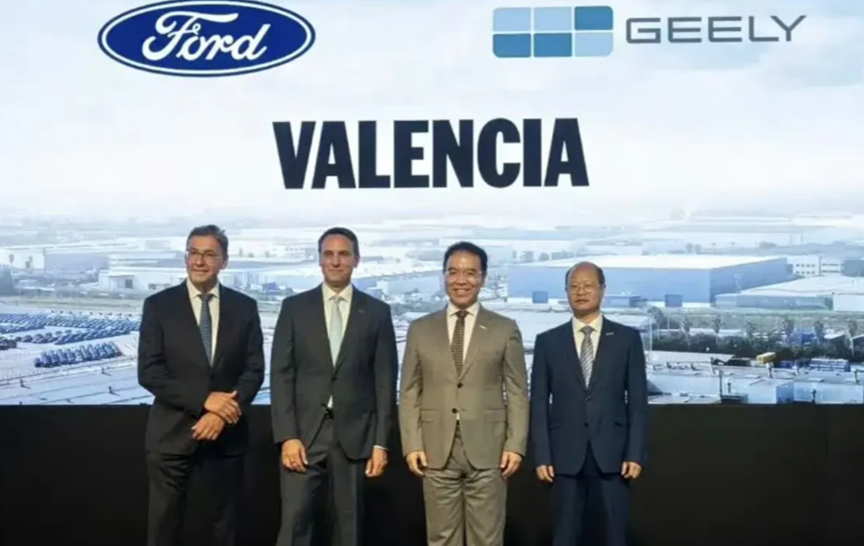
The partnership also carries political significance. Spanish Prime Minister Pedro Sánchez attended the signing ceremony, highlighting the importance of maintaining automotive employment and industrial investment in the country.
For Spain, the agreement represents a commitment to keeping Valencia as a major automotive production center. For Geely, it creates stronger ties with European policymakers and local stakeholders.
The structure reflects a broader trend in global automotive investment: companies are increasingly choosing strategic partnerships over full ownership. By holding 34% rather than pursuing control, Geely avoids taking on the full operational burden while still gaining meaningful influence.
The Volvo Legacy: A Sixteen-Year Trust Cycle Comes Full Circle
Beyond technology and manufacturing, the Ford-Geely partnership is also built on history.
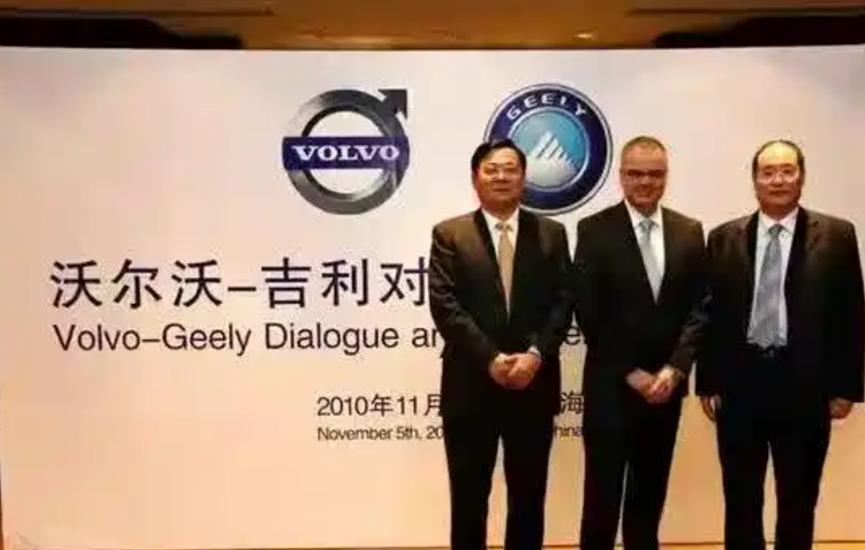
In 2010, Geely acquired Volvo Cars from Ford for $1.8 billion. At the time, many industry observers questioned whether a Chinese automaker could successfully manage a premium European brand with deep Scandinavian roots.
Geely’s approach was to preserve Volvo’s independence while supporting its transformation. The company maintained Volvo’s design identity, invested in electrification and helped the brand achieve stronger global sales performance.
The later acquisition of Lotus further strengthened Geely’s reputation as an operator capable of managing internationally recognized automotive brands.
Trust accumulated over years has become one of Geely’s most valuable assets. In announcing the Valencia partnership, Ford described Geely as a “capable partner” and highlighted the relationship’s foundation of trust and respect dating back to 2010.
A New Era of Cooperation Between Western and Chinese Automakers
The Valencia plant will create an unusual competitive relationship. Ford and Geely will share industrial infrastructure while remaining competitors in global markets.
Such cooperation requires a level of trust rarely seen in the automotive industry. Without confidence between partners, shared production lines and joint development programs can quickly become sources of conflict.
Ford’s decision suggests that access to advanced technology and reliable execution has become more important than traditional boundaries between competitors.
Sixteen years ago, Ford transferred Volvo to Geely in a deal that represented technology and ownership moving from West to East. Today, Geely is helping Ford accelerate its European EV strategy, creating a reverse flow of automotive expertise.
The relationship has completed a remarkable cycle.
China’s Global Auto Strategy Is Shifting From Selling Cars to Selling Capability
The Valencia partnership could become a model for how Chinese automakers expand internationally.
Rather than relying only on exporting finished vehicles or building entirely new factories, companies may increasingly compete through technology platforms, manufacturing partnerships and industrial cooperation.
Geely’s strategy with Ford follows a similar pattern seen in other markets. Its cooperation with Renault in South America, including a minority investment approach combined with access to manufacturing resources, reflects the same philosophy.
The goal is not simply to own overseas factories. It is to become an indispensable technology and manufacturing partner within global automotive networks.
The Bigger Question: Can Partnerships Challenge Vertical Integration?
The global EV industry is entering a new phase. Companies such as Tesla and BYD have built advantages through deep vertical integration, controlling everything from batteries and software to vehicle production.
Geely is pursuing a different path. Instead of owning every part of the value chain, it is positioning itself as a technology provider capable of working with established global brands.
The success of the Ford partnership will determine whether this lighter, partnership-driven model can compete with vertically integrated EV giants.
For now, the Valencia agreement shows how quickly the balance of power in the automotive industry is changing. A decade ago, Chinese automakers were seeking technology partnerships with Western companies. Today, some Western manufacturers are turning to Chinese companies for the technology needed to remain competitive.
Conclusion: Geely’s Long Game Enters Its Next Stage
The Ford-Valencia deal is not simply about a factory or a minority investment. It represents the payoff from years of technology development, international cooperation and strategic patience.
Geely’s rise from a Chinese manufacturer into a global automotive technology partner has been built through a combination of platforms, acquisitions and partnerships.
The company’s European expansion strategy suggests a new direction for China’s automotive globalization: not just exporting vehicles, but exporting engineering capability, industrial expertise and business models.
As the automotive industry continues its transition toward electrification, the companies that can combine technology, manufacturing scale and global cooperation may define the next decade of competition.