
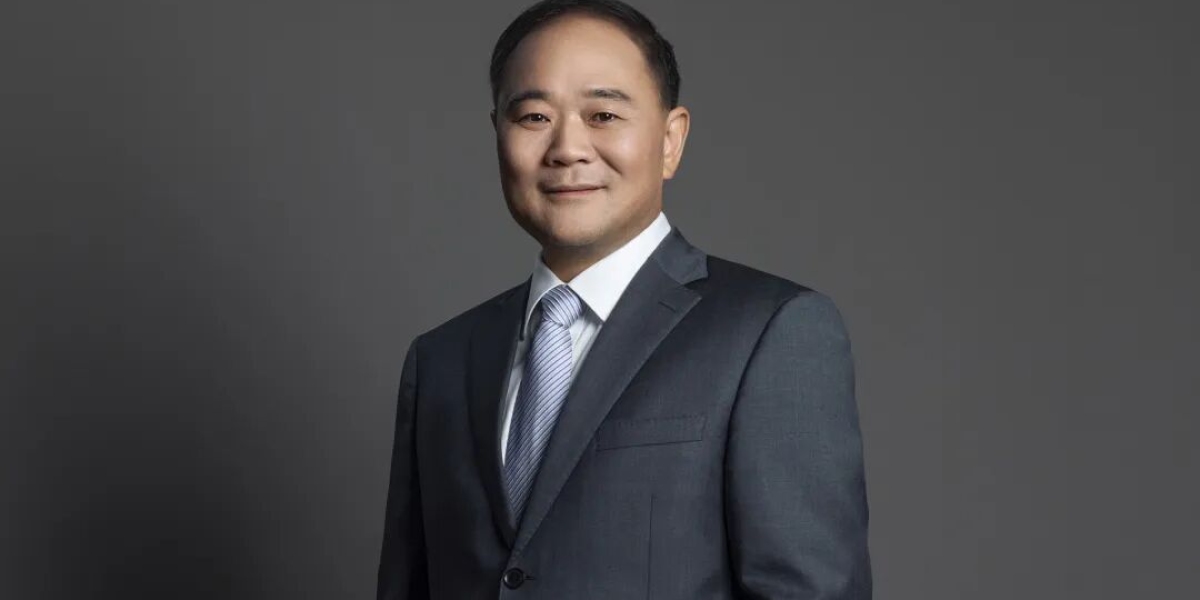
Geely Automobile is placing professional management and formal corporate governance at the centre of its next phase, as founder Li Shufu steps away from the board of the listed carmaker and hands the chairmanship to long-serving executive An Conghui.
The reshuffle marks more than a change at the top. It signals that Geely’s “One Geely” strategy is moving beyond founder-led integration and into a more institutional phase, with clearer boundaries between the board, senior management and the group’s controlling shareholder.
Li Shufu Steps Back From the Listed Carmaker
Geely Automobile Holdings, listed in Hong Kong under stock code 0175, announced the management changes on August 17. The appointments will take effect on August 18, 2026.
Li, who founded Geely and built it into one of China’s most internationally recognised automotive groups, has resigned as chairman and executive director of Geely Automobile. He has been appointed lifetime honorary chairman in recognition of his contribution to the company.
The move does not amount to a complete withdrawal from the business. Li remains Geely Automobile’s controlling shareholder and will continue as chairman of Zhejiang Geely Holding Group, the parent company overseeing the broader automotive portfolio. He is therefore stepping back from the governance of the listed unit while retaining a central role in the group’s long-term direction.
At Geely Automobile’s 2026 interim results briefing, Li described the automotive industry as “a marathon without a finish line”, arguing that corporate succession and a company’s values ultimately determine whether it can sustain its development. He also expressed confidence in An, whom he described as a senior professional developed within the Geely system.
An Conghui Takes Charge of the Board
An will succeed Li as chairman of Geely Automobile and lead the new board. His mandate includes strengthening coordination across the business, improving cooperation with the controlling shareholder and carrying the “One Geely” strategy into its next stage.
The appointment puts one of Geely’s most experienced insiders at the centre of the listed company’s governance. It also reflects the group’s preference for continuity: authority is being transferred to an executive shaped by Geely’s own management system rather than to an external successor.
That distinction matters. Geely has spent years building a wide portfolio of mass-market, premium and electric-vehicle brands. The challenge is no longer simply to expand that portfolio, but to make its businesses operate with greater discipline, share technology more effectively and reduce organisational overlap. The chairmanship gives An responsibility for turning that strategic ambition into a durable governance structure.
Gan Jiayue Becomes Chief Executive
The reshuffle also separates board leadership more clearly from day-to-day operations. Gan Jiayue has been appointed chief executive and will be responsible for running the company and executing its long-term strategy.
Gui Shengyue has stepped down as chief executive and becomes vice-chairman of the board, while remaining an executive director. The company said the change is intended to improve communication and coordination between the board and management.
Li Donghui has resigned as vice-chairman but will also remain an executive director. Taken together, the appointments create a new leadership structure in which An directs the board, Gan manages operations and Gui helps connect the two.
“One Geely” Moves From Campaign to System
Geely has framed the changes as part of a broader effort to strengthen the authority of professional managers, improve its governance structure and build a deeper succession pipeline. These are increasingly important priorities for a company whose scale and international reach make dependence on a founder’s personal authority less sustainable.
The “One Geely” programme was designed to draw the group’s businesses closer together and create a more coherent operating model. The latest appointments suggest that the reform is entering a more mature phase. Integration is no longer being treated only as a strategic campaign; it is being embedded in the allocation of authority, the relationship between the board and management, and the company’s approach to succession.
For investors, the central question will be whether this structure can preserve the speed and entrepreneurial instincts associated with Li while adding the transparency, accountability and operational consistency expected of a global carmaker.
A Founder’s Transition, Not an Exit
Li’s new position leaves Geely with a carefully managed transition rather than a clean break. The founder remains influential at holding-company level, but the listed automaker will be led through a more formal division of responsibilities.
That balance may prove critical as Geely competes across conventional vehicles, plug-in hybrids and battery-electric models while expanding overseas. A sprawling automotive group cannot rely indefinitely on a single individual to coordinate strategy, capital and execution.
With An as chairman and Gan as chief executive, the architecture of Geely Automobile’s next leadership era is now largely in place. The handover is the clearest indication yet that “One Geely” is evolving from a founder-backed reform into an institution designed to function beyond its founder.