
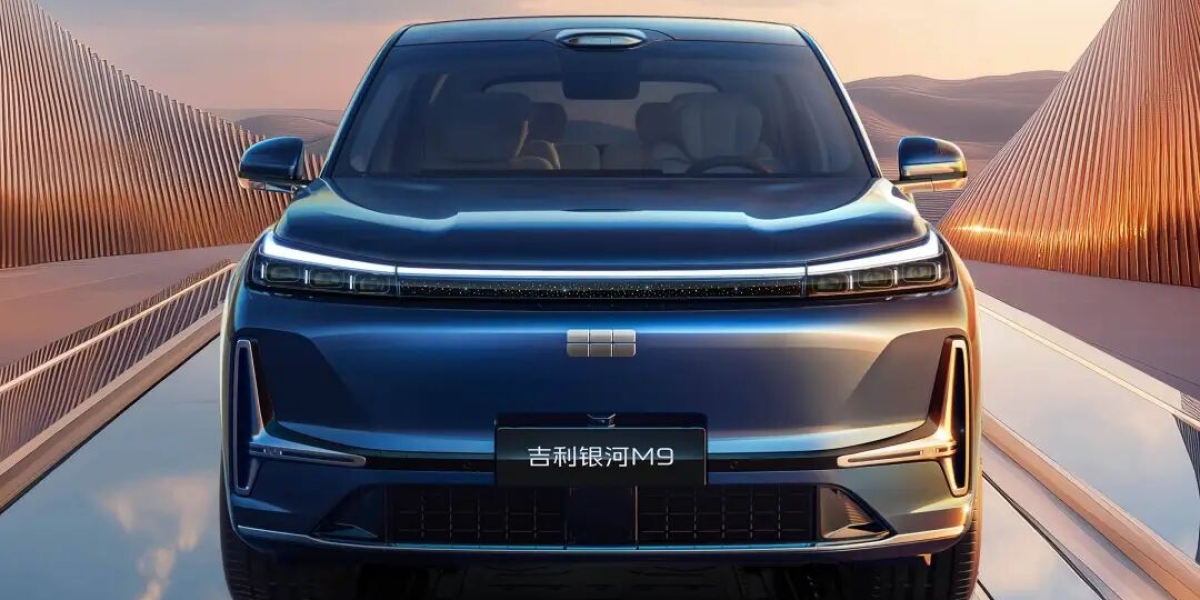
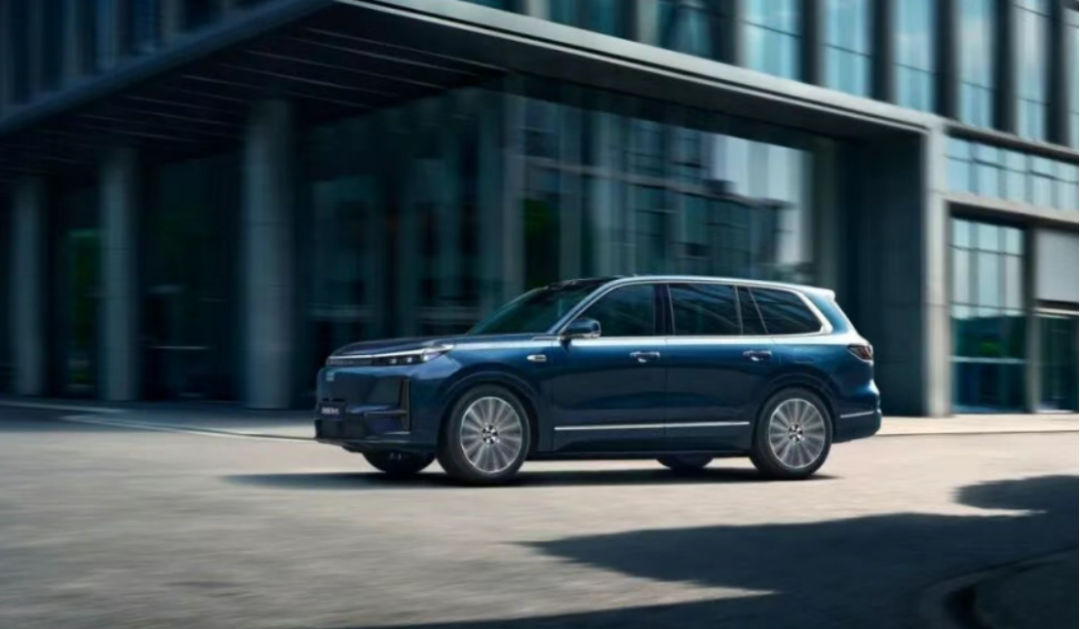
Geely Galaxy M9 launched on September 17 as a six-seat extended-range SUV priced from about $24,000 to $33,000.
A large SUV at a disruptive price
Within 24 hours, it had collected more than 40,000 orders, according to the article.
The response matters because the M9 directly attacks the market logic that made Li Auto successful: six seats, large space, comfort features, high intelligence, family use and a big-battery hybrid system.
Li Auto founder Li Xiang has acknowledged that several companies are now building products shaped by the success of Li Auto L9. That imitation is also a threat. Traditional automakers have studied the formula and are now applying their own scale, channels and cost control.
The copybook is working
Li Auto effectively defined China's large six-seat family SUV in the new-energy era. It predicted demand for spacious, comfortable, extended-range SUVs and built a strong user base around that insight.
The problem with being first is that success becomes visible. Other automakers can copy the use case, improve the value equation and attack the same customers.
The data show how quickly the field has crowded. Aito M8 has taken more than 80,000 firm orders since launch. Denza N9 delivered more than 1,000 units a week for eight consecutive weeks after its March launch. Lynk & Co 900 received more than 12,000 orders on launch day and 58,000 by May 10. Deepal S09 collected more than 20,000 firm orders in May. Geely Galaxy M9 then added more than 40,000 orders in 24 hours during presales.
The common point is that traditional automakers have decoded the emotional and functional appeal of Li Auto's family-SUV products.
Three tactics against Li Auto
The first tactic is configuration substitution. Traditional automakers are offering similar or higher equipment at lower prices. Galaxy M9 is 5.2 metres long, has a 3,030mm wheelbase and provides 860mm of third-row legroom, 10mm more than Li Auto L8, according to the article.
Its CLTC pure-electric range is 230km, and combined range is 1,500km, giving claimed advantages over Li Auto L8. The starting price near $24,000 creates a powerful value contrast with vehicles that once sat much higher.
The second tactic is channel penetration. Li Auto has built many stores, but its network is still concentrated in premium shopping centres in first- and second-tier cities. Geely Galaxy had more than 900 stores by August 2025, covering 85 per cent of prefecture-level cities, and plans to add another 300 by year-end.
That lower-tier reach matters. Geely can also create more targeted variants, including a 100km short-range version that pushes entry pricing below about $21,000. A more flexible traditional automaker can cover more customer types than a narrower new-force line-up.
The third tactic is technology-route tolerance. Geely has multiple powertrain routes, while Li Auto has relied heavily on extended range. Geely's self-developed Leishen EM-P hybrid system benefits from localised core components and lower cost. Galaxy L6 EM-i, launched in February 2025, started at about $11,000, showing how far Geely can push pricing through scale and supply-chain control.
Li Auto's old moat is narrowing
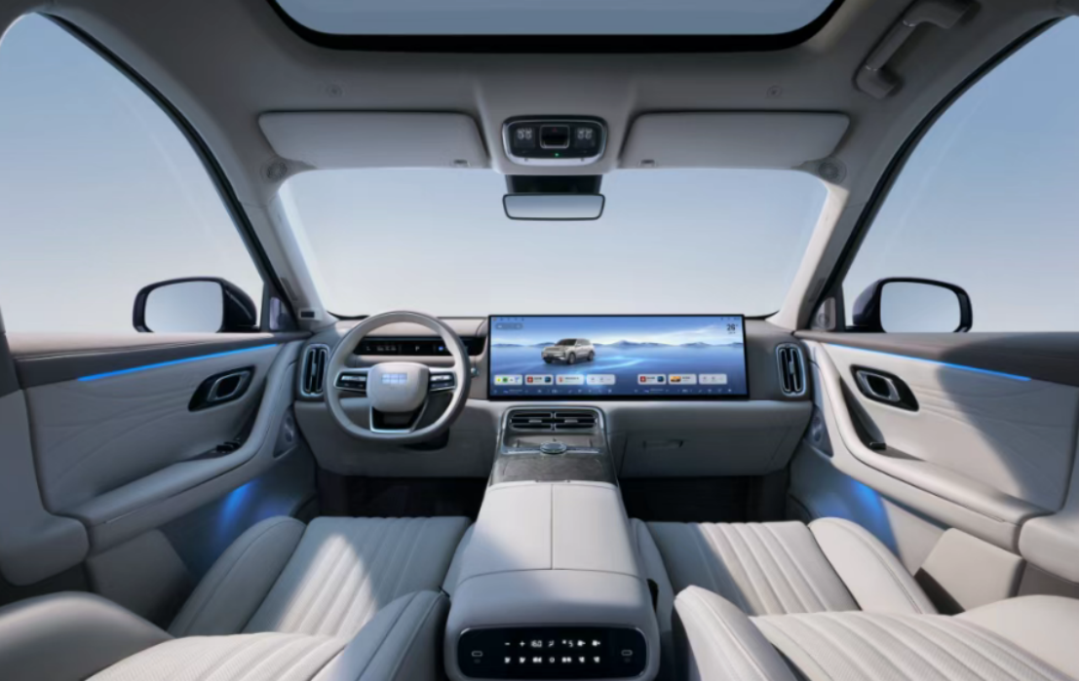
Li Auto's strengths have been scenario definition, user operations and intelligent iteration. But the familiar "fridge, screens and sofa" combination is no longer rare.
Galaxy M9 copies those features and adds rear-seat massage and in-car projection, pushing the family-use scenario from practical to more comfort-led. That weakens Li Auto's once-clear experience advantage.
Intelligence is also becoming more competitive. Galaxy M9 uses Flyme Auto 2.0, claims 1.2-second voice response and supports map-free NOA. Its hardware can compete with established intelligent-EV rivals. Geely's cooperation with Huawei is also deepening, and the Galaxy M10 planned for 2026 is expected to use Huawei ADS 3.0.
Li Auto is still moving. The L8 Max introduced in September added a parent-child interaction system that can use voice control for child-seat adjustment and customised songs. But small feature additions may not be enough if rivals can match the larger family scenario at lower cost.
What Li Auto needs next
The new-force brands must now build deeper moats. Those could come from stronger AI, better service, stronger emotional value, proprietary core components or higher brand status.
The article points to Xpeng's XNGP takeover rate of 0.03 times per 1,000km as an example of a technical benchmark. It also notes reports that Li Auto planned to mass-produce its own XPM power module in 2026, using a two-in-one integrated design to reduce chip area by 45 per cent. If Li Auto builds lower-level technology advantages, it can reduce its exposure to feature copying.
Brand elevation also matters. If Li Auto MEGA can maintain a leading position in the luxury MPV market above about $69,000, it could support a stronger brand moat.
The Galaxy M9's order book is a warning. The final contest between traditional automakers' scale and new-force brands' user insight has begun. Li Auto helped define the market. Now it must prove that definition alone is not the limit of its advantage.