Geely is moving to consolidate its intelligent-driving resources, bringing teams from brands including Zeekr into Chongqing G-ASD Intelligent Driving and creating a group that could approach 3,000 people.
A single intelligent-driving team becomes the goal
The move is still being refined, according to Geely Holding, but the direction is already clear.
G-ASD Technology and Geely are expected to combine resources, form a shared management team and build full-chain, end-to-end assisted-driving capability. After the integration, G-ASD Intelligent Driving is expected to operate as an independent company and become a core partner in Geely's artificial-intelligence ecosystem.
The restructuring echoes Geely founder Li Shufu's Taizhou Declaration from 2024, which pushed the group away from unchecked brand expansion and toward stronger integration. It also supports Geely's 2025 sales target of 3mn vehicles by giving the company a clearer intelligent-driving platform.
The multi-brand system created costs as well as growth
Geely's long-standing internal competition model helped the company grow. It reached 1.247mn sales in 2017 and remained one of China's leading domestic automakers for years. Multiple brands allowed the group to cover more segments and gave successful models room to emerge.
That same structure has become harder to manage in the new-energy era. More brands mean more duplicated product lines, higher coordination costs and more internal competition. Consumers can struggle to distinguish models such as Lynk & Co Z10 and Zeekr 001, or Lynk & Co Z20 and Zeekr X.
As battery-electric and intelligent-driving competition intensifies, dispersed resources can turn from an advantage into a drag. Geely's latest intelligent-driving integration is a response to that problem.
Smart driving needed a tighter centre
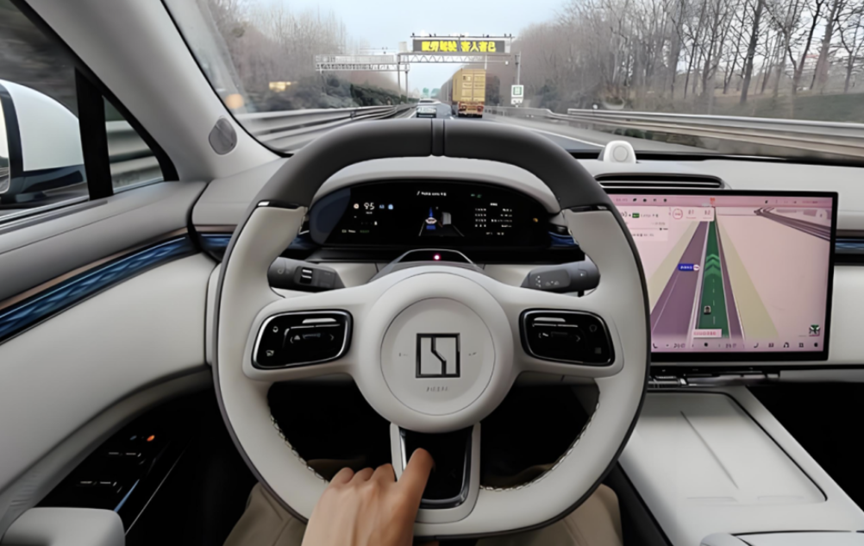
Geely has strong manufacturing capacity and the SEA architecture is widely regarded as one of the industry's more capable electric-vehicle platforms. Intelligent driving has been less clearly associated with leadership. The main reason is not lack of effort, but fragmentation.
Across the group, cockpit and operating systems have included Lotus self-development, LynkOS, Meizu's Flyme Auto and Zeekr OS. Driver-assistance routes have involved Ecarx, Jingwei HiRain, Freetech, Mobileye and internal teams. Multiple systems created optionality, but also slowed alignment.
Geely's driver-assistance development has been led by three broad forces. G-ASD Technology, associated with Yin Qi, focuses on advanced AI algorithms and innovation. Wang Jun's team works on system integration for the G-ASD Haohan system, with more emphasis on safety and reliability. Geely Research Institute is responsible for turning technical solutions into production-ready, automotive-grade systems.
Those priorities are not always easy to reconcile. A team focused on end-to-end large models wants data scale and rapid iteration. A system-integration team prioritises redundancy and validation. A production engineering team must protect stability and regulatory compliance. Without a strong central platform, the result can be slow decisions and uneven product release rhythms.
Integration could reduce duplicated development
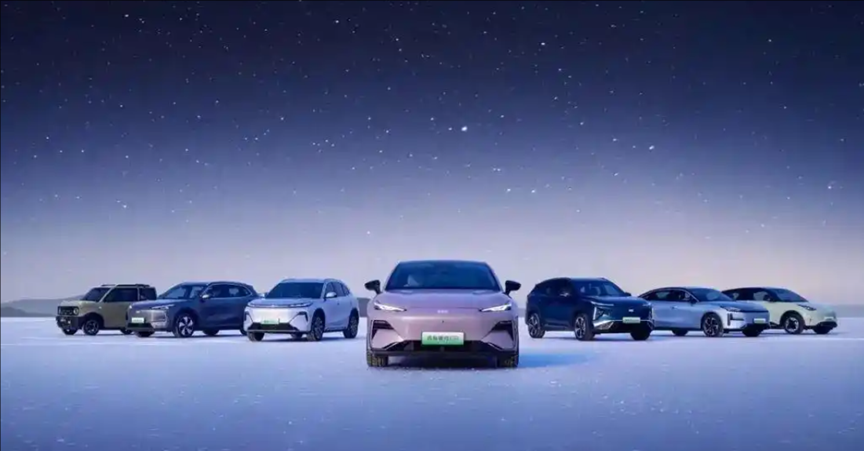
The core question is whether Geely's new structure can resolve the conflict between many brands and rising technology costs. Each brand has had its own models, chips and intelligent-driving choices. In a highly competitive market, that encouraged parallel experimentation, but it also raised the cost of algorithms, hardware validation, software testing and road-testing resources.
Some models may have leaned toward lidar-plus-vision perception for more precise environmental understanding, while others explored lower-cost vision-based routes. Those differences can make sense at model level, but they become expensive when duplicated across a large group.
Under the proposed integration, Zeekr and Geely Research Institute driver-assistance teams would be merged into Chongqing G-ASD Intelligent Driving, leaving Geely with one central intelligent-driving organisation. That should help align technical routes and reduce internal friction.
If costs become more controllable, Geely's goal of making technology more widely available across price segments becomes more realistic.
A more consistent user experience is the prize
The benefits would go beyond cost control. When each brand develops at its own pace, intelligent-driving performance can vary widely across the group. That makes it harder for consumers to see intelligent driving as a Geely strength.
A unified platform could create a more consistent experience from entry-level vehicles to premium models. It may also speed breakthroughs in L3-plus capability and large-model integration, helping Geely build a clearer smart-car identity against rivals such as BYD.
The challenge will be organisational. Consolidation can create efficiency, but only if teams accept shared authority, common technical standards and a single product roadmap. Geely must balance the interests of brands that have grown used to autonomy.
A self-reform by a traditional automaker
For legacy automakers, protecting an existing business is often easier than rebuilding the organisation for a new technology cycle. Geely's intelligent-driving integration is therefore a meaningful self-reform.
If it succeeds, Geely could turn a fragmented set of capable teams into a stronger central capability and make driver assistance a decisive advantage. If it fails, the group risks preserving the very complexity it is trying to escape. The next stage will show whether Geely can make "one intelligent-driving system" more than a slogan.