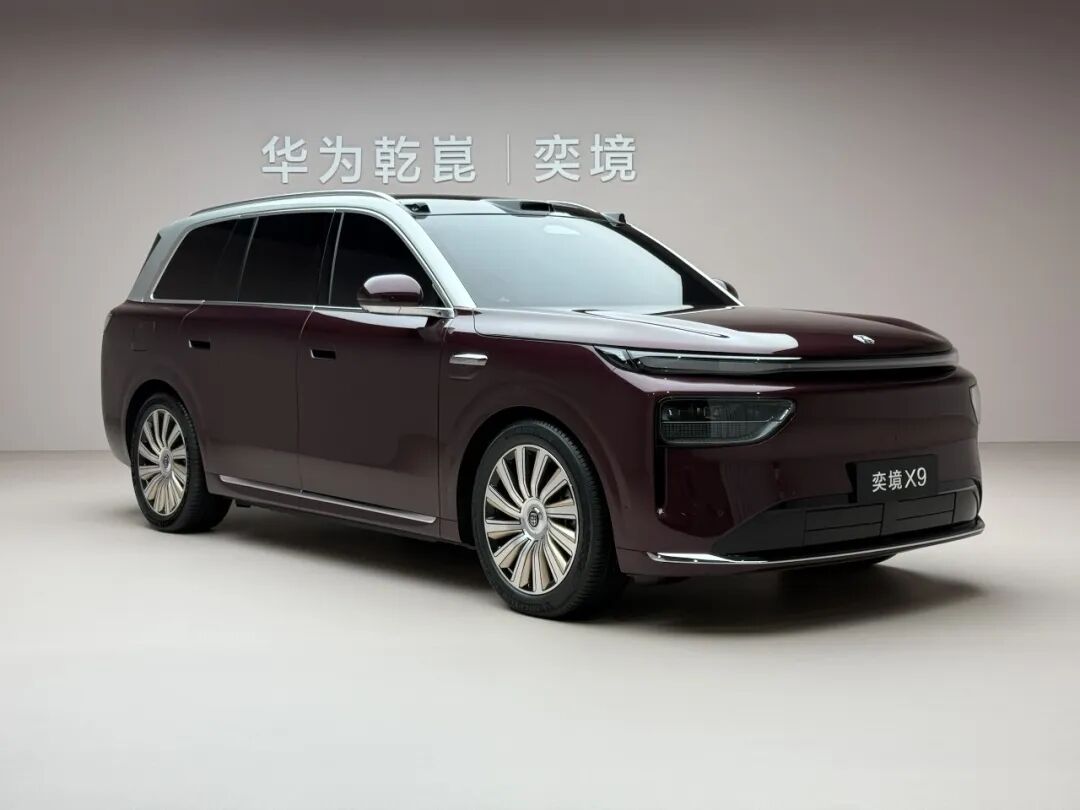
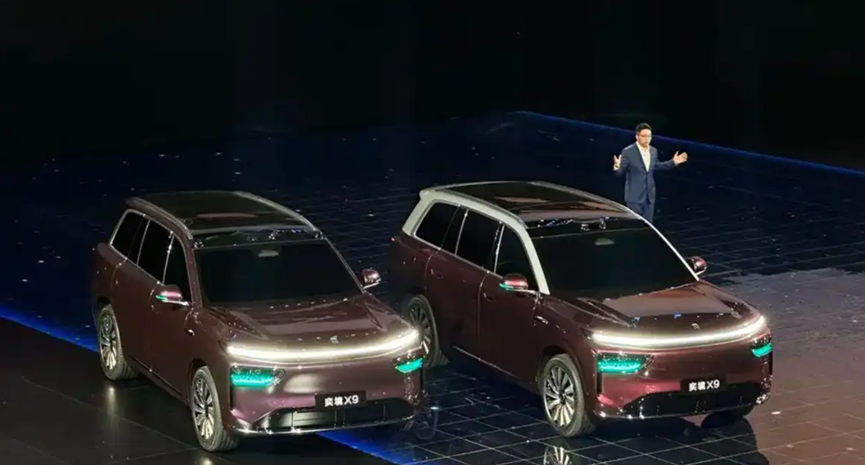
EPICLAND has entered China's crowded high-end new-energy market with its first flagship, the X9, unveiled globally at the Beijing auto show.
Another Huawei-linked flagship, but a different structure
The brand is the product of a three-year cooperation between Dongfeng Motor and Huawei Qiankun, backed by heavy investment and a dedicated joint team.
At first glance, EPICLAND X9 invites comparison with Aito M9. Both are Huawei-linked flagship SUVs, both target the roughly $70,000 high-end market, both emphasise family use, intelligence and safety. Yet the deeper logic is different.
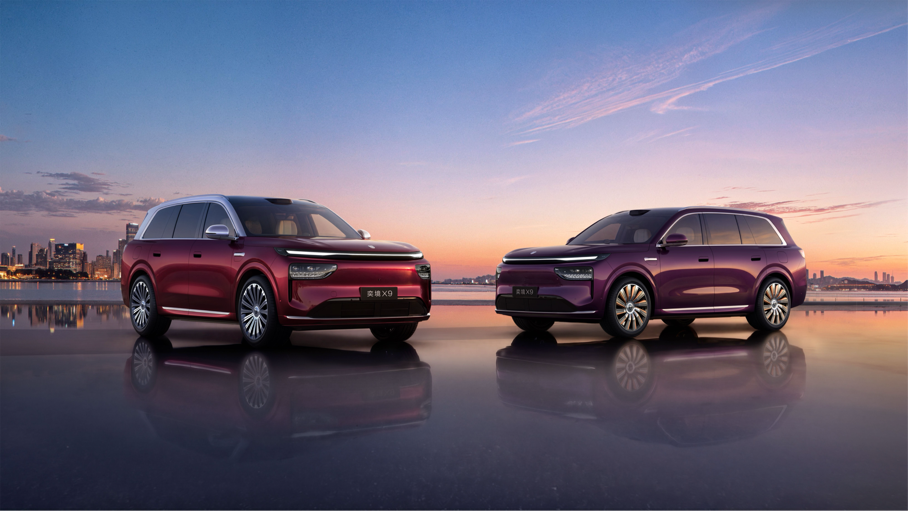
Aito is the benchmark brand in a Huawei-led full-chain model. EPICLAND is built through a co-creation model between Dongfeng and Huawei Qiankun. Huawei is not only an outside technology supplier, but a core partner working with Dongfeng on product definition, development, marketing, quality and user co-creation.
That distinction matters. EPICLAND is not simply a Dongfeng model fitted with a Huawei intelligent-driving package. It is a test of whether a central state-owned automaker can use Huawei's methods and technology to reform its own product and management system.
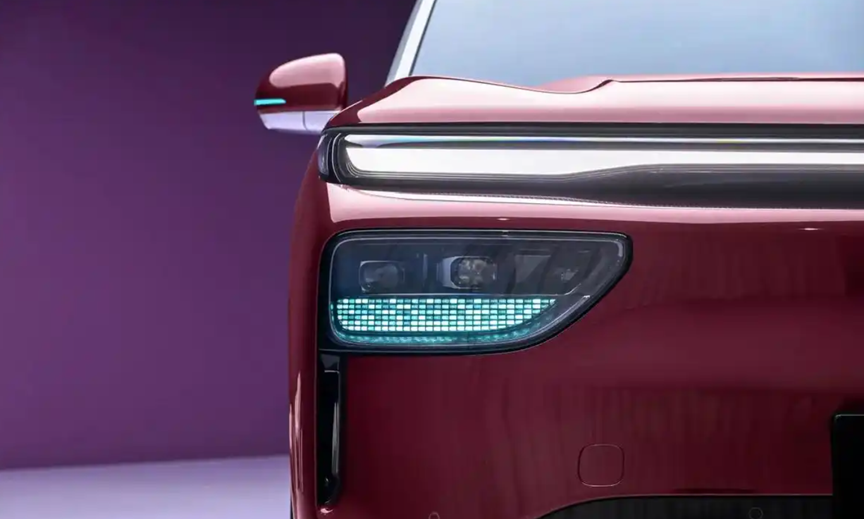
The core difference is the co-creation model
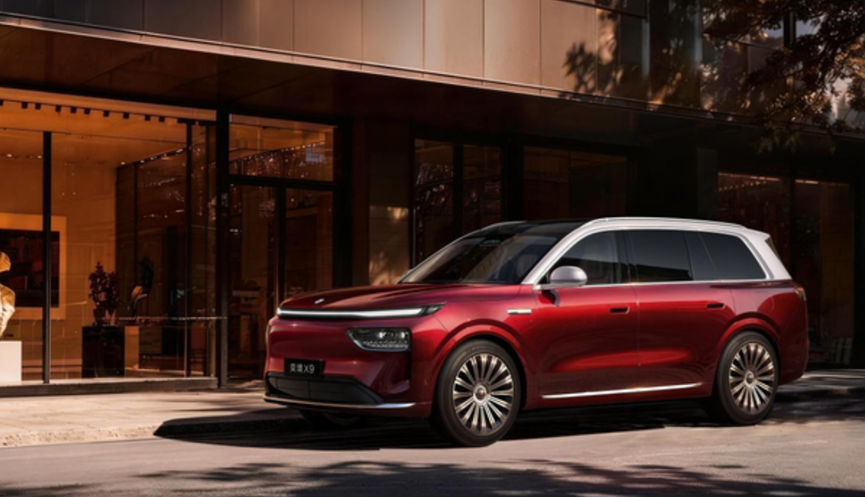
The X9's exterior presence and flagship positioning naturally put it in the same conversation as Aito M9. Large high-end family SUVs tend to converge in stance, space logic and visual authority. The more important question is how the vehicle was created.
EPICLAND's so-called Jing model is described as a full-cycle, full-chain, full-dimensional co-creation structure between a central state-owned automaker and Huawei. The two sides define products together, develop together, work in joint offices, market together, manage quality together and involve users together.
From top-level planning to parts selection, from engineering to vehicle launch and later iteration, the system is meant to avoid the gaps that often appear when a carmaker buys technology from an outside supplier and adapts it late in the process.
Dongfeng has committed major resources, including a dedicated team of thousands and large-scale investment. Huawei contributes its latest Qiankun intelligent-vehicle solutions. Dongfeng brings decades of manufacturing experience, a large user base and mature supply-chain capability. The X9's differentiator is therefore the combination of Huawei intelligence and Dongfeng industrial depth.
A flagship with no obvious entry-level compromise
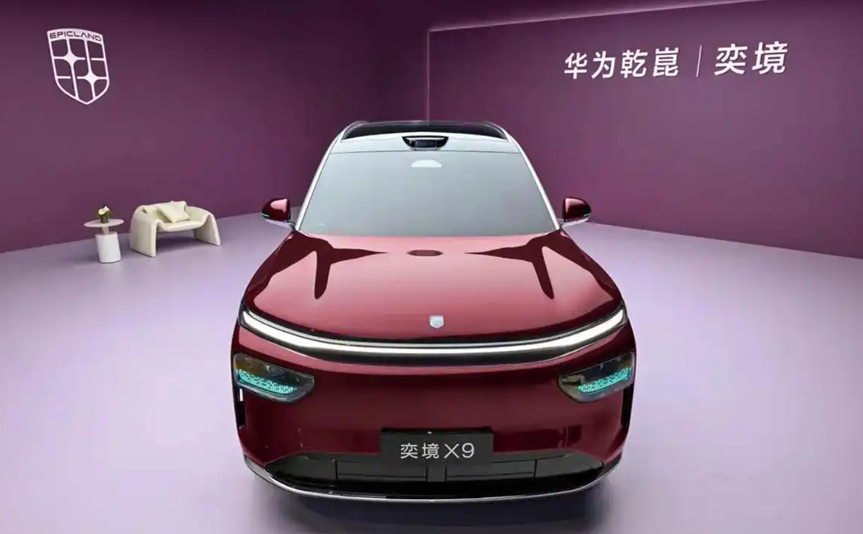
As EPICLAND's first large six-seat flagship SUV, the X9 is positioned as the brand's statement product. The approach is to standardise the features family buyers care about most, rather than use low trims as showroom bait.
The wheelbase is 3,120mm, giving the six-seat layout room to address one of the common complaints about large family SUVs: cramped third-row space. The vehicle debuts HarmonyOS 6 in the cabin and uses dual 17.2-inch butterfly-style displays that allow separate interaction for driver and front passenger.
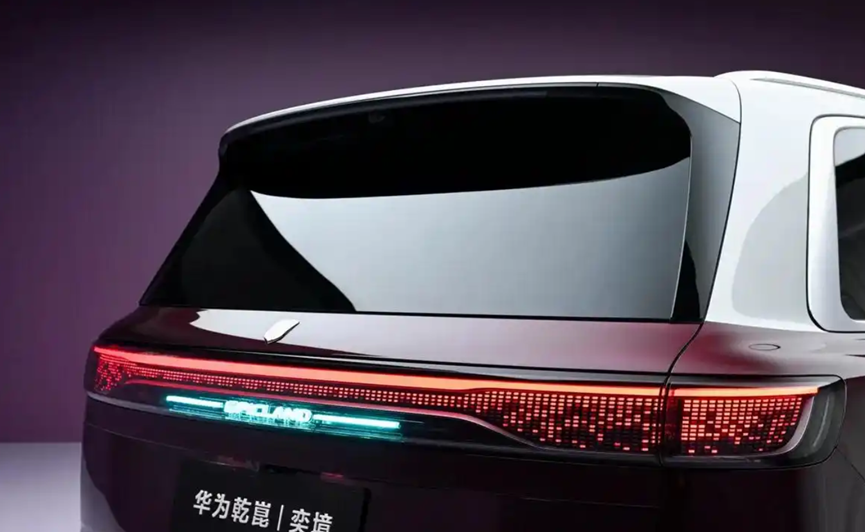
The X9 also introduces a rear ceiling-mounted soft-light screen, new Harmony visual interaction, an in-car laser projector and AR-HUD. It is among the first vehicles to use the Harmony Xiaoyi intelligent agent and AI multimodal perception. Cameras can be physically closed to protect privacy, while StarFlash sensors support anti-pinch functions, danger alerts and child-left-behind reminders.
Safety is treated as a central element. The X9 uses CAS 5.0 collision safety technology and 2,400MPa ultra-high-strength steel. It also claims a three-layer bullet-resistant battery-bottom armour and multiple redundant systems. Huawei Qiankun ADS 5, an 896-line dual-path lidar, the Qiankun Chitu digital chassis platform and an aluminium chassis are intended to combine safety, comfort and control.
The message is clear: EPICLAND is trying to put flagship family requirements into the standard product experience, rather than create a long option ladder.
A product launch that doubles as internal reform
In the short term, the X9 is Dongfeng's tool to enter the high-end family SUV market and strengthen its new-energy line-up. In the long term, it is more significant as an internal reform mechanism.
Dongfeng has decades of manufacturing history, a base of 64 million users and a large patent portfolio. Yet like many traditional state-owned automakers, it faces problems in the intelligent-EV era: complex processes, long decision chains, slower market reaction and older R&D mechanisms.
Shallow cooperation with technology companies can improve one product, but it rarely changes the organisation. The EPICLAND model is meant to go deeper. Huawei brings IPD and IPMS management mechanisms, strict quality standards and faster development iteration. Dongfeng contributes manufacturing, supply-chain resources and industrial validation.
Joint offices, shared responsibilities and joint problem-solving can break down departmental barriers. The combination gives Dongfeng a chance to keep the stability of a central state-owned manufacturer while adopting the speed of a technology company.
The same applies to user operations. State-owned automakers have often favoured conservative marketing and service models. Working with Huawei gives Dongfeng exposure to more refined user operations, premium-service systems and ecosystem thinking, which can later support other Dongfeng new-energy products.
For Dongfeng, the X9 is therefore not only a car. It is a way to learn management, mechanism design, software iteration and user operations. That may be more valuable than the sales of a single model.
The real test is whether the system becomes repeatable
China's high-end new-energy market is crowded with similar specifications and price claims. The X9's importance lies less in whether it resembles Aito M9 visually and more in whether Dongfeng can use EPICLAND to build a new organisational capability.
If the co-creation model produces better products and faster iteration across more vehicles, EPICLAND could become Dongfeng's strongest asset in the intelligent-EV transition. If it remains a single flagship experiment, the advantage will be harder to defend.
The early signal is that Huawei's auto partnerships are becoming more varied. Supplying technology is one model. Leading the full chain is another. EPICLAND points to a third path: using Huawei's methods and systems to help a traditional automaker rebuild from inside.