IM Motors has unveiled its "Hengxing" super range-extender technology to enthusiastic online coverage, with some commentary calling it a breakthrough for the brand.
A technical debut meets a deeper brand problem
The technology may be impressive, but IM's problem is no longer only technical.
SAIC has treated IM as a flagship premium new-energy project, providing capital, engineering and strategic support. After years of investment that has reportedly exceeded $1.4bn, the brand still has not delivered the volume or market influence expected of it.
China's premium new-energy market has moved beyond specification contests. Buyers now compare brand trust, lifestyle fit, ecosystem services, software maturity, marketing tone and ownership experience. A new range-extender system alone is unlikely to solve IM's broader difficulties.
Sales are moving in the wrong direction
IM's sales performance has become the clearest warning sign. SAIC's June production and sales report showed IM sold about 19,000 vehicles in the first half of 2025, completing only 19 per cent of its annual target of 100,000 deliveries.
That implies average monthly sales of roughly 3,000 vehicles. In 2024, IM sold 65,000 units for the full year, or fewer than 6,000 per month. Instead of improving in a growing new-energy market, the brand has slipped further behind.
The decline contrasts with SAIC's wider recovery. IM's June production fell 53.02 per cent year on year, while sales dropped 15.15 per cent. First-half production fell 29.39 per cent and sales declined 14.67 per cent. SAIC Group's overall sales rose 12.4 per cent over the same broad period, making IM's weakness more conspicuous.
That creates a hard question for SAIC: how long can it keep providing the same level of support to a brand that was supposed to be a spearhead for premium electrification but is now struggling to justify its resources?
Product and marketing mistakes have accumulated
IM has not lacked product ambition. The L7 and LS7 offered strong handling credentials, including double-wishbone front suspension, air suspension and aggressive tyre setups. Yet the brand pushed them toward family-car messaging, a mismatch for high-priced, performance-oriented products.
The later L6 and LS6 were priced more accessibly, but rapid iteration became a source of customer frustration, with some buyers feeling that earlier models aged too quickly. The article also cites owner complaints about quality and alleged misrepresentation, issues that have weighed on word of mouth.
Marketing has been an even bigger problem. The L6 launch mistakenly displayed Xiaomi SU7 parameters. Chief executive Liu Tao once framed employees working through repeated illness and missing a child's birth as examples of dedication, drawing criticism. Chief marketing officer Li Weimeng publicly mocked competitors. Other campaigns, such as calling a model an "AI takeaway intelligent sedan" or choosing a celebrity ambassador in a way that narrowed the brand image, further confused the positioning.
IM may not have intended to court controversy, but China's car buyers have become more rational and less forgiving. In the premium EV market, one tone-deaf campaign can harm trust quickly.
Range extenders are not a quick cure
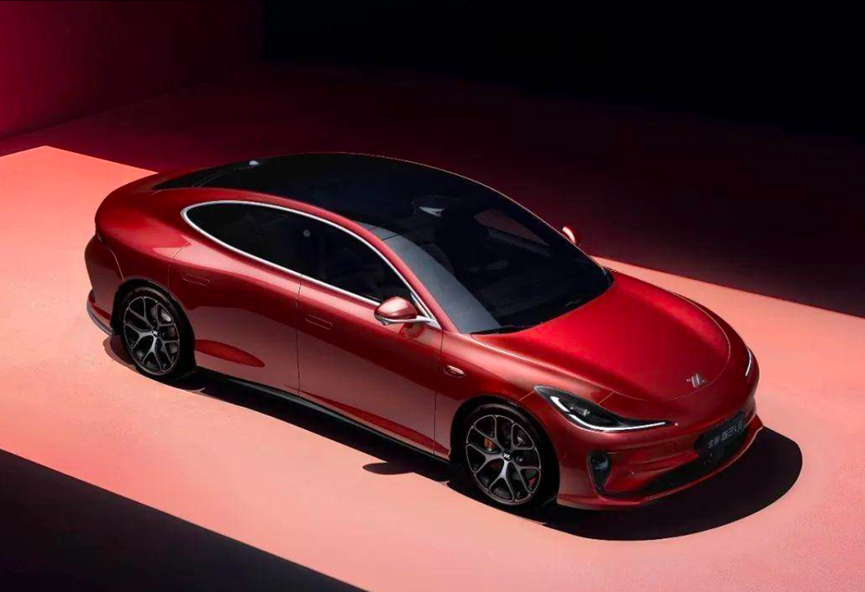
IM's new technology does have strong claims: a CATL customised large battery, 450km of pure-electric range, 800V fast charging, fuel consumption of 5.32 litres per 100km when the battery is depleted, a Lingxi chassis and steer-by-wire technology. Those figures can generate attention.
Attention is not the same as purchase intent. In the extended-range segment, Li Auto has built a strong use-case definition around families, while Aito has used Huawei's ecosystem to raise the user-experience bar. IM has not built the same level of scenario-based marketing or ecosystem identity.
The brand still appears driven by an engineering mindset, emphasising specifications and unconventional design while failing to explain how the car improves users' lives. Its missing capability is not only range-extender technology, but the transition from technology provider to lifestyle and experience leader.
SAIC now has other options
IM's timing is difficult. China's auto market no longer gives new brands unlimited room to experiment. Slow execution, unclear positioning and repeated communication mistakes can push a brand to the edge quickly.
SAIC also has no reason to rely on IM alone. The group has launched Shangjie with Huawei, giving it another route into intelligent new-energy vehicles. If Shangjie gains traction, IM may find its internal protection weakened.
IM completed a Series B financing round of about $1.3bn at the end of 2024. That investment increases pressure to show results, not simply to unveil new technology.
The hard issue is market independence
IM's sales decline is a symptom. The deeper problem is that the brand has not shown enough ability to face the market independently. It has technology support, capital and a powerful parent, yet it has not converted those advantages into a clear consumer proposition.
The Hengxing range-extender system may improve future products, but it cannot by itself repair positioning, trust, channel execution or marketing judgement. IM's next phase will determine whether it can become the premium EV champion SAIC wanted, or remain an expensive project looking for a reason to exist.