
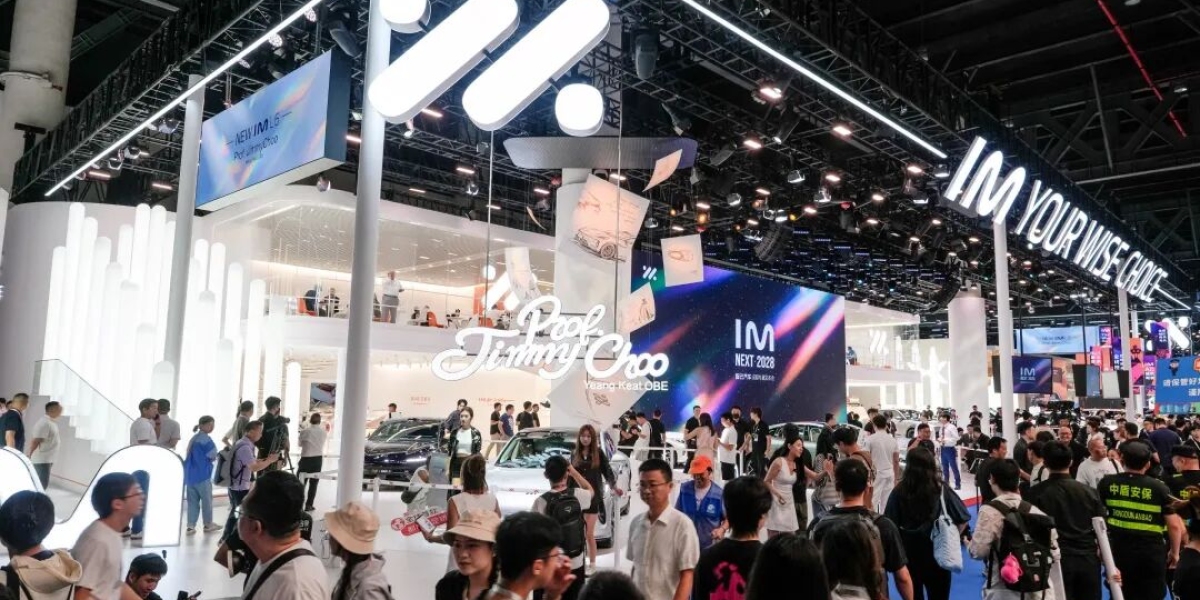
IM Motors has unveiled a new product strategy designed to make its most advanced electric-vehicle and intelligent-driving technology standard across future models, with the next-generation LS6 set to become the first major test of that approach when it launches in September.
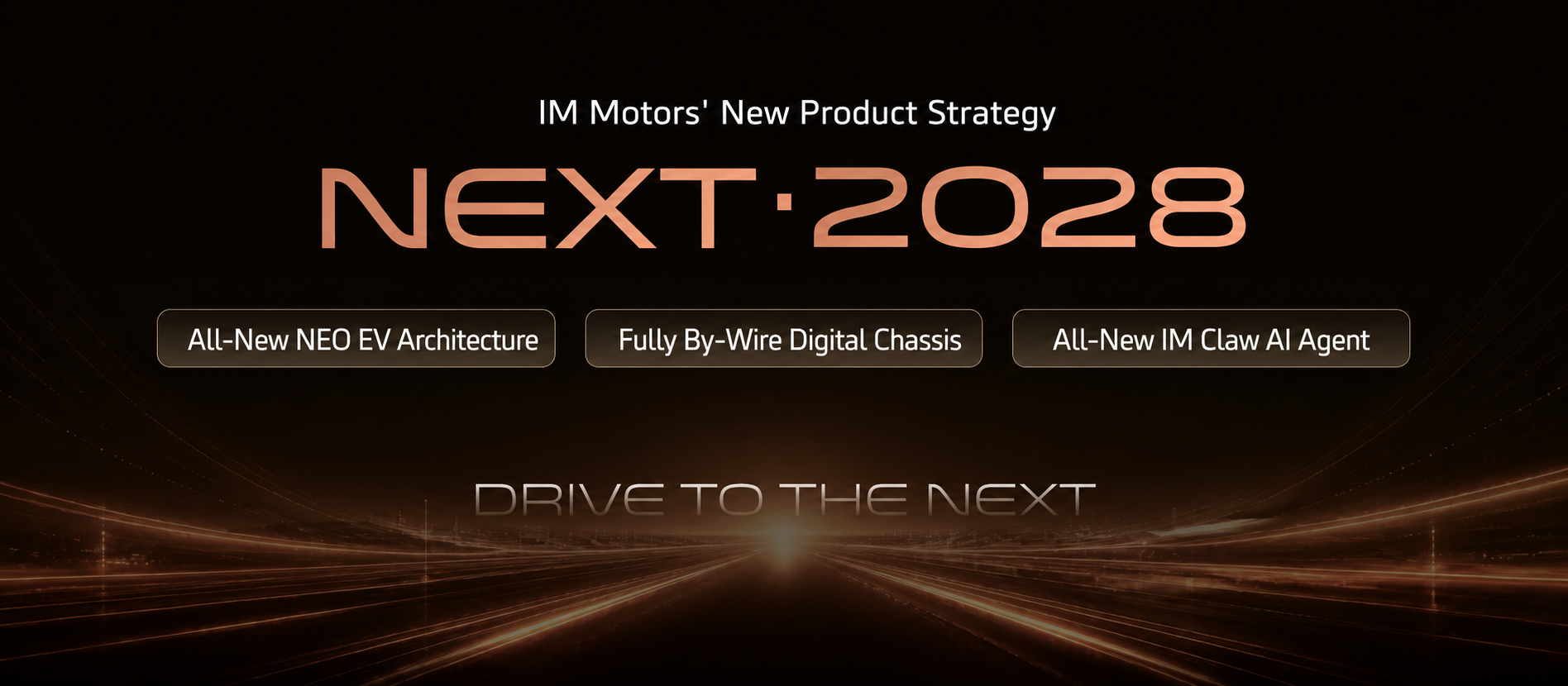
The SAIC Motor-backed premium EV brand introduced its “NEXT 2028” plan at the 2026 Chengdu Motor Show on August 21. The strategy is built around three pillars: a new NEO electric architecture, a fully by-wire chassis and an AI agent called IM Claw.
IM Motors says the programme will bring flagship systems to its broader line-up two to three years earlier than would otherwise be expected in this part of the market. That promise reflects a wider shift across China’s EV industry, where technology once reserved for expensive halo models is moving rapidly into mainstream vehicles.
Flagship Technology Moves Across the Range
The strategy extends an approach IM Motors has followed since its early models. The company introduced four-wheel steering as standard across its range in 2022, followed by standard lidar in 2023. It later added its Lingxi digital chassis and a range-extender system marketed as “Stellar”, before making its fully by-wire chassis a central part of the latest product cycle.
That history matters because “NEXT 2028” is not being presented as a single concept vehicle or a distant research programme. IM Motors intends to install the three core technologies across subsequent models, turning advanced hardware and software into a common product foundation.
For buyers, the immediate question is whether that standardisation can deliver a consistent experience without pushing prices sharply higher. For the company, it is also a test of whether technology developed with the scale and engineering resources of SAIC can give IM Motors a clearer position in China’s crowded premium EV market.
NEO Architecture Targets Efficiency and Faster Charging
The new NEO architecture covers the electric drive system, thermal management, electrical architecture and vehicle software. At its centre is a new family of “Hurricane” motors that IM Motors says improves combined CLTC drive efficiency by 2.8% while reducing motor weight by 8%.
The system works with the company’s Energy Efficiency Master 3.0 software, which is intended to lower overall power consumption. IM Motors has not yet provided a full set of independently comparable consumption figures for the models that will use the architecture, leaving the real-world advantage to be tested after launch.
A vehicle-wide 800-volt electrical platform is another part of the package. The company claims it can draw maximum available power from more than 90% of charging points in the market and recharge a battery from a low state of charge to 80% during the length of a typical coffee stop. Actual charging performance will still depend on battery specification, temperature and the output of the charger.
By-Wire Chassis Becomes the Hardware Base for Automation
IM Motors is placing equal weight on its fully by-wire chassis, which replaces or reduces conventional mechanical connections in key steering and control functions. The company describes the system as an aerospace-inspired safety platform as well as a way to change vehicle dynamics.
The steering-by-wire system is rated at 10 FIT, an engineering reliability measure equivalent to a maximum of 10 failures per billion operating hours, and is supported by three layers of redundancy, according to IM Motors. The company also claims a response time of 20 milliseconds, more than ten times faster than a typical human reaction.
The strategic value goes beyond handling. A vehicle capable of allowing software to control steering, braking and other chassis functions with sufficient redundancy provides the hardware foundation for more advanced AI agents and Level 3 or Level 4 automated-driving systems. That does not make the vehicle autonomous by itself, but it removes one of the mechanical barriers to deeper software control.
IM Claw Aims to Turn Voice Commands Into Actions
The third pillar, IM Claw, is intended to move in-car AI beyond question-and-answer voice assistance. IM Motors says a driver will be able to use a single spoken instruction to plan and adjust complex journeys, including collecting passengers from several locations or adding stops along an existing route.
The company is also preparing an assisted-driving system called IM AD ZETA. It is designed to work with a world model supplied by Chinese autonomous-driving specialist Momenta. IM Motors says the model will contain three to four times as many parameters as mainstream systems and offer a performance ceiling up to 20 times higher, although it has not disclosed a common benchmark that would allow those claims to be independently compared.
The commercial proposition is to use model capabilities developed with Level 4 automation in mind to improve a Level 2 driver-assistance system. Drivers will remain responsible for the vehicle, but IM Motors argues that a more capable physical-AI model can improve safety, comfort and decision-making within that boundary.
New LS6 Takes the Strategy Into the $30,000 Segment
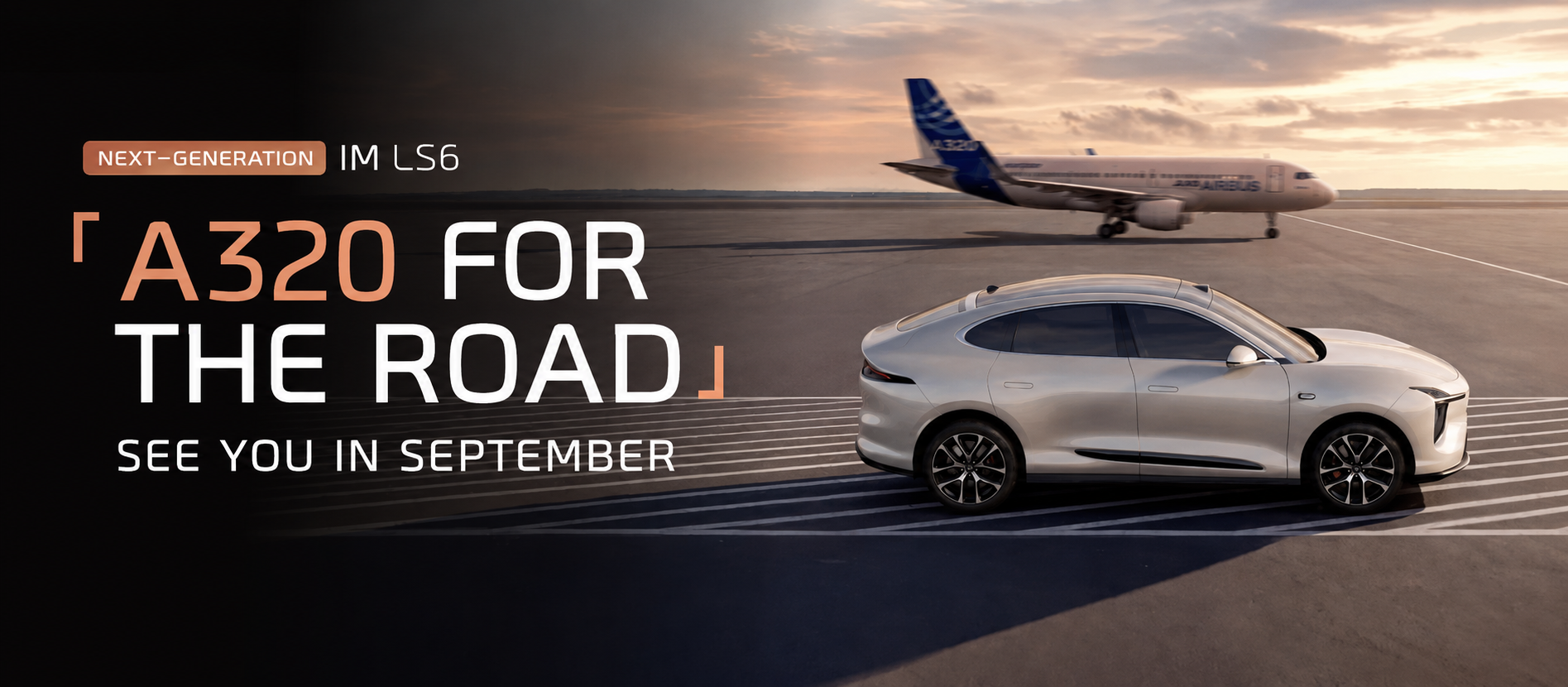
The next-generation LS6 will be the first high-profile production model to combine the three pillars when it is formally launched in September. IM Motors says every version will receive the NEO architecture, the fully by-wire chassis and the new intelligent systems.
The SUV is aimed at the family market around the $30,000 price segment in China. IM Motors is using the by-wire chassis to position the LS6 around what it calls aerospace-grade safety, while the cabin is being marketed as a “super first-class” interior developed with ideas drawn from aviation.
The company has gone as far as describing the vehicle as an “A320 for the road”. The comparison is unmistakably promotional, but it shows how IM Motors intends to sell the LS6: not simply as another technology-heavy electric SUV, but as a family vehicle combining software, chassis control and long-distance comfort.
Special-Edition L6 Models Add Design and Performance
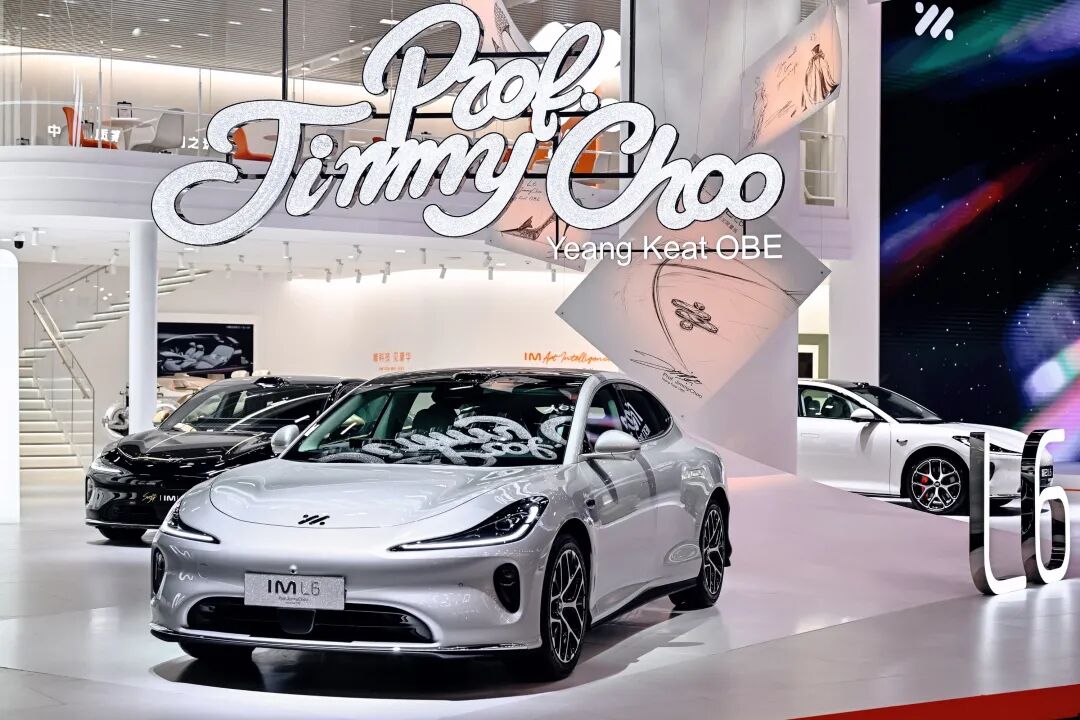
IM Motors also used the Chengdu show to display two special versions of the next-generation L6 electric fastback, which competes in roughly the same $30,000 price band. The Prof. Jimmy Choo Bespoke Limited Edition was developed with Malaysian-born British designer Jimmy Choo and combines fashion-led detailing with the model’s latest vehicle technology.
Pre-sales opened on August 18. Production of the first batch is limited to 1,000 vehicles, with 100 purchase allocations released at 10am each day. IM Motors says the available slots have sold out as soon as they were opened, suggesting early demand for a model positioned as a design-led alternative in the electric sports-sedan market.
A second version, created with performance driver Sean Lee, focuses on the L6’s handling potential and scope for modification. Lee described it as “one of the best cars I’ve ever driven” during the presentation, giving IM Motors another way to frame the L6 beyond luxury and digital features.
The two L6 editions broadened the company’s message at Chengdu, but the LS6 will carry the greater strategic burden. Its September launch will show whether “NEXT 2028” can translate a dense package of engineering claims into a vehicle that feels meaningfully different to customers in one of the world’s most competitive EV segments.