
At the pre-sale launch of the new MG4 on August 5, MG general manager Chen Cui was filmed wiping away tears as a short film honoured China's new-energy vehicle engineers.
A launch-night tear captured a bigger story
The moment quickly spread online, but it resonated because MG's position has become more complicated: strong overseas sales, weak domestic attention and a new push to prove its technology credentials.
Chen's emotion reflected several pressures. MG faces heavy EU tariffs, it has spent years trying to break through technical barriers in EV thermal management, and it is preparing to put semi-solid-state battery technology into an affordable electric hatchback.
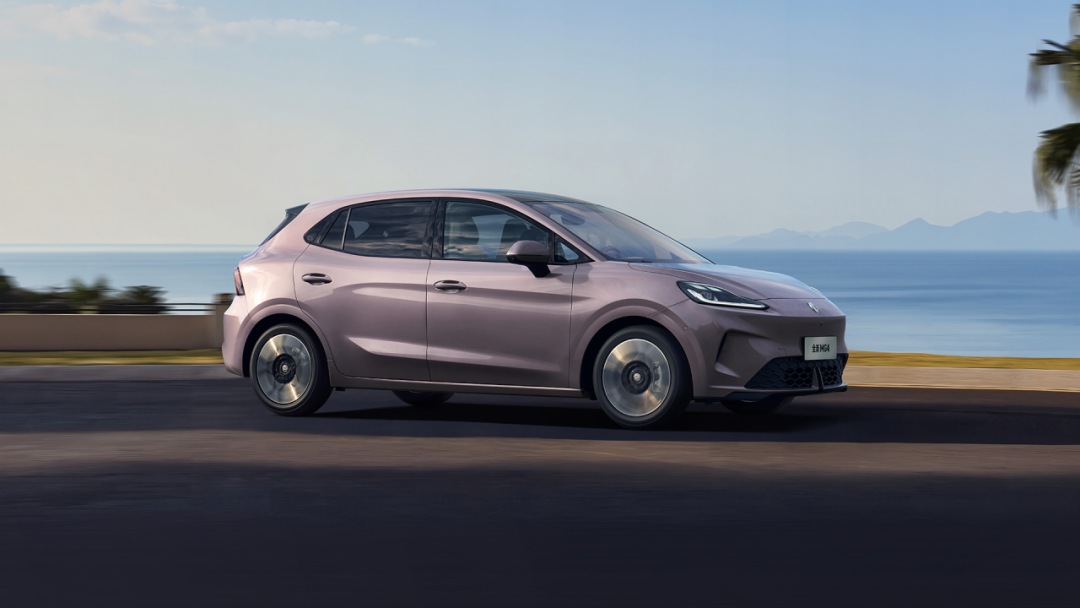
The new MG4 enters pre-sale in China at roughly $10,000 to $15,000. It offers a 2,750mm wheelbase, up to 530km of CLTC range, a 120kW motor and a technology package intended to make it more than another budget A0-class EV.
Europe has been MG's strength
MG has been one of the clearest examples of a Chinese brand succeeding overseas. It has been China's top single-brand auto exporter for five consecutive years. In the first half of 2025, MG sold 153,154 vehicles in Europe, up 18.6 per cent, surpassing Tesla's regional sales over the same period according to figures cited in the article.
The MG4 has been central to that story. In 2023, MG4 EV exports reached 138,700 units, making it Europe's best-selling compact battery-electric model. In June 2024, the MG4 ranked second among pure-electric models in Germany with 4,492 sales, ahead of the Volkswagen ID.3 at 3,257 units, making it the first Chinese model to enter the top three of that ranking.
MG's earlier EZS electric SUV also benefited from the brand's British heritage and European-style certification. Whole-vehicle type approval, five-star European safety credentials and UL2580 battery safety standards helped it win early attention in markets such as Israel, where it briefly led the local EV segment in early 2020.
SAIC's Anji Logistics network has supported MG's overseas expansion, linking production, shipping and regional distribution. A Thai production base serves Australia and New Zealand, while vehicles from a Pakistan KD facility support Middle Eastern markets. This logistics base helped MG maintain growth from 2020 to 2023, even as the global auto industry weakened.
The home market has been colder
MG's China business has not matched its overseas momentum. Some domestic MG dealers faced sales pressure in May 2025, with inventory build-up, larger terminal discounts and weaker salesperson performance. Models that once drew attention have faded in a domestic market crowded with aggressive new-energy rivals.
That imbalance makes the new MG4 important. It is not only a product update, but an attempt to show Chinese consumers that MG can compete through technology rather than relying on export reputation.
A technical counterattack starts with heat management
MG's engineering push began with EV thermal management. Tesla has long held advantages through aluminium-nickel alloy patents. MG invested about $69mn and mobilised more than 400 researchers over more than 2,500 days to develop an aluminium-lanthanum-cerium alloy as an alternative path.
The team tested from Mohe in northern China to Tibet in conditions ranging from minus 35C to 60C. The resulting thermal-management system is claimed to cut air-conditioning energy use by 50 per cent and reduce vehicle energy consumption to 10.4kWh per 100km. Its operating range extends down to minus 35C, around 20 per cent wider than the typical minus 25C lower limit cited for Tesla's system.
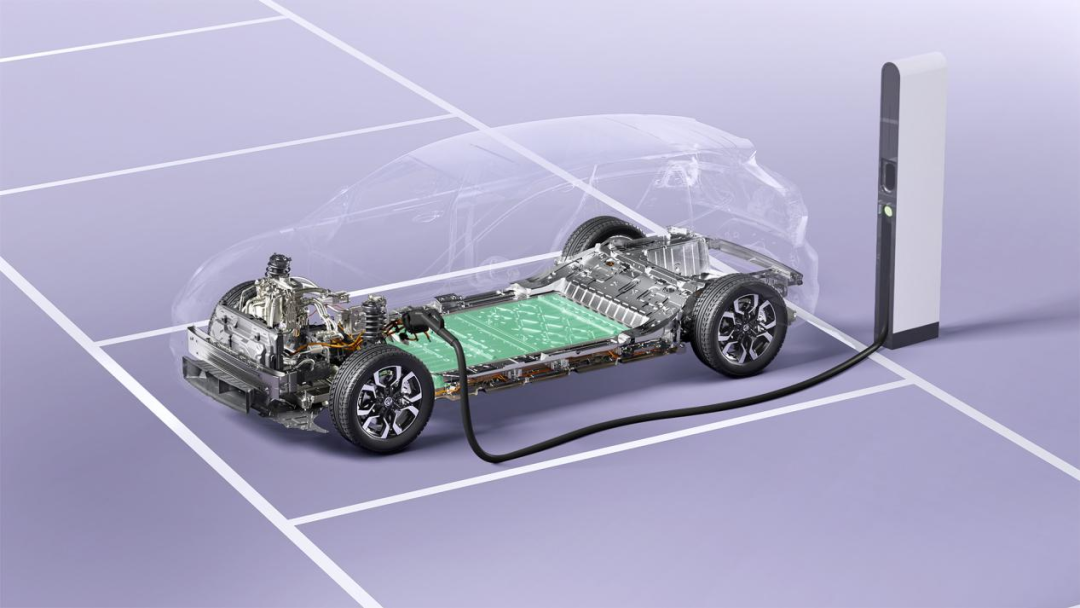
MG's larger bet is the semi-solid-state battery. The new MG4 uses QingTao Energy's second-generation semi-solid-state battery in its top version. Liquid content is reduced to 5 per cent, improving stability and safety. The battery has passed three-direction nail-penetration testing without smoke or explosion, and it can still charge at minus 25C.
SAIC has invested nearly $403mn in QingTao Energy over multiple rounds. Applying that technology to an EV in the roughly $10,000 class gives MG a chance to bring advanced battery language into a much lower price segment. MG has also promised full-vehicle compensation if the MG4 suffers a battery self-ignition event, a bold statement of confidence in the system.
Pricing exposes the tariff challenge
The MG4's China pricing contrasts sharply with Europe. In the UK, the model starts at about £25,995. The difference reflects more than positioning. The EU has imposed a 37.6 per cent additional tariff on MG-brand vehicles from China, taking the total tariff burden to 47.6 per cent when standard duties are included.
That cost pressure makes technology and local value harder to translate into European pricing. It also forces MG to sharpen its China strategy. Lower domestic versions use simpler equipment, such as a plastic steering wheel and steel wheels, while concentrating spending on core areas including SAIC's E3 electric platform, CTB battery-body integration and a Qualcomm Snapdragon 8155 cockpit chip.
The top version, priced around $15,000, adds L2 driver assistance. MG is trying to give A0-class buyers something closer to a larger-car ownership experience, with a 93.8 per cent cabin-space ratio and rear legroom compared by the brand to a B-segment car.
From export bridgehead to technology pushback
The European challenge is growing. The UK plant option would not fully remove cost pressure because post-Brexit vehicles entering the EU face additional duties. Rivals are also catching up. In May 2025, Geely registered 32,992 new vehicles in Europe, ranking ninth among automakers, while SAIC registered 29,387 and ranked tenth. BYD's battery-electric registrations rose 397 per cent year on year to 7,111, while MG recorded 4,114.
Chen used the MG4 launch to frame the new model as a response to the tariff barrier, saying MG's technology counterattack had arrived. The MG4 has already sold more than 40,000 units cumulatively in Europe, with first-half 2025 European sales up 33.5 per cent. If the new technology proves durable, it could be used across other overseas MG models.
MG's lesson is broader than one model. Export scale gave the brand a global foothold, but technology ownership may decide whether it can keep that position under tariffs and rising competition. For Chinese automakers seeking to move up the global value chain, core technology is becoming the only reliable passport through a more protectionist world.