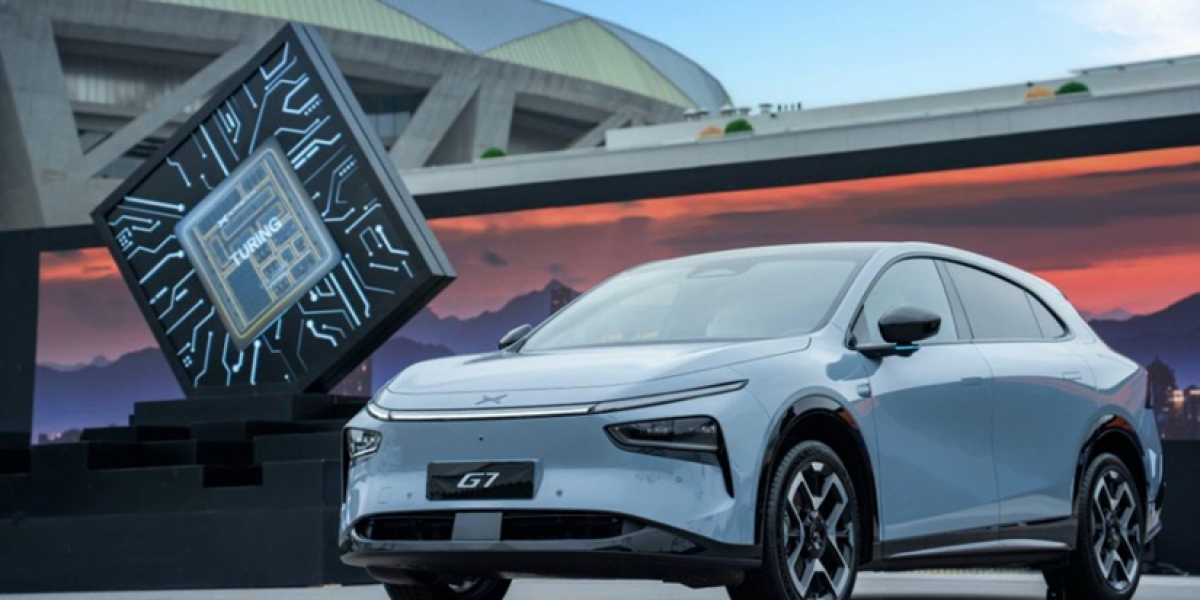
Xpeng's G7 arrives at a moment when the company needs a product with both sales potential and technology theatre.
A model built for attention
After a difficult period, Xpeng is using the G7 to fill the space between the G6 and G9 while presenting itself as a leader in the next phase of intelligent driving.
The company's messaging has been bold. He Xiaopeng has described the G7's L3 capability as far beyond human driving and has said Xpeng aims to achieve more than ten times the end-to-end driving capability needed for L3. The car drew more than 10,000 orders within 46 minutes of pre-sale in June, then passed 10,000 locked-in orders nine minutes after launch on July 3. Xpeng's US-listed shares rose more than 2 per cent that night.
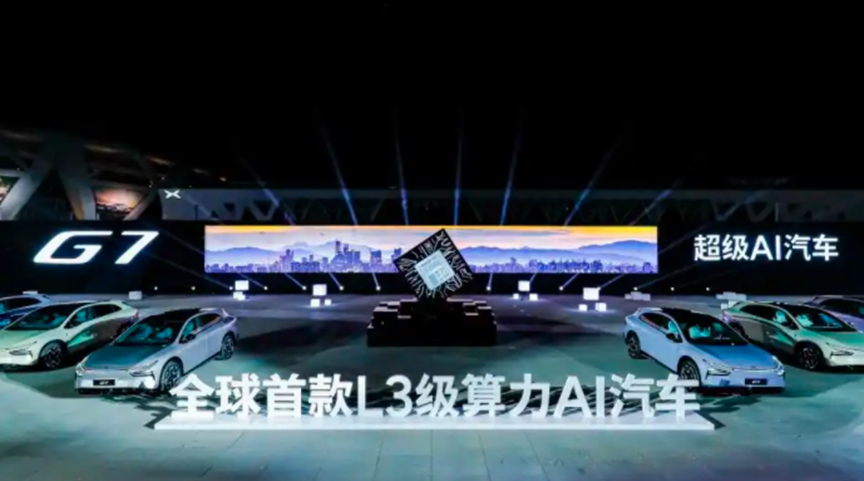
The headline phrase, "the world's first AI car with L3-level computing power", has given the G7 immediate visibility. It also puts the model close to the boundary between regulatory caution and consumer expectation.
L3 computing power is not L3 autonomous driving
On paper, the G7's technology package is striking. It uses three self-developed Turing AI chips, 5nm process technology, full claimed computing-power utilisation, 30 per cent power-consumption optimisation, five 128-line lidars with 200m detection range, 11 cameras, millimetre-wave radar and 360-degree environmental perception.
By comparison, the updated Tesla Model Y increased computing power from 144 TOPS to 720 TOPS, while Xiaomi YU7 uses Nvidia's Thor platform, one lidar, one 4D millimetre-wave radar, 11 high-definition cameras and 12 ultrasonic radars with 700 TOPS on a 4nm process.
The G7's specifications therefore support a strong technology story. The issue is the wording. "L3-level computing power" is not the same as "L3 autonomous driving". In a market where regulators discourage exaggerated autonomous-driving claims, the phrase allows Xpeng to use the emotional force of L3 without promising a legally recognised L3 driving function.
That distinction matters for consumers. Computing power is a resource. Driving capability depends on sensors, redundancy, software validation, operating domain, regulation, liability rules and real-world performance.
A chip bet needs a public payoff
Xpeng has reason to showcase its own chips. In early 2022, the company reportedly ended a chip cooperation project after finding serious flaws in the underlying architecture, taking losses described as hundreds of millions in local currency. Moving to self-developed chips was a costly strategic decision.
The G7 gives Xpeng a chance to show that the investment has produced a marketable advantage. Yet the product strategy also shows caution. The Max version still uses two Nvidia Orin-X chips, while only the Ultra version carries three Turing chips. That suggests Xpeng is testing market acceptance rather than switching entirely to its own silicon at once.
The road to true L3 is longer
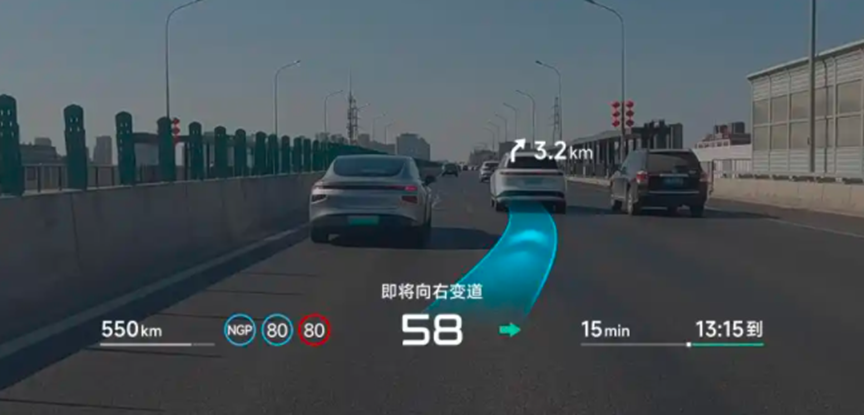
The G7's 2,200 TOPS computing platform supports Xpeng's VLA and VLM systems. VLA, or vision-language-action, is described as a decision layer that can understand complex scenarios such as collapsed roads or potholes and generate control signals. VLM, or vision-language model, combines visual and semantic information so the vehicle can interpret surrounding context.
These systems may be important steps toward higher-level intelligent driving. They do not by themselves make the car a certified L3 vehicle. He Xiaopeng has acknowledged that L3-level computing and AI capability are only the first step, and that true L3 still requires hardware dual redundancy and legal certification.
That is where the gap remains. Hardware redundancy in L3 systems usually implies robust backup across sensing and control. Xpeng's broader shift toward a vision-led intelligent-driving route still raises questions about extreme-weather reliability, since heavy rain, glare or poor visibility can degrade camera performance. Lidar can provide more reliable ranging in some adverse conditions, while camera systems can suffer from blurred or compromised imaging.
For consumers, the difficulty is that the most heavily marketed capability is not yet something they can fully experience or verify. The promise is future-facing, while the purchase decision is immediate.
The G7 faces a crowded market
Without the L3 computing label, the G7's competitive position becomes more uncertain. It targets the Tesla Model Y, but Tesla is working on a next-generation AI5 chip expected to deliver far higher computing power. Xiaomi YU7 is gaining momentum, and Li Auto's i6 and other similarly priced electric SUVs are also preparing to compete in the same band.
The G7 has useful strengths, including 702km of range and 819 litres of boot space, but those features may not be enough to create a clear gap. Some consumers have also criticised the design for lacking a distinctive identity.
The market's caution has already appeared in share-price moves. Xpeng's stock fell 6.66 per cent after pre-sale, then recovered after the formal launch. The mixed reaction suggests investors see potential, but not an easy path.
A breakthrough or a risky claim
The G7 gives Xpeng a technology-heavy product at a time when intelligent driving has become central to competition. Its computing power, sensors and self-developed chips are meaningful assets.
The risk is that the L3 label may create expectations that the current legal and technical environment cannot meet. Many companies believe they are approaching L3 capability, but most avoid testing the regulatory boundary in consumer marketing.
If buyers understand the G7 as a powerful assisted-driving platform, it may help Xpeng regain momentum. If they interpret the message as a promise of true L3 autonomy, disappointment could follow. The car's success will depend on whether Xpeng can turn computing power into trusted capability, not only a headline.