BMW has opened Chinese orders for the locally built Neue Klasse iX3 at a national fixed price starting at about $40,000, placing one of the German carmaker's most important electric vehicles into a market where software, range and charging performance now carry as much weight as the badge.
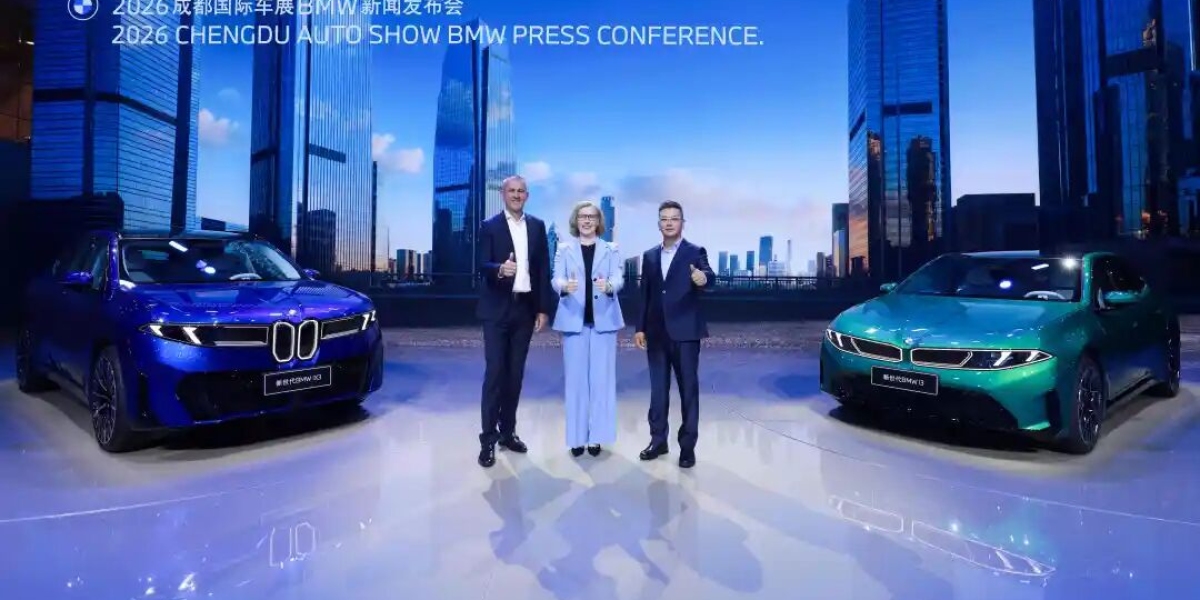
The electric sport utility vehicle made its Chinese debut alongside the new BMW i3 at the 2026 Chengdu Motor Show. BMW said the iX3's pre-order price will remain unchanged when the model goes on sale, removing the dealer-by-dealer price variation that has long been part of China's premium-car market. The China-specific i3, the eighth generation of BMW's compact sports saloon, is due to reach customers in the first quarter of 2027.
Together, the two models bring BMW's Neue Klasse technology package into series production in China. The programme combines a new electrical architecture and sixth-generation electric drivetrain with software and artificial-intelligence systems developed around Chinese roads, digital services and consumer expectations.
Sean Green, president and chief executive of BMW Group Region China, described the launch as the start of a new phase for the company in its largest single market. For BMW, the larger question is whether a century-old premium brand can translate its engineering identity into an electric era increasingly shaped by Chinese technology companies.
A Fixed Price and High Standard Specification
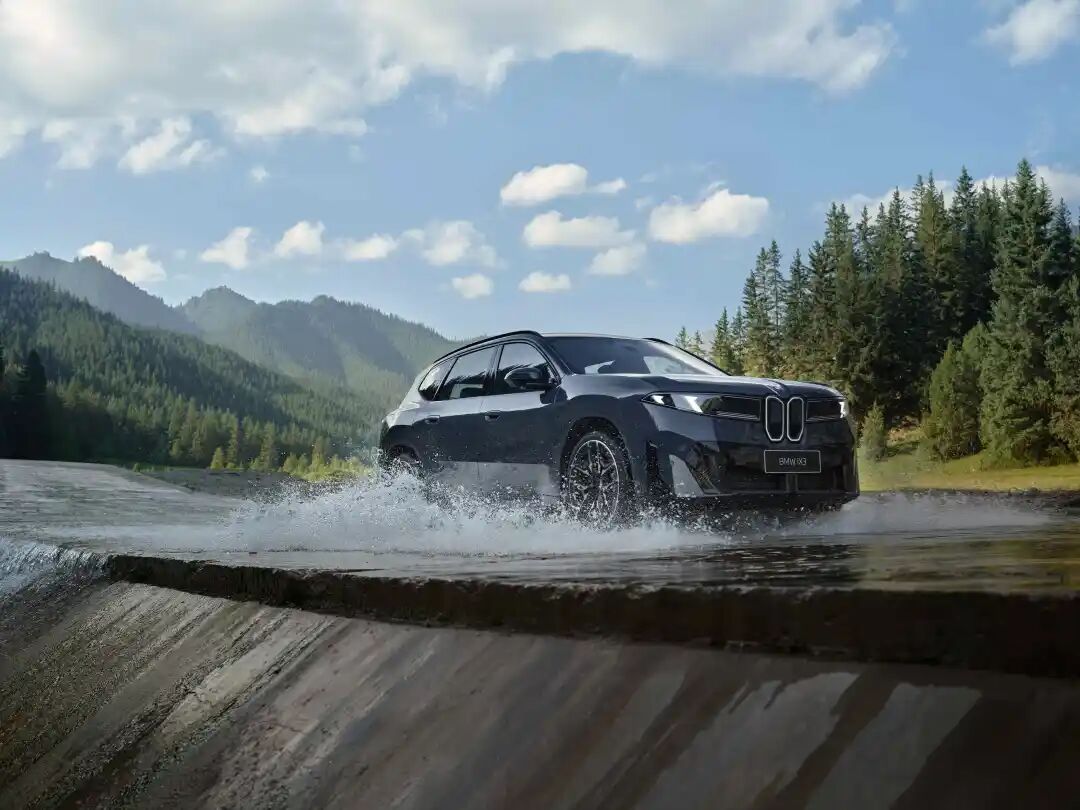
BMW is positioning the iX3 around an "entry model, high specification" strategy, with close to 40 major features fitted across the range. The three versions differ mainly in battery capacity and driving range, limiting the number of comfort and technology options buyers must add separately.
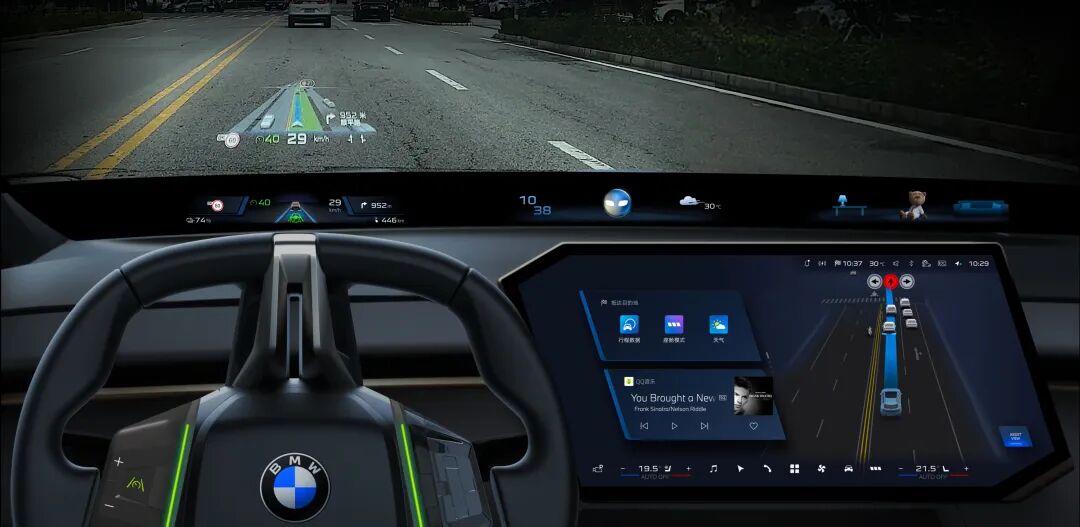
Standard equipment includes BMW's Digital Angel Wing front-end treatment and a new group of displays led by Panoramic Vision. The iX3 also receives an 800-volt electrical platform, the Heart of Joy central vehicle-control computer and a smooth-stop function intended to make braking more precise and progressive.
Inside, the BMW AI Personal Assistant integrates Alibaba's large-language-model technology, while an AI-powered image feature allows occupants to create personalised visual content. Ventilated front seats, a massage function for the driver, heated seats in both rows and a Harman Kardon audio system are also standard across the range.
BMW's advanced driver-assistance package, valued by the company at more than $3,000, is included on every iX3. The system covers assisted navigation in urban areas and on motorways, an area in which foreign carmakers have increasingly turned to Chinese technology partners to match rapidly evolving local products.
BMW said the overseas version of the Neue Klasse iX3 received a five-star rating in Euro NCAP's 2026 testing and has won both World Car of the Year and World Electric Vehicle awards. European orders are approaching 100,000, according to the company. The China-built version retains BMW's global safety standards but adds locally developed software, driver assistance and a specification tailored to Chinese buyers.
The i3 Recasts BMW's Driver-Focused Saloon
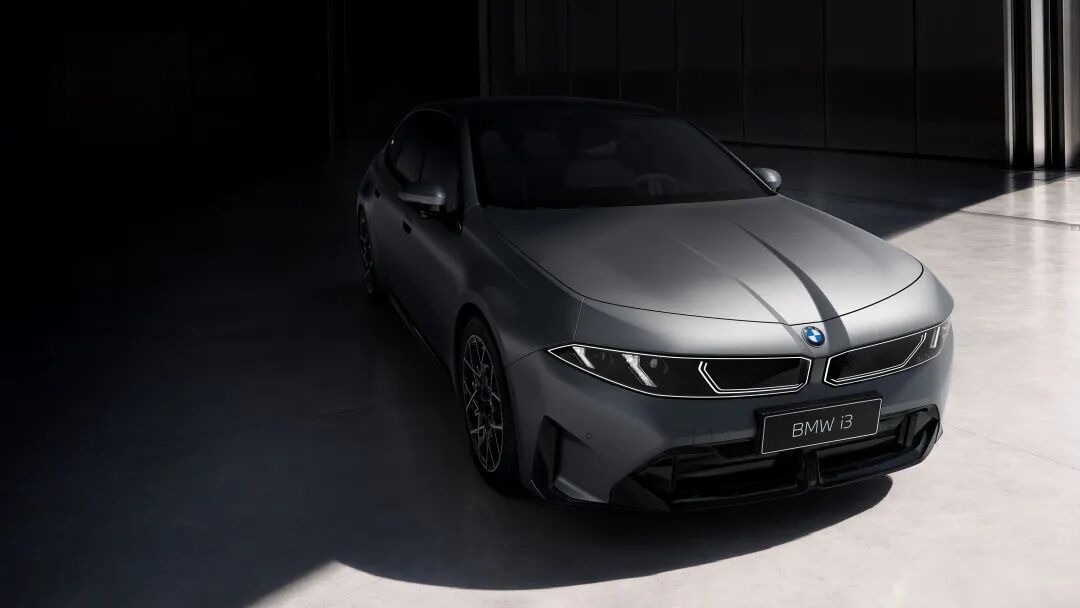
The new i3 extends the Neue Klasse formula to a model developed specifically for China. BMW will offer nine exterior colours, including Isle of Man Green, which is being produced locally for the first time, as well as Le Castellet Blue and Eucalyptus Green.
A longer rearward sweep to the roofline is intended to preserve the car's sporting profile while creating more passenger room. Its 3,005-millimetre wheelbase gives most of the additional space to rear-seat occupants, reflecting the greater importance of rear comfort in China's premium market.
The panoramic glass roof uses a three-layer silver coating and a Low-E composite structure. BMW claims heat insulation of more than 87.5% and ultraviolet blocking of 99.9%, specifications aimed at making the cabin more usable in both hot summers and cold winters.
The i3's digital cockpit is built around the China version of BMW Operating System X and four principal interfaces arranged within what the company calls a "visual cone" around the driver's line of sight. The central display is angled 17.5 degrees towards the driver and turned a further three degrees compared with BMW's sport-utility models. The layout is designed to reduce the need for drivers to take their hands from the wheel or their eyes from the road.
BMW and Alibaba have jointly developed a dedicated AI engine for the vehicle, supplemented by DeepSeek's reasoning capability. The resulting voice assistant is intended to support more natural conversations and task-specific AI agents. Drivers can also use voice commands, an in-car camera or images uploaded through the My BMW app to generate animations for the Panoramic Vision display.
A new Driving Fun Index turns steering, acceleration and braking inputs into real-time visual feedback. It is an unusually digital interpretation of BMW's traditional focus on driver involvement, using software to show how smoothly and precisely the car is being driven.
Momenta Brings a China-Trained Driving System
The driver-assistance technology in the locally built iX3 is based on BMW's partnership with Momenta, one of China's leading automated-driving companies. It uses Momenta's R7 architecture, combining reinforcement learning with a world model trained on more than 15 billion kilometres of Chinese road data.
The aim is to move beyond identifying vehicles, pedestrians and lane markings towards interpreting complex road behaviour. That distinction matters in Chinese cities, where mixed traffic, closely spaced road users and rapidly changing lane conditions can test systems developed primarily for Europe or North America.
Over-the-air updates will allow the algorithms and software to evolve after delivery. Panoramic Vision, the driver-angled central display, a 3D head-up display and the vertical-spoke sports steering wheel work together to show assistance status, detected surroundings and lane-level navigation.
BMW has also linked the assistance system with its Heart of Joy control unit. By coordinating braking, steering and acceleration through one high-speed computer, the company says it can deliver smoother and more accurate responses without diluting the handling character expected of a BMW.
The carmaker is placing equal emphasis on predictable system behaviour and a clear handover between vehicle and driver. BMW draws on more than two decades of driver-assistance development, but the China programme shows that experience alone is no longer sufficient: international manufacturers also need local data, local software partners and interfaces suited to local roads.
More Than 1,000 Kilometres of Claimed Range
The longest-range iX3, the 50L xDrive, is rated at 919 kilometres under China's CLTC test cycle. BMW says the new i3 will exceed 1,000 kilometres on the same measure. CLTC figures are typically more generous than European WLTP ratings, yet the numbers underline how strongly range continues to influence competition in China.
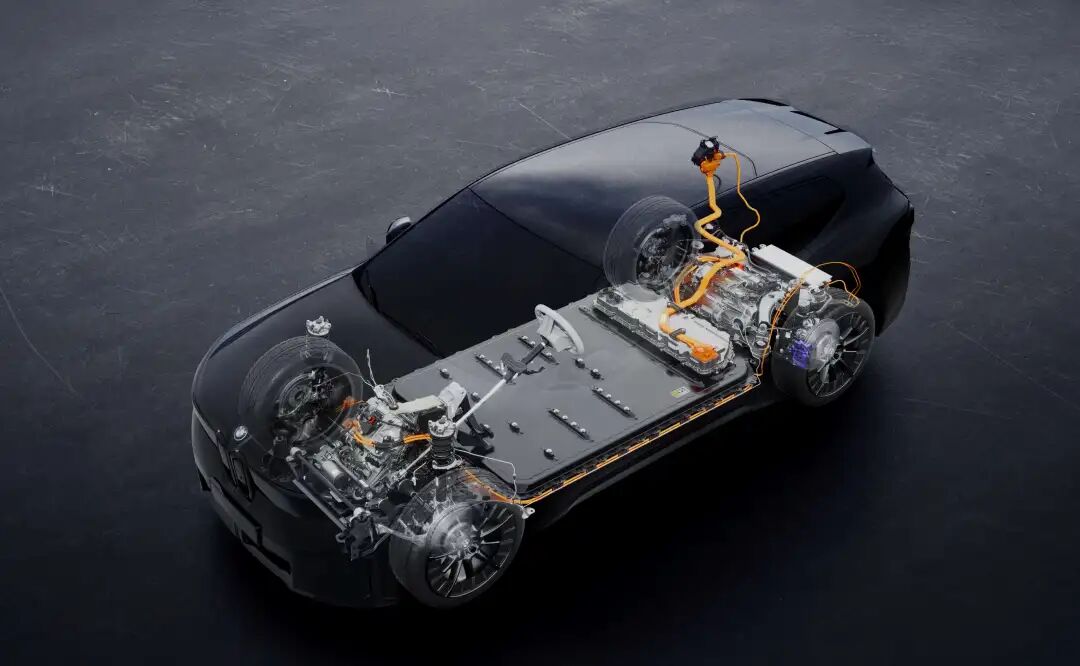
BMW's sixth-generation electric-drive system combines the battery, motors, thermal management and vehicle-level energy controls under a new 800-volt architecture. Peak charging power reaches 400kW. A body-integrated battery design improves packaging and structural rigidity while lowering the centre of gravity, supporting both passenger comfort and the handling balance that remains central to the brand.
The iX3 range uses two battery chemistries for different customer needs. Lithium iron phosphate batteries target frequent commuting with a balance of cost, durability and efficiency. Buyers seeking greater range and performance can choose a high-nickel cylindrical-cell system, described by BMW as the first production application of a "9-series" high-nickel large cylindrical cell in China.
BMW says the new cylindrical cells offer 20% more energy density than the prismatic cells used in its fifth-generation eDrive system. A steel casing and a pressure-release valve designed into the base are intended to strengthen thermal safety while allowing higher performance.
BMW Broadens Its Chengdu Line-Up
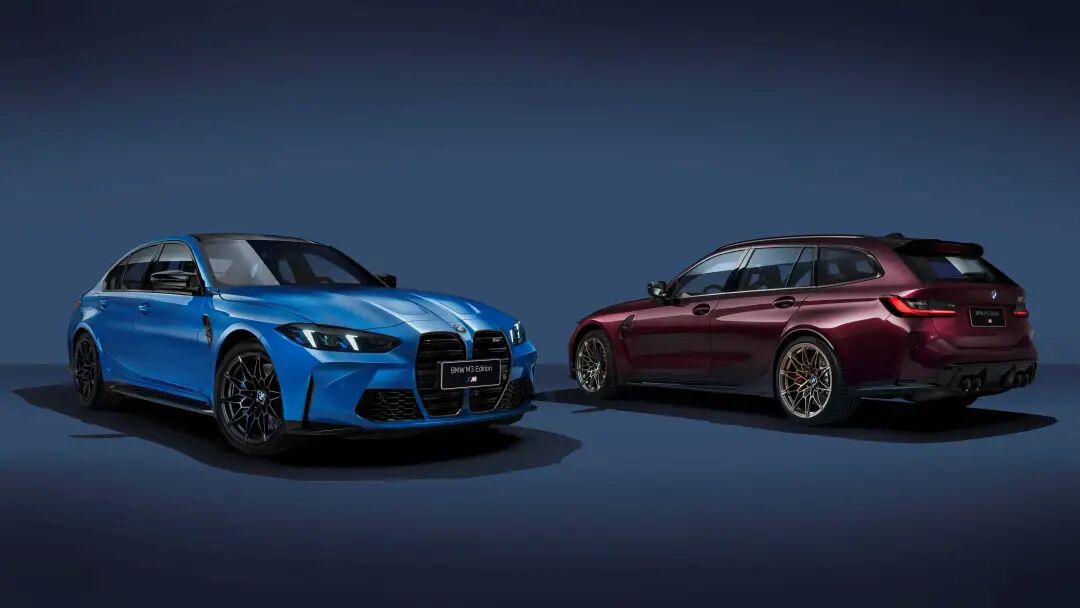
BMW used the Chengdu show to present more than its electric reset. To mark the M3's 40th anniversary, the company launched a limited edition for China, restricted to 20 saloons and 20 Touring models. An updated long-wheelbase 2027 BMW X3 also appeared ahead of deliveries scheduled to begin in September, with revised styling, comfort equipment and voice controls.
MINI is taking a less conventional route. From August 21, more than ten individualised models are being displayed in fashionable shopping districts as part of a "city motor show," shifting the brand's presentation from an exhibition hall to the urban settings where its cars are most likely to be used.
The iX3 and i3 remain the central test. Their design language, electronic architecture and China-focused digital ecosystem will gradually spread across BMW's wider range. Success will depend not only on headline range and charging figures, but on whether the combination of German vehicle engineering and Chinese software can produce an experience strong enough to stand out in the world's most demanding electric-car market.