
BMW is reportedly preparing to abandon the traditional 4S dealership model as early as 2027 and move fully toward direct sales.
A luxury brand questions the 4S model
For a legacy luxury automaker, that would be a major challenge to one of the industry's most entrenched retail structures.
The move reflects pressure. Traditional dealerships have long helped automakers build reach, service capacity and local relationships. But falling sales, thinner margins and chaotic discounting have exposed the limits of the model for BMW.
A direct-sales strategy could give BMW more control over price, customer data and brand experience. It could also create new costs and conflict with the dealer network that has supported the brand for decades.
The pressure behind the change
BMW's recent performance has been weak. In 2024, group revenue fell 8.4 per cent to €142.38 billion, net profit dropped 36.9 per cent to €7.678 billion, and global sales fell 4 per cent to 2.451 million vehicles.
China was especially difficult. BMW sold 714,500 vehicles there in 2024, down 13.4 per cent. Core models such as the 3 Series and 5 Series fell 15.2 per cent and 12.8 per cent respectively. The article says BMW's profit loss in China alone reached €4.4 billion.
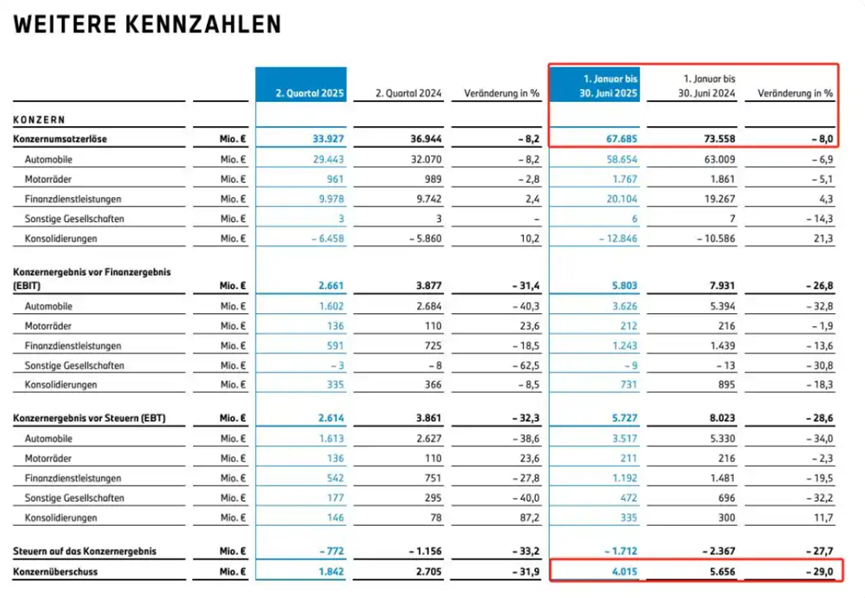
The decline continued into 2025. In the first half, group revenue fell 8 per cent to €67.7 billion, after-tax profit dropped 29 per cent to €4.0 billion, and gross margin declined from 20.5 per cent to 18.2 per cent. China sales fell another 15.5 per cent to 317,900 vehicles, the steepest drop among BMW's major markets.
Those numbers expose a retail problem. In an era of digital research, transparent pricing and intense new-energy competition, traditional 4S stores no longer give BMW the same control they once did.
Why direct sales appeals
BMW's dealer pricing has become inconsistent during China's price war. Some dealers have offered steep discounts, while others have tried to hold price discipline. That volatility damages a luxury brand built on confidence and premium perception.
Direct sales could create more uniform and transparent pricing. If buyers know they will receive the same price and service standard wherever they buy, BMW can reduce the brand erosion caused by dealer-level price battles.
It could also make the company faster. Under the dealer model, changing promotions, adjusting configurations or responding to market demand requires communication through layers of the network. Direct sales gives the manufacturer a more direct link to customers and data.
That matters in the electric and intelligent-vehicle era, where buyers increasingly expect online configuration, transparent information, personalised service and a smoother link between digital and physical retail.
The cost of tearing down the old system
The appeal is real, but so are the risks. BMW has spent decades and significant capital building a dealer network. Replacing or reshaping it would require new experience centres, online sales platforms, logistics, training, service processes and inventory management.
Dealers currently carry part of the inventory and operating burden. If BMW takes more of that onto its own balance sheet, cost and risk may rise rather than fall.
The legal environment is another obstacle. In Brazil, the so-called Ferrari Law restricts automakers from bypassing dealers to sell directly to individual consumers. If BMW tries to implement direct sales there, it could face legal challenges. Changing the law would take time.
China does not ban multiple sales models, but its auto-sales rules also require protection of dealer rights and interests. If BMW compresses dealer profit too aggressively, dealers could push back through complaints or legal claims around unfair competition. The article points to 2024 complaints from some BMW dealers about low-price direct sales affecting offline stores as a warning sign.
The dealer ecosystem problem
BMW's dealers do more than sell cars. They provide maintenance, parts, used-car services and local customer relationships. In a direct-sales model, dealers may shift from profit-sharing partners to service providers.
That change can reduce their incentive to invest in brand experience, local marketing and customer retention. If it happens across a large network, BMW could face what the article describes as a channel-ecosystem fracture.
For a luxury brand, that risk is serious. Premium customers expect a high-quality ownership experience after purchase, not just a transparent transaction at the point of sale.
A necessary gamble
BMW's reported move toward direct sales is ultimately about disintermediation. The company wants more control over customers, data, pricing and brand delivery as the market shifts toward electrification, intelligence and digital retail.
If it works, BMW could repair pricing discipline, strengthen customer relationships and create a model other traditional automakers may study. If it fails, the company could damage dealer trust, raise operating costs and lose more market share.
The direct-sales question is therefore not whether BMW should modernise. It must. The question is whether it can modernise without undermining the network that still supports much of its sales, service and brand credibility.