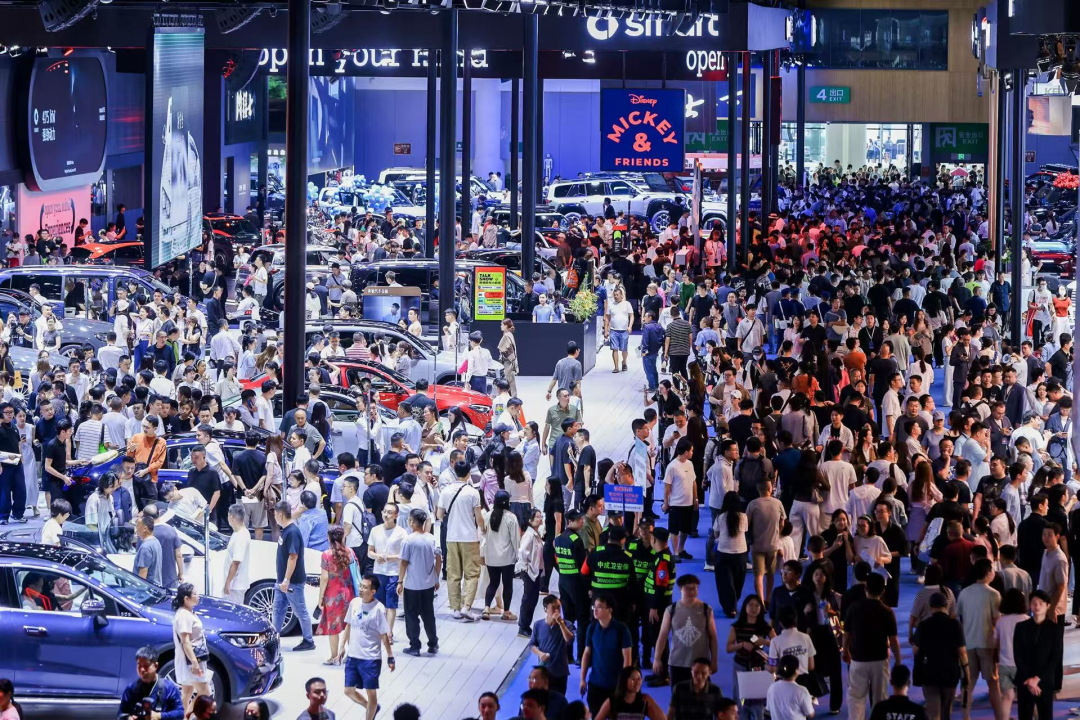
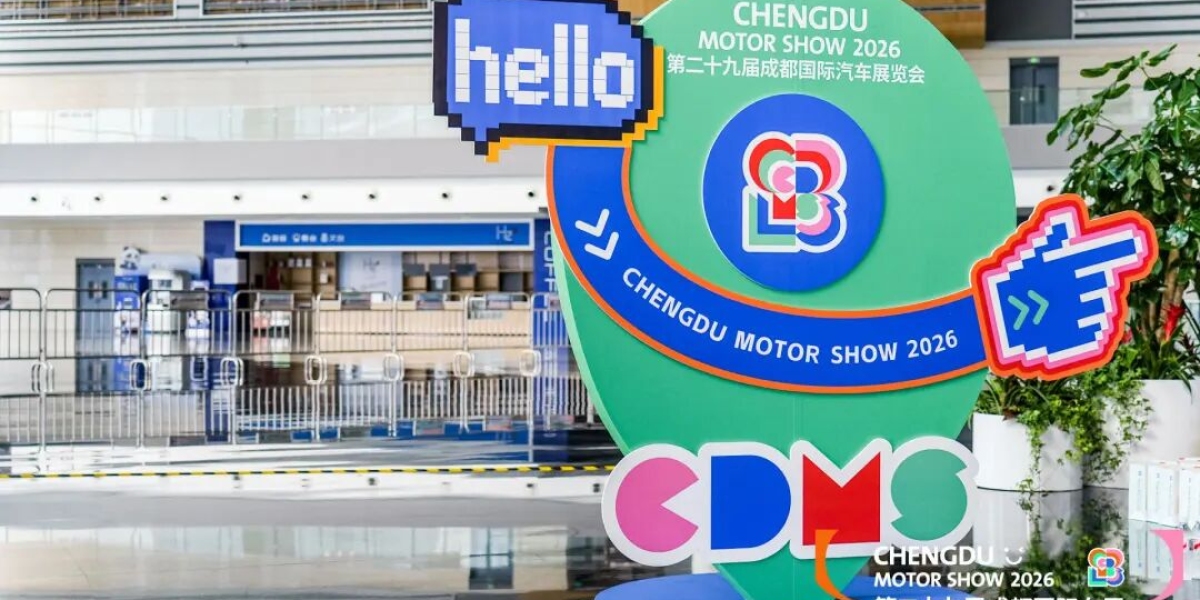
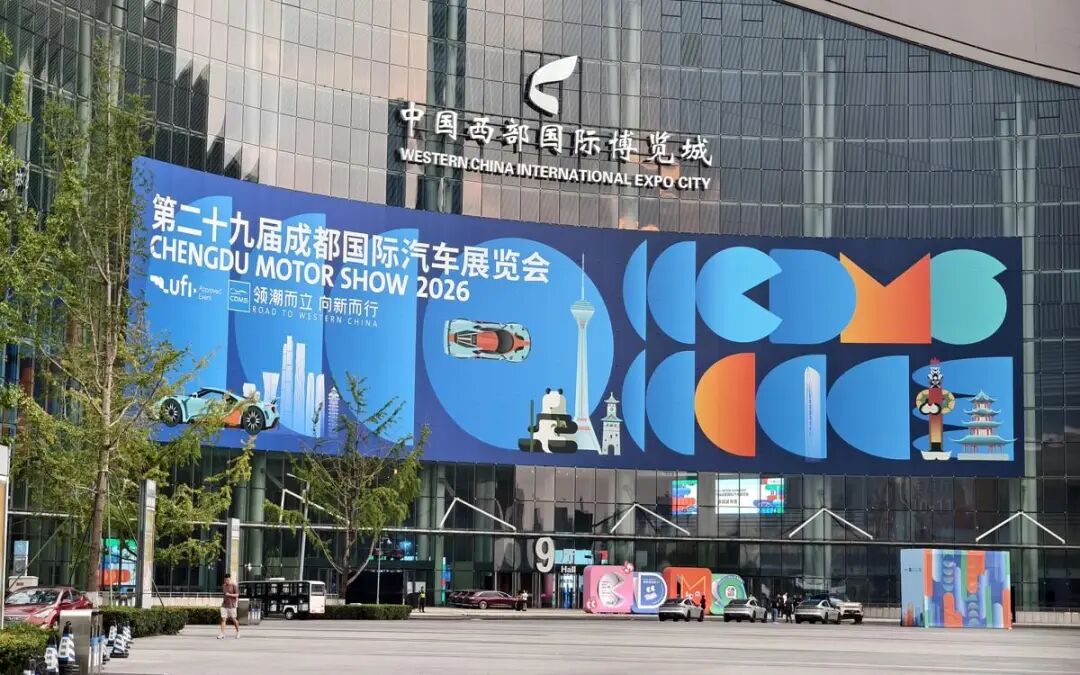
The Chengdu Motor Show has not gone cold. It has become more candid. The event now offers a clear view of how every carmaker sees its relationship with China’s market—and whether a costly regional show still deserves a place in its strategy.
On paper, the 2026 edition remains formidable: 220,000 square metres of exhibition space, nearly 120 brands and about 1,600 vehicles. Yet before the doors opened, the industry’s most persistent description of the show was “quiet”.
The issue is not that visitors have stopped coming. It is that some manufacturers have. Rolls-Royce, Bentley, Porsche, Lexus and Jaguar Land Rover are absent. So are Dongfeng Nissan, Dongfeng Honda, Chevrolet and Yueda Kia. More than 20 brands have stayed away, an unusually large withdrawal in the show’s history.
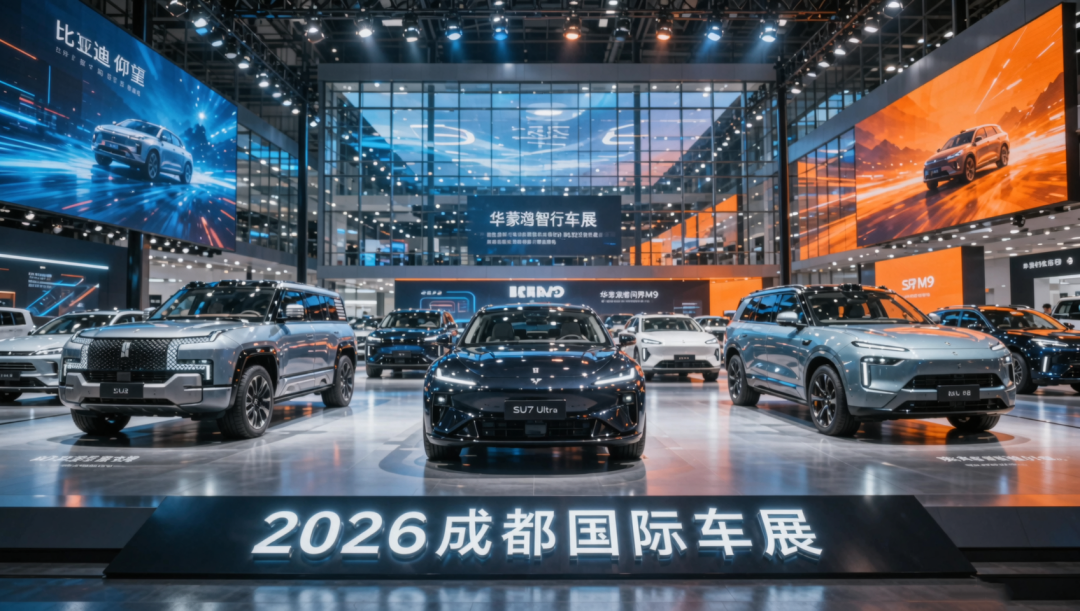
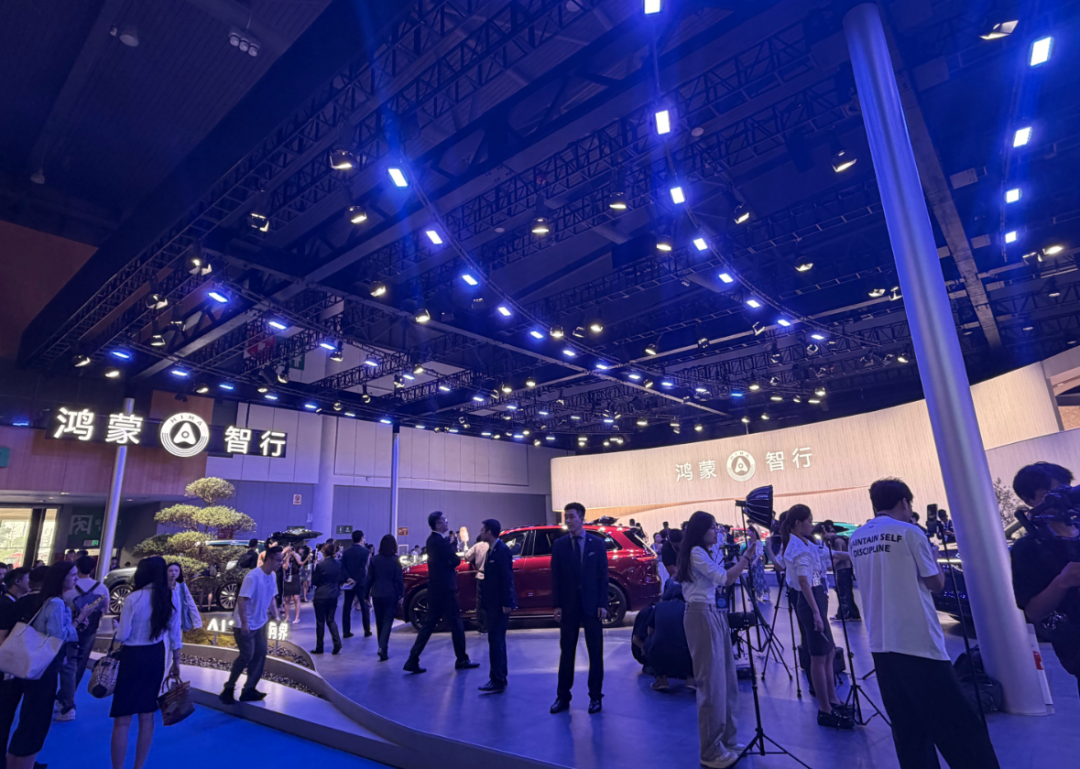
Inside the halls, the picture is almost the reverse. BYD has taken over Hall 9, Chery has occupied Hall 5 and Great Wall Motor has claimed half of Hall 1. Huawei’s Harmony Intelligent Mobility Alliance has assembled all five of its brands—Aito, Luxeed, Stelato, Maextro and SAIC — for the first time. Xiaomi is showing battery-electric and range-extended vehicles together.
Some companies are leaving; others are spending more. That divide cannot be reduced to whether the show is hot or cold. It points to a deeper change in industry behaviour. Carmakers no longer assume they must attend every major motor show. They are asking a harder question: what, precisely, can Chengdu deliver?
The Cost of Showing Up
By 8am on the opening day, most stands had already switched on livestreams designed to sell cars. Senior executives, once central to the theatre of a major show, were largely missing. Regional sales teams were running much of the floor. One brand executive put the objective plainly: selling cars was the event’s main task.
That shift—from building national brand prestige to generating retail orders—helps explain why so many companies have opted out. The calculations differ across the market, but each group has a recognisable commercial logic.
For ultra-luxury marques, non-attendance is becoming routine. Rolls-Royce, Bentley, Porsche, Lamborghini, Maserati, Aston Martin and Lotus have now skipped Chengdu for two consecutive years. A large public stand has never been the most efficient place for these companies to close a sale. Brand centres, private previews and track experiences offer tighter control over the audience and the product.
Broader luxury brands face a different decision. Lexus has also been absent for two years, reflecting a communications calendar increasingly built around selected launches rather than continuous show attendance. Once a major model has already been introduced at Beijing or through a dedicated digital event, Chengdu is no longer indispensable.
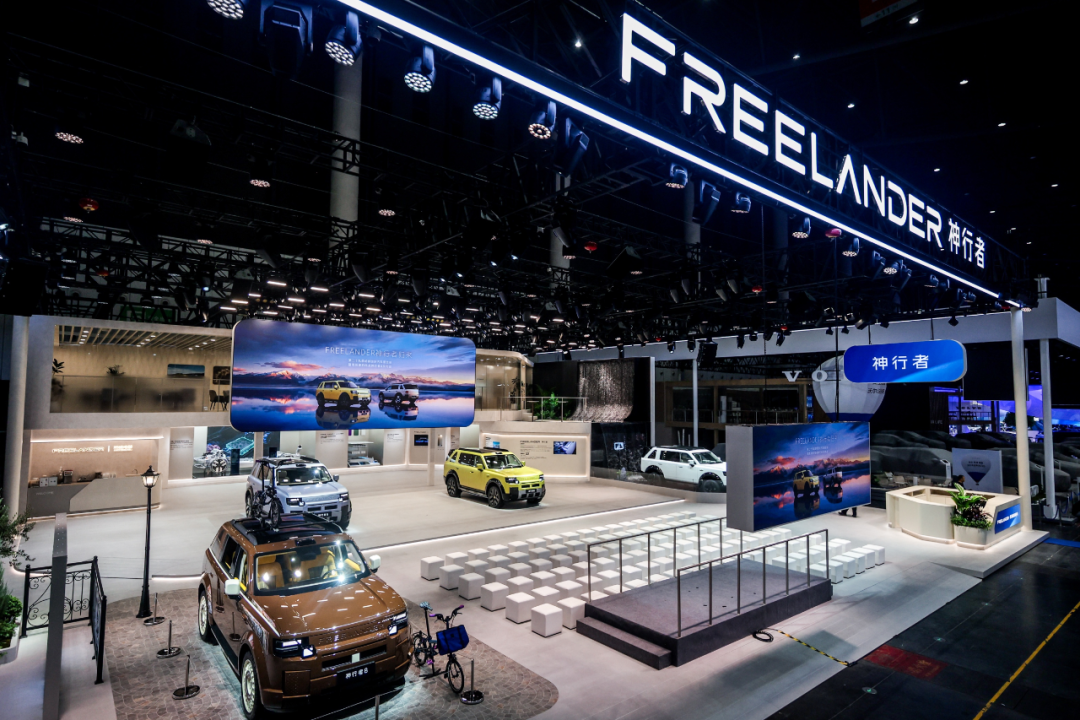
Jaguar Land Rover illustrates a more selective approach. The parent brands are not exhibiting, but FREELANDER—the new-energy marque created with Chery—has made its Chengdu debut. This is less a retreat than a reallocation of attention: spending is being directed towards a new growth business rather than conventional corporate visibility.
For mainstream joint ventures, the problem is the product cycle. China’s passenger-car market has been under severe pressure, with sales in the first half down by more than 20 per cent from a year earlier. Petrol-car volumes continue to contract, while several joint ventures are still waiting for competitive new-energy models. That leaves them with few important launches capable of justifying a large stand.
Dongfeng Honda is a case in point. Its slower electrification push has left it without a major new product suited to a concentrated show debut. Attending without a compelling vehicle can expose the weakness of the pipeline rather than strengthen the brand.
Industry participants increasingly describe the decision through three ledgers: product, return on investment and distribution. A conventional stand of about 1,500 square metres can cost between roughly $1.180 million and $2.212 million. In a market dominated by cost reduction and margin pressure, that expenditure has to produce a measurable result.
Why China’s Biggest Groups Are Spending More
The list of absentees is growing, but so is the scale of the companies that still see Chengdu as strategically valuable.
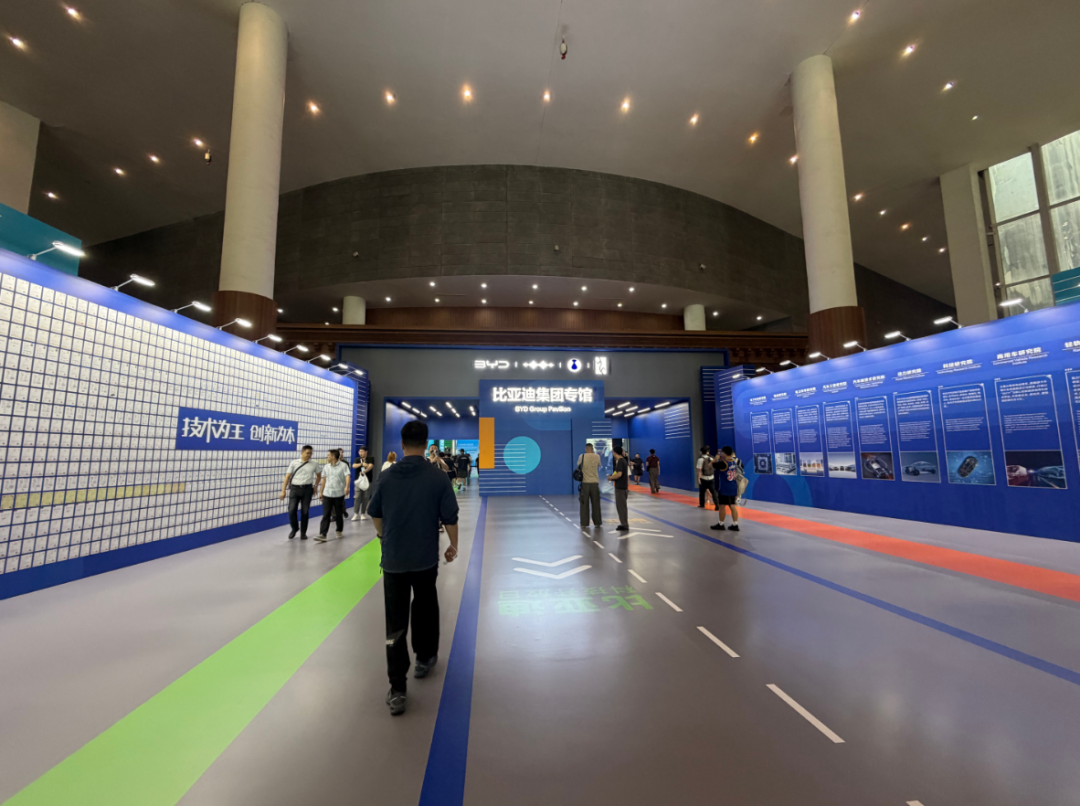
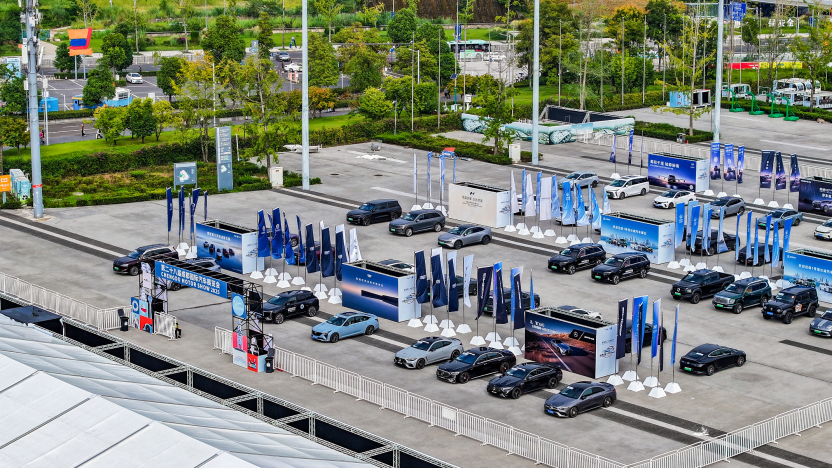
BYD has taken a dedicated hall for a third year. Its 2,156-square-metre display brings together the Dynasty, Ocean, Denza, Yangwang and Fangchengbao marques. The group is using the show for the global debut of the Da Han, its first D-segment luxury flagship saloon under the Dynasty network. The indoor display includes assisted-driving and ultra-fast-charging zones, while outdoor areas demonstrate driver-assistance, emergency flotation and chassis technologies.
Chery has brought 38 vehicles across Chery, Exeed, Jetour, iCar and Zongheng. Its “technology ecosystem island” uses component displays, interactive experiments and immersive demonstrations to present the group’s engineering capabilities. A dedicated Rhino Battery programme shows puncture, compression and water-immersion safety tests.
Great Wall Motor is using half of Hall 1 for Wey, Ora, Haval, Tank, GWM Pickup and Souo. Huawei’s five-brand alliance is appearing as a complete portfolio, while Xiaomi is presenting its battery-electric and range-extended ranges side by side for the first time.
The logic begins with the city. Chengdu has more than 8.17 million registered vehicles, making it China’s largest car-ownership market by fleet size. In June, it was also selected as a national pilot city for reform of automotive distribution and consumption.
The previous show attracted 910,200 visits, generated 33,745 vehicle orders and recorded transactions worth about $848.3 million. Attendance has remained close to 900,000 for three years, with orders consistently between 33,000 and 35,000 vehicles. For manufacturers seeking growth in western China, Chengdu remains difficult to ignore.
Southwestern demand also differs from the coastal markets. SUVs account for 58 per cent of vehicle interest, plug-in hybrids and range-extenders for 34 per cent, and off-road or outdoor-oriented products for 46 per cent. Buyers in Sichuan have shown a strong appetite for distinctive vehicles and outdoor lifestyles, giving models such as the iCar V25 and Exeed EX6 a more receptive audience.
The heavy presence of Chinese brands is therefore not simply a display of corporate confidence. It is an attempt to capture a replacement-and-upgrade cycle in a market whose preference for SUVs, hybrids and off-road products closely matches their latest portfolios. BYD’s decision to present several models priced above roughly $29,000 is aimed at rising demand for more premium vehicles across the southwest.
This year’s show has also introduced a 1,000-square-metre exhibition devoted to Chengdu’s intelligent and connected-vehicle supply chain. Five locally based manufacturers are showing 15 locally produced models across petrol, battery-electric and hybrid powertrains, alongside battery, electric-drive, power-electronics and connected-car technologies.
That moves the event beyond a collection of new vehicles. Competition is being framed around brands, technology, ecosystems and localisation—not only the prospect of producing one blockbuster model.
China’s Biggest Motor Shows Are Splitting Into Different Roles
Attendance at Chengdu was once close to compulsory. As one of China’s four top-tier motor shows and the first major event of the second half, skipping it risked being interpreted as a loss of momentum. That assumption is fading.
When regional sales teams replace corporate executives as the central actors, a new vehicle becomes a tool for attracting footfall and collecting leads. Once sales conversion is the primary objective, the show loses some of its aura as a national launch platform.
For a brand without an important debut, the remaining benefits are visibility and retail sales. Neither necessarily requires a motor show. Livestreaming, direct-to-consumer marketing, dealer events and private product experiences can often reach a more precisely selected audience.
The deeper change is a division of labour among China’s four leading shows. Beijing and Shanghai have consolidated their position as stages for global premieres and annual strategic announcements. Chengdu is becoming a gateway to western China and a sales platform ahead of the important September-October buying season. Guangzhou is more closely tied to southern China and the final sales push of the year.
Carmakers no longer need to distribute their budgets evenly across all four events. They can concentrate resources around one product cycle or regional strategy and deliberately abandon another.
Chengdu is the first show to feel that pressure because it sits in an awkward middle ground. It cannot match the global-launch status of Beijing and Shanghai, and it lacks Guangzhou’s position at the close of the sales year. As manufacturers become more disciplined about exhibition spending, Chengdu is an obvious place to cut.
A Regional Show With a More Defensible Future
That does not mean Chengdu is entering an irreversible decline. A more selective exhibitor list may force the event to define a role that is harder for larger shows to copy.
Three elements are beginning to form that identity. The first is the locally produced intelligent-vehicle zone, which turns a product display into an exhibition of an industrial ecosystem rooted in the city. Beijing and Shanghai cannot reproduce that local supply-chain story in quite the same way.
The second is a stronger emphasis on off-road driving, outdoor use and road trips. Those experiences align directly with southwestern consumer tastes and offer more value than another hall filled with static vehicles.
The third is an unapologetic focus on sales conversion. Other shows may still prefer the language of brand narratives and global strategy; Chengdu can make transactions, leads and regional market penetration its central proposition.
The show’s quieter image is therefore misleading. What is disappearing is the old convention that every serious carmaker must be present. In its place is a more selective market in which each brand chooses the stage that fits its products, customers and budget.
Chengdu may lose some prestige as that transition unfolds. It may also emerge with a clearer purpose: not a smaller version of Beijing or Shanghai, but China’s most commercially important regional motor show—a place where the industry’s balance of power is measured less by press conferences than by who can attract buyers and convert attention into orders.