
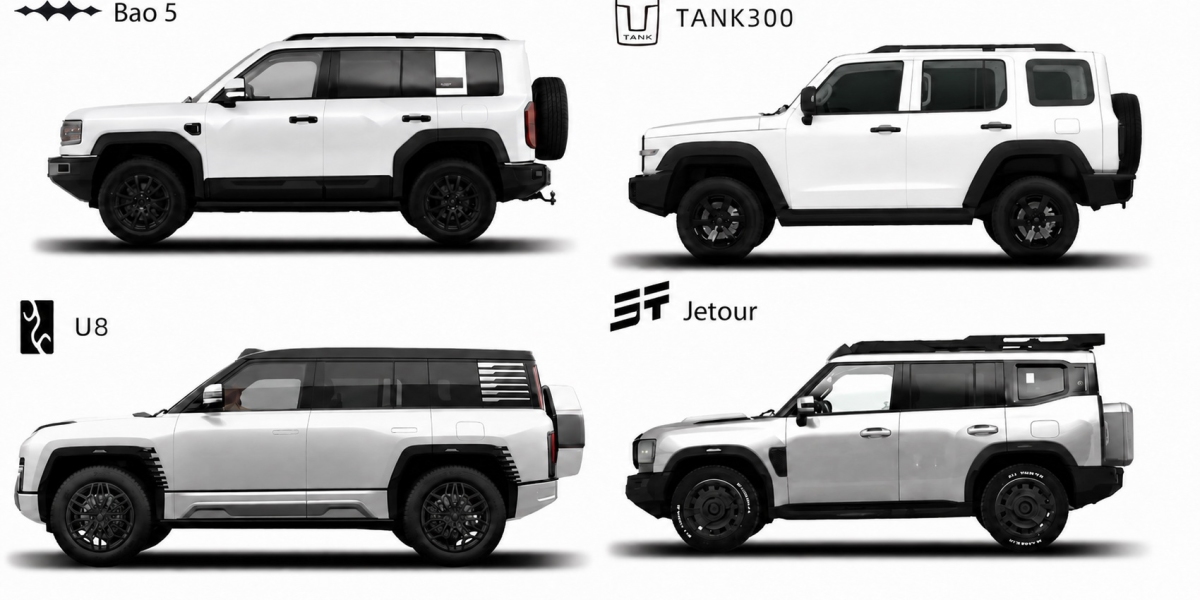
Walk through the 2026 Chengdu Motor Show and one design language is difficult to escape.
Upright, square-edged SUVs fill the halls, and lidar sensors sit above many of their windscreens. In one of China's fastest-growing vehicle segments, advanced driver assistance is no longer an optional flourish. It has become the price of admission.
The shift has been remarkably fast. China's market for so-called boxy SUVs expanded from 131,000 sales and barely more than 10 models in 2020 to an annualised market of about 1.5 million vehicles and more than 50 nameplates in 2026. The category has shed its niche status, but that growth has also transformed what the vehicles represent.
In June 2026, car-based models with unibody construction accounted for 72.4 per cent of segment shipments. Traditional body-on-frame vehicles, the architecture long associated with serious off-road ability, were left with 27.5 per cent. A 2026 white paper from the China Automotive Information Technology institute said China sold 1.3 million off-road-related vehicles in 2025, with lighter, city-oriented models taking close to 70 per cent. About 73 per cent of owners drove fewer than 500 kilometres off road in a year.
Most customers are not buying a machine to cross deserts or climb rock faces. They want a practical family vehicle whose shape evokes weekends, camping and escape. That has changed the competitive logic. If lidar, urban navigation assistance and a connected cockpit become standard, and if the ladder frame matters to fewer buyers, traditional off-road brands need a new answer to a basic question: what still makes them distinctive?
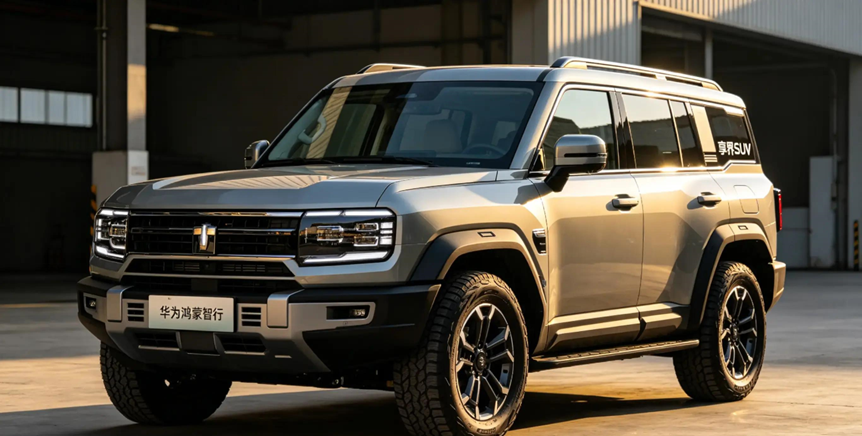
The Ladder Frame Is Losing Its Hold on the Market
China's first-half sales illustrate how far consumer priorities have moved. The Fangchengbao Tai 7 sold 94,400 units, the Haval Big Dog recorded 55,200 and the BAIC BJ30 reached 29,200 after its entry price was cut to about $10,000. The Tank 300, one of the most recognisable body-on-frame SUVs in the country, managed 19,900 and ranked seventh among boxy models.
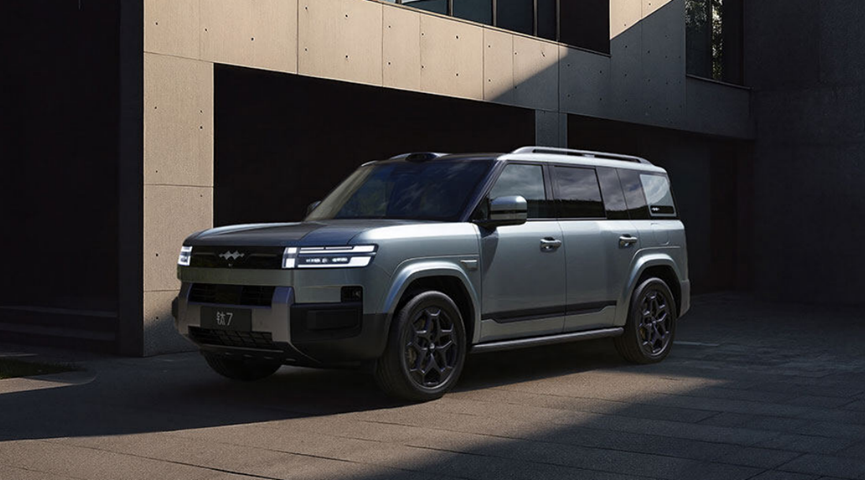
The Tank 300 and BAIC BJ40 still appeared in the segment's top 10, so the ladder frame is not disappearing. It is losing its former authority as the feature that defines an off-roader. Buyers once judged these vehicles by the number of locking differentials, their approach angles and whether the body sat on a separate frame. The dominant test now is whether an SUV can handle 90 per cent city use and 10 per cent weekend travel without asking the family to tolerate the compromises of a specialist machine.
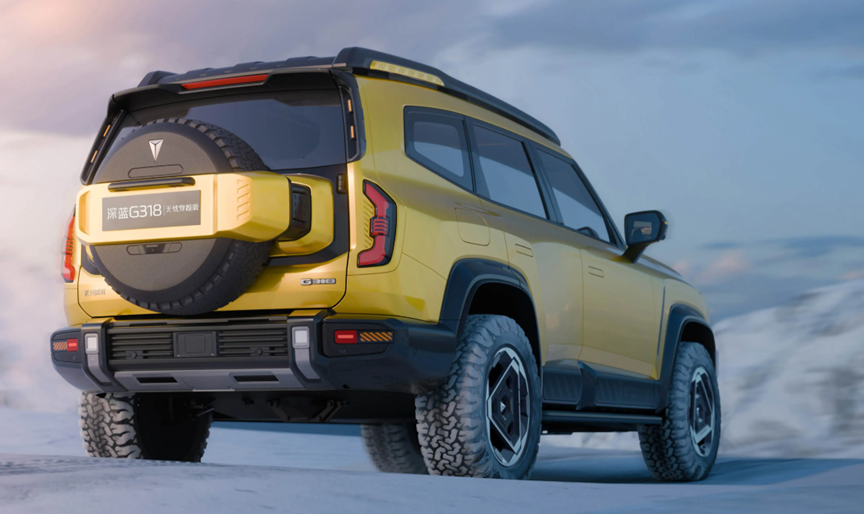
Deepal chief executive Jiang Hairong captured that change when launching the latest G318. He described the boxy SUV as one of the ultimate forms of the sport utility vehicle and argued that a "90 per cent city, 10 per cent outdoors" pattern reflects the reality of most Chinese households.
The G318 was introduced with limited-time prices of about $29,000 to $35,000. It combines Huawei's Qiankun ADS 5 Pro driving system with the HarmonySpace 5 cockpit, placing Huawei's two intelligent-vehicle pillars in a model priced around $30,000. The proposition respects the visual heritage of the off-roader while treating family comfort, software and daily usability as the commercial priority.
M-Hero has pushed the same logic further with the X700. It is the first model from the brand to abandon body-on-frame construction, adopting a unibody platform and the description "luxury intelligent all-terrain SUV". Chief executive Wan Liangyu said the X series would retain the professional capabilities of M-Hero's M series while placing greater emphasis on intelligent comfort for families.
That amounts to a strategic reversal. M-Hero was launched in 2022 around the ambition to build China's most capable new-energy off-road vehicles. Four years later, the X700 is taking the marque into the roughly $30,000-to-$37,000 family market. The brand is no longer selling maximum toughness alone. It is trying to make off-road credibility compatible with mainstream use.
Traditional Off-Road Brands Are Paying the Price
The transition has been more painful for manufacturers whose identities were built around mechanical toughness. As demand shifts towards urban driving and light outdoor use, a heavily off-road image can become a constraint. Nearly every rival can now add lidar, a large screen and a plug-in hybrid powertrain; fewer consumers are prepared to accept poor ride comfort or higher energy use in return for capability they rarely need.
Tank sold 92,700 vehicles in the first half of 2026, down 10.62 per cent from a year earlier. June volume fell 27.16 per cent to 15,700. Monthly sales of the Tank 300, once close to 10,000 at their peak, have dropped to roughly 3,000.
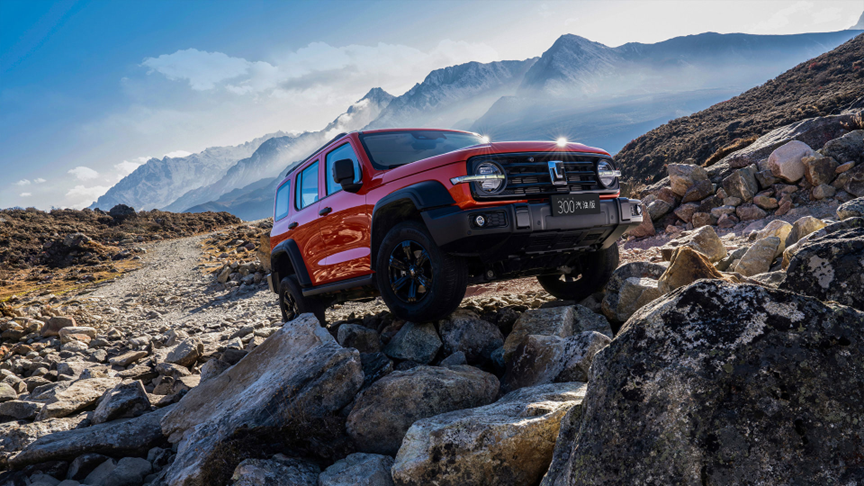
Great Wall Motor's response shows what it believes the market now rewards. A redesigned Tank 300 launched on July 19 with its wheelbase extended by 260mm to 3,010mm. The range gained a Hi4-Z plug-in hybrid version with more than 200km of claimed electric range, as well as roof-mounted lidar and navigation assistance covering a broader set of driving scenarios.
Great Wall said firm orders exceeded 15,300 within 12 hours. It remains to be seen how many will become deliveries, but the early response makes one point difficult to ignore: intelligent features and everyday electric driving appear to generate more excitement than the frame underneath the vehicle.
Smart Driving Is Becoming the Admission Ticket
At Chengdu, the competition stretches from the iCAR V25 in the roughly $22,000 price bracket to upper versions of the FREELANDER 8 costing about $67,000. Lidar and urban navigation assistance are appearing across that range. Huawei's Qiankun ecosystem now reaches from the Jetour Traveller C-DM Qiankun Edition to the premium Stelato G9.
This is a democratisation of assisted-driving technology, but it is also the start of a new divide. Once a sensor suite becomes common, its presence says little about the quality of the vehicle. The harder engineering task is to connect perception, decision-making and vehicle control with an off-road chassis.
A lidar unit cannot simply be calibrated for a conventional city SUV and expected to work identically on a taller vehicle with greater suspension travel and more violent body movement. Vibration control, ranging logic and sensor confidence must all account for broken surfaces, steep gradients and rapid changes in vehicle attitude.
BYD's God's Eye system can work with the DiSus body-control technology and the DMO off-road platform to adapt the vehicle to changing terrain. Huawei's collaborations with M-Hero can draw on chassis data to refine assistance functions away from smooth urban roads. Integration of this kind is far harder to copy than the hardware mounted on the roof.
As components converge, competition will move towards the speed and quality of over-the-air updates, the consistency of transitions between city and off-road modes, and the depth at which driving software can interpret chassis signals. A manufacturer that turns "smart driving plus light off-road use" into one coherent experience has a more defensible advantage than a rival selling a familiar sensor list.
Technology Cannot Replace Mechanical Credibility
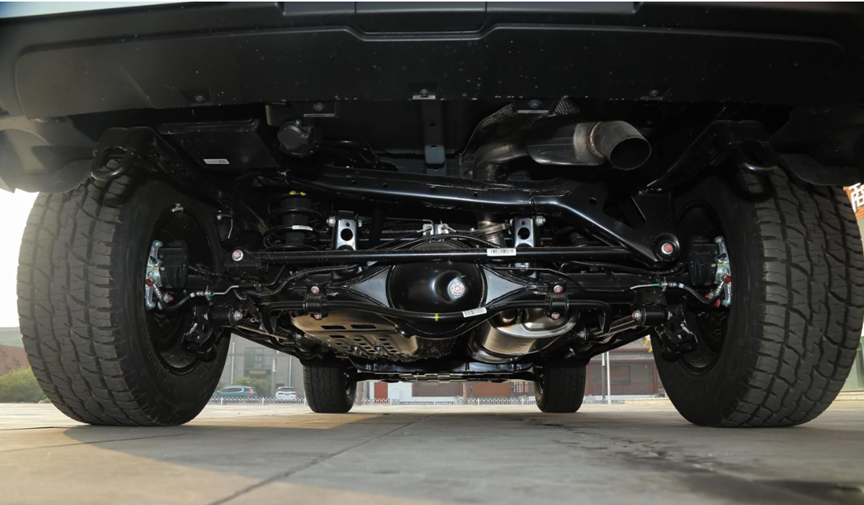
Software integration is not, by itself, the core of a serious off-roader. In rock crawling, remote crossings and other extreme conditions, the hardware associated with the body-on-frame era still matters. Suspension articulation, structural strength, thermal management, recovery points, locking differentials and predictable low-speed control cannot be replaced by a driver-assistance menu.
Technology can lower the entry barrier, reduce driver error and add a useful margin of safety. It may help an inexperienced owner choose a terrain mode, manage a descent or understand what lies beyond the bonnet. The customers who regularly travel far beyond paved roads still require durability, repairability and control when sensors are obscured or electronic assistance reaches its limits.
This creates a difficult strategic choice. If a hard-core brand pursues the urban market too aggressively, it risks weakening the authenticity that gave the badge value. If it protects every traditional engineering compromise, it may confine itself to a shrinking pool of enthusiasts. The strongest products are likely to separate genuine mechanical capability from performative toughness: keeping the systems that matter in difficult terrain while removing the discomfort that serves no useful purpose.
From Off-Road Totem to Lifestyle Platform
The boom in boxy SUVs is not primarily taking sales from traditional off-roaders. It is taking business from conventional urban SUVs. New-energy vehicles represented more than 65 per cent of the boxy segment in the first half of 2026, with plug-in hybrids forming the largest group. The Tai 7 led both hybrid SUVs and boxy models for six consecutive months, selling itself less on extreme capability than on size, efficiency and suitability for family life.
That explains why styling and technology alone may not provide lasting differentiation. The next route is the "boxy SUV plus": a product surrounded by travel services, owner experiences, merchandise and destinations that turn the vehicle into a gateway to a lifestyle.
Jetour has already pursued this model through its "Travel+" strategy. Along the western Sichuan section of the G318 route, the company has established eight flagship stations and 24 partner locations. Its wider network connects more than 20,000 hotels, over 10,000 travel products, more than 3,000 service stations and upwards of 600 travel benefits. By July 2026, Jetour's cumulative global sales had exceeded 2.45 million vehicles across 100 countries and regions.
M-Hero plans to expand its intelligent off-road experience bases from 10 to 100 by 2027. Such programmes are not substitutes for a competitive vehicle. They can create an ownership identity that is harder to reproduce than a square silhouette, particularly when many customers are buying the promise of adventure rather than a weekly need for it.
The Category Risks Erasing Itself
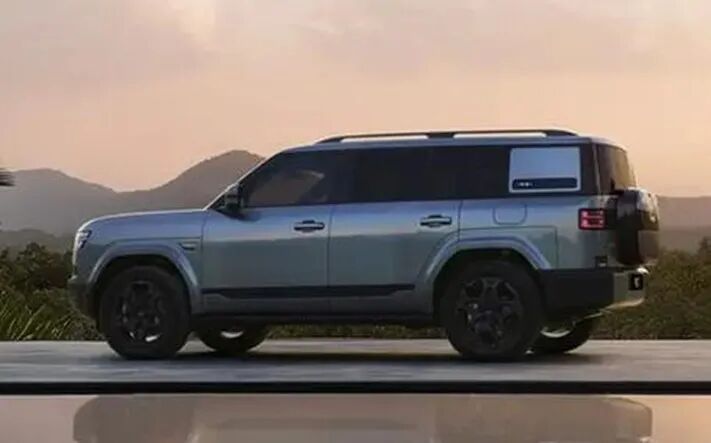
There is a paradox at the centre of the market. The more successful the boxy SUV becomes, the less distinctive the label is. As ordinary SUVs adopt flatter bonnets, upright tailgates and squared wheel arches, the boundary between a conventional family crossover and an off-road-inspired model continues to blur.
Design is easy to imitate. Lidar is becoming commonplace. Plug-in hybrid systems are spreading through every price band. If all manufacturers converge on the same appearance, powertrain and feature list, the category may dissolve into the default shape of a practical SUV.
Deeper links between artificial intelligence and chassis control offer one route to differentiation, but even that may not preserve the meaning of the boxy SUV. If the term ultimately describes little more than a useful family vehicle with upright styling, it will move ever further from the hard-core off-roader whose image created its appeal.
What Hardcore Off-Roaders Can Still Sell
China's market is delivering a blunt verdict. For most families, the distant destination they imagine is a campsite two hours from home, not an expedition route requiring a tougher axle or another differential lock. Fitting lidar and making these vehicles easier to drive is a rational response to that reality.
The opportunity for hard-core off-road brands is not to reject that change. It is to offer something the city-oriented boxy SUV cannot convincingly claim: verified capability, durable engineering, integrated terrain intelligence and an ownership community built around real use. The ladder frame can remain part of that proposition, but it can no longer be the proposition on its own.
Some manufacturers will become reformers, treating the boxy SUV as a software-rich family vehicle with an outdoor aesthetic. Others will defend the traditional architecture and accept a smaller market. The more resilient brands may do both, separating lifestyle-led models from specialist products while allowing technology to move between them.
The race for a breakout hit will therefore be decided by more than who adds the next lidar sensor. It will depend on whether a manufacturer can make the vehicle's design, software, chassis and owner ecosystem express the same idea. In a market full of boxes, coherence may become the rarest feature of all.