China's auto industry still produces strong headline numbers. Production and sales remain large, new-energy penetration keeps rising, and manufacturers continue to publish market-share gains.
The Boom That Dealers Cannot Feel
Yet the condition of car dealers tells a much darker story.
In 2025, more than half of China's 4S dealerships lost money, and more than 80% sold new cars below cost. The figures expose the strain behind the country's price-for-volume growth model. The traditional 4S system, once built on vehicle sales, service, finance and insurance, is being squeezed by price wars, uneven profit distribution and the shift to new-energy vehicles.
The industry's movement from growth to share-grabbing has turned pricing from a competitive tool into a force that is damaging the distribution channel. The result is a question that now hangs over China's car market: can manufacturers keep chasing volume if the retail network that supports them is bleeding?
A Channel Selling More and Earning Less
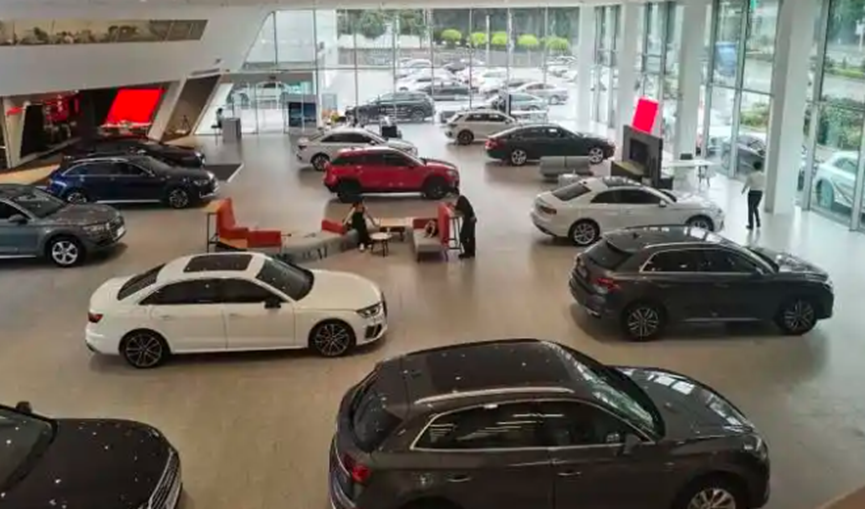
In March 2026, the China Automobile Dealers Association released its survey on the condition of national car dealers in 2025. The findings were stark. Some 55.7% of 4S stores recorded a full-year loss. Only 23.5% were profitable, while 20.8% broke even.
The new-car business was even weaker. A total of 81.9% of dealers faced price inversion, meaning market prices had fallen below acquisition cost. More than half of stores saw inversion of over 15%. Overall gross profit contribution from new-car sales fell to minus 25.5%.
Luxury dealers, once seen as more resilient, were also under pressure. Gross margins on luxury-brand new-car sales fell to minus 26.2%, worse than the industry average.
The cause is visible in China's price war. Mainstream joint-venture brands have continued to deepen terminal discounts. Domestic brands have cut prices to defend share and clear inventory. New-energy brands have combined official price reductions with retail subsidies. Across the market, pricing systems have been pushed toward disorder.
Dealers have little room to manoeuvre. If they refuse to discount, they risk missing manufacturer targets and losing rebates, vehicle allocation or even authorisation. If they discount aggressively, rebate income often fails to cover the cash loss on each vehicle. The more they sell, the more they can lose.
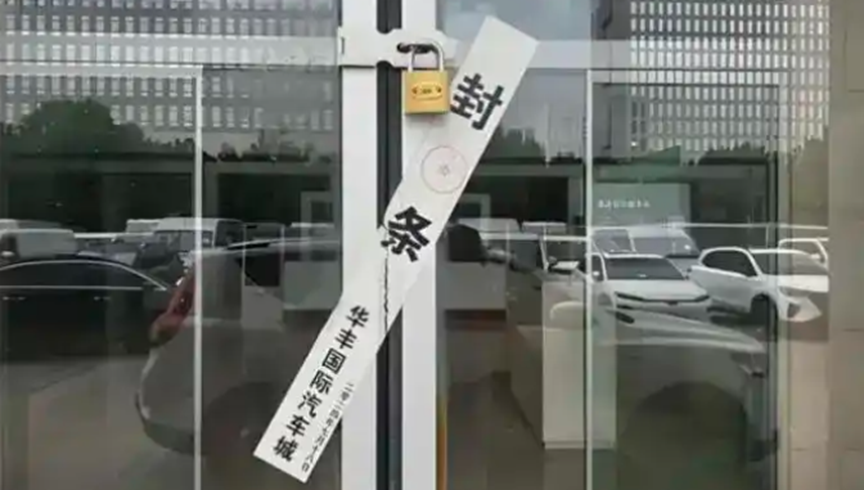
Inventory pressure, bundled slow-selling models and longer rebate settlement cycles have placed dealer cash flow under further stress. In 2025, 4,961 4S stores in China closed or withdrew from networks, a visible contraction of the traditional retail channel.
Manufacturers Are Passing Pressure Downstream
The crisis is not only a matter of supply and demand. It reflects a distorted balance of power between manufacturers and dealers.
In a market no longer growing as quickly, carmakers are chasing volume, capacity utilisation, investor confidence and competitive pressure all at once. Some have weakened their own price discipline to defend market share. Dealers have moved from brand partners to tools for absorbing capacity and delivering short-term sales numbers.
Official price cuts and online direct sales make the problem worse by disrupting offline pricing. Dealers must either follow the reductions and lose money, or hold pricing and lose customers. Manufacturers may secure stronger sales data and protect market share, but the channel's profit base is eroded.
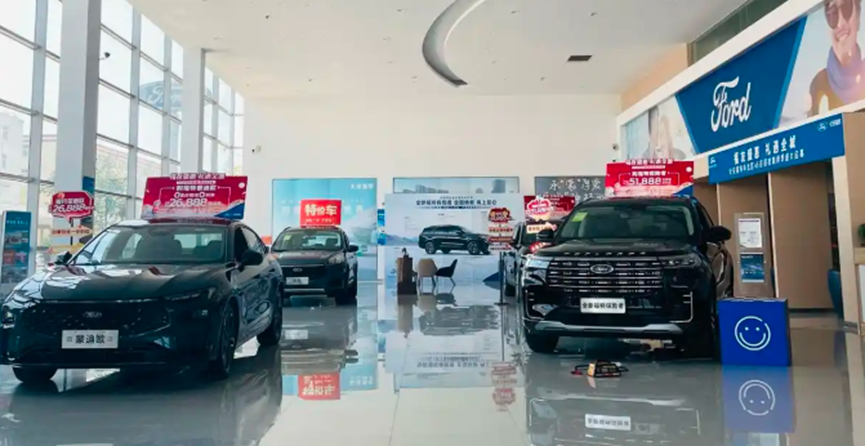
That approach carries longer-term risk for the manufacturers themselves. Dealers without profit cannot invest in store operations, staff training or service quality. Tensions between dealer groups and carmakers can then damage brand reputation and future sales.
For decades, China's auto industry benefited from a division of labour in which manufacturers built products and dealers handled sales and service, with profits shared across the chain. The price-for-volume strategy is breaking that bargain. If the terminal channel collapses, the damage will ultimately return to manufacturers through weaker brand value and poorer customer support.
The Old 4S Business Model No Longer Fits
Price wars are only part of the problem. At a deeper level, the traditional 4S model is losing its fit with the new-energy era.
The old dealership profit model relied on three pillars: new-car sales, aftersales maintenance, and finance and insurance. Each pillar has weakened. New-car sales, once the core profit source, have become the largest loss centre. The age of earning money from transaction spreads is largely over.
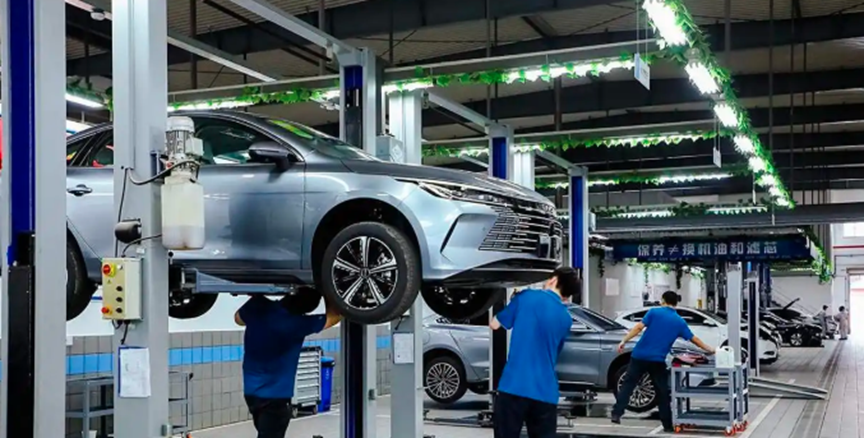
Aftersales used to provide the most stable margin. EVs and plug-in hybrids have simpler mechanical structures and lower maintenance needs, while core battery, motor and control technologies remain controlled by manufacturers. That reduces the service work available to dealers. Independent aftersales platforms such as Tuhu and Tmall Auto Care have also taken customers with lower prices.
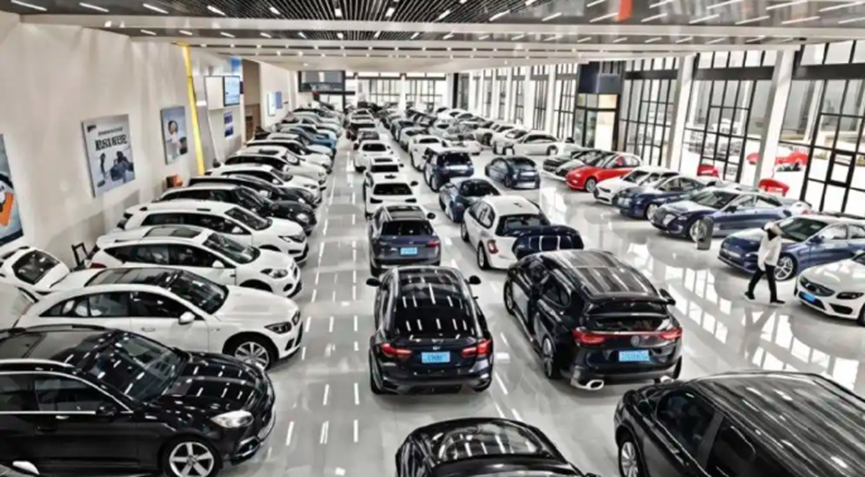
Value-added businesses such as finance, insurance and accessories cannot offset the losses from vehicle sales in a fiercely competitive market. The 4S model is also heavy in assets: store construction can require investments well above $1 million, with high rent and staff costs. Negative-margin operations quickly drain cash.
New-energy brands are pushing different channel models. Direct sales give brands national price consistency and lighter retail operations while removing intermediary layers. Agency models can shift dealers away from inventory and pricing risk, turning them into service operators rather than balance-sheet holders of discounted stock.
Both models address pain points in the traditional system and are quickly taking channel share. The distribution market is becoming more concentrated, with large dealer groups better able to consolidate resources while weaker stores exit.
A Leaner Retail Future
China's auto retail channel is likely to keep changing. Smaller city showrooms, shopping-mall stores, community service centres and multi-brand retail formats may replace some of the heavy 4S footprint. Dealers under pressure will need to become lighter, more service-oriented and more digitally connected.
Carmakers that still rely heavily on traditional 4S sales will also need to adjust. The business logic of auto retail is changing from inventory-driven distribution toward user operation, service retention and more flexible formats.
The after-effects of the 2025 dealer crisis are only beginning to emerge. In the short term, price wars are likely to continue in 2026, and channel consolidation will accelerate. Weak stores and weaker brands will be eliminated more quickly.
In the long run, China's auto distribution industry needs to move away from destructive price competition and rebuild a profit-sharing system between manufacturers and retailers. The shake-out is harsh, but it may be a necessary step toward a healthier, more efficient retail ecosystem.