
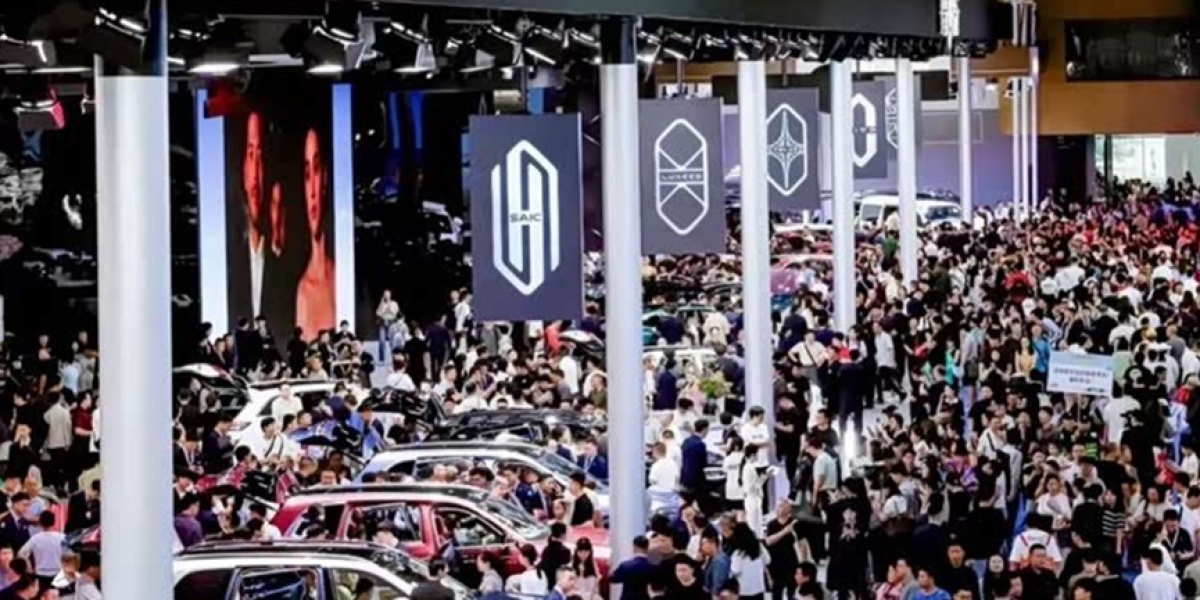
China’s biggest motor shows have spent the past several years becoming showcases for ever larger batteries, faster charging, more computing power and increasingly ambitious assisted-driving systems.
The 2026 Chengdu Auto Show may signal that the industry is beginning to move on.
Before the show has even opened, its layout and programme point to a different kind of contest. Chinese groups are taking over entire halls, several foreign luxury brands are staying away, and organisers are adding hands-on demonstrations for intelligent driving, chassis performance and real-world manoeuvring.
The numbers remain formidable: 220,000 square metres of exhibition space, nearly 120 brands and about 1,600 vehicles. Yet the more important story is how that space is being used. BYD will occupy Hall 9 on its own. Chery’s five-brand line-up will dominate Hall 5. Huawei’s automotive ecosystem will arrive in Chengdu with its broadest portfolio yet. Outside the halls, visitors will be able to test functions such as automated parking, narrow-road driving and suspension behaviour rather than simply listen to another presentation about specifications.
For an industry that has spent years competing through bigger numbers on a screen, the shift matters. Chengdu is starting to look less like a specification showroom and more like an examination of whether the technology actually works for drivers.
From Looking at Cars to Driving Them
The specification race has been one of the defining features of China’s automotive boom. New-car launches have trained buyers to compare voltage architectures, charging rates, computing chips and assisted-driving functions almost as closely as they once compared horsepower and fuel economy.
Terms such as “800V”, “urban NOA”, “Orin” and “5C fast charging” have become standard launch-event language. The problem is that increasingly impressive numbers do not always produce an equally impressive driving experience. A vehicle can win on a presentation slide and still disappoint once it leaves the stage.
The Chengdu show is trying to bring that gap into the open. For the first time, the official test-ride and test-drive area will include dedicated intelligent-driving scenarios. Visitors will be able to experience suspension filtering, automated parking and narrow-road manoeuvring — routine situations that reveal far more about a vehicle than a list of hardware specifications.
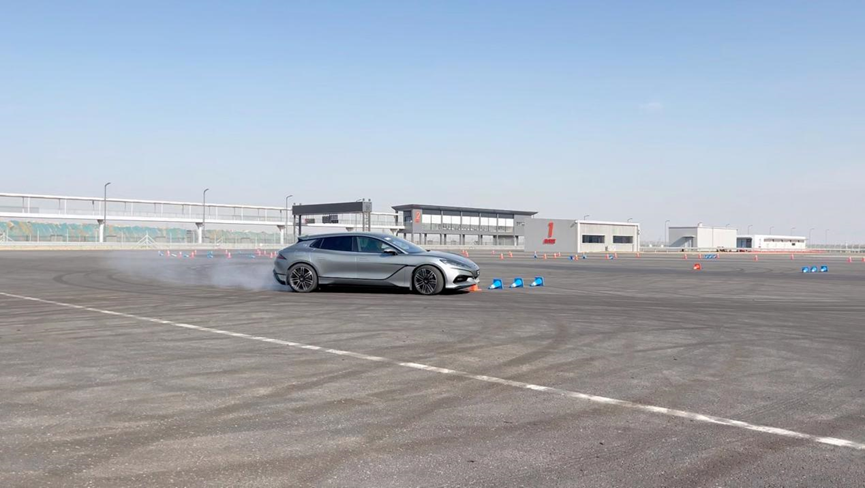
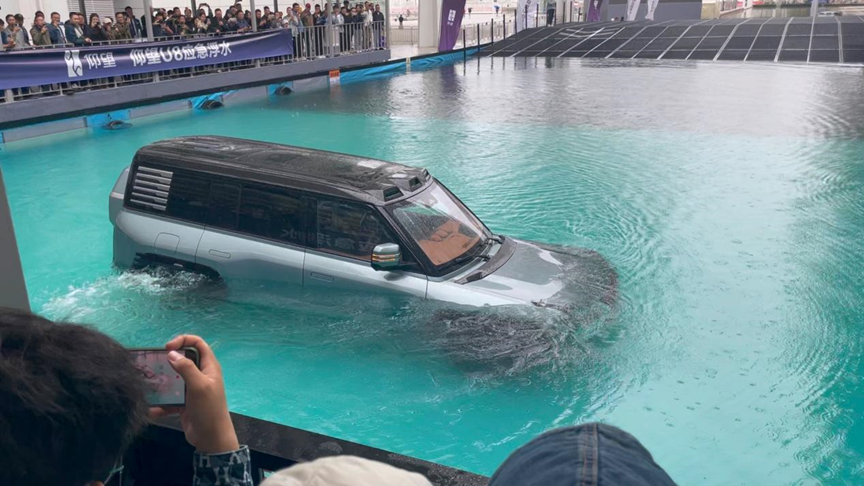
Major manufacturers appear to have recognised the same change. BYD plans to use its technology open day to demonstrate a Denza Z9GT performing an unmanned drift, the Yangwang U8’s emergency flotation capability and a 45-degree slope challenge. Its God’s Eye intelligent-driving area will demonstrate automated parking and functions based on the company’s Yi San Fang and Yi Si Fang vehicle-control technologies.
BYD will also use a dedicated flash-charging area to demonstrate performance under both normal temperatures and extreme cold of minus 30 degrees Celsius.
The significance goes beyond adding a few interactive attractions. For several years, China’s carmakers have relied heavily on hardware escalation: more sensors, faster processors, larger screens and higher charging power. Rapid product cycles made the numbers move quickly, but the disconnect between specification sheets and everyday usability has become increasingly difficult to ignore.
That concern is also at the heart of the recent debate in China over so-called “instant cars” — vehicles developed and launched at unusually high speed. The argument is no longer simply about how quickly a manufacturer can bring new technology to market. It is about whether the finished product has been tested and refined enough to deliver the experience promised by its specifications.
Consumers are becoming harder to impress with numbers alone. The next competitive question is more practical: Is the car good to drive? Is the technology useful? Does the product justify its price? Chengdu’s move from watching to experiencing reflects that change in buyer expectations.
Chinese Carmakers Are No Longer Just Exhibiting
The balance of power inside the exhibition halls is changing just as visibly.
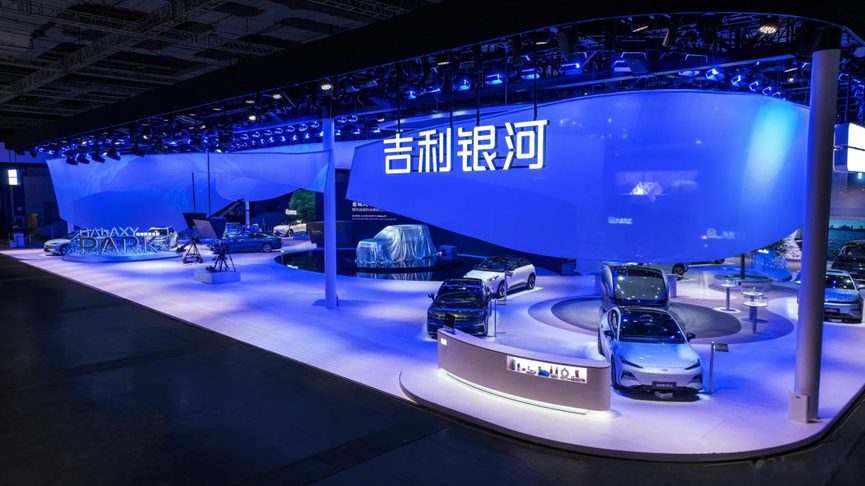
Chinese brands will account for more than 60 per cent of the show’s exhibition area, according to the information released ahead of the event. Their presence increasingly resembles a coordinated group offensive rather than a collection of individual vehicle stands.
BYD will take over the whole of Hall 9. Its Dynasty and Ocean networks will appear alongside Denza, Fangchengbao and Yangwang, while God’s Eye intelligent driving and flash-charging technologies will have their own dedicated display areas.
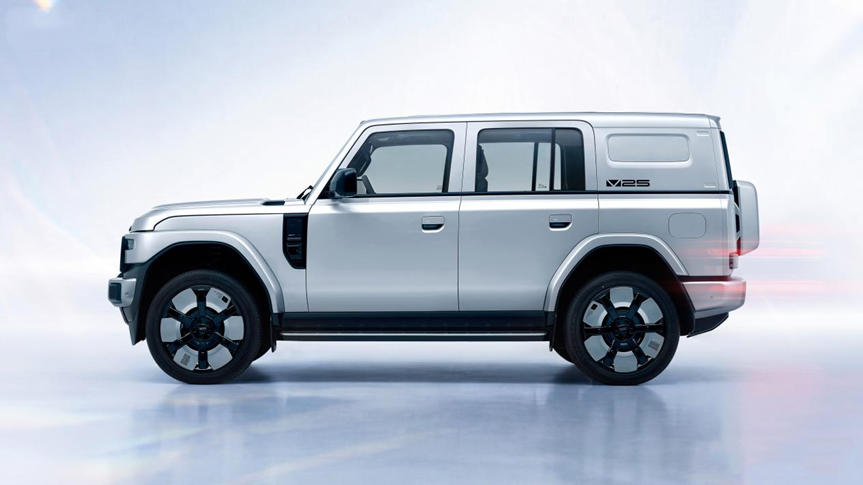
Chery will concentrate five brands in Hall 5 under an “AI Technology City” concept, giving the group a presence close to a full-hall takeover. Its line-up spans very different parts of the market: the youth-oriented iCAR V25, the global debut of the Exeed EX6, the amphibious-performance showcase of the Zongheng G700, a retro-inspired QQ3, and Jetour’s boxy off-road and compact camper products.
The strategy illustrates how China’s largest manufacturers are no longer relying on a single successful model or even a single brand. They are using broad portfolios to cover family cars, off-road vehicles, premium products, intelligent vehicles and lifestyle niches at the same time.
Great Wall Motor will bring Haval, Tank, Wey, Ora, GWM Pickup and Souo to Hall 1, together with displays of its super-V8 engine, carbon-fibre lightweight technology and mid-engine architecture.
Geely Galaxy is building an immersive “Galaxy Technology Park” and is expected to show the Galaxy Battleship 700, described as its first AI all-terrain hardcore SUV, as well as the Galaxy TT, a C-segment AI battery-electric sports sedan.
Huawei’s automotive ecosystem will also have an unusually broad presence. The Harmony Intelligent Mobility Alliance portfolio will include Shangjie, Luxeed, Stelato, Aito and Maextro, while Huawei Qiankun-backed Qijing, Huajing and Yijing will add another layer to the group’s technology partnerships.
Taking over a hall may look like a matter of exhibition spending. In practice, it reflects a deeper change in the capabilities of China’s largest carmakers. A decade ago, domestic brands were still widely associated with value-for-money competition. Today, leading groups are presenting complete systems of brands, technologies and vehicle categories.
The contest has moved from individual cars to portfolios — and from isolated product features to the ability to develop, manufacture and market multiple technology platforms at scale.
Foreign Brands Split Between Retreat and Reinvention
The foreign-brand picture is far less uniform.
Porsche, Bentley, Maserati, Lamborghini and Rolls-Royce are set to miss the Chengdu Auto Show for a second consecutive year. Lexus, Genesis, Infiniti and Jaguar Land Rover also do not appear on the published exhibition map.
The repeated absence of premium and ultra-luxury marques is likely to reinforce the perception that some are pulling back from large-scale Chinese motor shows. Yet absence does not necessarily mean withdrawal from the market.
For ultra-luxury brands, major exhibition participation can be expensive while producing relatively limited direct sales. Their customers are often reached more effectively through private events, one-to-one test drives and invitation-only experiences. Cutting a large show budget can therefore be a commercial decision rather than a strategic retreat.
Among mainstream joint-venture brands, the divide is sharper. Dongfeng Honda and Kia are absent from the current exhibitor list, while other groups are using Chengdu to show that they are accelerating their response to China’s electric and intelligent-vehicle competition.
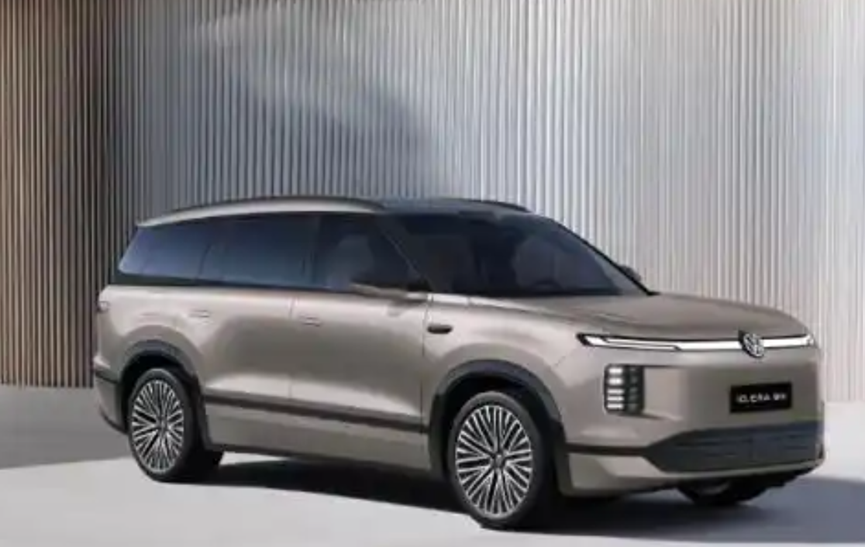
SAIC Volkswagen is one of the most active. Its ID.ERA line-up will include the ID.ERA 9X already on sale, the global debuts of the ID.ERA 8X and ID.ERA 5X, and the market launch of the ID.ERA 5S.
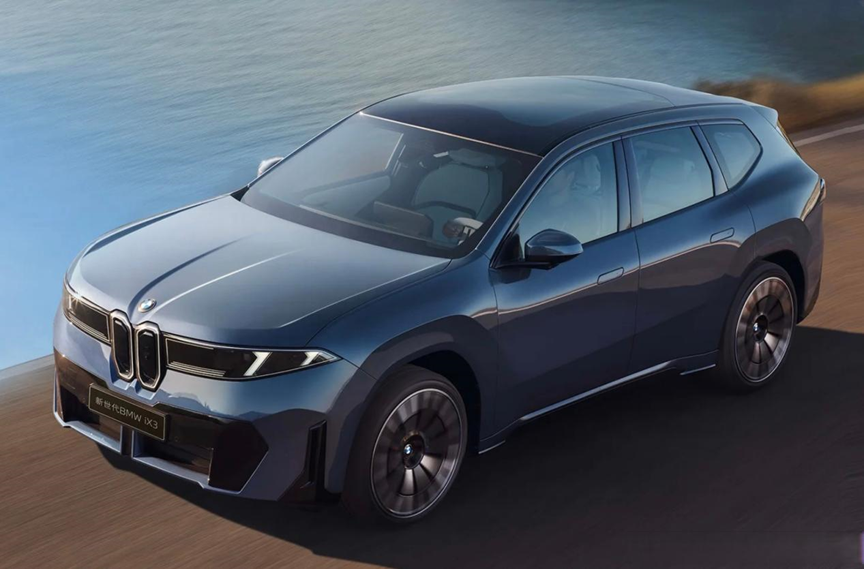
BMW will use the show for an important step in its Neue Klasse programme. The new-generation BMW iX3, the first Neue Klasse intelligent battery-electric SAV, is due to open for reservations, while the first Neue Klasse sedan, the BMW i, will also make a full appearance. BMW’s Panoramic iDrive system will be shown more comprehensively for the first time.
The message is significant for a traditional luxury manufacturer sometimes seen in China as having moved too cautiously on electrification. BMW is using a new generation of products and interfaces to argue that it can remain competitive as the market shifts towards software, intelligence and electric powertrains.
Cadillac will show the XT5 PHEV, its first plug-in hybrid SUV. Beijing Hyundai will open presales for the Elexio V, while Mercedes-Benz is expected to stage the global debut of the long-wheelbase GLE.
These launches show why the old division between Chinese and foreign brands is becoming less useful. The more important distinction is between manufacturers willing to adapt products to the speed and priorities of the Chinese market and those still relying on legacy strengths.
Chengdu Becomes a Test of the “Joint-Venture 2.0” Model
The show will also provide another test of what has been described in China as the “joint-venture 2.0” model.
Vehicles such as SAIC Volkswagen’s ID.ERA range and GAC Toyota’s bZ3X point towards a different relationship between global manufacturers and their Chinese operations. Instead of simply adapting a vehicle defined overseas, local teams are taking a larger role in product definition while technologies are drawn more deeply from China’s domestic supply chain.
That model is designed to address one of the biggest problems facing established foreign carmakers in China: product cycles and technology choices developed for global markets do not always match the pace of Chinese EV competition.
Chengdu will not determine whether that strategy succeeds, but it offers a useful window into how far the transition has progressed. A joint venture that can combine an international brand, local product leadership and Chinese intelligent-vehicle technology may still have a strong role in the market. A brand that simply imports an old product-development formula is increasingly exposed.
China’s Auto Shows Are Changing With the Industry
The changes at the 2026 Chengdu Auto Show reflect the broader pressures running through China’s car industry.
Some luxury and joint-venture brands are reducing their presence as profitability weakens and marketing budgets come under pressure. Large motor shows are expensive, and manufacturers facing weaker margins are becoming more selective about where they spend. Media events may become more fragmented, while launches are increasingly held before the show itself rather than saved for the exhibition floor.
At the same time, vacant space is being filled quickly. BYD and Chery have the scale to take over entire halls. Huawei and Xiaomi are using high-visibility advertising and technology ecosystems to build automotive influence. BMW, Mercedes-Benz and SAIC Volkswagen are still committing heavily to major product launches.
The result is not the decline of the motor show so much as a change in what the event is expected to prove.
For years, China’s auto exhibitions rewarded spectacle and headline specifications. The next phase may demand something harder: demonstrating that the technology works, that the product portfolio makes strategic sense and that a brand can still justify the cost of being there.
That is why Chengdu matters. The show is moving from a specification stage to an experience test, from individual Chinese-brand stands to full-scale group offensives, and from near-universal participation to a more polarised field.
If visitors leave having learned less about presentation slides and more about how the cars actually behave, the 2026 Chengdu Auto Show may offer one of the clearest signs yet that China’s automotive competition is shifting from chasing numbers to proving value.