
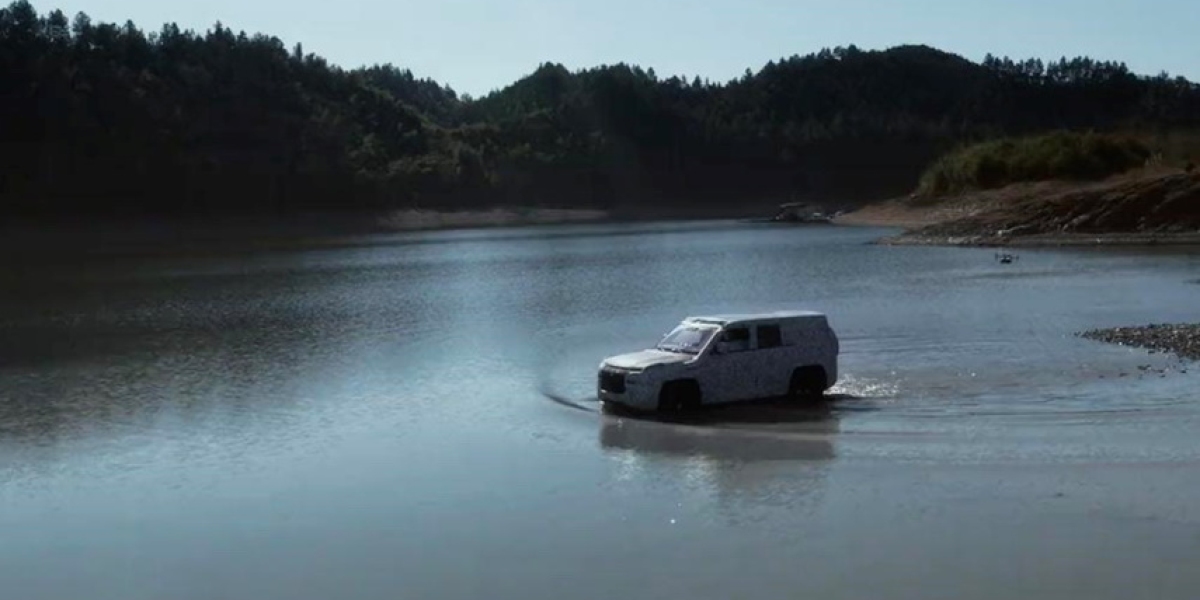
Typhoon Dolphin's long sweep across eastern and central China has turned an unusual engineering question into a more immediate commercial one.
As intense rainfall inundated roads and disrupted transport, the ability of a vehicle to pass through deep water — or, in a handful of cases, remain afloat — began to look less like an off-road party trick and more like a response to a changing climate.
Chinese carmakers have already started competing around the idea. BYD's Yangwang U8 can activate an emergency flotation mode, Xiaomi's Pengcheng N90 Max is designed to keep its cabin from taking in significant water for three minutes in an extreme situation, and Jetour's Zongheng G700 has demonstrated an even more ambitious water-crossing system.
The timing is significant. China introduced tougher mandatory safety rules for electric-vehicle batteries on July 1, requiring battery packs to withstand more demanding tests and raising the thermal-runaway threshold to no fire or explosion. Later that month, a research project backed by the China Automotive Technology and Research Center examined standards for emergency flotation functions in EVs.
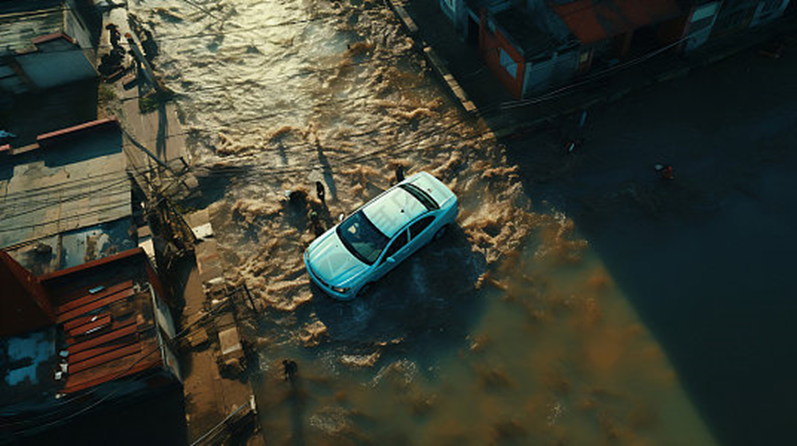
Yet the industry's interest in flood resilience should not be mistaken for evidence that cars are about to become boats. Turning deep-water capability into a credible selling point requires carmakers to clear three practical hurdles: the technology must work beyond a controlled demonstration, after-sales networks must be able to diagnose delayed damage, and insurers must be willing to cover the financial risk.
Three engineering routes, with sharply different costs
Electric vehicles have one structural advantage over combustion-engine cars in floodwater: they do not have an engine air intake that can draw water into the cylinders and cause catastrophic hydrolock. Their battery packs are also sealed against water and dust. Neither advantage makes an EV inherently safe to drive through a flood, but both give engineers a different starting point.
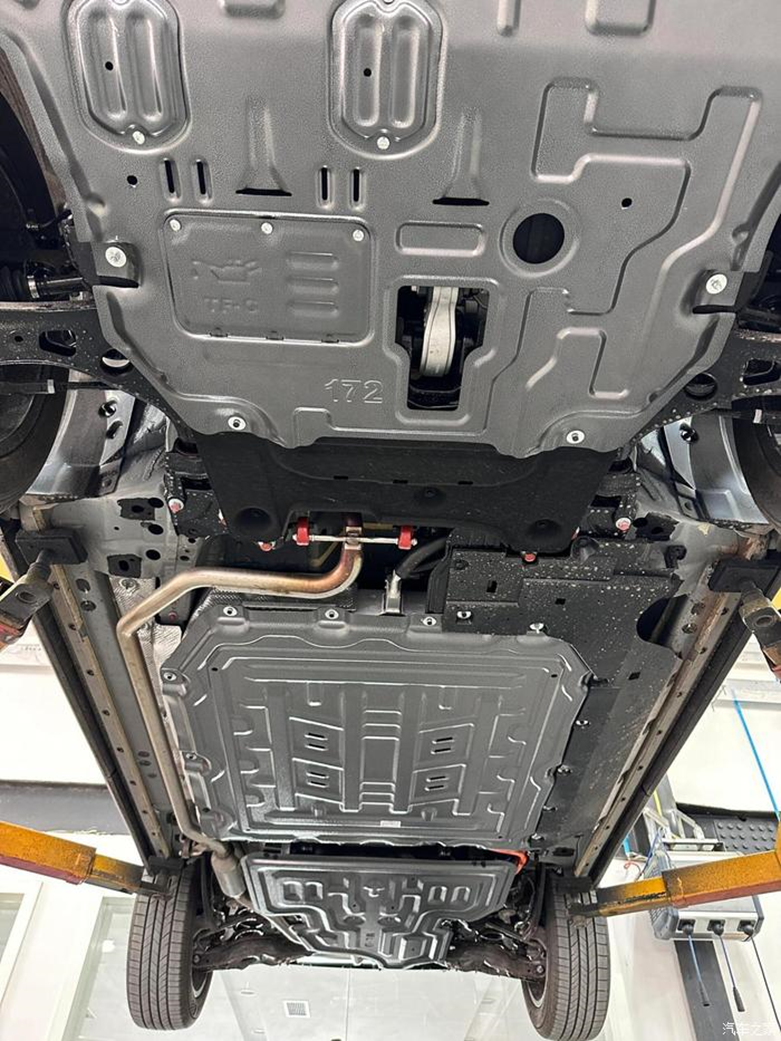
The least expensive approach is improved sealing. Carmakers can raise the protection level of a battery pack, strengthen underbody shielding and protect vulnerable electrical components. This can lift a vehicle's rated wading depth from about 300mm to somewhere between 500mm and 700mm. It is a relatively straightforward way to add a margin of safety that customers can understand, without redesigning the vehicle around flotation.
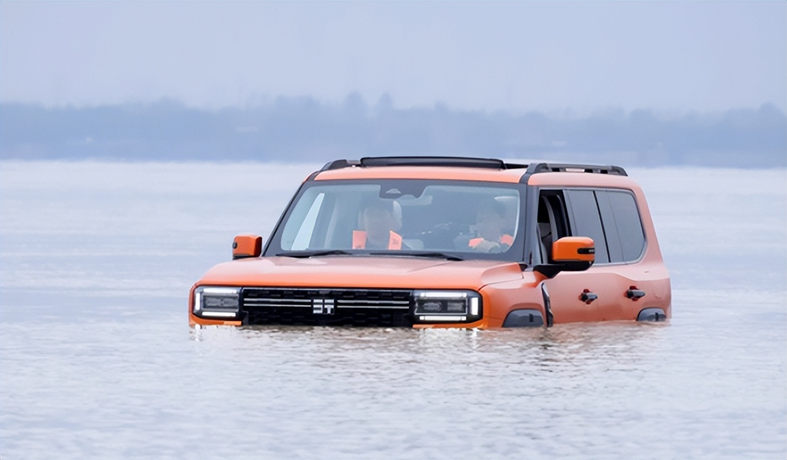
A second route is limited emergency buoyancy. Xiaomi says the Pengcheng N90 Max can wade through water as deep as 750mm and, if it enters deeper water, provide a short escape window with no significant cabin ingress for three minutes. Its wading mode requires at least 15 per cent battery charge and must be activated manually. The company describes the function as emergency redundancy, warns owners against deliberately entering unknown water and calls for an inspection after any serious wading event.
The third and most expensive route is controlled flotation or quasi-amphibious operation. The Yangwang U8 uses four independently driven wheels to manoeuvre while afloat and is designed to remain on the surface for up to 30 minutes in an emergency. Jetour has taken the concept further with a limited G700 fitted with twin water-jet thrusters. The company demonstrated the vehicle crossing the Yangtze River in about 22 minutes, although owners need training and certification. The standard G700 can wade to 970mm but is not designed to navigate like the specialised version.
Those differences create a natural market hierarchy. Stronger sealing could plausibly reach vehicles around $22,000. Limited flotation is more likely to remain in models above roughly $37,000, while controlled flotation and amphibious hardware are likely to stay concentrated in flagships costing $74,000 or more.
Actual demand may prove less dramatic than the technology. Even during severe urban flooding, many drivers are more likely to encounter water rising partway up the wheels than depths at which a vehicle must float. Their immediate concern is not whether the car can move across open water, but whether the battery has been compromised, whether the dealer can identify hidden damage and whether an insurer will pay.
That gap between engineering capability and everyday use will shape the market. Flotation can give premium models a memorable technology signature. Mid-market vehicles can sell deeper wading limits and better sealing as safety features. Entry-level cars will rely more heavily on mandatory standards. A full industry arms race is unlikely, but weak flood protection could become a disadvantage for higher-priced SUVs.
After-sales networks face damage that may take weeks to appear
Building a vehicle that survives a controlled water test is only the first step. Once a manufacturer advertises deep-water capability, some owners will inevitably feel more confident entering flooded roads. Higher use brings a higher probability of failures, and those failures may not be visible when the vehicle leaves the water.
Moisture inside a battery enclosure, falling insulation resistance, corroding wiring and damp cells can take weeks — sometimes months — to produce symptoms. A vehicle may appear normal immediately after a storm while deterioration continues out of sight. Dealers could therefore face a delayed wave of claims long after the floodwater has receded.
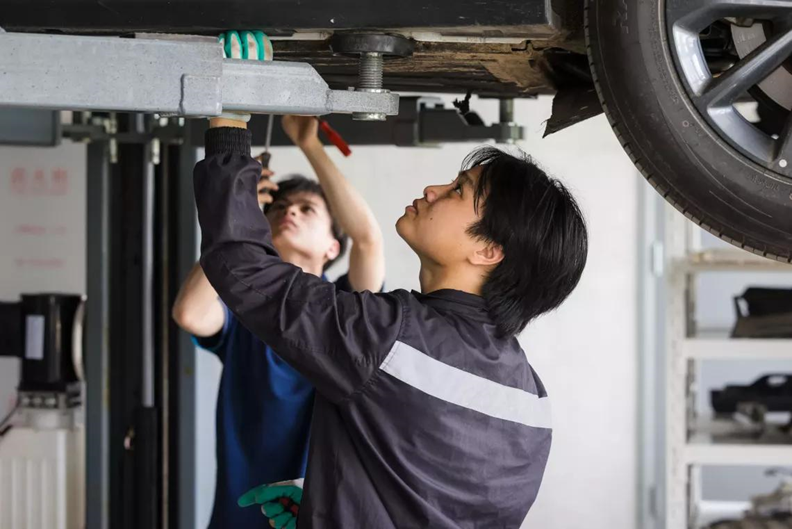
Many service networks are not yet organised around that risk. Post-wading inspections are not always built into a standard process, and customers may not understand why a vehicle that appears to drive normally should be checked. Carmakers that want to promote flood resilience will need a clear protocol covering battery sealing, high-voltage insulation, connectors, wiring and event data.
Warranty language presents another problem. Lifetime warranties on batteries, motors and power electronics often exclude damage caused by deliberate deep-water driving or improper operation. The distinction between normal commuting and reckless use is rarely obvious. If a driver encounters an unexpectedly flooded underpass and the water rises above half the wheel, is that ordinary use or avoidable risk?
Ambiguity creates fertile ground for disputes. A brand that advertises wading capability but later rejects a battery claim on the grounds that the owner entered deep water risks turning a safety message into a reputational liability. The product is incomplete unless it is supported by an integrated system for inspection, repair, roadside assistance and insurance reporting.
This is also where a less visible competitive advantage may emerge. A manufacturer able to alert the driver, record the water depth, arrange recovery and route the car into a standardised inspection process would have something more defensible than a dramatic launch video. It would have evidence, procedures and a service promise.
Insurers will decide whether the feature is affordable
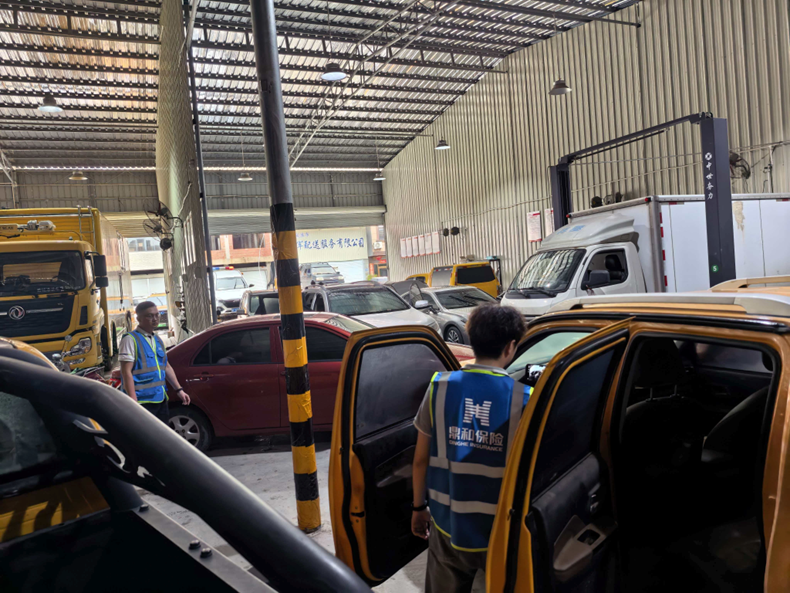
Insurance is becoming the industry's quiet arbiter. China's updated specialist motor-insurance terms for new-energy vehicles have clarified protection for batteries, motors and electronic controls under comprehensive vehicle cover. A recent Beijing Financial Court ruling also reinforced the principle that water-damaged batteries should be assessed through professional inspection rather than rejected simply because the pack carried a waterproof rating.
The case illustrates the economics. The vehicle was insured for about $9,000, while the quoted battery repair exceeded $27,000. The court treated the car as a constructive total loss and ordered the insurer to pay the insured amount. The ruling matters because a battery pack can account for 40 to 50 per cent of an EV's cost, and damage inside it may be both difficult to see and uneconomic to repair.
If flood-related total losses rise, insurers will respond through pricing and underwriting. A model associated with expensive water damage could face higher premiums, narrower coverage or more restrictive conditions. The cost would ultimately reach the buyer, weakening the appeal of the feature that created the risk in the first place.
That makes insurance compatibility part of vehicle design. Replaceable modules, accessible inspection points, reliable water-depth records and repairable sealing systems could matter almost as much as maximum wading depth. Carmakers that involve insurers early may be able to demonstrate lower loss severity and protect customers from punitive premiums.
Driver behaviour remains critical. Policies can exclude losses worsened by an attempt to restart or operate a flooded vehicle. The safest response after a serious wading event is usually to stop, isolate the vehicle where possible, call for recovery and obtain a professional inspection. In-car warnings and post-event instructions should make that sequence difficult to misunderstand.
Flood resilience will matter, but flotation will remain a niche
More extreme rainfall is likely to make flood resilience a more visible part of vehicle development, particularly in China, where EV adoption and urban density give the issue unusual scale. The strongest commercial opportunity is unlikely to be a mass market of cars that can navigate rivers. It is more likely to be a layered set of protections: better sealing for affordable cars, deeper wading capability for SUVs and emergency flotation for a small group of flagships.
The winners will not be determined by the most spectacular demonstration alone. They will be the manufacturers that define the operating limits honestly, detect damage early, provide a credible service response and keep insurance costs manageable. Typhoon Dolphin has made the engineering look timely. The harder task is turning it into a safety system that still works after the water is gone.