
China’s electric-vehicle market is producing one of its sharpest contradictions yet. In the first half of 2026, passenger-car sales below roughly $7,000 fell 55% from a year earlier to just 130,000 units.
At the other end of the market, new-energy vehicles priced above about $59,000 recorded sales of 240,000 units, up 46%, with Chinese brands taking 59% of the segment.
The divergence is striking in a market that spent much of the past decade making electric mobility cheaper. The ultra-low-cost micro EV, once one of the most visible symbols of China’s electrification drive, is suddenly under pressure just as locally built premium EVs are gaining credibility with wealthier buyers.
This is not simply a story of Chinese consumers abandoning cheap cars for expensive ones. The broader domestic passenger-car market remains weak, with first-half retail sales falling about 20% year on year. Instead, the split points to a deeper restructuring: policy support is becoming less favourable to the cheapest vehicles, tougher safety requirements are raising engineering costs, and larger models are moving down into price bands once dominated by A00-class city cars. At the same time, buyers who remain willing to spend are increasingly asking for technology, safety and a differentiated ownership experience rather than the lowest possible sticker price.
The Micro-EV Boom Is Reversing
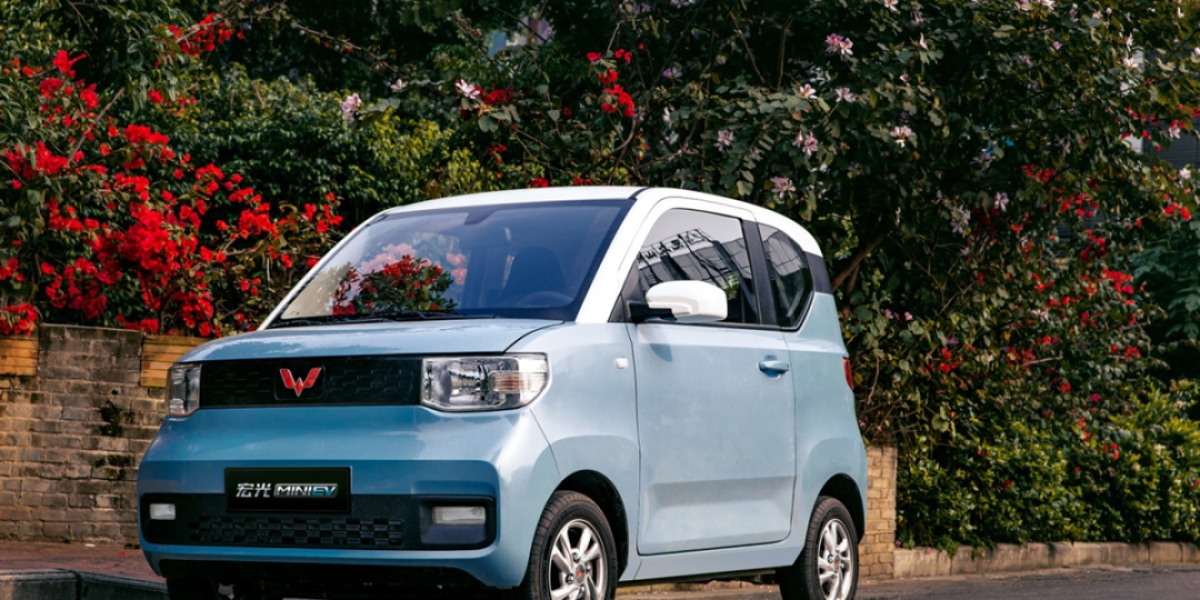
No model better defined China’s micro-EV boom than the Wuling Hongguang Mini EV. Launched in 2020 with an entry price below roughly $4,000, the tiny battery-electric car turned basic urban mobility into a mass-market product. At its peak, annual sales reached 554,000 units and monthly deliveries at times exceeded 50,000.
By the first half of 2026, that momentum had faded sharply. Hongguang Mini EV sales fell to 72,800 units from 171,100 a year earlier, a decline of nearly 100,000 vehicles. Several rivals suffered even steeper contractions. Geely’s Panda sold 19,900 units, down 78.2%; Wuling Bingo sales fell 79.3% to 16,200; BYD’s Seagull dropped 68.5% to 55,100; and Changan discontinued sub-$7,000 entry versions of the Lumin.
The weakness extends beyond individual nameplates. A00-class battery-electric wholesale volumes fell 44% year on year in May, while the segment’s market share dropped by 11.6 percentage points from a year earlier. Dealers that once treated micro EVs as traffic generators are increasingly giving them less showroom attention as sales and margins deteriorate.
Premium NEVs are moving in the opposite direction. Sales above roughly $59,000 rose 46% in the first half, even as most other price bands weakened. The contrast reflects an increasingly polarised market: price-sensitive households are delaying purchases or moving away from the new-car market, while buyers with stronger purchasing power are still prepared to trade up for vehicles offering more space, software, driver-assistance systems and premium features.
Cheap EVs Are Becoming Less Economic to Build
The problem for A00-class cars begins with their economics. Their defining advantage has always been price, but the policy and regulatory environment in 2026 is making that advantage harder to preserve.
From January 1, China reduced the purchase-tax exemption for NEVs rather than maintaining the previous full exemption. For a micro EV priced at around $6,000, the change can add several hundred dollars to the buyer’s effective cost before manufacturer incentives. Trade-in subsidies have also become more closely linked to the value of the replacement vehicle, reducing the relative benefit available to the cheapest cars.
For a customer shopping with a budget of roughly $4,000 to $7,000, even a modest increase in the final transaction cost can alter the purchase decision. That sensitivity is particularly important in a segment whose customers were attracted precisely because the vehicles offered one of the lowest-cost routes into new-car ownership.
China Passenger Car Association secretary-general Cui Dongshu has argued that the sharp decline in the lower end of the market reflects a combination of tighter technical requirements for tax-qualified NEVs, pressure on short-range and less-efficient entry models, and weaker underlying demand.
Manufacturers are also being squeezed from the cost side. Battery-grade lithium carbonate spot prices climbed to around $28,000 per tonne in May 2026, more than doubling from their lows in the first quarter of 2025. A00 vehicles use smaller battery packs than larger EVs, but they also have far less margin available to absorb increases in cells, materials and compliance costs.
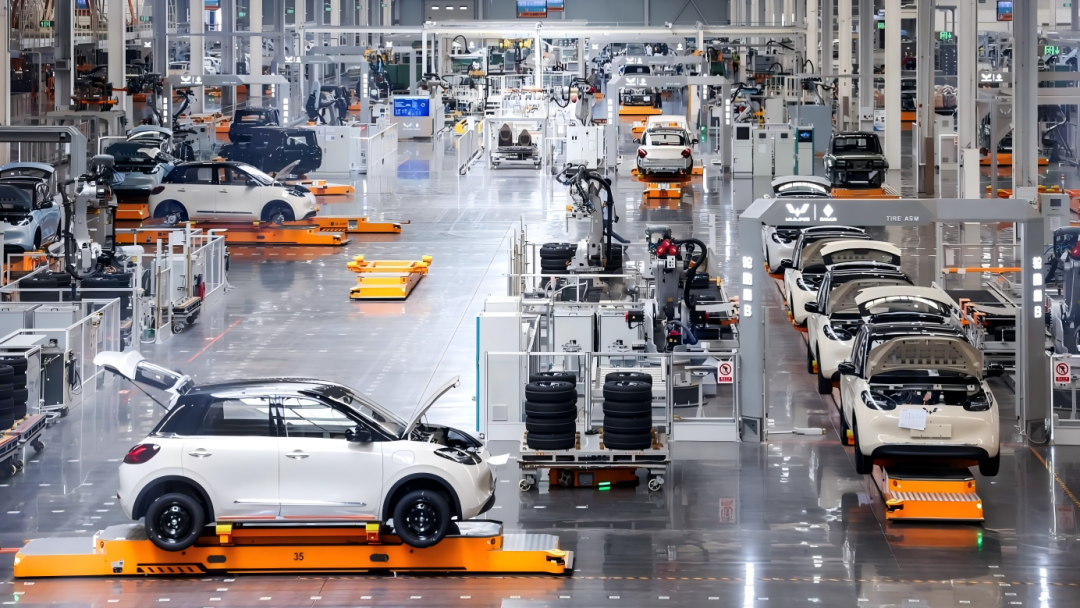
Safety rules are adding another layer of expense. New requirements that took effect on July 1 raised the threshold for battery and vehicle safety, including tougher thermal-runaway standards, underbody impact testing and a requirement for a physical emergency power-disconnection function. The rules reduce the scope for automakers to protect low prices simply by stripping out engineering content or relying on less costly battery configurations.
The financial buffer is already thin. Chen Shihua, a deputy secretary-general of the China Association of Automobile Manufacturers, has said vehicle manufacturing margins are around 1.5%. On a vehicle worth approximately $15,000, that would imply profit of only a few hundred dollars before accounting for the specific economics of an ultra-low-cost model. The margin on a micro EV can be even tighter.
The Biggest Threat Is Coming From Slightly Larger Cars
Regulation and commodity costs alone do not explain the decline. The most direct competitive pressure on A00 cars is coming from the next segment up.
A0-class EVs such as Geely’s Xingyuan and the Wuling Bingo Pro have pushed into the roughly $7,000-$9,000 price range while offering larger cabins, longer driving ranges and substantially more equipment. That has narrowed the price gap separating a minimalist city car from a more versatile small EV.
The fifth-generation Hongguang Mini EV, for example, lists a 301-km version at roughly $8,000. Spending only around $1,000-$2,000 more can put a buyer into a 2026 Geely Xingyuan with a 310-km range, larger dimensions and more features. For many households, the step up now looks easier to justify than it did when micro EVs occupied an almost uncontested low-price niche.
Geely delivered 194,200 Xingyuan units in the first half of the year, making it one of China’s strongest-selling NEV passenger models. Even during the seasonally weak Lunar New Year month of February, A0-class battery-electric wholesale sales reached 122,000 units, up 3.9% year on year.
The result is a classic case of market compression. A00 models cannot move much lower in price without damaging already fragile profitability, while A0 vehicles are moving downward with enough scale and product content to make the smallest cars look compromised.
Wuling’s Next Act Shows Where the Market Is Heading
Automakers are responding in different ways, but the direction is broadly the same: away from relying on the cheapest vehicles as the foundation of growth.
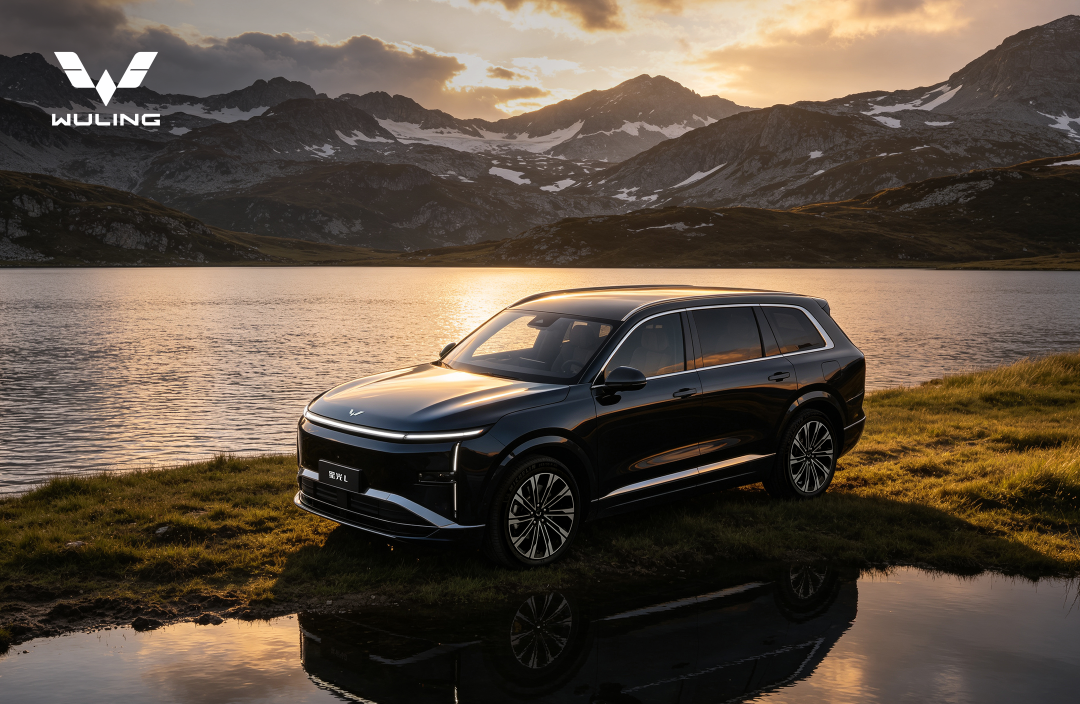
Wuling offers the clearest example. The brand that became synonymous with China’s micro-EV boom is expanding into larger vehicles, including the Starlight L and other products positioned further up the size and price ladder. The Starlight L, a six-seat plug-in hybrid SUV, starts at around $16,000 after incentives, a very different proposition from the low-cost urban runabouts that built Wuling’s modern EV reputation.
The strategic logic is straightforward. Larger vehicles provide more room for battery, software and safety content, but also more room for pricing and margin. They allow manufacturers to compete on features and brand positioning rather than purely on manufacturing cost.
The challenge is that moving upmarket is not simply a matter of building a larger car. Brands associated with low-cost mobility have to change customer perceptions, strengthen research and development, broaden their dealer capabilities and compete in segments where buyers expect higher levels of refinement and technology.
Exports Offer a Second Life for Small EVs
China’s domestic market may be turning against the smallest EVs, but overseas markets could provide them with a second growth curve.
China exported 540,000 new-energy passenger vehicles in July, according to figures cited in the source material, up 147.8% from a year earlier. A00- and A0-class battery-electric models together accounted for 42.2% of pure-electric exports, up from 36.6% a year earlier.
That matters because the economics of a small Chinese EV can look very different outside China. In markets where new cars remain expensive, compact EVs can still offer an attractive combination of purchase price, low operating costs and urban practicality.
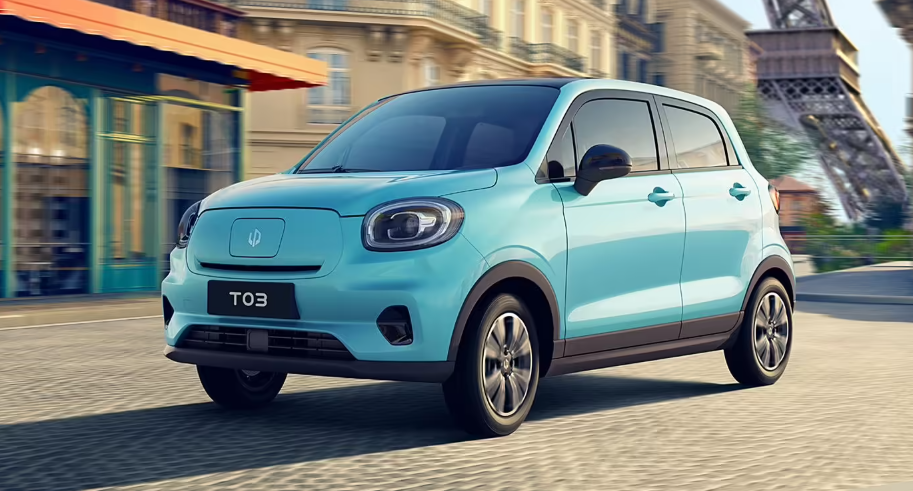
Leapmotor’s T03 illustrates the opportunity. Registrations in Italy reached 5,513 units in March, according to the source article, up 2,827% from a year earlier and enough to put the model at the top of the country’s battery-electric sales ranking for the month. The same logic could apply across parts of Southeast Asia, Latin America and other emerging markets where affordable electrification remains an unmet demand.
Export growth will not rescue every A00 model. European safety requirements, tariffs, logistics costs and local consumer preferences can erode the price advantage, while emerging markets vary widely in charging infrastructure and purchasing power. But overseas sales give Chinese manufacturers another channel through which to monetise platforms that are losing momentum at home.
The Bottom of China’s EV Market Is Being Rewritten
The third response is more defensive: cut production or eliminate models that no longer justify their engineering and compliance costs. As new battery standards raise the minimum investment required to keep a vehicle on the market, some manufacturers are likely to conclude that the cheapest variants are no longer worth updating.
That creates its own risk. Reduced supply can weaken dealer commitment and consumer interest, pushing the segment into a cycle in which low volumes make further investment even harder to justify. Cui has warned that micro EVs and other entry-level categories are under pressure and that lower-income vehicle demand needs support.
Yet the underlying use cases have not disappeared. China still has millions of consumers who need a car for short commutes, smaller cities, suburban travel or as a second household vehicle. What is changing is the definition of value.
Five years ago, a tiny battery, basic cabin and rock-bottom price could be enough to create a blockbuster. In 2026, buyers and regulators are demanding more: safer batteries, longer range, better connectivity and more usable interiors. Once those features become the minimum acceptable standard, the economics that created the first micro-EV boom begin to break down.
China’s A00 segment is therefore unlikely to disappear, but its role is changing. The next generation of affordable EVs may be fewer in number, more capable and somewhat more expensive. For automakers, the race is no longer to build the cheapest electric car possible. It is to determine how much technology and safety can be delivered before affordability itself disappears.