
China’s car industry has become exceptionally good at launching new models. The harder question is ...
Whether every manufacturer has become equally good at proving those vehicles are ready for the road.
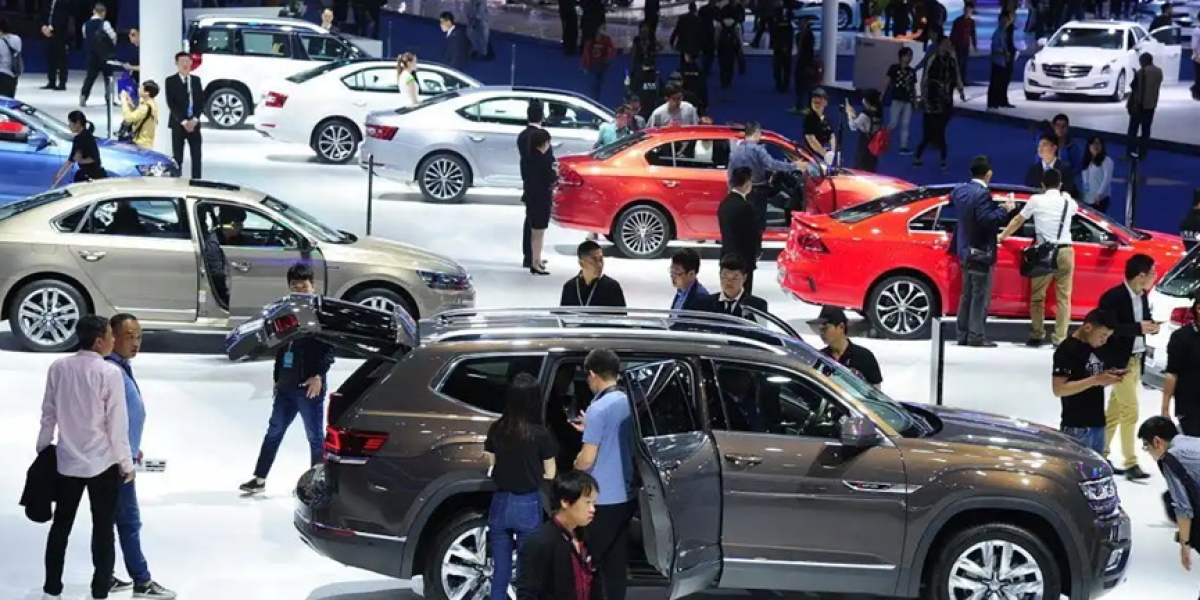
From January to May 2026, 542 new and updated models were introduced in China, equivalent to roughly 3.6 launches a day. During the first half of the year, the country issued 50 vehicle recall notices covering about 1.65 million cars. Recall volumes involving Chinese domestic brands rose 681.2% from a year earlier, according to data cited from the State Administration for Market Regulation.
The two figures do not establish a direct causal link. Recalls can rise because manufacturers and regulators are finding problems more effectively, and a large campaign may concern vehicles developed years earlier. Yet the combination of relentless product launches and sharply higher recall volumes has intensified a debate over what Chinese industry executives have begun calling the “instant car”.

Two positions now frame that argument. Li Xueyong, Chery Automobile’s executive vice-president, says there are parts of vehicle development where time cannot safely be removed. Lu Fang, chairman of Dongfeng-backed premium EV maker Voyah, argues that a short development programme should not automatically be mistaken for an incomplete one. For Lu, the decisive test is whether every required validation stage has been completed.
Both arguments contain an important truth. Digital engineering, modular architectures and more capable simulation can make vehicle development faster. But an industry under intense commercial pressure also has powerful incentives to present a compressed timetable as evidence of technical progress, even when outsiders have little ability to see which tests were completed, shortened or deferred.

Development Cycles Are Shrinking Faster Than the Risks
A conventional vehicle programme once commonly took three to four years from approval to launch. In China’s electric-vehicle market, that cycle has in some cases fallen to 18 months or less. Part of the reduction is legitimate. Shared platforms avoid repeating the same engineering work, modular components can be reused across several models, and digital twins allow engineers to identify faults before building expensive physical prototypes.
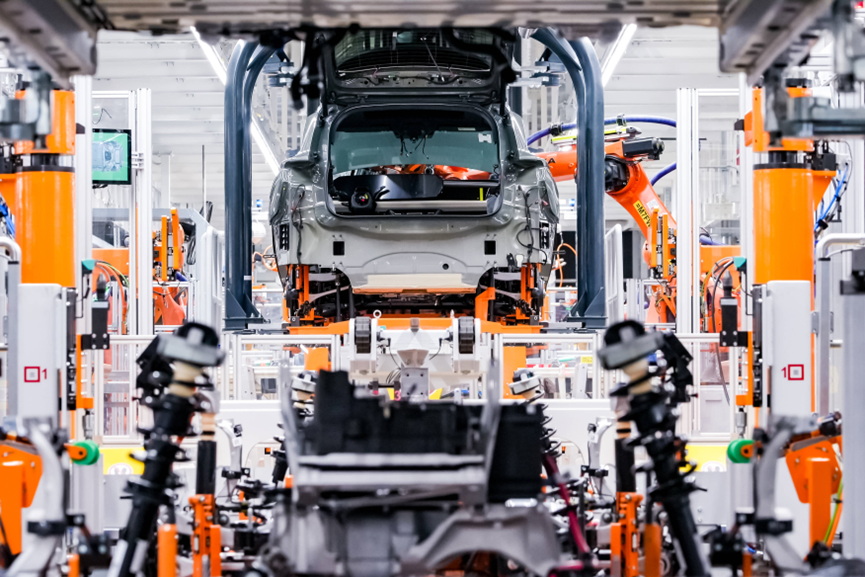
Simulation can also run thousands of virtual scenarios far more quickly than a traditional test fleet could reproduce them. Simultaneous engineering allows design, production preparation and supplier work to proceed in parallel rather than in sequence. Used properly, these tools remove delay without removing discipline.
The risk appears when efficiency becomes indistinguishable from omission. Li Fenggang, general manager of Beijing Hyundai, told the 2026 China Auto Forum that some manufacturers were cutting essential design-validation and production-validation work to reach the market sooner. Design validation, commonly known as DV, tests whether a component or system performs as intended. Production validation, or PV, determines whether factories, tooling and suppliers can reproduce that performance consistently at scale.
A vehicle that passes one stage but not the other may have a sound design and still suffer unstable production quality. The reverse is no better: a consistently manufactured component does not become safe merely because each example contains the same design weakness. When either stage is compressed too far, early buyers can end up performing the final round of testing in public.
Software updates complicate that boundary. Over-the-air fixes can correct genuine post-launch defects and improve a vehicle throughout its life. They can also make it easier to launch before calibration is mature, particularly when software is expected to conceal or compensate for unresolved hardware behaviour. An OTA-capable car is not necessarily an unfinished car, but connectivity should not become a substitute for pre-launch engineering.

Voyah Says Short Does Not Mean Incomplete
Lu Fang has challenged the assumption that speed itself is the problem. He argues that a vehicle should be judged by whether it completed all necessary analysis, simulation, testing and production preparation, not by the number of months shown on a development calendar.
That distinction matters. A model derived from a mature architecture does not need every component to be validated from zero. Proven battery systems, electric drive units, electronic architectures and manufacturing processes can be carried across vehicle programmes. Engineers can then concentrate on the parts that changed: body structure, thermal behaviour, suspension tuning, software integration or a new supplier component.
In this context, a shorter timetable can reflect accumulated knowledge rather than reduced standards. Voyah’s position is that a vehicle developed efficiently should not be placed in the same category as one rushed to market after tests were removed.
The weakness in that argument is not technical but informational. Buyers, dealers and investors rarely receive a complete account of a vehicle’s validation programme. Manufacturers announce millions of test kilometres and extreme-weather trials, but those headline numbers reveal little about failure rates, test severity, corrective work or production consistency. The industry therefore asks consumers to trust a process they cannot inspect.
That makes validation completeness the correct standard in theory and a difficult standard to apply in practice. Without greater disclosure, almost every manufacturer can describe its own compressed programme as efficient while characterising a rival’s as rushed.
Chery Is Making Time Part of the Product
Chery has taken the opposite communication strategy with the Fulwin T7, a battery-electric sport utility vehicle related to the Lepas L6 sold in overseas markets. The company says the programme took five years: two years of planning followed by three years of development.
During the planning stage, Chery says it surveyed more than 5,000 users across 15 representative countries and converted different driving habits and market conditions into more than 80 localisation requirements. It later deployed 81 durability vehicles for testing across regions that included Europe, Southeast Asia, the Middle East, southern Africa, Russia, Mexico and Brazil.
The company reports more than 6 million kilometres of total testing, including 1.45 million kilometres devoted specifically to durability. Test conditions ranged from temperatures of minus 40 degrees Celsius to 55 degrees, as well as high humidity, rough roads and other conditions intended to represent the environments in which the vehicle may eventually be sold.
Those numbers are company claims rather than an independent audit, and a long programme does not by itself guarantee a fault-free vehicle. Poorly designed tests do not become rigorous merely because they run for years. Chery’s approach is still significant because it treats development time and global validation as part of the product’s value proposition at a moment when much of the Chinese market sells novelty and rapid iteration.
Chery is not rejecting speed across its entire portfolio. Its product strategy is closer to a two-track system. A new global model carrying unfamiliar technology and entering multiple regulatory environments can receive a longer programme. Annual updates, renewed nameplates and vehicles built from mature systems can move more quickly because the validation burden is concentrated on what changed.
This is a more useful distinction than simply choosing between fast and slow. Reusing verified engineering is efficiency. Removing verification is risk transfer.
The Recall Surge Is a Warning, Not a Verdict
China’s recall figures have become central to the instant-car debate, but they require careful interpretation. The first half of 2026 brought recalls covering about 1.65 million vehicles, while the number involving domestic brands increased steeply from a low comparison base. That does not prove that rapid development caused each defect.
Recall data can be distorted by the size of individual campaigns, changes in reporting, stronger regulatory enforcement and the rapid expansion of the vehicle population. A manufacturer willing to recall a defective product may be behaving more responsibly than one that leaves a known problem unaddressed.
The figures still expose the scale of the quality challenge. Electric vehicles combine batteries, high-voltage systems, complex software, connected services and advanced driver-assistance functions. Faults can emerge from the interaction of systems that may each have passed isolated tests. As development cycles shrink, integration and production validation become more important, not less.
China’s model-launch race adds another layer of pressure. Carmakers are fighting a prolonged price war while technology and consumer expectations change quickly. A delayed model can arrive with an outdated battery, an inferior assisted-driving package or a price that no longer fits the market. For weaker brands, missing one product window can threaten their survival.
That commercial reality explains why few manufacturers can simply slow down. It does not remove their responsibility to prove that faster engineering is supported by mature platforms, reliable suppliers and sufficient physical testing.
The Real Problem Is Information Asymmetry
The dispute between Chery and Voyah is less a disagreement over engineering than a dispute over evidence. Lu is right that calendar time is an imperfect proxy for quality. Chery is right that certain physical processes cannot be wished away by software or management theory.
The industry needs more useful measures than launch speed or aggregate test mileage. Manufacturers could disclose whether DV and PV were completed separately, how many prototypes were used, which systems were carried over from proven vehicles, which were newly validated, and how test failures changed the final design. Regulators could standardise more of that disclosure so companies compete on comparable evidence rather than marketing language.
External standards can reduce the trust gap. Chery joined the board of the International Automotive Task Force in 2026, giving it a role in the development of global automotive quality-management standards. The company also points to international five-star safety ratings and J.D. Power results as evidence that its internal process produces measurable outcomes. Such credentials strengthen the case, though none should replace scrutiny of an individual vehicle.
Warranty and compensation commitments can also return some risk to manufacturers. They are most credible when the terms are clear, exclusions are limited and claims can be settled without imposing a heavy burden on owners. A promise printed in a launch presentation is not equivalent to a transparent, enforceable policy.
China is also moving towards a firmer regulatory floor. Reliability requirements due to take effect in 2027 will make pre-market testing more explicit, while proposed revisions to electric-vehicle test rules would raise the required reliability mileage for battery-electric models from 15,000 kilometres to 30,000 kilometres. The direction is clear: digital tools may improve how testing is conducted, but physical validation remains necessary.
Fast Engineering Still Needs Slow Proof
The strongest version of Voyah’s argument and the strongest version of Chery’s are compatible. Modern carmakers should use simulation, modular platforms and parallel development to remove wasted time. They should then spend the time saved on the areas where uncertainty remains: new hardware, system integration, extreme conditions and production consistency.
A long programme can conceal bureaucracy and poor management. A short one can reflect genuine engineering progress. Neither duration nor speed is a quality certificate.
The dividing line is whether a manufacturer has reduced repetition or reduced proof. That distinction is difficult for consumers to see and easy for carmakers to blur. As China’s auto industry launches models at a pace unmatched elsewhere, the next stage of competition will depend less on who can unveil another vehicle and more on who can demonstrate that rapid development has not shifted unresolved risk onto the buyer.