
For decades, China’s automotive joint ventures followed a familiar formula: foreign carmakers supplied technology, brands and product blueprints, while their Chinese partners contributed manufacturing capacity, distribution and access to the world’s largest car market.
That arrangement is now being turned on its head.
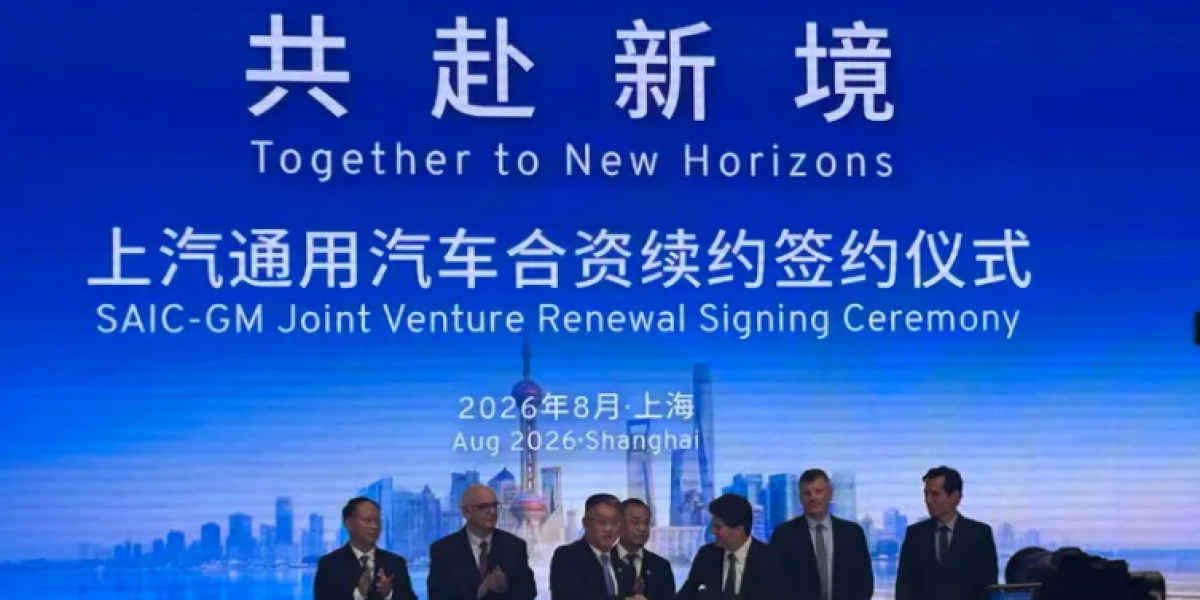
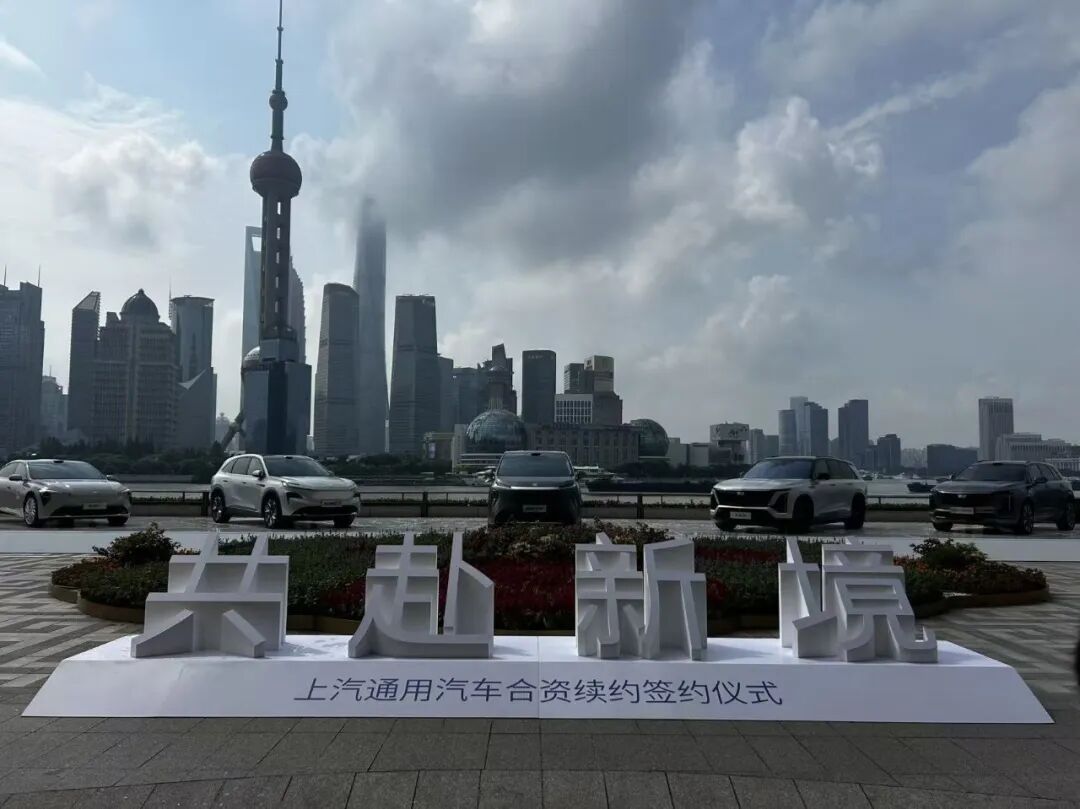
In the summer of 2026, several of the longest-running automotive partnerships in China moved to extend their joint ventures even as foreign brands continued to lose market share. Honda and GAC agreed in July to extend GAC Honda’s term through 2038. In August, General Motors and SAIC renewed their 50:50 venture for another 20 years, taking the partnership through 2047. Volkswagen and SAIC had already moved in late 2024 to extend their alliance through 2040.
At first glance, the timing looks counterintuitive. Chinese brands accounted for 71.8% of the country’s passenger-vehicle wholesale market in the first half of 2026, according to data cited in the source article, leaving foreign and joint-venture brands with 28.2%. In June, their combined share fell below 25% for the first time, compared with close to 60% in 2020.
Yet global carmakers are not simply retreating. They are signing longer contracts, giving Chinese teams more authority over vehicle development and increasingly treating China as a source of technology rather than merely a destination for products engineered elsewhere.
The result is the emergence of a different kind of joint venture — one in which the key asset is no longer the right to introduce a foreign model into China, but the ability to define a product in China and potentially sell it to the rest of the world.
From localisation to product control
The length of the latest agreements is significant, but the more important shift is taking place inside the companies themselves.
SAIC-GM offers one of the clearest examples. The venture, established in the 1990s, was originally built around a division of labour common across China’s auto industry: global platforms and engineering came from the foreign partner, while the Chinese side handled production, market access and local execution.
That model is changing. Pan Asia Technical Automotive Center, SAIC-GM’s core engineering operation, has moved far beyond adapting global vehicles for Chinese customers. It is increasingly involved in defining vehicles from the architecture upward.
The locally developed Xiao Yao architecture, introduced in 2025, illustrates the shift. Designed around China’s new-energy vehicle market, the platform can support MPVs, SUVs and sedans as well as battery-electric, plug-in hybrid and range-extended powertrains.
GAC Honda is moving in a similar direction. After renewing the venture, the company has been pushing a product-director system in which the joint venture’s local team takes the lead in product definition rather than simply modifying models developed elsewhere. Two vehicles based on China-specific platforms are expected in 2027 under that approach.
Volkswagen has expanded the role of its technology and development operations in Hefei, while Nissan has elevated China into a more important hub within its global research and development network. Across the industry, foreign carmakers are shifting more authority over product definition, software, electrical architecture and technology choices to teams based in China.
The implication is straightforward: the old joint-venture advantage was access. The new one is decision-making power.
In the combustion-engine era, the critical question was which company could secure the rights to manufacture and sell a global model in China. In the electric and software-defined era, the more important question is who controls the product brief, the electronics, the user experience and the development timetable.
The rise of the ‘reverse joint venture’
China’s joint-venture system was once described through the language of “market for technology”. Foreign manufacturers brought engineering expertise, brands and management systems; Chinese companies offered a vast market, factories, labour and distribution.
The arrangement helped build China’s modern auto industry and trained generations of engineers and manufacturing specialists. It also left many local partners dependent on their foreign shareholders for core vehicle development and product planning.
That imbalance has narrowed sharply.
China’s electric-vehicle and intelligent-car ecosystem now develops at a speed that many traditional global manufacturers struggle to match. Batteries, electric powertrains, cockpit software, advanced driver-assistance systems and vehicle electronics increasingly come from Chinese suppliers or Chinese engineering teams.
This has given rise to what some industry observers describe as a “reverse joint venture”: instead of Chinese manufacturers importing foreign technology, multinational groups increasingly seek Chinese technology, engineering speed and supplier networks to improve their own competitiveness.
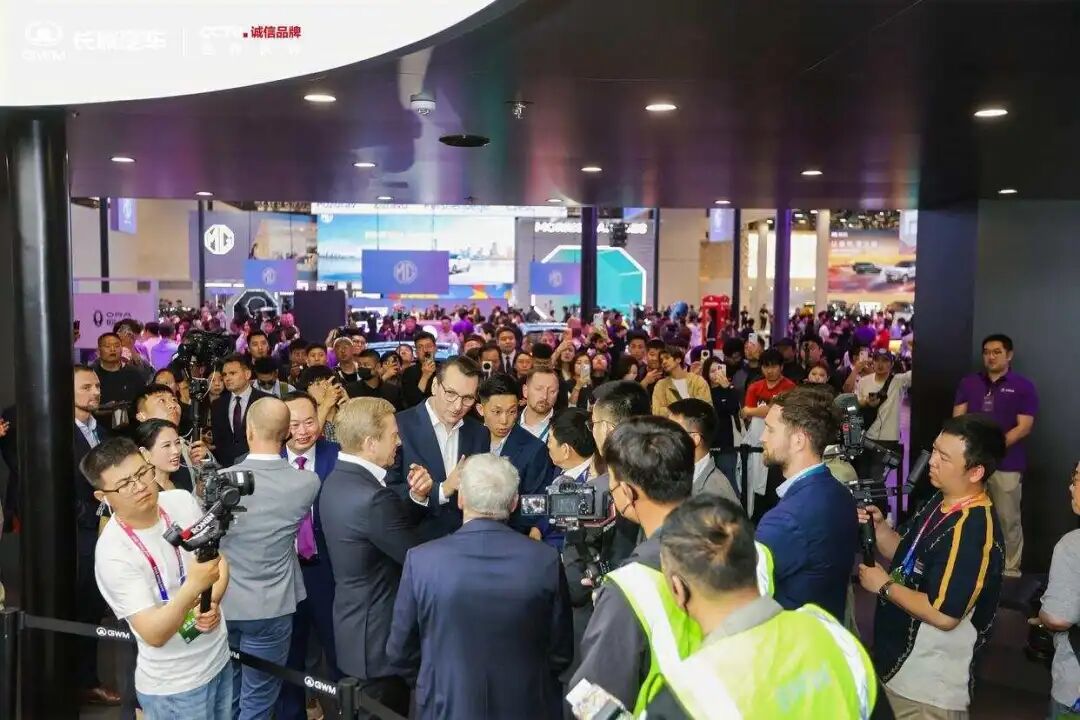
The shift was visible at the 2026 Beijing auto show, where international executives and engineers were far more prominent around Chinese technology companies, and foreign brands increasingly presented local partnerships alongside their own products.
Volkswagen Group CEO Oliver Blume has previously described China as a kind of “fitness centre” for the auto industry — a market where intense competition and rapid technology cycles force companies to improve faster. The metaphor captures why shrinking market share does not necessarily reduce China’s strategic importance to global carmakers.
For Western manufacturers, China has become both a market problem and a development resource. Losing customers to BYD, Geely, Xiaomi and other fast-moving rivals increases the pressure to localise engineering. At the same time, access to China’s battery, software and electronics ecosystem offers a route to lower development costs and shorter product cycles.
The most important development is that locally created technology is beginning to travel in the opposite direction.
Volkswagen has discussed using China-developed electronic architectures and related technologies in other markets. BMW has built a research and development network of more than 3,000 people in China, its largest outside Germany, and some digital cockpit functions are introduced in China before being adapted for global vehicles.
This changes the strategic purpose of the joint venture. China is no longer simply where a foreign car is localised. It is increasingly where parts of the global car are conceived.
From ‘global to China’ to ‘China to global’
For most of the joint-venture era, localisation meant taking a vehicle designed for global markets and adapting it to Chinese roads and customers. Wheelbases were stretched, suspensions softened, rear-seat equipment upgraded and powertrains adjusted to local conditions.
The intellectual centre of the product remained outside China.
The emerging model reverses the direction of travel. Vehicles can now be defined, engineered and manufactured in China with overseas sales built into the programme from the beginning.
SAIC-GM is among the most visible proponents of this approach. At the renewal of the partnership, SAIC Chairman Wang Xiaoqiu framed the evolution as a move from “technology introduction and local production” toward “local innovation and global sharing”.
Buick’s Electra E7 is expected to become one of the early tests of that strategy. The China-developed model is scheduled to begin overseas shipments in October 2026, targeting markets in the Middle East, Africa, South America, Mexico and the Asia-Pacific region.
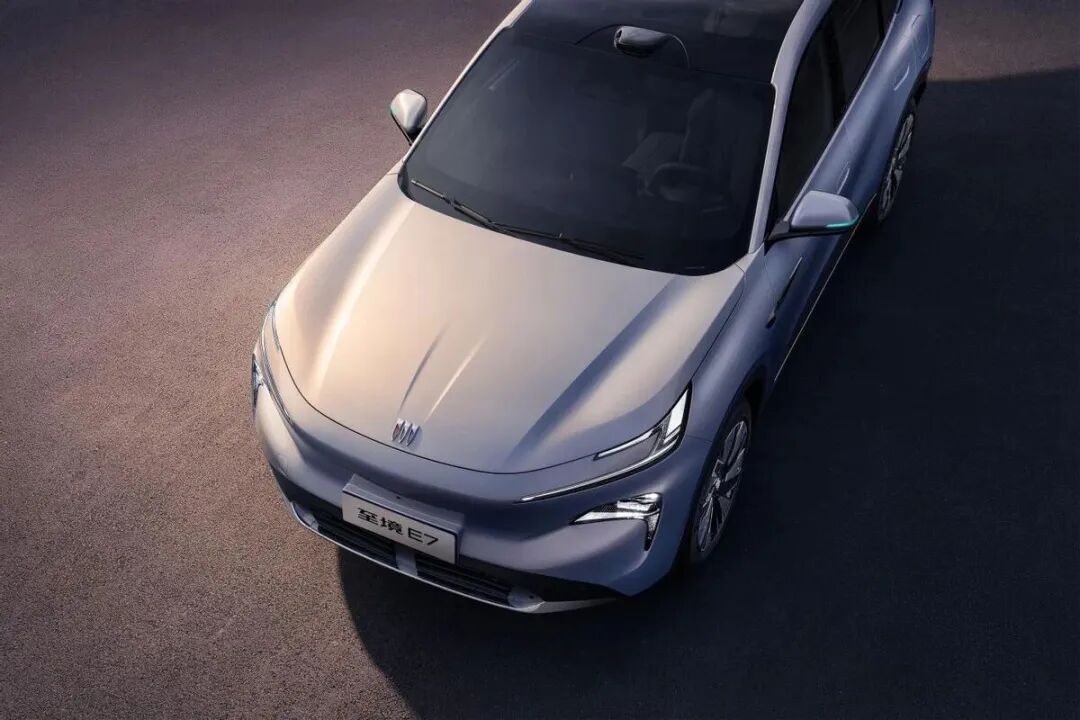
Its importance goes beyond a single export programme. The vehicle represents a joint-venture product defined and developed in China with multiple overseas markets in mind from the outset — a departure from the traditional model of adapting a Western vehicle for Chinese buyers.
SAIC-GM intends to make the approach part of its broader product plan. The company has said it aims to introduce at least 30 new-energy vehicles by 2030, spanning battery-electric, plug-in hybrid and range-extended technologies.
That makes the renewed venture less a bet on recovering the old joint-venture market and more a bet on building a new industrial role for China inside GM’s global system.
Speed is not the only advantage
The rise of China-led development has also exposed a tension that the joint ventures may be able to exploit.
Vehicle development cycles have become dramatically shorter. In the combustion-engine era, a new model commonly required more than three years from programme approval to mass production. Some Chinese manufacturers have compressed that timetable to roughly 18 months.
The gains in speed are real, but so are the risks. Shorter programmes can reduce the time available for design validation, production verification, durability testing and quality stabilisation.
SAIC-GM has sought to position itself against the most aggressive version of this race. Its executives have argued that the company will not build “instant cars” and that validation standards should remain rigorous even as development accelerates.
This may become one of the more valuable features of the post-joint-venture model. Chinese engineering teams can provide speed, cost discipline and a deep local supplier base, while multinational groups contribute decades of experience in global validation, safety processes and industrial quality systems.
If the two sides can genuinely integrate those strengths, the joint venture could evolve from a compromise structure into a competitive one.
A new export model for foreign brands
The shift is not limited to GM, Honda or Volkswagen.
Dongfeng and Stellantis have also outlined plans to deepen cooperation around new-energy vehicles. The source article cites a planned investment of more than $1.114 billion, with Dongfeng’s Wuhan operations expected from 2027 to produce several Peugeot and Jeep new-energy models for distribution through Stellantis’ global sales network.
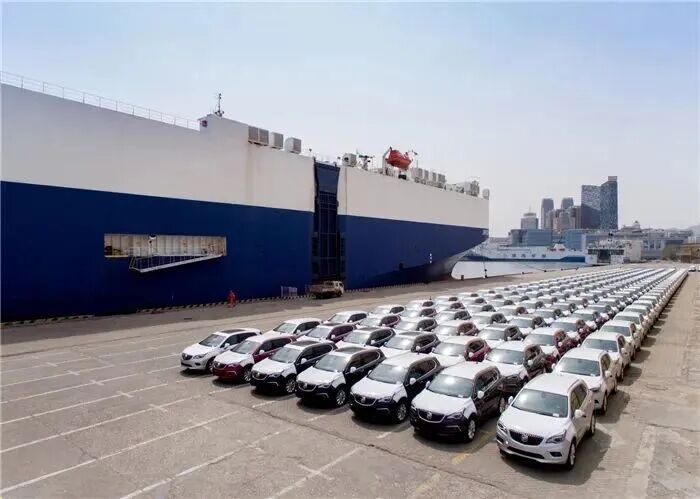
The commercial logic is compelling. Building an international retail network from scratch can cost billions of dollars and take years, particularly for Chinese brands that lack established recognition in Europe, Latin America, the Middle East or other major markets.
Joint ventures already sit on top of something Chinese technology companies increasingly want: access to mature global brands, dealer networks, after-sales systems and regulatory experience.
That creates a potential exchange very different from the one that defined the first three decades of China’s joint-venture industry.
Instead of exchanging market access for foreign technology, the new model can exchange Chinese technology for global distribution.
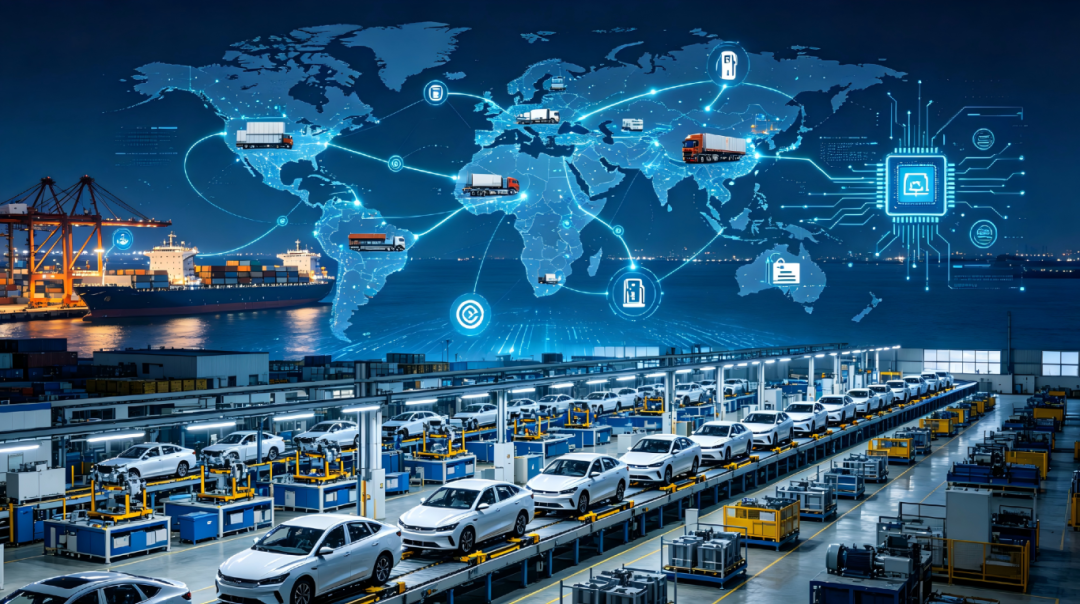
For a multinational manufacturer, a vehicle can be engineered more quickly and at lower cost using China’s supplier base, then sold through an existing global network. For the Chinese partner, the same arrangement provides a lighter-capital route into overseas markets without having to recreate decades of distribution infrastructure.
This is why the latest renewals should not be read simply as foreign manufacturers refusing to leave China. They are evidence that the role of China inside global automotive companies is being rewritten.
The next joint-venture era will not resemble the last one
The first era of Chinese automotive joint ventures was built on asymmetry. Foreign carmakers controlled technology and brands; Chinese partners controlled market entry, production and local relationships.
The next era is likely to be built on a more complicated exchange of capabilities.
Chinese companies and engineering teams bring faster development, competitive electric-vehicle technology, software integration and a highly efficient supply chain. Global manufacturers bring brand equity, international compliance experience, manufacturing discipline and distribution networks accumulated over decades.
The companies that merely preserve the old structure — waiting for their overseas shareholder to provide the next platform, engine or product blueprint — are likely to become increasingly irrelevant.
Those that turn local engineering into a core capability have a more credible route forward.
The real question is therefore no longer whether Chinese or foreign shareholders “win” the joint venture. It is whether both sides can build an organisation capable of combining China’s development speed and cost base with the global reach, quality systems and brand power of multinational carmakers.
If they can, the joint venture may prove more important in the next decade than its falling market share today would suggest.