
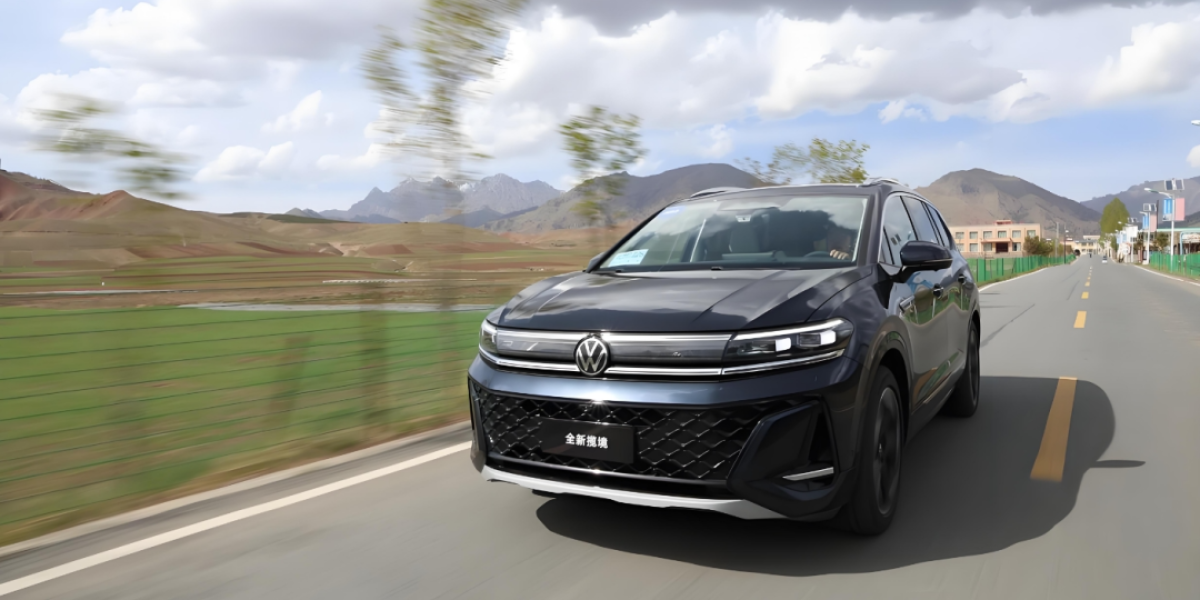
FAW-Volkswagen's new Talagon arrives at a revealing moment for China's car market.
A value reset for a joint-venture flagship
Even as electrification dominates the industry's public narrative, Volkswagen's China brand sales rose 12.5 per cent in the first half of 2025, and FAW-Volkswagen's overall sales rose 15.1 per cent year on year.
Wu Yingkai has summed up the company's approach as stabilising petrol cars, adding electrification and planning exports. The new Talagon fits the first part of that strategy. It is a flagship petrol SUV designed to show that a joint-venture brand can still win if it offers stronger equipment, smarter technology and a more convincing price.
The two pre-sale versions, the 450 4Motion Supreme and 450 4Motion Flagship, are priced at roughly $42,000 and $44,000. A limited ordering benefit allows a deposit to become about $1,000 of purchase value, reinforcing the model's value message.
Volkswagen tries to answer the smart-cabin question
Joint-venture brands in China have often been criticised for weak infotainment and slower intelligent-vehicle features. The new Talagon is designed to challenge that image.
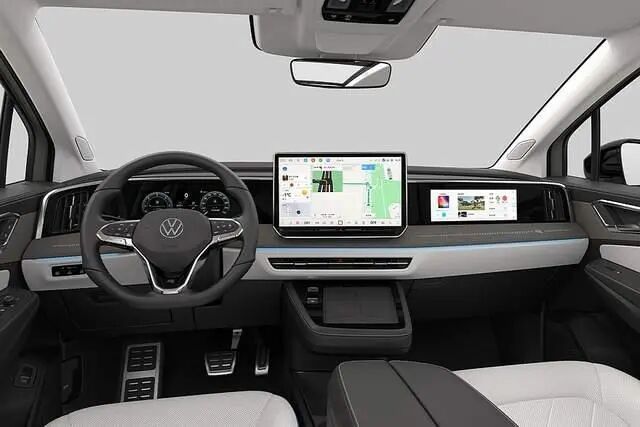
The cabin uses a three-screen layout: a 15-inch central display, an 11.6-inch passenger entertainment screen and a 10.25-inch instrument cluster. It runs on Qualcomm's 8155 chip with 12GB of memory and uses iFlytek voice technology with more than 95 per cent claimed dialect-recognition accuracy.
The system supports more than 400 interaction functions, covering climate control, seat heating, ventilation, massage, navigation, media and real-time information. DeepSeek has also been introduced through the cloud, combined with Volkswagen's own hybrid large-model technology to improve interaction.
The human-machine interface has been redesigned around a map base with a stack of smart cards on the left side. Users can swipe vertically, move horizontally and customise frequently used functions. The change reflects a more local understanding of Chinese user habits.

Assistance systems become standard rather than decorative
The new Talagon also includes IQ.Pilot combined driver assistance as standard. The L2 system supports predictive adaptive cruise control, lane keeping, stalk-activated lane changes, obstacle avoidance, cut-in response and other daily driving functions.
It is paired with a 360-degree camera system and parking assistance, while Emergency Assist 3.0 monitors driver status during travel. The package is meant to make intelligent features feel like part of daily use rather than expensive add-ons.
For FAW-Volkswagen, this is central to the message: a petrol SUV can still feel modern if the cabin, voice system and driver assistance are credible.
Space and power remain the traditional strengths
The Talagon's other argument is more conventional. It offers a true three-row cabin with a 5,168mm body length, 2,002mm width, 1,792mm height and 2,980mm wheelbase. Those dimensions are meant to show that the third row is not a token feature.
The powertrain uses the fifth-generation EA888 engine, paired with a DQ501 wet dual-clutch gearbox and 4Motion all-wheel drive. FAW-Volkswagen is presenting the package as stronger yet more efficient than before.
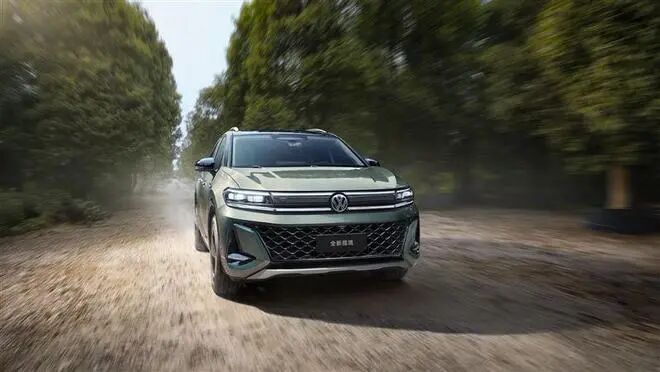
The model also receives new R-Line and more rugged front-end designs, a wraparound cabin, the three-screen layout, premium seats, noise and vibration optimisation, dual 40W wireless charging and Harman Kardon audio. The broader aim is to make the vehicle feel less like a bare-bones joint-venture product and more like a high-value family SUV.
The petrol market still matters
FAW-Volkswagen's strategy rests on a fact that can be overlooked: petrol vehicles remain a large part of China's market. Data cited in the article show traditional fuel vehicles, including conventional hybrids, reached 7.14mn sales by May 2025 and held 56 per cent market share.
That means more than half of buyers were still willing to consider fuel vehicles. The challenge is that those buyers now expect lower purchase costs, better equipment and smarter cabins. Simply relying on brand history is no longer enough.
Wu has said joint ventures face three pressures: shrinking market space, slower transformation and the need to improve product speed and competitiveness. The new Talagon is FAW-Volkswagen's answer to those pressures in the petrol SUV segment.
A test of whether joint ventures can still adapt
The new Talagon's purpose is clear. It is not trying to make petrol vehicles fashionable again by nostalgia. It is trying to prove that a joint-venture petrol SUV can still deliver space, technology and value in a market shaped by Chinese new-energy rivals.
If buyers accept that message, FAW-Volkswagen can strengthen its petrol-car base while it continues to build electrified products. If not, the old perception of joint ventures as slow, expensive and under-equipped will become harder to escape.