
Foreign automakers' China strategies are entering a second transformation phase. Ford and Toyota's channel changes show how global carmakers are trying to defend their market base as Chinese brands gain share.
Two reforms on the same day
On September 23, Ford China announced the creation of Ford Sales & Service Shanghai, a wholly owned company that will manage marketing, sales and service for Ford passenger vehicles and pickup trucks in China.
The same day, media reports said Toyota China was testing channel integration in about 10 cities where only one Toyota joint-venture 4S store remains. Those stores would be allowed to sell the full range of both GAC Toyota and FAW Toyota models. Toyota China later said the move was only a trial.
The two moves are not coincidental. Passenger-car association data show Chinese domestic brands reached a 64.2 per cent domestic retail share in June 2025, up 5.6 percentage points year on year. China Automobile Dealers Association data show joint-venture 4S stores fell 13.5 per cent in 2024, with 4,419 outlets leaving the network.
Ford chooses the aggressive route
Ford's reform is one of the most aggressive channel moves by an international brand in China. The new company, fully controlled by Ford, will begin operations on October 1, 2025. It will take over marketing, sales and aftersales businesses previously split between Changan Ford and JMC Ford.
The scale is larger than many expected. JMC Ford has about 110 dealers, while Changan Ford has around 270 outlets. The combined network will include more than 300 outlets.
JMC has said the integration does not mean it is fully withdrawing from passenger-vehicle sales. Instead, sales operations will be managed through the new company, with targets and sales expansion responsibilities shared. That structure is designed to balance the interests of the joint-venture parties.
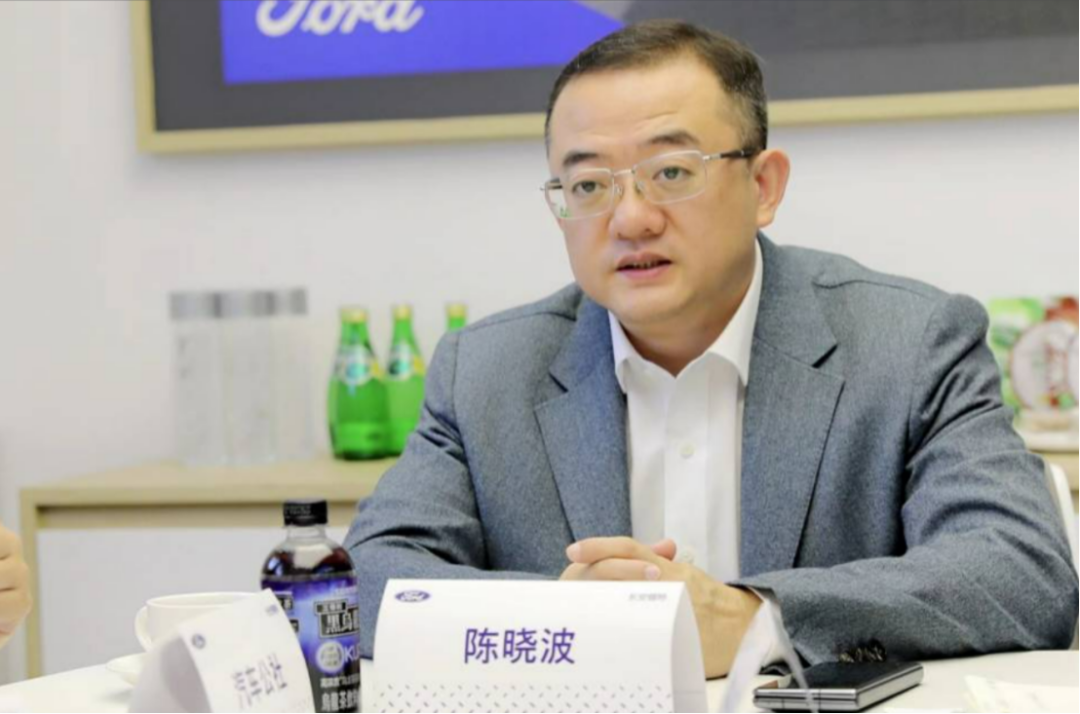
Ford has also chosen a local management figure to lead the transition. Chen Xiaobo, previously a vice-president at Changan Ford New Energy Technology and executive vice-president of its national sales and service organisation, will become president of the new company and report directly to Ford China chief executive Sam Wu.
Toyota chooses a small test
Toyota is moving more cautiously. In selected single-city, single-store markets, Toyota is allowing one dealer to sell both GAC Toyota and FAW Toyota models. The company says the trial is intended to improve service and efficiency while also considering environmental and operational factors.
The test reportedly began in July and August and now covers about 10 cities. The core purpose is to fill service and product-coverage gaps in lower-tier markets, where one joint-venture channel may not be able to cover the full model range and buyers may need to travel to another city.
Toyota has less reason to move aggressively than Ford. In the first half of 2025, Toyota sold 837,700 vehicles in China, up 6.8 per cent. FAW Toyota sold 377,821, up 16 per cent, while GAC Toyota also posted solid growth. For Toyota, the channel test looks more like preventive optimisation than emergency repair.
Ford's reform reflects survival pressure
Ford has tried channel integration before. In 2018, it attempted to unify its networks through a national dealer-service development organisation, but the effort was blocked by interest differences between Changan and JMC.
Six years later, the market context is much harsher. In the first five months of 2025, Changan Ford's sales were under pressure and Changan Automobile stopped separately disclosing Changan Ford sales in its production and sales bulletins.
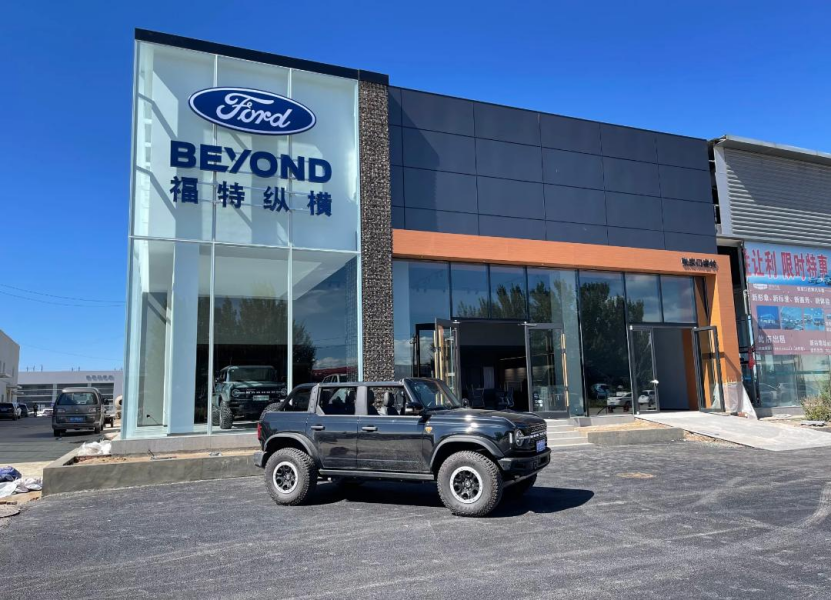
JMC Ford Technology has also struggled financially. It lost about $15 million in 2022, $117 million in 2023 and $94 million in 2024, for cumulative losses of about $225 million over three years. Its Ford Beyond off-road lifestyle brand has access to models such as the F-150 Raptor, but third-party data cited in the article show its best-selling model in August was Bronco, with only 591 units sold.
For Ford, channel consolidation is no longer only a development issue. It has become part of a survival plan.
Toyota's hidden pressure
Toyota's position looks stronger, but its dealers are also under strain. In 2024, more than 50 FAW Toyota dealers left the network. In Beijing, the number of dealers fell from a peak of 24 to fewer than 20. Some dealers have faced inverted pricing, losing about $1,000 on each vehicle sold.
GAC Toyota has also adjusted under inventory pressure. In 2024, it cut dealer sales targets by about 20 per cent to ease terminal pressure.
There are structural issues too. GAC Toyota's supplier localisation rate has reached 95 per cent, while FAW Toyota still relies more heavily on Japanese suppliers such as Denso and Aisin. That creates potential internal friction and makes resource sharing harder.
Channel integration as a reset
For foreign brands, channel reform can reduce cost, improve efficiency and stabilise the market base during the intelligent-EV transition.
Ford's integration is expected to save about $69 million in annual operating expenses, according to public information cited in the article. It also solves a product-separation problem. Ford Beyond off-road models can reach more users through the Changan Ford network, while Changan Ford dealers gain a richer product line.
The unified channel can also support a more differentiated Ford lifestyle ecosystem, covering experience spaces, outdoor communities, customisation and vehicle services. Ford has planned 24 official experience routes, more than 2,400 professional events each year and nearly 3,000 lifestyle products.
Toyota's trial serves a different purpose. It tests whether multi-brand same-store operations can work in lower-tier markets before a broader EV push. Toyota plans to launch a new electric platform and several EVs in 2026, and lower-tier cities may become an important source of growth.
A broader foreign-brand pattern
Ford and Toyota are not alone. Mercedes-Benz has said it will merge low-efficiency outlets over the next two years, while Porsche plans to reduce its dealer network from 160 outlets to 100.
The common lesson is that foreign automakers can no longer rely on legacy channel structures in China. The companies that balance brand strength with terminal efficiency will have a better chance of holding their ground.
Ford is taking a high-risk, high-urgency route. Toyota is testing a controlled adjustment. Both are responding to the same reality: in China, channel reform has become part of the transformation, not an afterthought.