
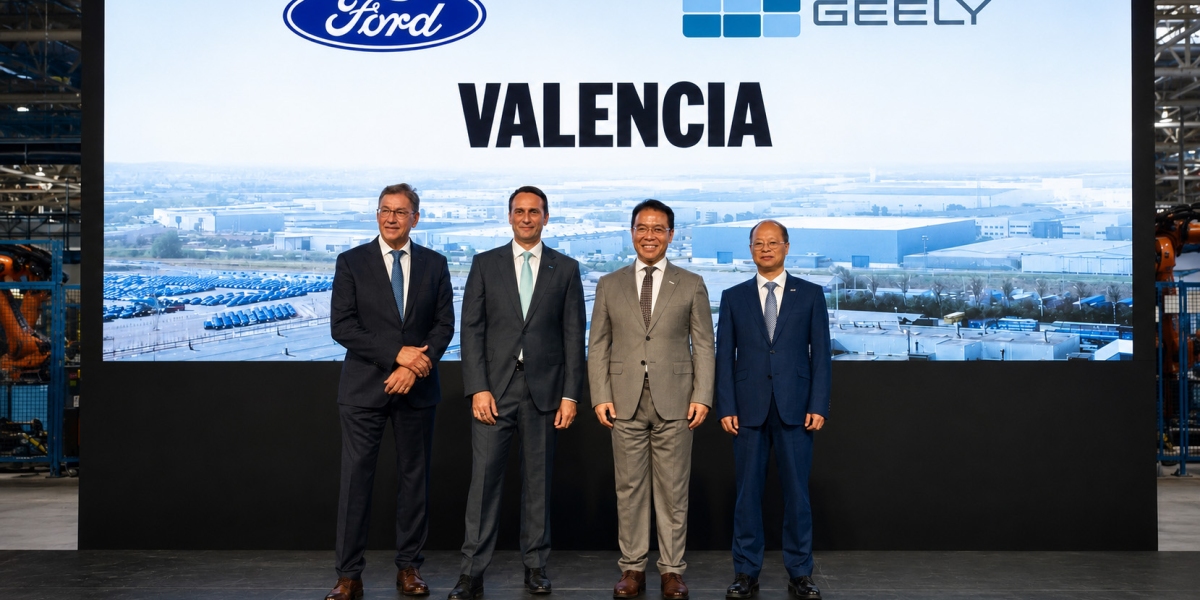
Ford’s decision to build a new vehicle-manufacturing partnership with Geely in Spain marks a striking shift in the global auto industry’s balance of power.
Ford’s decision to build a new vehicle-manufacturing partnership with Geely in Spain marks a striking shift in the global auto industry’s balance of power. Rather than relying on its long-standing Chinese partner Changan, the US carmaker is turning to Geely’s electric-vehicle platforms and plug-in hybrid technology to accelerate its European transition.
Under the agreement announced on July 23, 2026, Ford will hold a 66% stake in the Spanish manufacturing venture, retaining control of the operation. Geely will invest €221 million for the remaining 34%. The plant is expected to begin operations in 2027, with several jointly developed models scheduled to enter production from 2028.
The arrangement is significant not only because of the capital structure, but also because of the direction in which the technology is flowing. For decades, Chinese joint ventures were built around foreign manufacturers supplying platforms, engines and production expertise. In this case, Geely is expected to provide much of the electric and plug-in hybrid technology that Ford needs to rebuild its European product line.
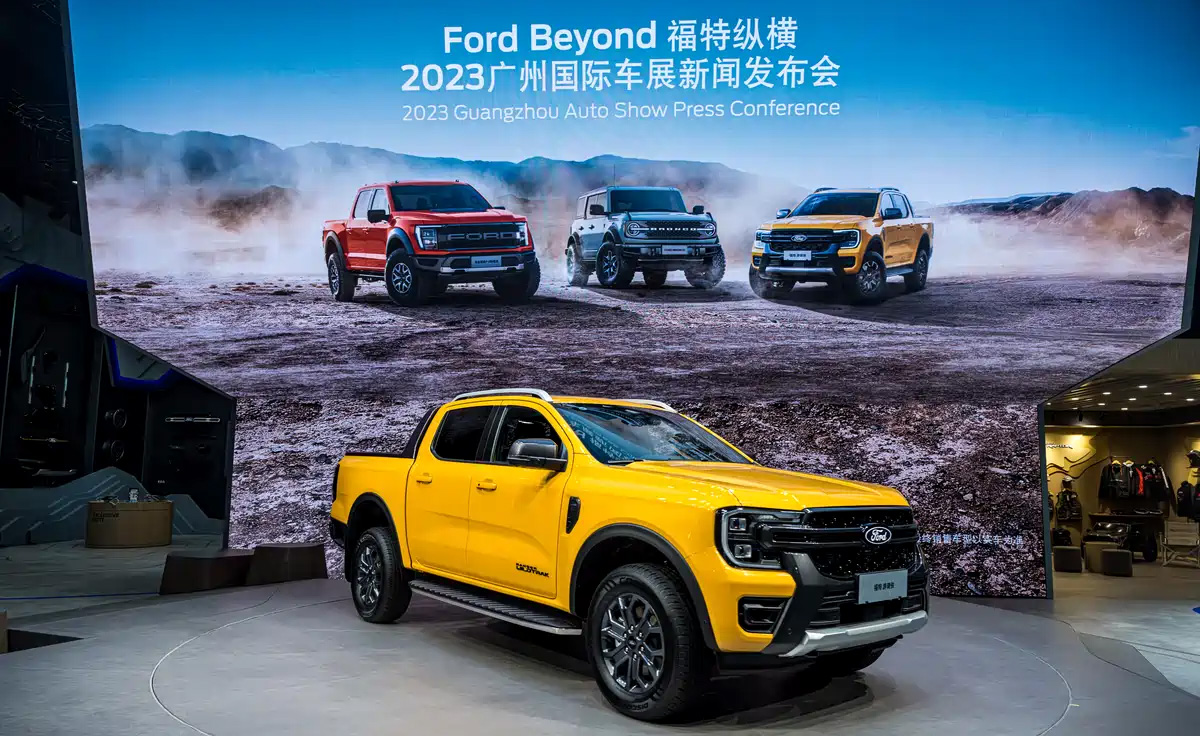
Ford’s China Partnership Has Struggled to Deliver New-Energy Models
Ford and Changan have spent years discussing the joint development of electrified vehicles for China. Their plans included shared chassis technology, hybrid systems and locally tailored new-energy models. Yet progress has been slow, and few of those projects have moved beyond the planning stage.
The two companies operate Changan Ford under a 50:50 ownership structure. That arrangement has often made decision-making more complex, particularly over product positioning, research spending, distribution control and the allocation of electric-vehicle resources.
Ford had explored using Changan’s Deepal and Qiyuan technology portfolios to strengthen its position in China’s rapidly changing car market. Disagreements over technology sharing, cost allocation and launch schedules repeatedly delayed the programme. Several planned hybrid and battery-electric vehicles failed to reach large-scale production.
Ford has also reduced parts of its China-focused electric-vehicle investment in recent years and taken tighter control of its new-energy sales operations. That retrenchment weakened the case for a broad new development programme with Changan and made the partnership less useful to Ford’s wider global electrification strategy.
Geely Offers Ford a Faster Route to European Production
The European project with Geely has a clearer industrial timetable. The product plan is expected to include two main groups: Ford-branded vehicles using Geely plug-in hybrid systems, and battery-electric models built on Geely-developed architectures.
Two new Ford models are planned for production in Spain: a compact Bronco and a family-oriented crossover. Both are expected to retain Ford’s C2-based vehicle architecture, with Ford leading exterior design, chassis tuning and driving dynamics.
The powertrain package, battery system and electronic controls are expected to come from Geely’s Leishen Hi·P plug-in hybrid technology. Production is targeted for 2028, with the vehicles aimed at Europe’s mainstream family and light off-road segments.
Longer-term plans reported by overseas media point to four battery-electric Ford models using Geely’s GEA architecture between 2027 and 2030. The range could include an electric Puma, a small urban crossover, a compact family SUV and a Europe-focused electric MPV.
Geely would supply the underlying vehicle architecture, electric drivetrain, battery controls and thermal-management systems. Ford would concentrate on exterior and interior design, software localisation and brand-specific calibration.
Building the vehicles in Spain would also allow the partners to serve the European market from within the region, reducing exposure to tariffs on electric vehicles imported from China and giving both companies greater flexibility over sourcing and production.
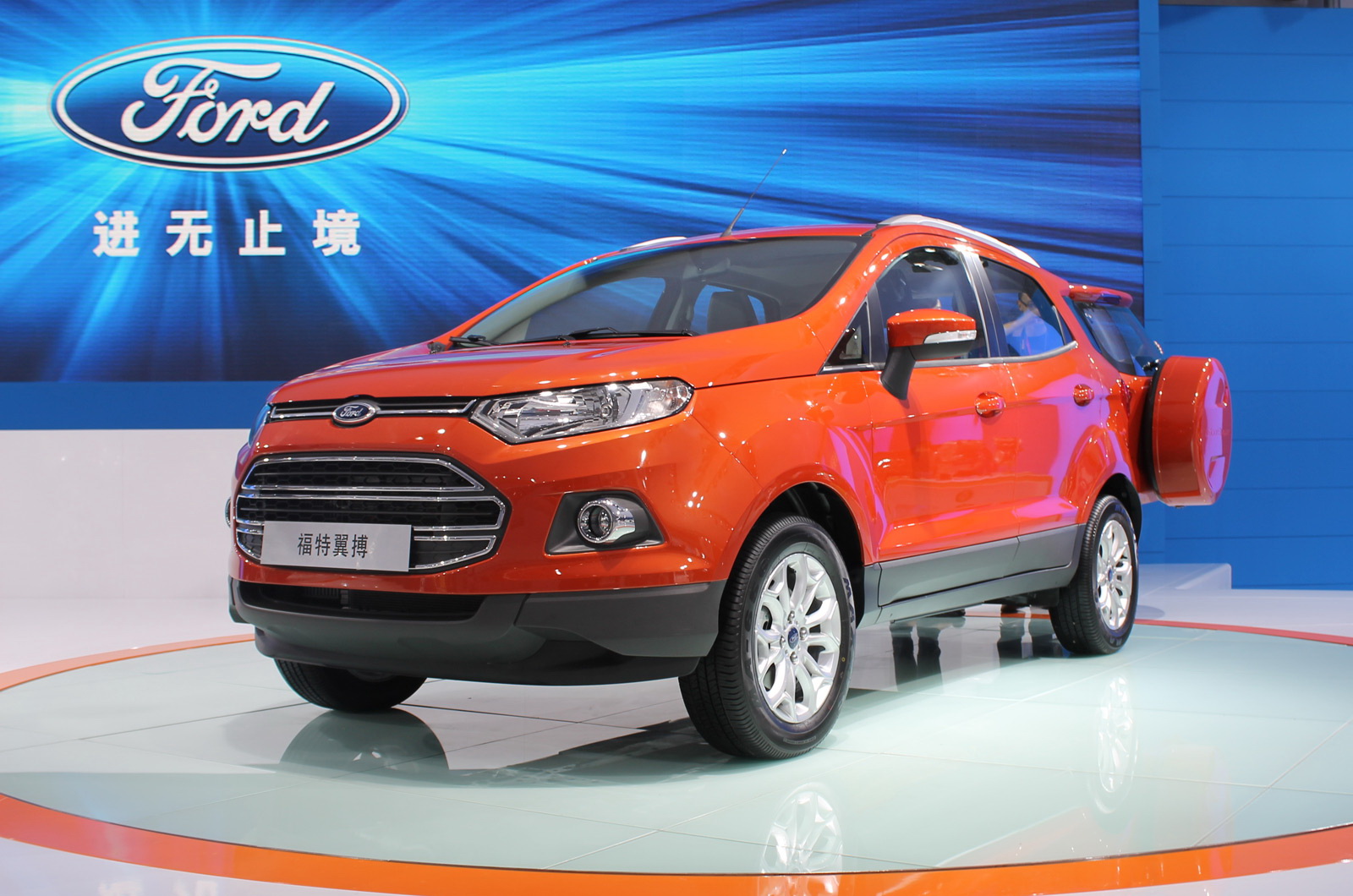
Why Geely Fits Ford’s European Strategy Better Than Changan
The choice of Geely does not necessarily mean that Changan lacks competitive electric or plug-in hybrid technology. The gap lies more in commercial structure, international manufacturing experience and the ability to execute a project outside China.
Ford’s immediate objective is to revive underused capacity at its Spanish plant. That requires a partner willing to invest directly in the factory, share restructuring costs and support local production. Geely can provide capital while drawing on the European manufacturing experience of Volvo and its wider group of brands.
Changan, by comparison, has yet to establish a large-scale vehicle manufacturing base in Europe. Its overseas industrial footprint remains concentrated in other regions, leaving it less prepared to support an immediate European factory conversion.
The ownership model is another decisive factor. Ford wants to retain a 66% controlling stake, with the Chinese partner acting mainly as a technology and capital provider. Geely has accepted that structure, giving Ford clear authority over the brand, factory and commercial operation.
A similar arrangement could be harder to build with Changan after years of operating under an equal-ownership structure in China. Ford appears unwilling to reproduce that more complicated governance model in Europe.
Geely also has a more developed system for licensing technology to outside partners. Its electric platforms and Leishen hybrid systems can be supplied as complete packages, including vehicle architecture, components, software and engineering support.
That commercial approach gives Ford access to mature systems without having to fund every stage of development independently. Changan’s new-energy technology has so far been used mainly within its own brand portfolio, with less experience in licensing complete vehicle platforms to major overseas manufacturers.
Geely’s wider supply-chain network is another advantage. The group has manufacturing and sourcing operations across Europe, Southeast Asia and Latin America. That makes it easier to meet European rules of origin, localise components and control logistics costs.
A Reversal of the Traditional Joint-Venture Model
The Ford-Geely project illustrates how rapidly the logic of international automotive partnerships is changing. Western carmakers once entered China to provide engineering and gain market access. Chinese groups are now supplying the electric platforms, batteries and software systems that established global manufacturers need to remain competitive.
For Ford, the partnership offers a way to shorten development cycles, reduce the financial burden of creating new electric technologies and protect jobs at a European factory. It could also help the company comply with increasingly strict emissions rules while rebuilding a product line that has lost ground to both Tesla and Chinese EV brands.
For Geely, the deal creates several sources of value. The company can generate revenue from technology licensing, component supply and platform royalties while gaining access to local manufacturing capacity in Spain.
That local footprint could also support the European expansion of Geely’s own brands and reduce the cost and political risk of importing vehicles directly from China.
The deeper significance lies in the transfer of industrial influence. Geely is no longer simply learning from a global carmaker. It is becoming a technology supplier to one. Ford’s decision to bypass its long-standing partner Changan for a new European venture suggests that future alliances will be determined less by history than by speed, scalability and the ability to commercialise electric-vehicle technology across borders.