
Ford is handing part of the future of its European manufacturing network to Geely, in a partnership that captures how rapidly the balance of power in the global car industry is shifting.
The two companies announced on July 23 that they plan to establish a manufacturing joint venture at Ford’s Almussafes plant near Valencia, Spain. Ford will retain a 66% controlling stake, while Geely will acquire 34% for €221 million. Subject to regulatory approval, the venture is expected to begin operating in the first half of 2027, with new vehicles entering production from 2028.
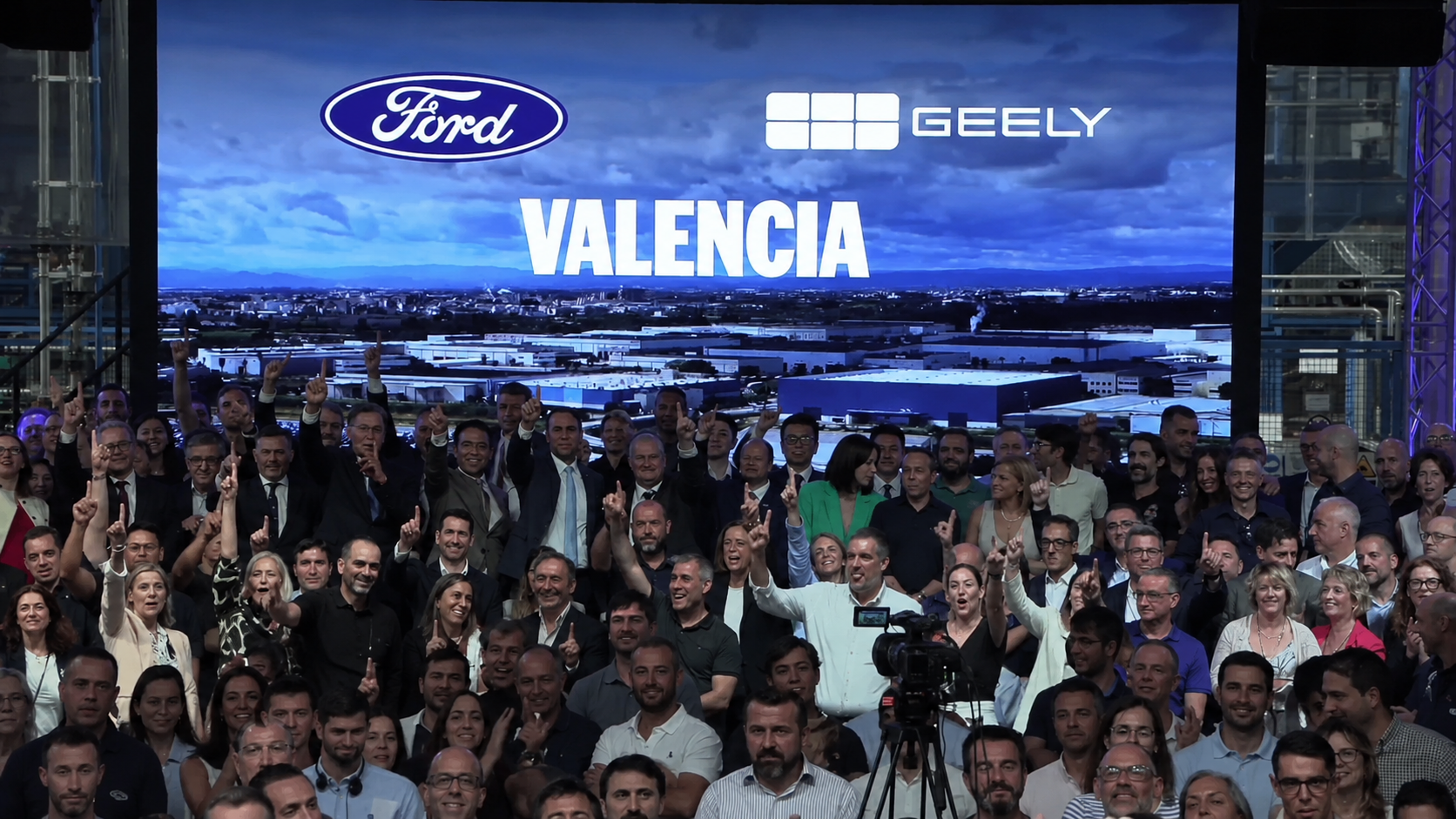
The factory is set to build five models for the European market: the existing Ford Kuga, a new member of the Bronco family, an all-new Ford multi-energy crossover and two electric SUVs carrying the Geely badge. The agreement gives Ford a route to lower-cost product development and higher factory utilisation, while offering Geely its first major manufacturing foothold in Europe.
It also signals a broader strategic reversal. For decades, Chinese carmakers relied on Western partners for platforms, engines and manufacturing expertise. Ford’s new arrangement with Geely shows that technical and industrial dependence is increasingly moving in both directions.
A European Bronco Built for a Different Market
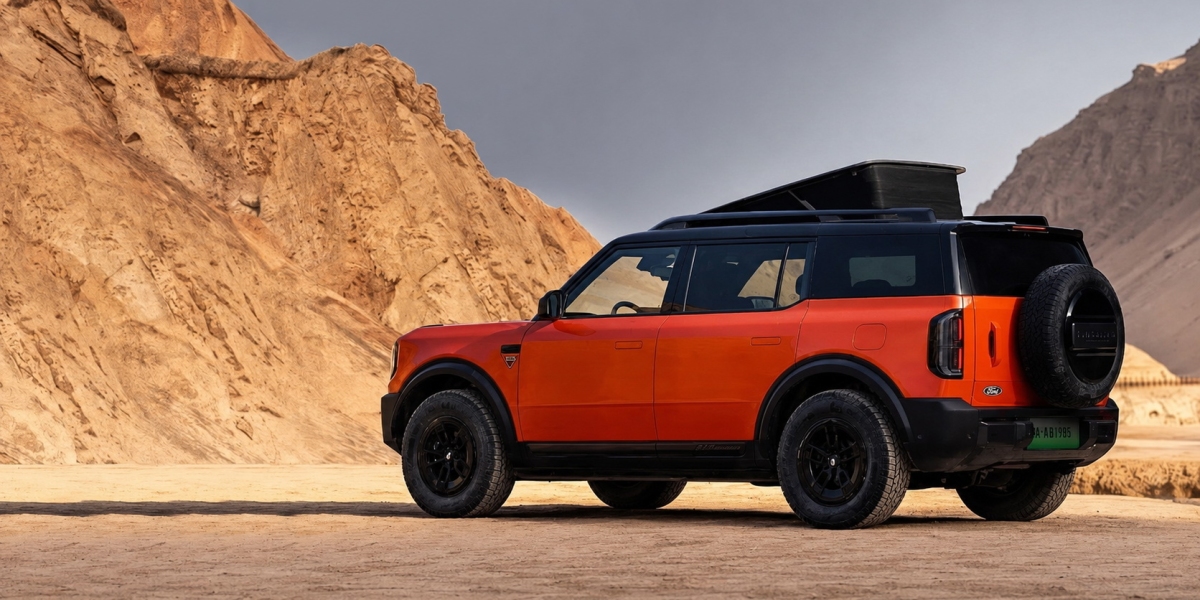
The most eye-catching model in the plan is a new Bronco-family SUV intended for Europe. It is expected to be smaller and more urban-focused than the full-size off-road models associated with the name in North America, reflecting the narrower roads, tighter parking spaces and stricter emissions rules of European cities.
Ford has confirmed that the vehicle will be a multi-energy model and will be produced in Valencia from 2028. The company has not yet disclosed its platform, battery supplier or detailed powertrain configuration.
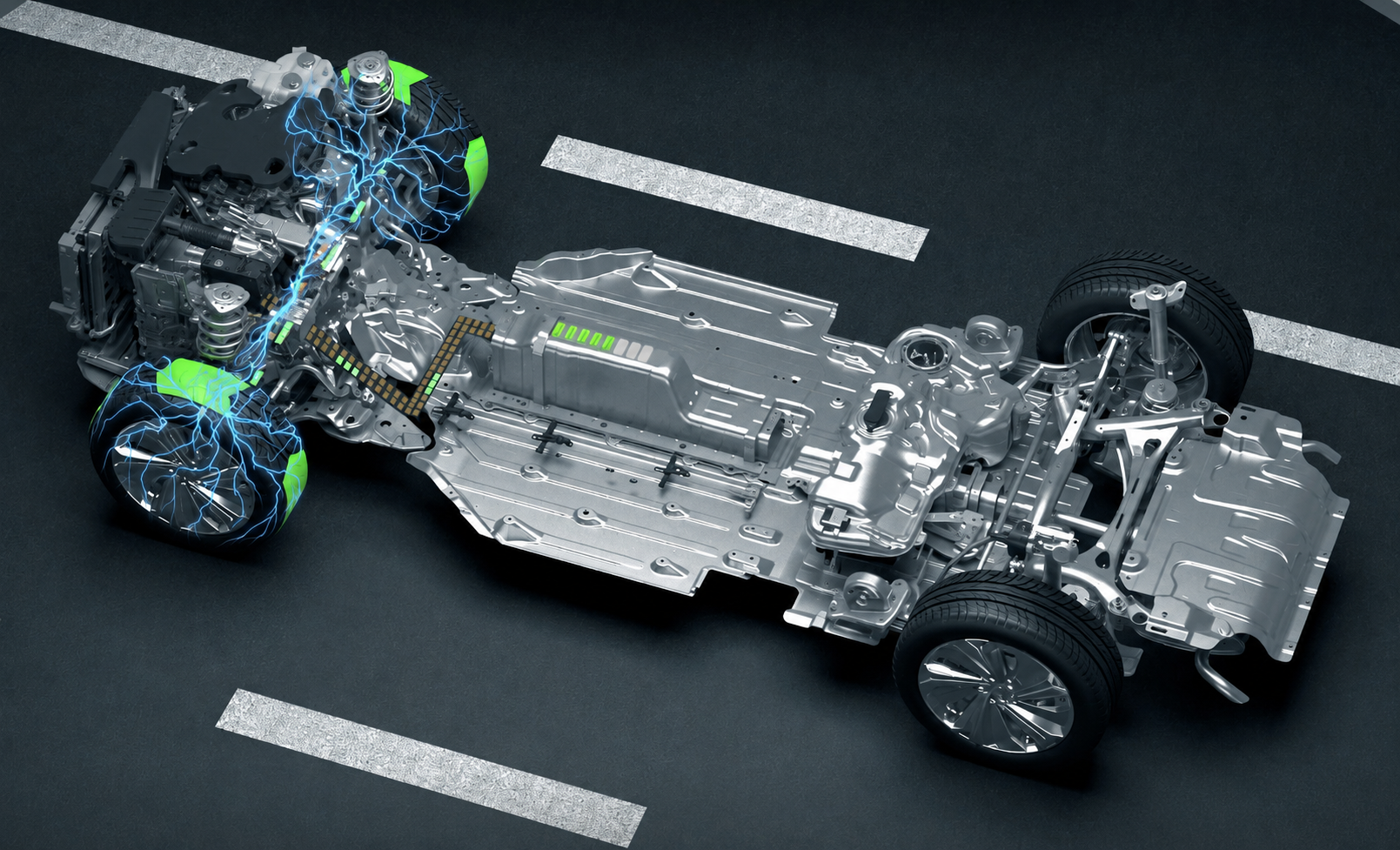
Industry expectations point to a model that retains Ford’s control over vehicle design, chassis tuning and brand character while drawing on Geely’s experience in electrified powertrains and cost-efficient supply chains. Reports in China have suggested that a plug-in hybrid version could use technology derived from Geely’s Thor hybrid system, but that detail has not been confirmed in Ford or Geely’s official announcement.
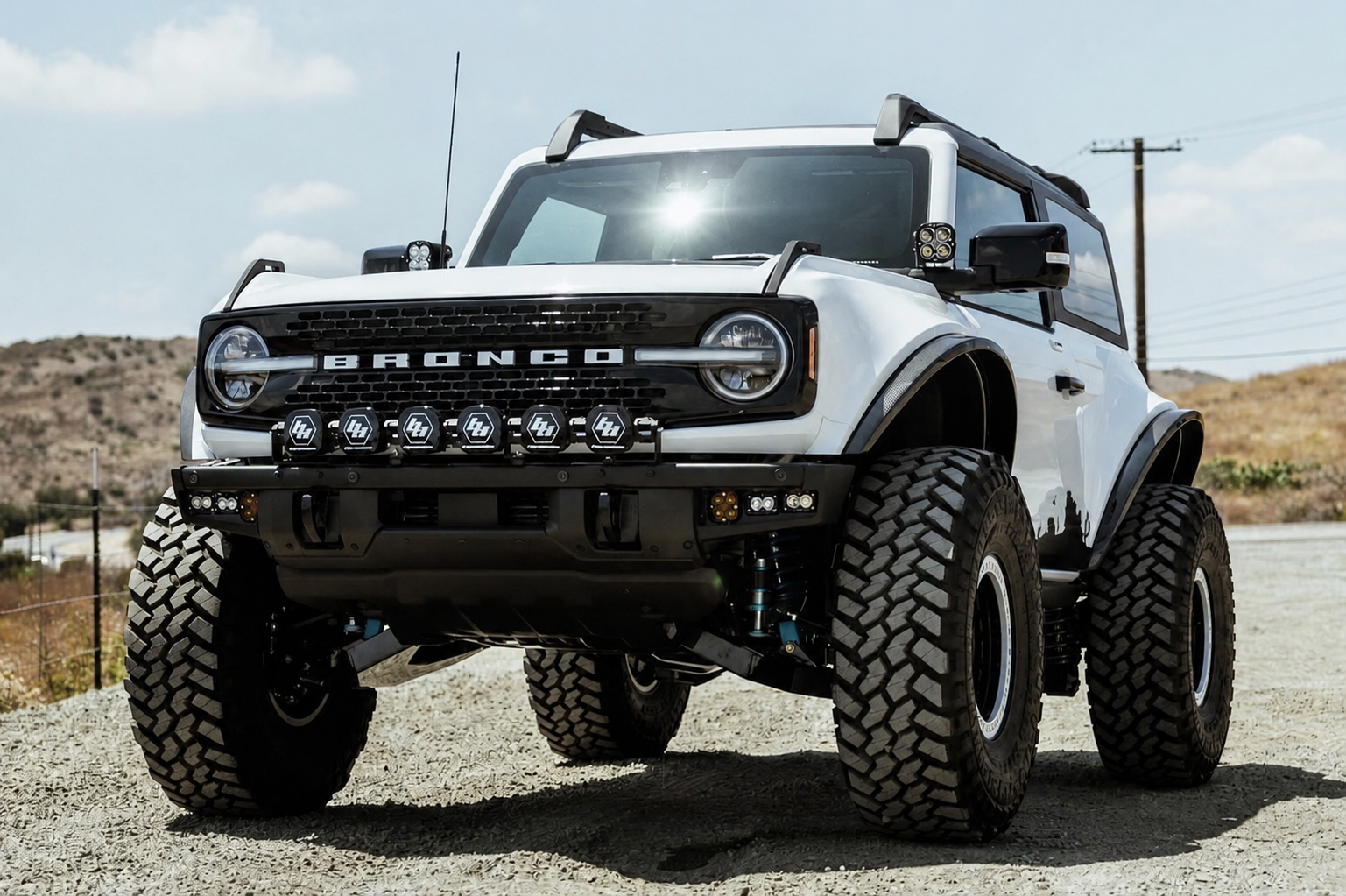
That distinction matters. The partnership is not simply a case of Ford placing its badge on an existing Chinese vehicle. Ford is attempting to preserve the elements that make the Bronco recognisable — upright styling, a rugged image and some degree of off-road capability — while using cooperation with Geely to reduce the cost and time required to bring an electrified model to market.
The strategy reflects a difficult compromise facing legacy manufacturers. Fully electric demand in Europe has grown more slowly and less evenly than many carmakers expected, while emissions rules continue to tighten. A vehicle capable of being sold with more than one powertrain gives Ford greater flexibility as consumer preferences and regulation evolve.
A Jointly Developed Crossover for Europe’s Mainstream
The second new Ford model will be an all-new multi-energy crossover aimed at the heart of the European family-car market. Unlike the more image-led Bronco, this vehicle is expected to compete directly with high-volume crossovers from Volkswagen, Peugeot, Renault, Hyundai and Kia.
Ford and Geely have described it as a jointly developed model, though the companies have not released detailed specifications. It is expected to support several forms of propulsion, potentially including combustion-engine, hybrid and plug-in hybrid variants.

For Ford, the crossover could become the commercial centrepiece of the partnership. The company already has a broad European dealer network and a recognised brand, but it has struggled to match the cost structures and rapid development cycles of newer competitors. Geely brings scale in batteries, electronics, software and electrified powertrains, as well as a supplier base refined through intense competition in China.
The combination could allow Ford to launch a competitively priced vehicle without surrendering control of exterior design, ride quality, safety calibration or customer-facing brand identity. Geely, in return, gains experience developing products for European requirements and access to a manufacturing operation with an established workforce and supplier ecosystem.
One Plant, Two Brands and Five Vehicles
The Valencia factory has a potential annual capacity of about 500,000 vehicles, but much of that capacity has been underused following the end of several older Ford model programmes. The joint venture is designed to restore production volume by allowing vehicles from both manufacturers to share the same industrial base.
Ford’s Kuga will remain in production without interruption. It will be joined by the new Bronco-family model and the jointly developed crossover. Geely plans to add two electric SUVs, including the EX5, giving the Chinese group a route to local European production.
Local assembly could become increasingly valuable for Chinese carmakers. European Union tariffs have made imported Chinese-built electric vehicles more expensive, and policymakers are discussing stronger local-content requirements for vehicles sold in the region. Producing cars in Spain would reduce Geely’s exposure to trade barriers while bringing it closer to European consumers.
The arrangement is focused on manufacturing. According to transaction disclosures, the joint venture itself will not take over Ford and Geely’s separate branding, sales, distribution or wider research-and-development operations. Each company will continue to manage its own commercial activities.
This structure allows both sides to share factory costs without fully merging their European businesses. Ford remains the controlling shareholder, while Geely gains meaningful influence and a physical production base without having to build a greenfield plant from scratch.
Why Ford Needs Geely
Ford’s European passenger-car business has been under pressure from weak profitability, high development costs and a product range caught between the combustion-engine era and an uncertain electric transition.
The company has already reduced jobs, withdrawn long-running nameplates and reconsidered parts of its electric-vehicle strategy. Its Valencia plant, once one of the pillars of Ford’s European manufacturing system, has been operating far below its potential capacity.
Working with Geely offers three immediate advantages. It spreads investment across a larger production base, shortens the route to electrified products and gives Ford access to technologies developed in the world’s most competitive electric and hybrid vehicle market.
Geely has spent years building a broad technical portfolio across its own brand and affiliated marques including Volvo Cars, Polestar, Zeekr and Lynk & Co. Its expertise extends beyond batteries and motors to vehicle electronics, software integration and modular architectures.
For Ford, purchasing or sharing selected systems may be more rational than developing every component internally. The risk is that excessive reliance on a partner could weaken Ford’s own engineering capabilities. The opportunity is to redirect capital towards areas where the company still has stronger brand equity, including vehicle design, chassis development, commercial vehicles and off-road products.
Why Geely Wants Valencia
For Geely, the deal is about far more than selling components to Ford. The Spanish plant gives it a credible route into European manufacturing at a time when Chinese carmakers face growing political and regulatory scrutiny.
Geely will pay €221 million for its stake, valuing the joint venture at about €650 million. Building an equivalent factory independently would likely require substantially more capital and several years of planning, permitting, construction and workforce recruitment.
The partnership also provides access to a mature European supplier network and a workforce experienced in producing vehicles to Ford’s quality standards. Spain offers comparatively competitive labour and energy costs and remains one of Europe’s largest vehicle-producing countries.
Local production could help Geely present itself less as an importer and more as a participant in Europe’s industrial economy. That distinction will become increasingly important as governments weigh employment, local content and strategic autonomy alongside consumer pricing and emissions targets.
China’s Electric Bronco Offers a Warning
Ford’s latest European Bronco plan arrives after a difficult attempt to reinterpret the nameplate for China’s electric-vehicle market.
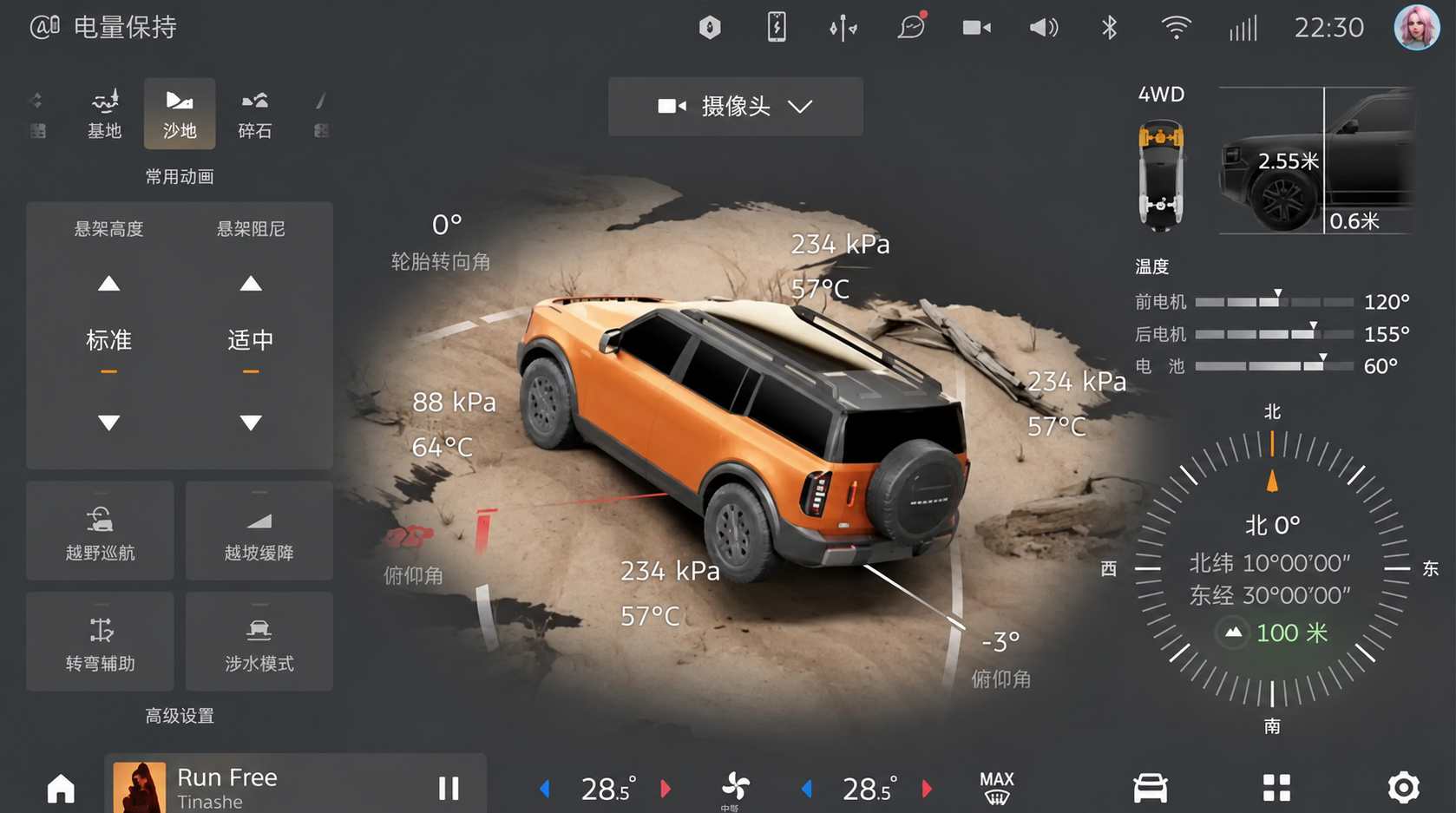
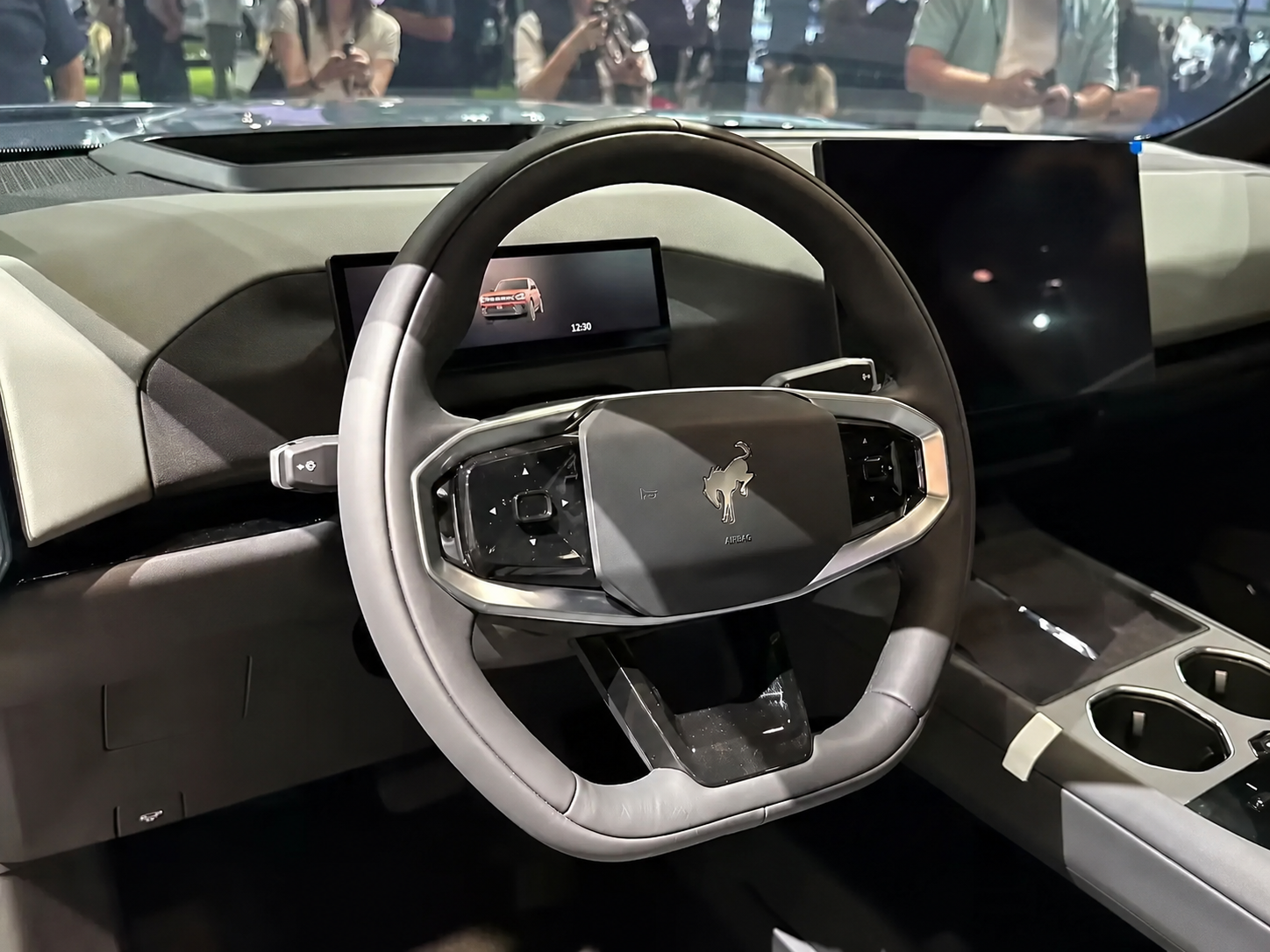
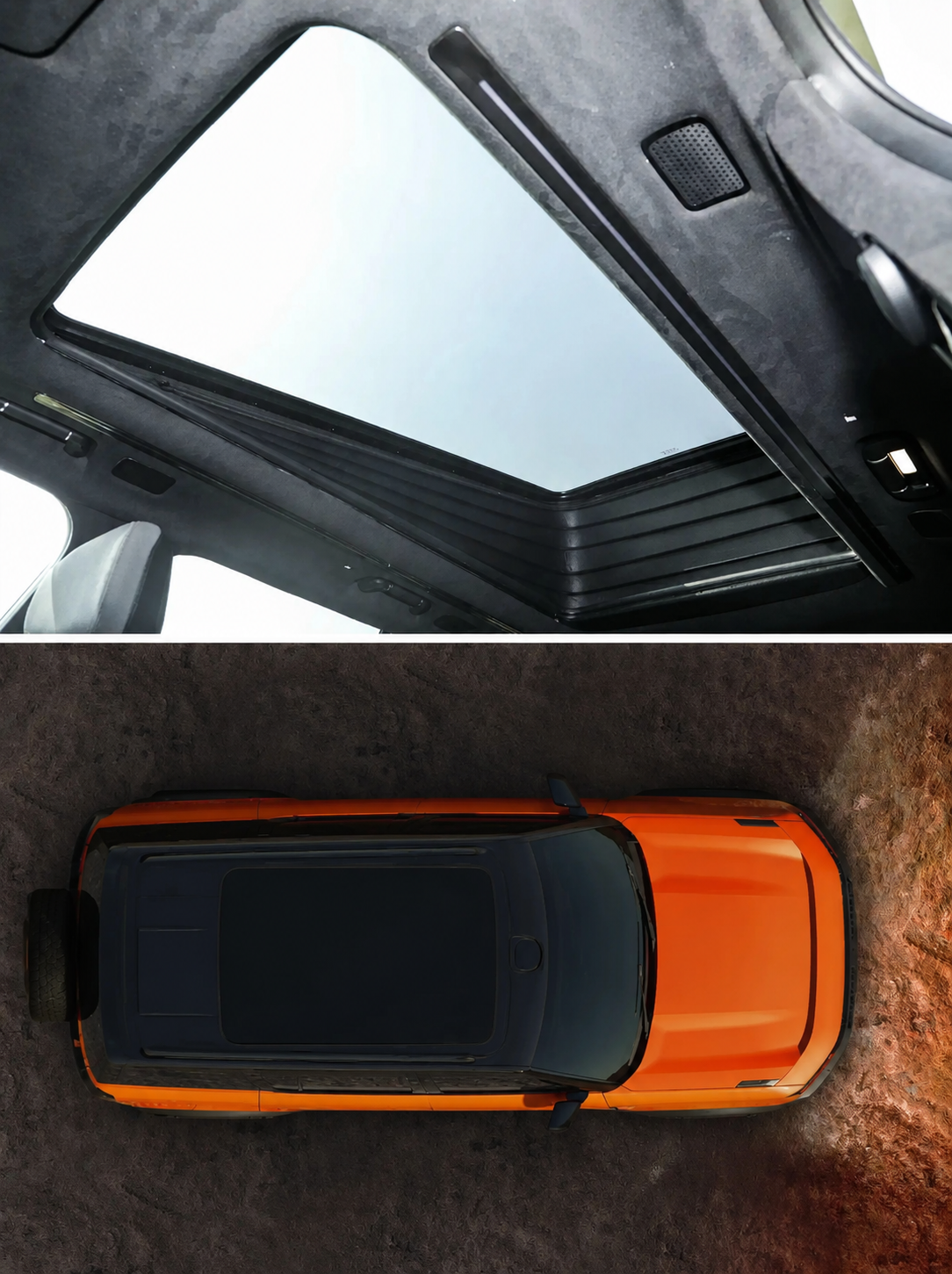
In 2025, Ford’s Chinese operation introduced the Intelligent Adventure Bronco, a five-metre electrified SUV developed with JMC Motors. The model was offered in battery-electric and range-extended versions and positioned as an “all-terrain camping SUV”.
Its range-extended version was rated at up to 1,220 kilometres under China’s CLTC testing cycle, while the battery-electric version claimed 650 kilometres. The vehicle also featured four-wheel drive, camping-oriented interior functions and advanced driver-assistance hardware.
The specification sheet was extensive, but the product struggled to establish a clear identity. Traditional off-road enthusiasts questioned whether its car-like construction and reduced mechanical hardware preserved enough of the Bronco’s original character. Family buyers, by contrast, faced a large vehicle with rugged styling and compromises in ride comfort and packaging.
The result illustrates the danger of trying to satisfy too many audiences with one product. A vehicle can offer impressive batteries, screens and camping features yet still fail if customers cannot immediately understand what it is for.
Ford’s problems in China extended beyond a single model. JMC Ford Technology, the sales joint venture established to expand Ford’s off-road and pickup business, later ceased operations and entered a wind-down process. According to JMC Motors’ 2025 financial disclosures, the venture recorded a net loss equivalent to about $111 million and ended the year with negative net assets of roughly $93 million, based on the July 27, 2026 central exchange rate.
Annual sales had fallen from about 48,000 vehicles in 2022 to roughly 30,000 in 2025. The experience provides a cautionary lesson for the European venture: combining technologies and brand names is not enough. Product definition, pricing, distribution and market positioning still determine whether cooperation creates value.
A New Model for Europe-China Automotive Partnerships
The Ford-Geely agreement belongs to a new phase of cooperation between Western and Chinese carmakers.
The old model was built around foreign manufacturers bringing technology and brands into China in exchange for market access and local production. The emerging model is more complex. Western companies increasingly retain control of styling, brand management and selected engineering disciplines while sourcing electric architectures, batteries, software or hybrid systems from Chinese partners.
Chinese groups, in turn, use technical partnerships and shared factories to gain production capacity, political legitimacy and distribution access in overseas markets.
This does not mean Western manufacturers have become interchangeable contract assemblers, nor that Chinese companies will automatically dominate every partnership. Ford still controls the Valencia venture and will continue to own its brands, dealer relationships and product decisions. Yet the direction of technology transfer is no longer one-way.
The partnership also reflects the economics of Europe’s automotive transition. Carmakers must comply with tighter emissions rules while dealing with uncertain electric demand, high labour costs and aggressive competition. Sharing platforms, factories and powertrain technology can reduce duplicated investment and keep plants operating.
The Hard Part Comes After the Deal
On paper, the logic is compelling. Ford gains new products and better factory utilisation. Geely gains European production and a route around import barriers. Valencia gains a stronger industrial future and the prospect of additional employment.
Execution will determine whether those advantages survive contact with the market.
The new Bronco must look and feel sufficiently like a Ford rather than a generic electrified SUV. The crossover must be priced against established European rivals while delivering the software and efficiency consumers increasingly expect. Geely’s own models must build recognition in markets where the brand is still unfamiliar.
The two companies will also need to manage political scrutiny. Chinese investment in strategic manufacturing is becoming more sensitive in both Europe and the United States, and Ford may face questions over technology dependence and supply-chain exposure.
Still, the Valencia deal captures a reality that the global car industry can no longer avoid: China is not merely a market or a source of low-cost components. It has become a centre of automotive technology, manufacturing scale and product development.
Ford’s decision to work with Geely is therefore less an admission of defeat than a recognition of the new competitive order. The companies have agreed on the factory, ownership structure and initial product plan. Their greater challenge will be turning that industrial logic into vehicles European consumers genuinely want to buy.