
JD.com's move into car sales is less about becoming an automaker than about finding a new growth channel as traditional e-commerce matures.
A car deal shaped by platform pressure
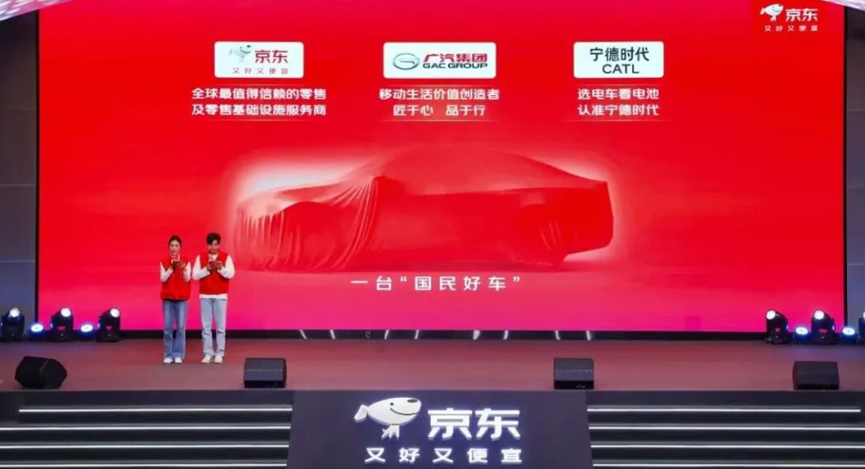
The structure of the project is deliberately light. GAC Aion provides the vehicle, CATL provides its Choco battery-swap module, and JD.com handles exclusive sales. JD is not entering manufacturing. It is contributing consumer insight, traffic and retail infrastructure.
That matters because the company's core e-commerce growth has slowed. After expanding into food delivery, travel, discount supermarkets, coffee and now vehicles, JD is searching for a second growth curve that can support future valuation and investor confidence.
The auto market is attractive because it extends far beyond the vehicle sale. Aftermarket services, finance, maintenance, accessories, insurance, charging and future mobility services can all become part of a broader consumer ecosystem.
Why JD needs new growth
China's e-commerce giants are facing a more difficult environment. JD's traditional strengths in 3C electronics and home appliances are growing more slowly, and the company's revenue growth has decelerated sharply.
From 2020 to 2023, JD Group's revenue growth fell from about 29.28 per cent to 27.59 per cent, then 9.95 per cent and 3.67 per cent. In 2024, full-year revenue reached about $161 billion, up 6.8 per cent, an improvement from 2023 but still below 2022 growth. JD Retail revenue growth fell to 5.1 per cent in 2024, compared with 27.6 per cent in 2021.
User dependence has also weakened. Average annual purchase frequency per user fell from 5.7 times in 2019 to 3.2 times in 2024. In the second quarter of 2025, net profit attributable to ordinary shareholders was about $861 million, down more than 50 per cent from a year earlier.
Those numbers do not threaten JD's position overnight, but they explain why the company needs new categories. The auto industry offers scale. China produced 31.282 million vehicles and sold 31.436 million in 2024, up 3.7 per cent and 4.5 per cent respectively, according to the China Association of Automobile Manufacturers. The new-energy aftermarket is forecast by some observers to exceed about $542 billion by 2027, with average annual growth of 25 per cent.
JD's advantage is not the car
JD brings several assets to automotive retail. It has more than 580 million active users, strong online consumption habits, supply-chain management capability, data analysis, logistics and multichannel operations.
In theory, that can make the car-buying process more digital. JD Mall can display models, configurations and prices, while livestreams and short videos can show design, interior and performance. JD Finance can provide car-loan services using data-based risk control. JD Financial data cited in the article said 85 per cent of car-loan applicants using its platform in 2024 received approval, with average disbursement time of two hours.
JD's supply-chain model could also matter. By using demand data, centralised procurement and scaled sales, the company may be able to reduce certain distribution costs and offer more transparent pricing.
The deeper goal is not a single car sale. JD wants to build a full-cycle vehicle consumption loop: buying, accessories, maintenance, insurance, replacement and resale.
From cars to mobility retail
Car ownership links naturally with JD's existing categories, including home appliances, furniture, insurance and services. If JD can connect vehicle purchase, car products, maintenance and trade-in, it can fill out a higher-value consumer journey.
The company may also be thinking beyond private cars. In May, JD registered the Joyrobotaxi trademark, a move seen as a possible signal of interest in autonomous taxis. The idea discussed in the article is that robotaxi cabins could become mobile retail terminals, linking online orders with in-vehicle pickup and instant retail.
JD's investments in AI, internet-of-things technology and big data also connect with future autonomous logistics. That gives the automotive project a possible role inside a larger mobility and consumption platform.
The aftermarket is another strategic prize. Vehicle maintenance and repair remain fragmented in China, with inconsistent service standards and uneven parts quality. If JD can use its supply-chain reputation to organise this market more effectively, it could become a service traffic aggregator and perhaps a standard-setter.
The barriers are high
The logic is attractive, but cars are not ordinary e-commerce products. Buying a vehicle still requires offline experience, test drives, delivery, aftersales support and long-term trust. A product worth tens of thousands of dollars cannot be sold as easily as a phone or appliance.
JD has offline stores, but competing with mature 4S dealer systems will be difficult. It needs enough physical density and service capability to reassure buyers before and after purchase.
JD Auto Service also has not yet broken through decisively. It remains far behind stronger aftermarket names such as Tuhu in consumer recognition. The aftermarket is large, but it is also crowded, involving 4S dealers, Tmall, Pinduoduo and many smaller service providers.
The cooperation with GAC, CATL and Changan shows that automakers and suppliers are at least willing to test JD's channel value. If the first project works, more manufacturers may join. If it fails, the limits of platform-led car retail will become clearer.
The car is the entry point
JD is not mainly trying to sell one vehicle. It is trying to increase high-value user stickiness, create new consumption scenarios and build a lifetime-value loop around mobility.
That is why the auto category matters. It can drive finance, insurance, accessories, maintenance, replacement and future mobility services, creating traffic across JD's wider businesses.
The plan is plausible, but far from assured. Automotive retail has high barriers, heavy offline requirements and complex service expectations. JD's move is a serious experiment in new retail, not a guaranteed answer to its growth slowdown.