
Mercedes-Benz and BMW are facing pressure from several directions at once: China's brutal new-energy vehicle competition, weaker global earnings, trade-policy uncertainty and a European regulatory path that still points toward the phase-out of new combustion-engine cars.
Two German giants confront a harsher market
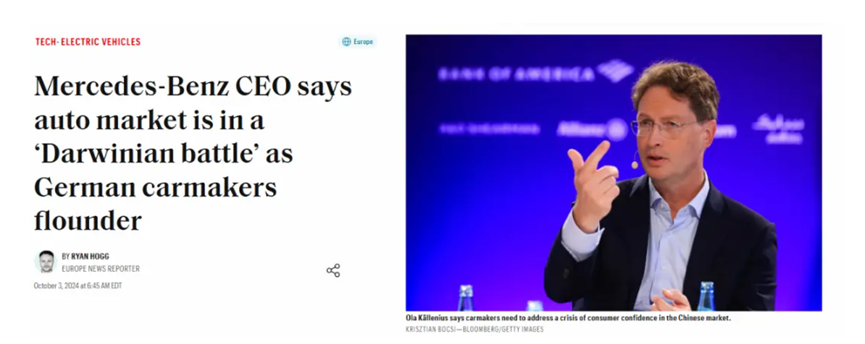
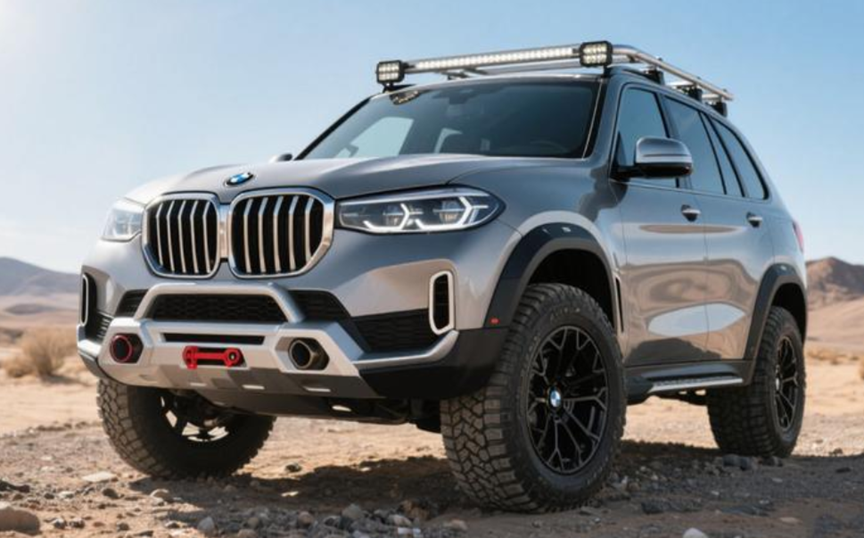
Mercedes-Benz chief executive Ola Kaellenius has warned that Europe must remain technologically neutral as it decarbonises, arguing that the industry risks a severe shock if the EU proceeds with a full ban on new combustion-engine cars from 2035. Around the same time, Automotive News reported that BMW is developing a rugged off-road SUV, expected before 2030, that would compete with the Mercedes-Benz G-Class.
The two stories appear separate, but they share the same backdrop. Germany's leading luxury carmakers are looking for ways to protect earnings and relevance as China reshapes the global premium-car market.
China is hitting earnings hard
Mercedes was the most pressured of the German luxury trio in the first half of 2025. Revenue fell 8.6 per cent to 66.37bn euros. Operating profit dropped 55.8 per cent to 3.56bn euros, and net profit fell by the same rate to 2.68bn euros.
BMW, long one of the strongest profit generators among premium carmakers, also weakened. First-half revenue fell about 8 per cent to 67.7bn euros, the operating margin was 6.2 per cent and net profit declined 29 per cent to 4.015bn euros.
China explains a large part of the pressure. Mercedes delivered about 1.076mn vehicles globally in the first half, down around 8 per cent, and 293,200 in China, down 14 per cent. BMW Group delivered about 1.207mn vehicles globally across BMW, Mini and Rolls-Royce, down 0.5 per cent, but China deliveries fell 15.5 per cent to 317,900.
The decline shows that Chinese buyers are no longer automatically backing German premium brands. Domestic rivals have squeezed the pricing power of traditional luxury cars by offering electric platforms, advanced driver assistance, richer cabins and faster product cycles at lower prices.
Discounting is not fixing the problem
Dealer pressure is visible in transaction prices. Some Mercedes A-Class sedans have reportedly been cleared at about $17,000, while EQA and EQB electric models have been discounted into the roughly $22,000 range. Even so, demand has remained weak: the EQA sold only 191 units in the first half, and Mercedes' monthly EV sales in China have fallen to the low-thousands level.
This is not only a pricing problem. Chinese consumers are rejecting products that feel slow to adapt to local expectations. In a market where assisted-driving features, cockpit software and EV range are moving quickly, a luxury badge cannot compensate for a weak technology proposition.
Trade uncertainty is adding to the strain. Volatile US tariff policy has forced carmakers to adjust inventory and logistics, hurting margins and cash flow. Mercedes withdrew annual guidance for a time as it waited for clearer tariff and demand signals. BMW has been less exposed but still faces cost pressure.
The self-rescue plan runs through China
Both carmakers understand that winning back China requires deeper localisation. Mercedes has introduced a new-generation L2++ map-free assisted-driving system led by its Chinese research team and adapted with Momenta for local road conditions. The system is expected to appear first on the latest electric CLA.
BMW is also moving toward Chinese partnerships in smart cabins and driver assistance. Its Neue Klasse models will use cooperation with Alibaba in cockpit technology, and BMW is working with Momenta on a next-generation assisted-driving solution for China. The system is intended to use AI large models and focus on point-to-point navigation assistance in local driving scenarios.
Mercedes has said it will advance a dual-track petrol and electric strategy and launch more than 40 new models by 2027, while increasing local research and development in China. BMW is also building its Neue Klasse platform and plans more than 40 new models by 2027.
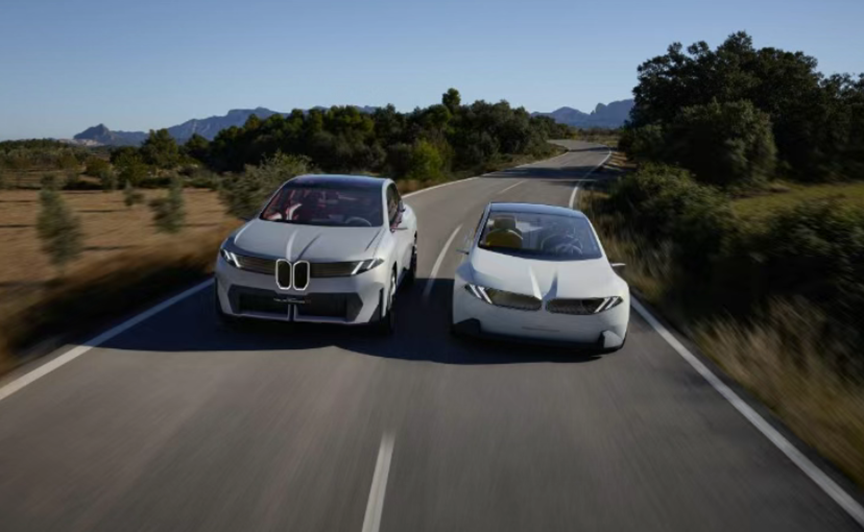
BMW's reported off-road SUV plan shows a separate search for profitable niches. The vehicle, reportedly codenamed G74 and based on an upgraded X5 platform, could enter production in South Carolina in the second half of 2029. If priced well, it may help BMW challenge one of Mercedes' strongest image products.

Local partnerships buy time, but not certainty
The difficulty is that Mercedes and BMW are trying to catch up in the very areas that Chinese brands have made central to competition: electrification, software, intelligent driving and local user experience. Public filings from German premium carmakers have increasingly acknowledged that Chinese brands now lead in several of those fields.
Partnerships with Chinese technology companies can address immediate product gaps, but they are not a complete long-term answer. To recover durable competitiveness, foreign luxury brands need stronger local software capability, more authority for China teams and EV models that can earn positive margins in a price-sensitive market.
Analysts cited in the article argue that if German luxury brands cannot lift software self-development above 50 per cent, raise the share of China-based research teams above 40 per cent and turn EV gross margins positive before 2027, their China positions may be gradually taken over by domestic premium brands.
Timing is the other risk. Mercedes' L2++ system, BMW's Neue Klasse platform and planned product waves still need to reach customers at scale. By then, Chinese rivals may have moved again.
Global cost pressure adds another front
Mercedes and BMW are also adjusting production footprints in response to tariff and cost risks. Mercedes plans to add GLC production at its Alabama plant from 2027. BMW is studying ways to expand capacity at its Spartanburg plant, including additional shifts.
These moves may help in North America, but they do not immediately solve the earnings pressure created by weaker China sales and rising EV investment. The next reporting periods will depend on whether both companies can cut costs, protect margins and show credible progress in China.
The old premium formula is no longer enough
Mercedes and BMW remain global luxury powers, but China's market is making clear that past dominance offers little protection. EU regulation, Chinese new-energy competition and falling profit all point to the same conclusion: premium brands must adapt more quickly or lose influence in the world's most important EV market.
The question is no longer whether they recognise the problem. It is whether they can rebuild the balance between petrol profits, electric investment and Chinese localisation before domestic premium rivals make the gap permanent.