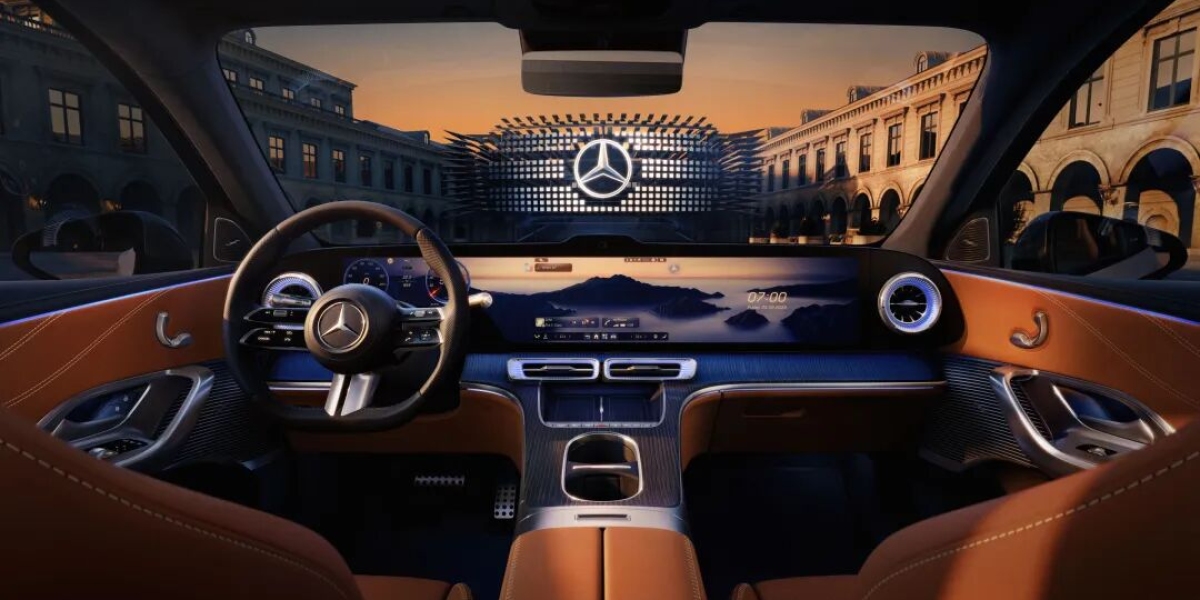
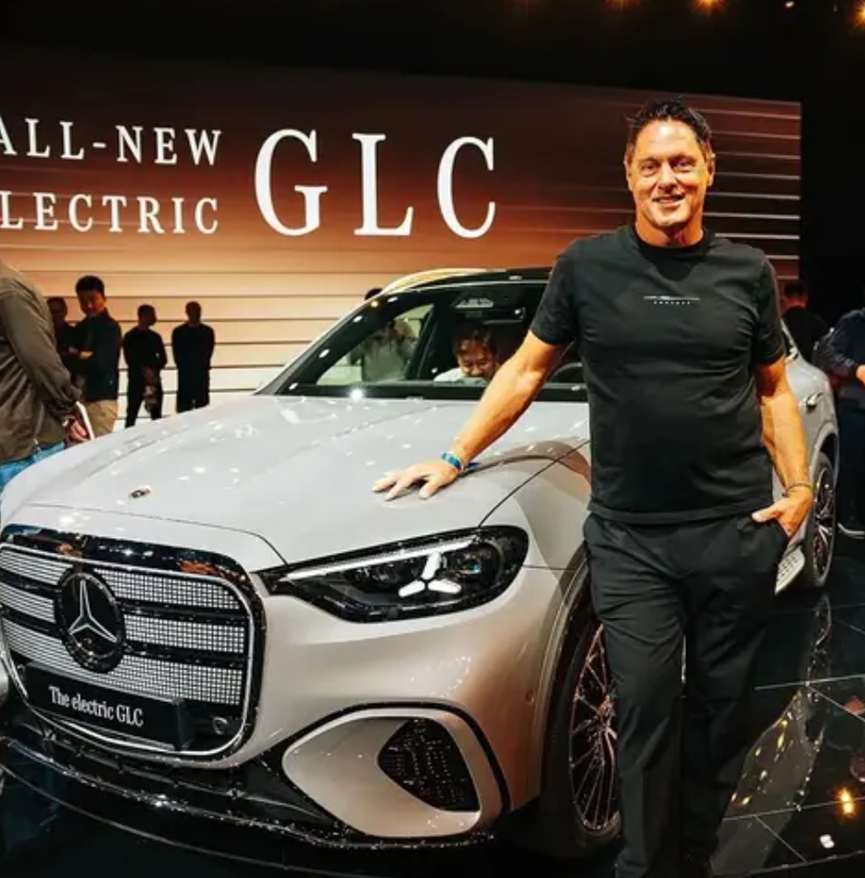
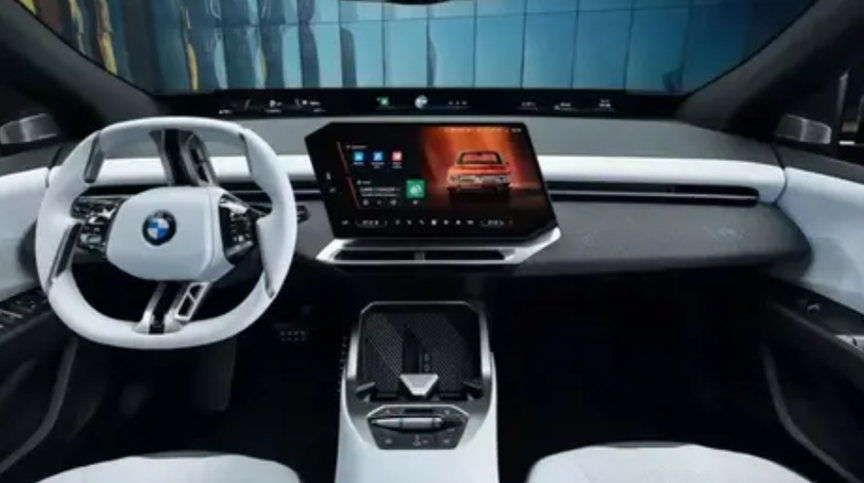
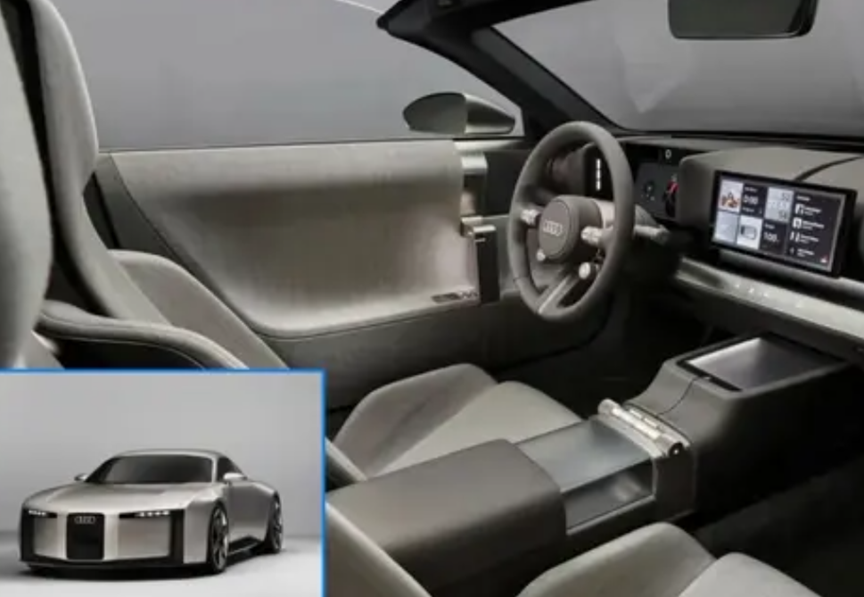
Mercedes-Benz chief design officer Gorden Wagener publicly criticised the interiors of BMW and Audi, arguing that some rival designs lacked technology feel, placed displays too far away or relied on extra touchscreens.
A rare public jab inside the German luxury club
German luxury brands have always competed, but the directness of the comments stood out. The episode looked less like a normal design critique and more like a sign that the old BBA balance is fraying under market pressure.
The question is not whether Mercedes was right about screens. It is why a brand that once seemed above such public arguments now feels the need to create attention this way.
Mercedes starts chasing attention
The answer begins with the changing luxury market, especially in China. Before 2010, BMW, Mercedes and Audi held around 80 per cent of China's luxury-car market. From 2016 to 2022, the three brands still sold around 600,000 vehicles each year in China and held more than half the luxury market.
In 2022, BMW sold about 695,000 vehicles in China, while Mercedes and Audi were each around 600,000. They remained the top three luxury brands.
From 2023, Chinese independent premium brands began rising quickly, and the luxury market started to reset. The article says the three German brands' combined share fell by eight percentage points that year. In 2024, BMW sales fell to 625,000, Mercedes dropped from 623,000 to 589,000, and Audi fell from 668,000 to 600,000. Their combined share narrowed by another 10 percentage points to 35 per cent.
That is the backdrop for Wagener's comments. Mercedes still has a century-old luxury name, but it is competing in a market where attention, technology perception and Chinese digital speed increasingly matter.
Profit pressure is harder to ignore
The first half of 2025 was difficult for all three German luxury groups. Mercedes' net profit fell 55.8 per cent, Audi's declined 37.5 per cent and BMW's dropped 29 per cent.
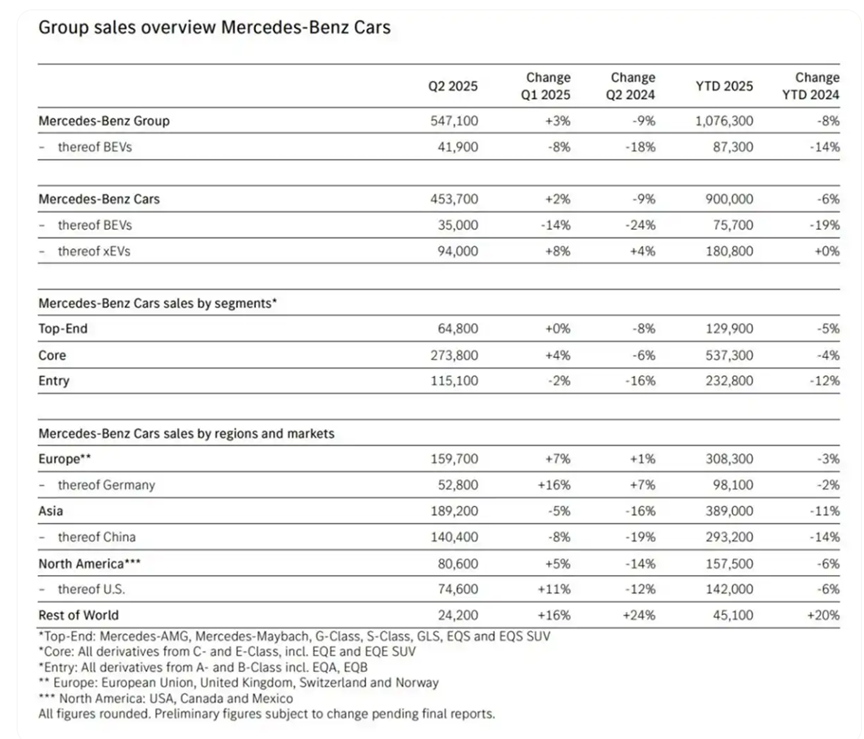
Mercedes was under the most pressure. Global vehicle sales fell 8 per cent to 1.0763 million in the first half. China sales dropped 14 per cent to 293,200, the steepest decline among its major markets.
Revenue fell 8.6 per cent to €66.377 billion, while net profit dropped from €6.087 billion a year earlier to €2.688 billion. Second-quarter net profit fell 68.7 per cent to €957 million.
Electrification has not offered much relief. Mercedes sold 41,900 battery-electric vehicles in the second quarter, down 18 per cent year on year. First-half battery-electric sales reached 87,300, down 14 per cent.
That makes the public design dispute look like a symptom. Mercedes is trying to defend recognition at a time when its sales, profits and EV transition are all under strain.
The better answer may be cooperation
The deeper question for BMW, Mercedes and Audi is whether to fight each other or cooperate where the old luxury model is under pressure.
Reports have said Mercedes-Benz and BMW have held senior-level talks about engine cooperation, with Mercedes potentially using BMW four-cylinder petrol engines in future models.
The logic is clear. For Mercedes, using BMW engines could provide Euro 7-compliant powertrains more quickly, support petrol and plug-in hybrid models, and reduce duplicated four-cylinder engine development spending. For both companies, it could preserve the combustion base while freeing resources for electrification and software.
If such cooperation happens, it would be historic: two German luxury rivals sharing core technology because the market transition has become too expensive to handle alone.
BMW and Audi look more pragmatic
BMW has spent 2025 building technology partnerships in China. It has deepened cooperation with Huawei around the Harmony ecosystem, worked with Alibaba on large language models and intelligent voice interaction, and announced cooperation with Momenta on next-generation assisted driving for the Chinese market.
In batteries, BMW has long-term cooperation with CATL and EVE Energy around sixth-generation battery technology, supply, development and local production.
Audi has taken a similar route. Audi China has worked with Huawei on ADS and Harmony cabin applications. SAIC Audi has shared an electric platform with IM Motors and is co-developing pure EVs with SAIC. SAIC Audi A5L Sportback, the first fuel car using Huawei Qiankun assisted-driving technology, has also raised expectations among Chinese buyers.
Mercedes has cooperation with Tencent in autonomous driving and has been linked to ECARX in smart cabins, but the market increasingly judges by delivered results rather than announcements.
The screen argument is a distraction
Traditional luxury brands can no longer win by default. Chinese buyers are comparing them with domestic premium EVs that move faster in software, cabin experience and intelligent driving.
That makes public criticism of rival screens feel less important than the larger challenge. Mercedes, BMW and Audi need credible Chinese technology partnerships, faster EV execution and products that feel digitally current without losing luxury identity.
The German luxury trio may still be rivals, but in the intelligent-EV era, cooperation may be more valuable than internal sniping. The brands that understand that first will have a better chance of defending their place in China.