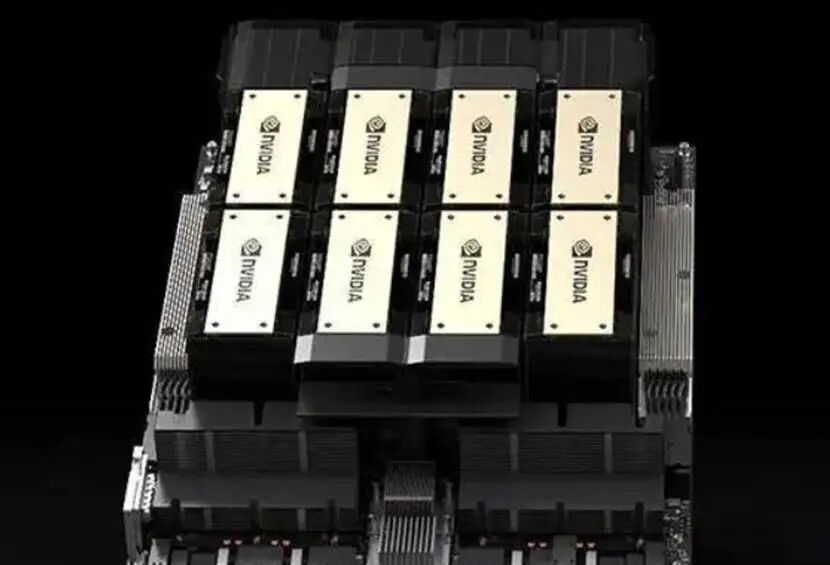
Reports that the US government approved Nvidia's export of H200 AI chips to China immediately caught the attention of China's auto industry.
A new supply signal for autonomous-driving ambitions
The timing matters. In 2026, competition in advanced driver assistance and higher-level autonomous-driving systems is expected to intensify, and training better models requires more data-centre computing power.
The article says the Trump administration would allow Nvidia to sell H200 chips to China while collecting a 25 per cent fee. Even with that cost, the policy change could create a new round of advantages for automakers and software suppliers already tied closely to Nvidia's ecosystem.
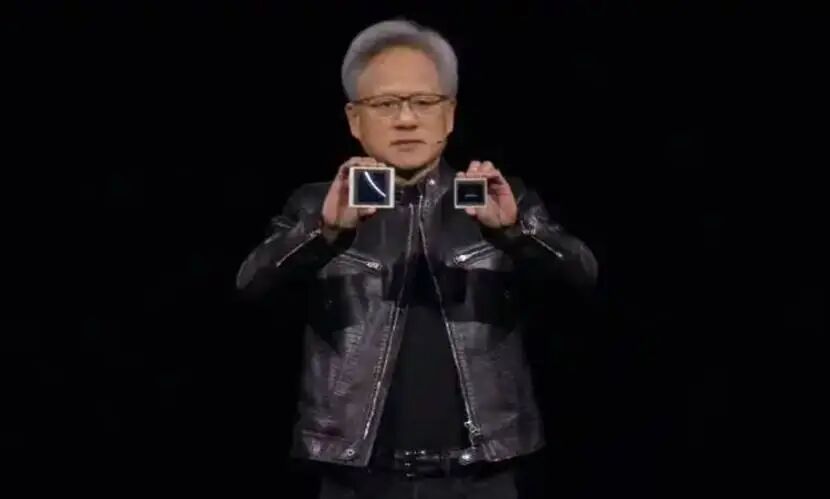
The H200 is not a vehicle-mounted chip. It is a data-centre AI processor based on Nvidia's Hopper architecture, released in November 2023 for large-scale model training and inference. Its relevance to cars lies in training and improving autonomous-driving models before those systems are deployed in vehicles.
The direct winners among carmakers
The biggest short-term beneficiaries are likely to be companies already using Nvidia technology. China's next phase of smart-car competition is not only about sensors or features. It is about computing power, model training and the speed of algorithm iteration.
Xiaomi, Li Auto and Geely already have important links with Nvidia's automotive chip ecosystem. Li Auto has said it will use Nvidia's DRIVE Thor chip in an upcoming model, giving it a route to higher assisted-driving capability without relying entirely on self-developed chips.
Nio has also worked with Nvidia, first in infotainment and later in assisted-driving functions. Although Nio has adjusted its chip strategy, the article argues that it is unlikely to ignore the benefits of stronger training resources if H200 access can help in the smart-driving race.
BYD has expanded its Nvidia relationship across vehicle systems and beyond. The two sides worked from Orin-based intelligent-driving systems to a 2024 announcement that next-generation BYD models would use DRIVE Thor, while cooperation also extended to factory supply-chain optimisation and virtual-showroom development. Additional H200 training capacity could support BYD's push toward more advanced autonomous-driving functions.
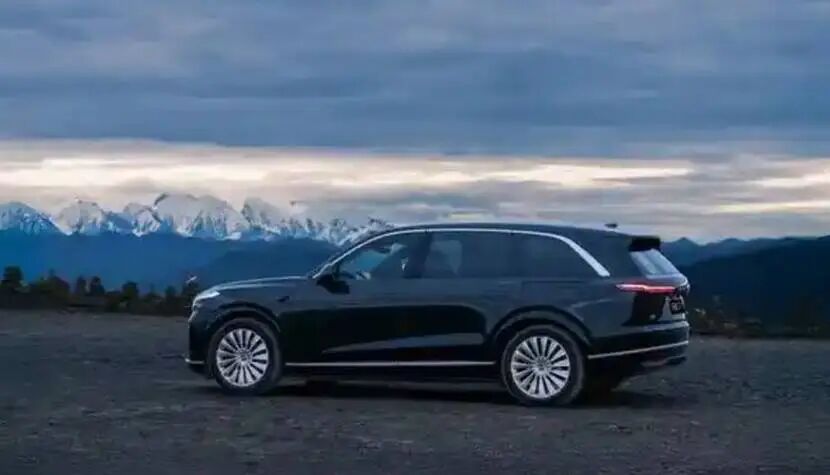
Geely's Zeekr brand is another example. Its Qianli Haohan assisted-driving system uses dual Nvidia Thor chips. More powerful cloud training resources could accelerate model updates and improve the competitiveness of Geely's higher-end new-energy products.
Smart-driving suppliers may split further
For autonomous-driving solution providers, the H200 opening could strengthen the divide between ecosystem insiders and outsiders. In this field, adaptability to a chip ecosystem and the ability to deploy at scale are becoming decisive.
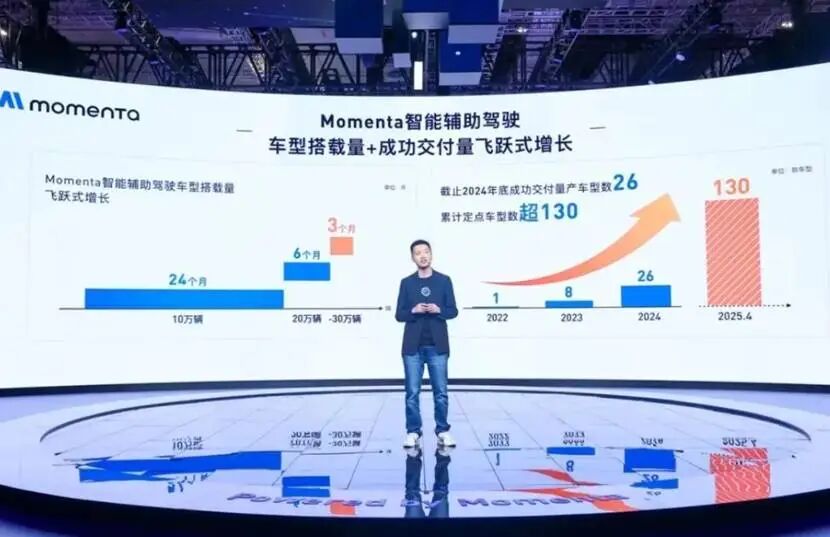
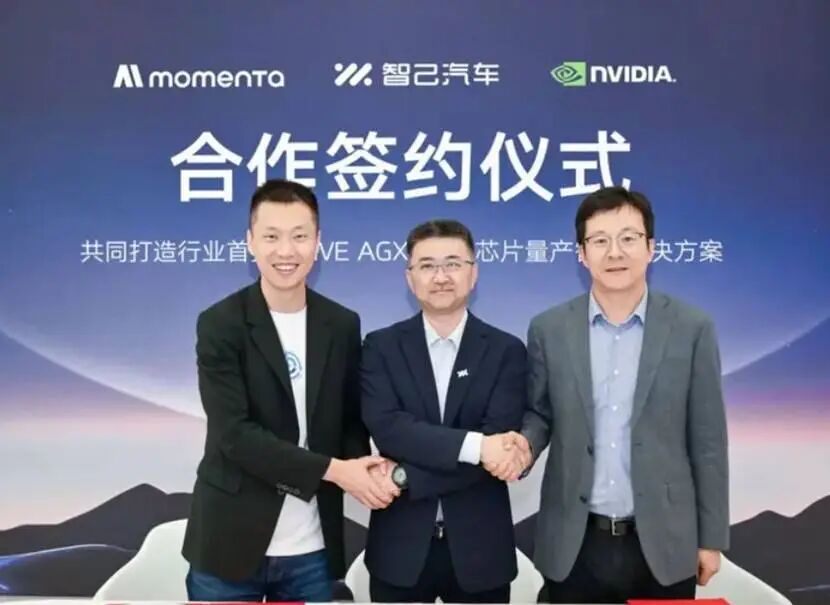
Momenta is one of the clearest potential beneficiaries. The company has long built standardised algorithm systems on Nvidia's chip ecosystem, including computing cards used for model training. That reduces the need for large-scale custom development for each automaker and improves iteration efficiency.
Nvidia's CUDA ecosystem creates a technical foundation that can amplify Momenta's advantages in algorithm development, toolchains and partner compatibility. If H200 supply becomes easier, the company may be able to widen its lead and move closer to a profitable loop built on repeatable software deployment.
Nvidia's broader ecosystem is also expanding. Bosch, ZF, Sony and other suppliers have joined sensor-certification systems, while Nvidia's simulation platform can help solution providers save millions of dollars in testing costs, according to the article.
Not all suppliers will share the upside. Horizon Robotics is pushing its HSD standard algorithm system, Huawei is strengthening vertical integration of chips and algorithms, and smaller solution providers face pressure if they cannot adapt to Nvidia's ecosystem or build a clear differentiated position. Automakers increasingly want integrated packages covering vehicle chips, algorithms and cloud training resources.
The risks behind the opening
The short-term benefit is obvious: companies pursuing advanced driving may face less pressure from scarce high-end training chips. The long-term risks are more complicated.
The first risk is policy uncertainty. The approval reflects a stage in US-China trade bargaining, and export permissions remain subject to US Commerce Department approval and security review. Automakers and suppliers therefore need fallback plans.
Some leading companies are already hedging. BYD, for example, works with Momenta while also investing in its own chips and intelligent-driving systems, according to the article. The logic is to avoid putting all critical technology dependence in one place.
The second risk is technology dependence. Nvidia has a powerful ecosystem and strong industry influence, but its roadmap will naturally prioritise its own strategic interests. Companies that rely too heavily on external chips and training resources may struggle to control their long-term technology direction.
The third risk is cost. If the US collects a 25 per cent share from H200 exports, companies using those chips for model training will face a meaningful additional expense. As assisted-driving features move into more vehicles, automakers will have to balance training cost, feature pricing and mass-market affordability.
A buffer, not a rescue
Nvidia H200 access may help China's smart-driving industry in the short term, especially for carmakers and solution providers already integrated with Nvidia. It could help stronger players move faster and widen the gap with weaker rivals.
It should not be treated as a permanent guarantee. Export policy can change, dependency can create strategic weakness, and high-end computing does not solve every challenge in product experience, safety validation or cost control.
The best use of this opening is as a buffer period for supply chains and high-end computing resources. Chinese automakers and smart-driving suppliers that use the window to accelerate their own technology development will be better placed for the long race. Those that treat it as a lasting shortcut may find the advantage less secure than it appears.