

China's new-energy market is moving from spectacle to scrutiny. As NEVs become the mainstream choice, buyers are looking beyond headline specifications and asking harder questions: does the technology work in daily use, does it remain reliable over time, and does it still perform when conditions are less than ideal?
A Joint-Venture Brand Tries a Different Answer
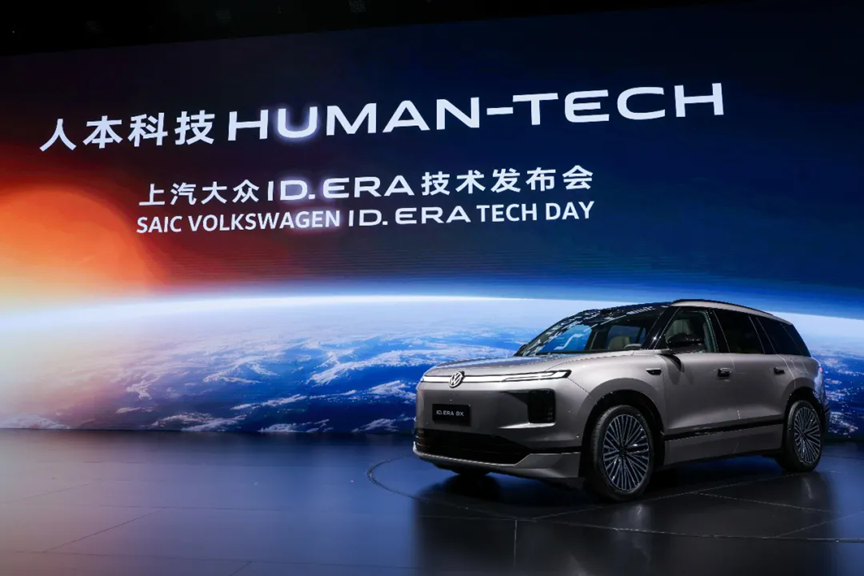
SAIC Volkswagen used its March 16 ID. ERA technology event in Shanghai to answer those questions through hardware and validation rather than marketing flourish. Under the theme of human-centred technology, the company presented the core systems for the ID. ERA series, including its Golden Range Extender, Xingyun intelligent chassis, Yunqi smart cabin and Xingyun assisted-driving system.
The signal was clear. In 2026, as joint-venture carmakers mount a counterattack in China's new-energy market, SAIC Volkswagen wants to compete on system integration and long-term dependability rather than isolated parameter claims.
Beyond the Parameter Race
After the event, SAIC Volkswagen general manager Tao Hailong said the company was not trying to be a "parameter party". The technologies shown, he said, were the result of integrated capability, product understanding and customer insight.
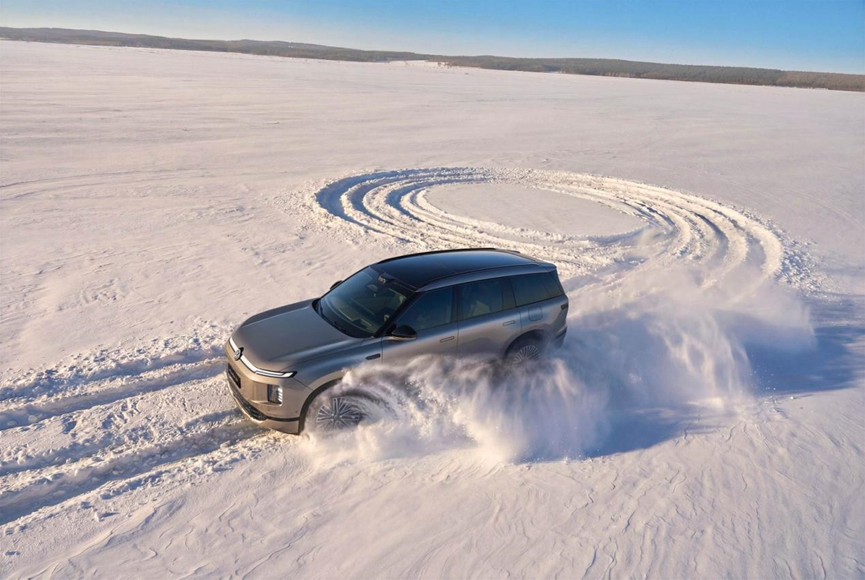
That remark addresses one of the market's current distortions. Over the past few years, the industry has competed over thermal-efficiency rankings, extreme range figures and sub-three-second acceleration. Those numbers create attention, but users ultimately care about practical moments: whether a range extender still has power when the battery is low, how the vehicle behaves in severe cold, and whether the body remains stable after a tyre blowout at highway speed.
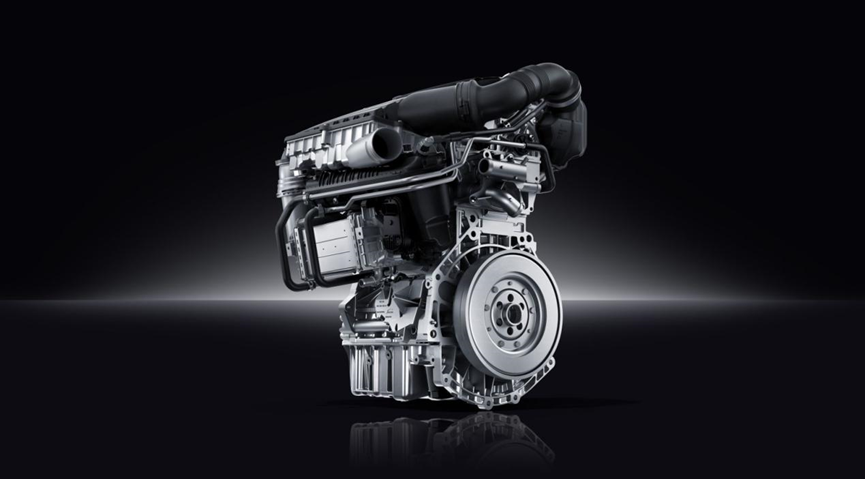
The ID. ERA 9X is SAIC Volkswagen's first complete answer to those concerns. Its Golden Range Extender is built around the EA211 1.5T EVO II turbocharged engine, a family with more than 20 million units on Chinese roads. SAIC Volkswagen adds VTG variable-geometry turbocharging, a deep Miller cycle and a 350-bar high-pressure fuel system.
The claimed result is a compact, efficient, stable and quieter range-extender package. The ID. ERA 9X offers more than 400km of CLTC pure-electric range and more than 1,600km of combined range. In four-wheel-drive form, depleted-battery fuel consumption is 6.27 litres per 100km. When the range extender starts, cabin noise changes by less than 0.5dB, a difference most occupants would barely notice. In testing at 3,650 metres in Lhasa, acceleration time differed by only 0.18 seconds between high-battery and low-battery states.
A Chassis for a Three-Tonne SUV
The ID. ERA 9X is a large six-seat flagship SUV more than 5.2 metres long and weighing over 3 tonnes when fully loaded. Such vehicles can be difficult in narrow urban streets, tight parking areas and U-turns. SAIC Volkswagen's Xingyun intelligent chassis is designed to reduce that burden.
The hardware includes a double-wishbone front suspension, five-link independent rear suspension and extensive use of aluminium alloy. A 150mm dual-chamber air suspension supports seven ride-height levels, while rear-wheel steering cuts the minimum turning radius to 4.85 metres, smaller than that of a Polo hatchback.
SAIC Volkswagen is also leaning on its chassis-tuning heritage. Engineers controlled key damper-valve dimensions to 0.01mm and used micron-level tuning to balance rough-road comfort, speed-bump composure and body control after large suspension movements. The aim is the familiar German combination of resilience, unity and stability.
Smart Cabin Without Screen Clutter
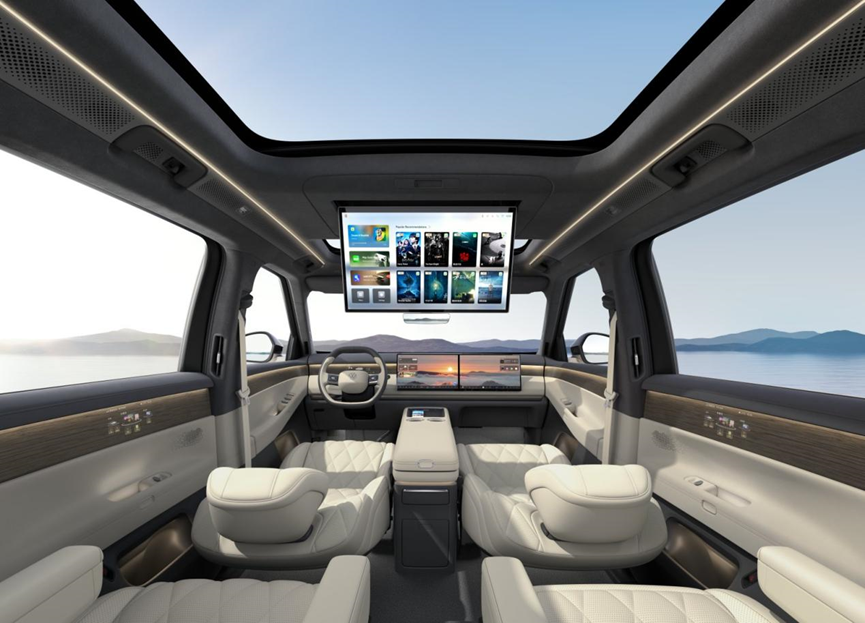
In the cabin, SAIC Volkswagen is avoiding the race to add more visible screens. The ID. ERA 9X's Yunqi smart cabin uses an industry-first Smart Surface magic screen, which hides the display beneath a wood-grain trim panel through micron-level laser perforation. When turned off, it disappears into the interior. When activated, it becomes a clear display surface.
The second-row door-panel magic screen has a more practical purpose. When a passenger presses the door-opening button, it shows a live rear-side image to warn of approaching vehicles or pedestrians, reducing door-opening risks.
The seating system also tries to combine comfort and safety. The ID. ERA 9X has three zero-gravity seats, including a dynamic zero-gravity seat on the right side of the second row. SAIC Volkswagen pairs that with a 12-litre anti-submarining airbag, integrated seatbelts and reinforced seat and body mounting points, addressing the common criticism that zero-gravity seats can prioritise comfort over crash protection.
Momenta and the Move Toward Physical AI
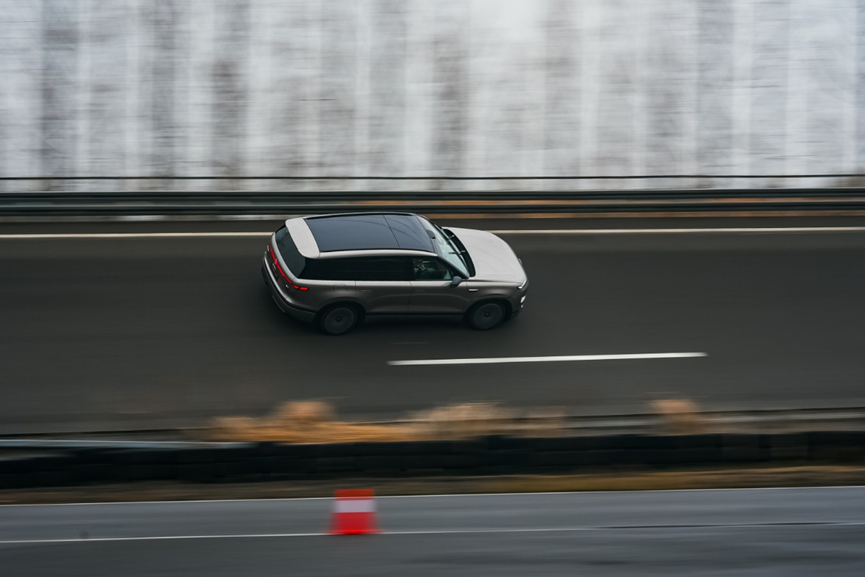
The assisted-driving system may be the most forward-looking part of the package. The ID. ERA 9X is set to be the first vehicle globally to use Momenta's R7 reinforcement-learning world model.
Traditional assisted-driving systems rely heavily on data training and pattern matching. They perform best in scenarios they have already seen. A reinforcement-learning world model aims to build a deeper understanding of physical reality, allowing the system to make more reasonable decisions in unfamiliar situations.
Momenta had already put China's first mass-production reinforcement-learning large model into vehicles in 2025, with key safety indicators improved by more than five times, according to the original report. In the ID. ERA 9X, SAIC Volkswagen is betting that such a model can make assisted driving feel safer and less brittle.
Safety as the Hard Boundary
Safety remains the point where SAIC Volkswagen is most keen to show its traditional strengths. The ID. ERA 9X uses what the company calls hexagonal battery safety protection. Its underbody protection can withstand a 2,000-joule impact without battery fire or explosion, a standard said to be 13 times tougher than the Chinese national requirement.
The vehicle is also a production application of SAIC Volkswagen's Collision Safety 4.0 standard, which is based on European standards while meeting Chinese national, C-NCAP and C-IASI requirements, plus Volkswagen Group's own higher standards.
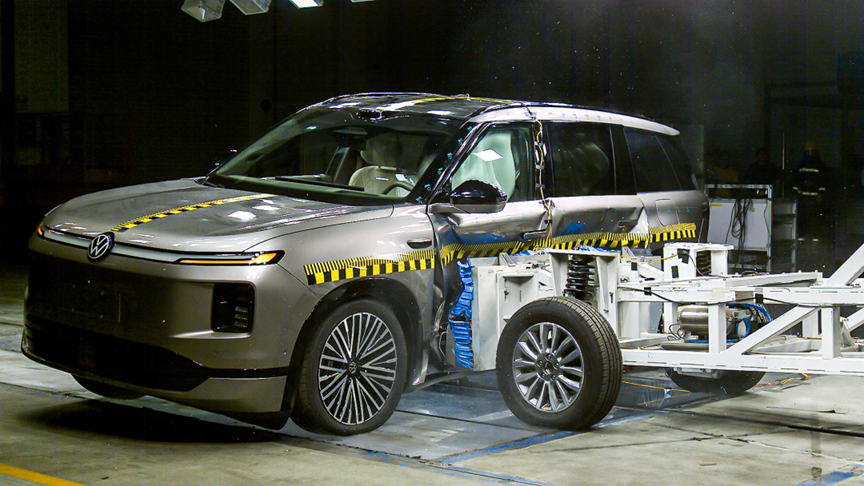
At a crash-safety experience day on March 16, the ID. ERA 9X completed three tests: an 80kph, 70% overlap high-speed rear impact; a 56kph full-frontal rigid-barrier impact; and a 60kph deformable moving-barrier side impact. SAIC Volkswagen said all three achieved structural integrity, no battery thermal runaway, no critical occupant harm and no obstruction to rescue.
The wider development programme included more than 32,000 hours of range-extender bench durability testing, over 2,600 fast-charging battery cycles, more than 20,000 hours of electric-drive durability testing, more than 1 million kilometres of single-module bench durability and more than 10 million kilometres of complete-vehicle road testing.
The System Is the Message
SAIC Volkswagen's confidence comes from more than any single technology. It comes from four decades in China, mature powertrain development, Volkswagen's validation system and a stable supplier base.
In 2026, the company plans to launch seven new new-energy models, including the ID. ERA 9X. The product year will test whether joint-venture brands can still use engineering discipline and quality systems to compete with faster-moving domestic rivals.
The ID. ERA event did not rely on noise. Its argument was that users need certainty across all scenarios and across the full life cycle of the vehicle. If SAIC Volkswagen can deliver that certainty, the ID. ERA 9X may become more than a new model. It could become an example of how German validation and Chinese intelligent-vehicle technology can be combined in the next phase of joint ventures.