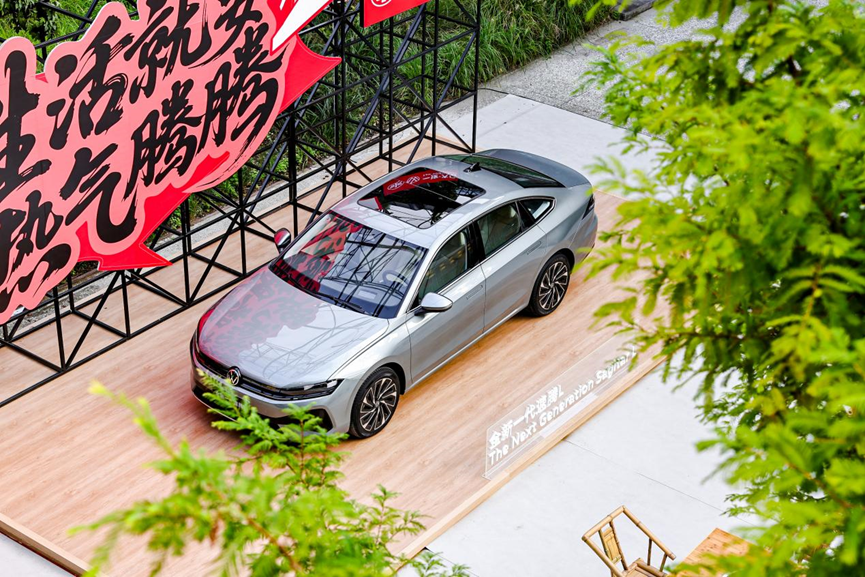
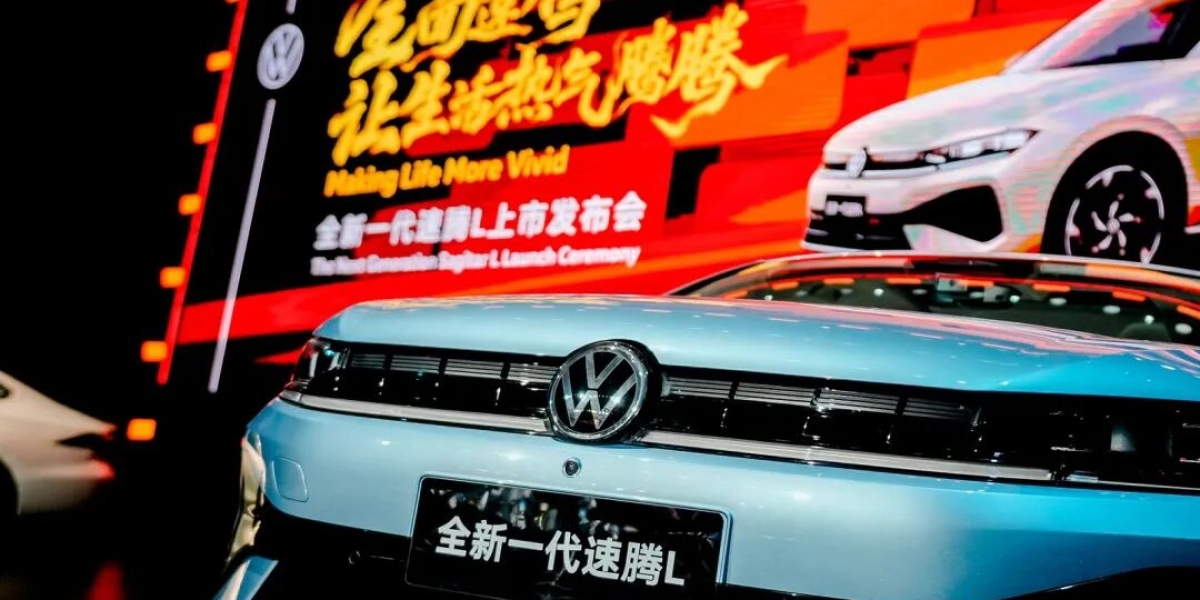
Volkswagen's Sagitar has long occupied a familiar place in China's family-car market: a joint-venture sedan with German branding, conservative engineering and a vast owner base.
A legacy sedan returns to a changed battlefield
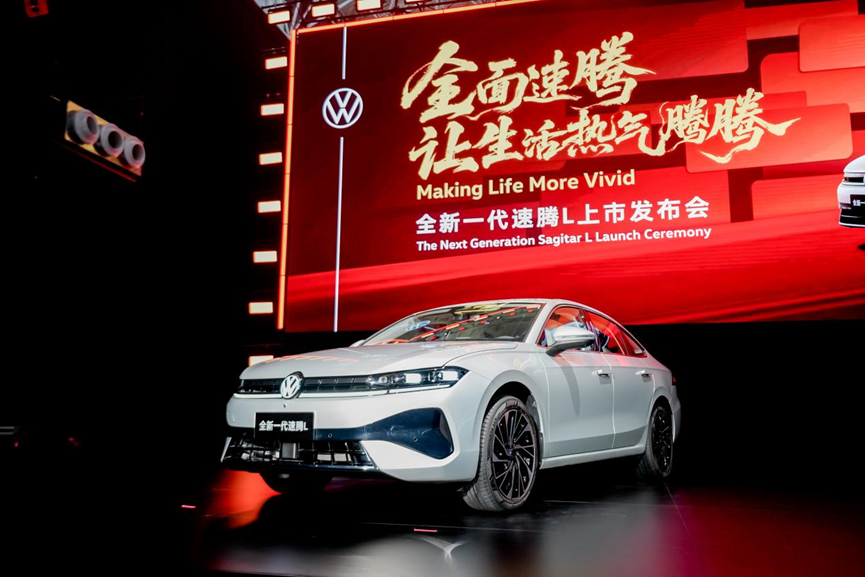
The latest Sagitar L arrives with a harder assignment. It is being asked to defend FAW-Volkswagen's petrol-car core just as Chinese buyers are being pulled toward increasingly affordable electric and plug-in hybrid models.
The timing is deliberate. Data from the China Association of Automobile Manufacturers showed domestic sales of traditional fuel vehicles reached 981,000 units in July 2025, up 8.4 per cent from a year earlier. Petrol-car sales had posted year-on-year gains for two straight months, suggesting that the segment still has enough scale to matter even as electrification dominates the industry's narrative.
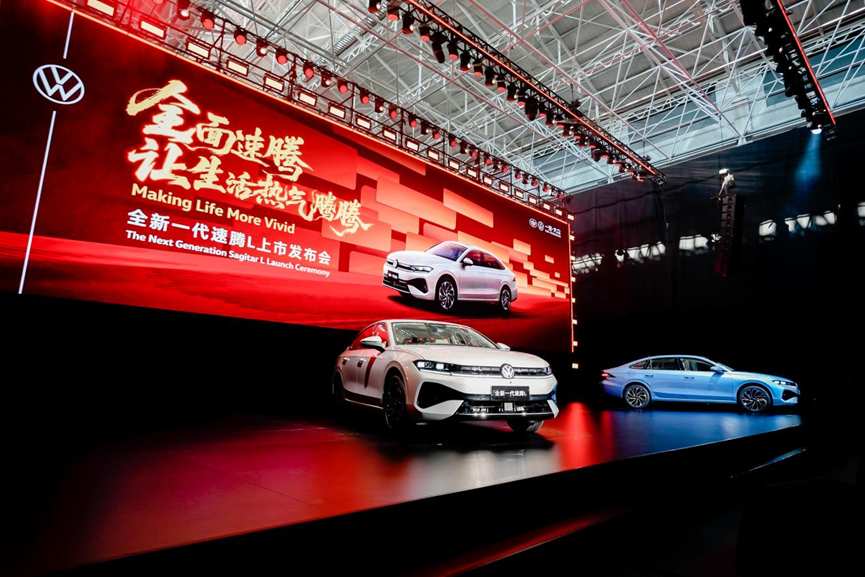
FAW-Volkswagen has priced the new Sagitar L at roughly $16,000 to $18,000, with a limited-time insurance benefit worth about $1,000. That positions the car directly against both Chinese-brand petrol sedans and lower-priced new-energy vehicles that have compressed margins across the market.
Volkswagen leans on heritage, but cannot rely on it
The Sagitar entered China in 2006 and helped define the country's A-plus sedan category. Volkswagen says the nameplate has accumulated more than 4.3mn sales, giving it a reservoir of trust that many newer competitors lack. Yet nostalgia alone is no longer enough in a market where buyers expect screens, driver assistance and aggressive pricing even from mainstream models.
The new Sagitar L keeps the conventional Volkswagen pitch around body structure and durability. It uses a cage-style body, more than 80 per cent high-strength steel and a claimed 28 per cent share of hot-formed steel. FAW-Volkswagen also points to sealing technology designed to prevent visible rust for three years and rust-through for 12 years.
Before launch, the vehicle was put through more than 9mn kilometres of testing, according to the company, including durability runs in cold, high-altitude and hot-weather conditions. Those numbers are part of a broader effort to remind buyers that German-brand quality remains a selling point, even when Chinese rivals are moving faster on software and cabin technology.
The petrol-car fight is shifting toward technology
China's mainstream petrol market remains large. CAAM data put domestic traditional fuel-vehicle sales at 7.676mn units in the first seven months of 2025, or 52.62 per cent of the domestic vehicle market. The A-segment and adjacent compact categories still make up much of that demand, even after a 5.5 per cent year-on-year decline during the same period.
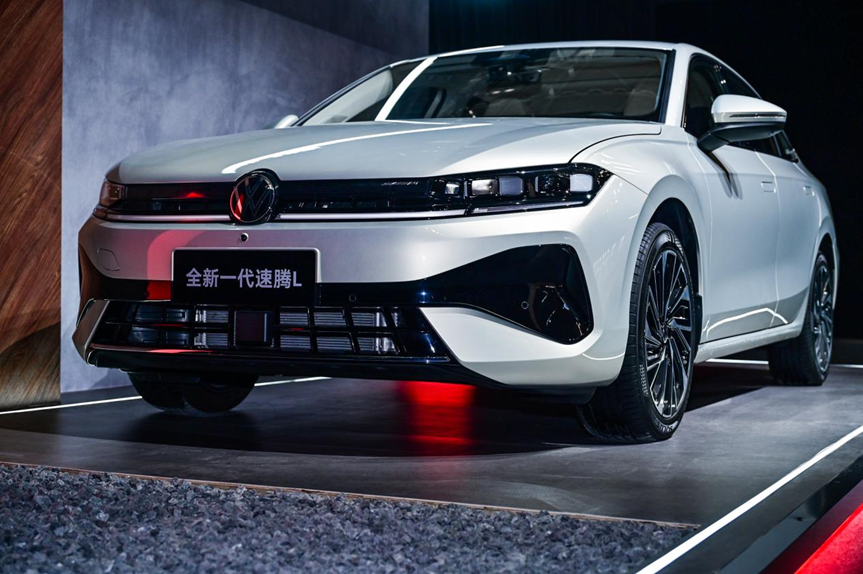
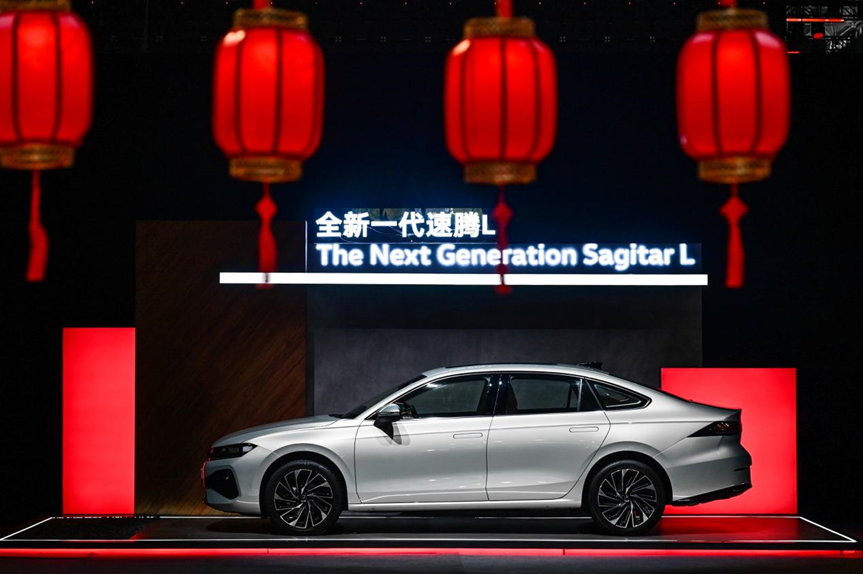
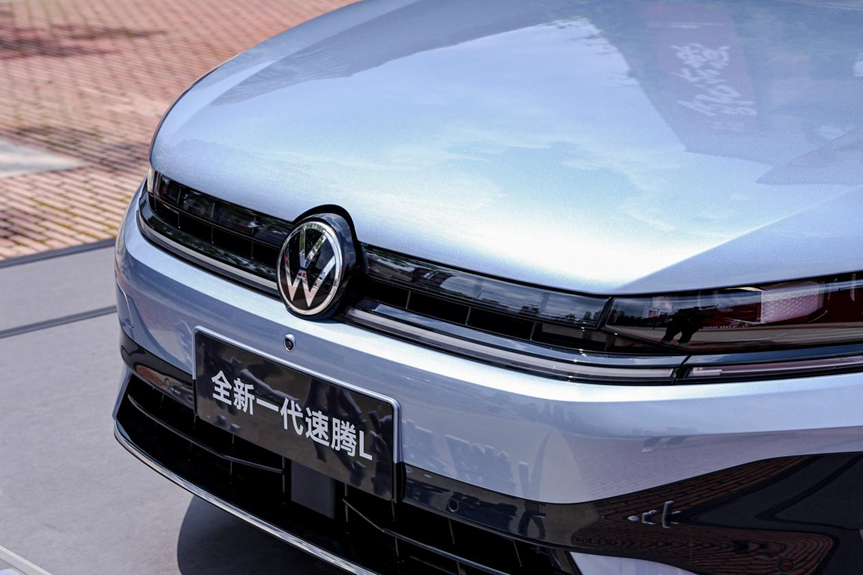
FAW-Volkswagen is trying to show that a petrol sedan can still feel current. The Sagitar L adopts a cleaner exterior design, new colours, pixel-matrix headlights, a full-width light bar, illuminated badging and a longer 4,812mm body with a 2,731mm wheelbase. Volkswagen also claims a strong cabin-space ratio for the class.
The larger shift is inside the car. The model offers IQ.Pilot assisted driving, including highway navigation assistance, ramp handling, obstacle avoidance, traffic-light start-stop support, parking assistance and remote parking. FAW-Volkswagen is presenting the car as the only A-plus petrol sedan in China capable of end-to-end highway navigation assistance.
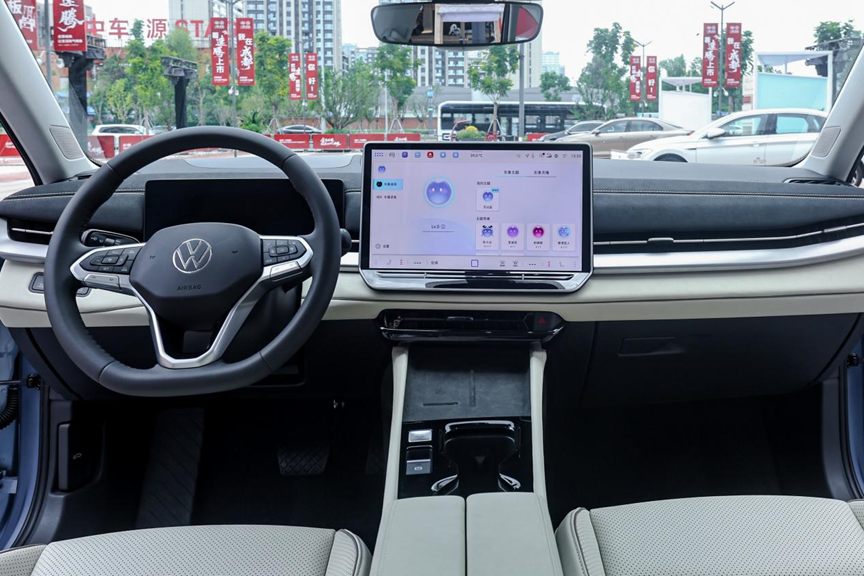
The cockpit package also reflects how far buyer expectations have moved. A 15-inch 2K central display, 10.25-inch digital cluster, head-up display, Qualcomm 8155 chip, iFlytek voice system, more than 400 vehicle-control functions and model integrations involving DeepSeek and Doubao put the Sagitar L closer to the equipment lists usually associated with Chinese new-energy cars.
Mechanical strengths remain central to the pitch
FAW-Volkswagen has not abandoned the more traditional reasons buyers choose a petrol Volkswagen. The new Sagitar L uses a 1.5-litre Evo2 turbocharged engine with variable-geometry turbocharging related to technology used by Audi. Output is listed at 118kW and 250Nm, with a broad torque band intended to deliver quicker response in everyday driving.
Efficiency is part of the argument. The engine package includes Miller-cycle combustion, variable valve timing, atmospheric plasma spray technology and an electronically controlled water pump. Aerodynamic changes to the bonnet, front bumper airflow and tyre structure help reduce the drag coefficient to 0.25, about 10 per cent lower than the previous generation. Claimed combined fuel consumption is 5.49 litres per 100km.
The chassis stays with front MacPherson and rear multi-link independent suspension, with revised damping. FAW-Volkswagen says the front track is 30mm wider and anti-roll-bar stiffness is up 25 per cent, changes intended to improve stability during lane changes and higher-speed cornering while preserving ride comfort.
A defensive model with offensive intent
The new Sagitar L is more than a routine refresh. For FAW-Volkswagen, it is a test of whether a joint-venture brand can defend a profitable petrol-car base while Chinese automakers set the pace in electrification, software and price competition.
The car's prospects will depend on whether buyers still see value in Volkswagen's blend of perceived quality, familiar engineering and upgraded technology. In a market where legacy foreign brands can no longer assume automatic loyalty, the Sagitar L is being asked to prove that the petrol sedan still has room to fight.