
China’s mid-sized sedan market was once a place domestic brands struggled to enter with confidence. That has changed as Chinese carmakers have built serious advantages in electrification and in-car technology. Zeekr 007, Luxeed S7 and Xiaomi SU7 have all pushed into the segment, turning it into one of the most closely watched battlefields in the world’s largest car market.
A late mover tries to define its own lane
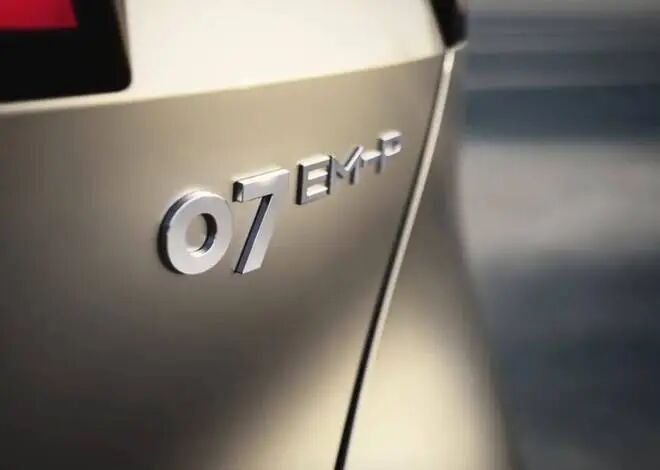
For Lynk & Co, the number seven carries its own symbolism. The Geely-backed brand was launched in 2016 and built an early following through original design and a rare motorsport culture among Chinese marques. Yet in the new-energy era it has not always looked like a front-runner. The arrival of the Lynk & Co 07 EM-P is therefore more than a model launch. It is a test of whether the brand can accelerate in a more crowded plug-in hybrid market while preserving the identity that made it distinctive.
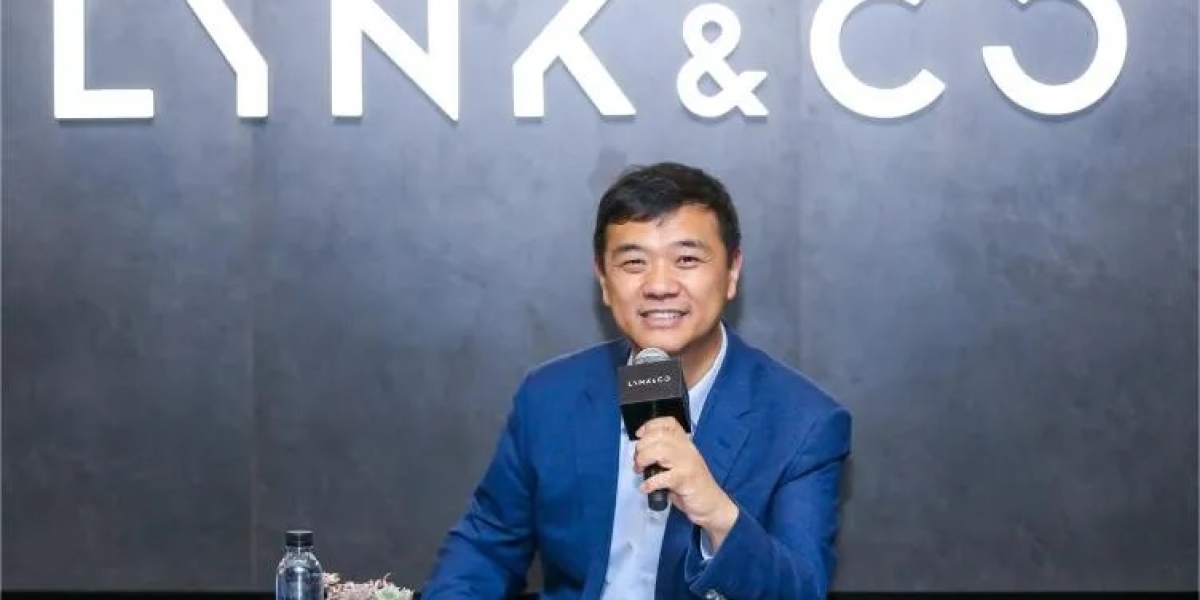
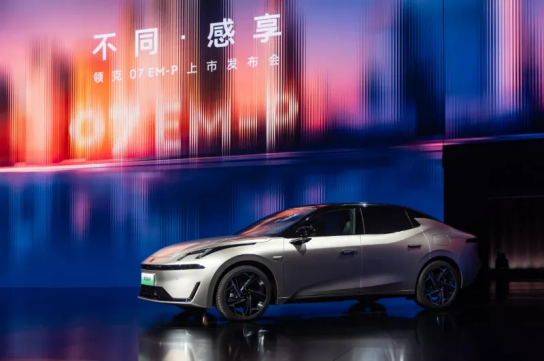
At the May 17 launch, Lin Jie, senior vice-president of Geely Auto Group and general manager of Lynk & Co Automobile Sales, summed up the pitch with a pointed line: there are many electric “7s”, but only Lynk & Co has a premium hybrid “7”. The 07 EM-P was priced from about $24,000 to $26,000, with a limited-time launch benefit worth roughly $1,000 that lowered the entry price to about $23,000.
That was a meaningful cut from the pre-sale range announced at the Beijing auto show, which had been roughly $25,000 to $29,000. The top version came down by more than $4,000, helping the model quickly gain traction. Lynk & Co said pre-sale orders exceeded 10,000 units, while firm orders passed 7,000 within 48 hours of launch.
In a market where almost every brand is being forced to discount, that is a respectable start for a domestically developed premium mid-sized sedan. The more important question is why it happened. Price helped, but Lynk & Co’s management argues that the car reflects a broader philosophy rather than a simple discounting exercise.
Value, not a race to the bottom
Lin said Lynk & Co would not compete by lowering prices for their own sake. That claim may sound awkward given the launch price came in well below the earlier pre-sale level, yet the distinction matters. Rivals such as Deepal SL03 and BYD Seal have used large group scale to push prices below about $21,000. Lynk & Co, also backed by a powerful parent, could arguably have gone lower.
Lin’s answer is that the brand wants sustainable growth and will not sell products without profit. In his view, the new-energy market is already extremely aggressive, but a premium brand cannot survive by eroding its own economics or weakening customer pride and loyalty. Lynk & Co’s position is that it must fight a value war rather than a price war.
That explains the way the 07 EM-P has been equipped. Every version comes with a 23-speaker Harman Kardon audio system, developed and tuned from the vehicle drawing stage through three rounds of calibration to create a 7.1.4-channel 3D surround-sound experience. It is an unusual level of standard equipment in this price band.
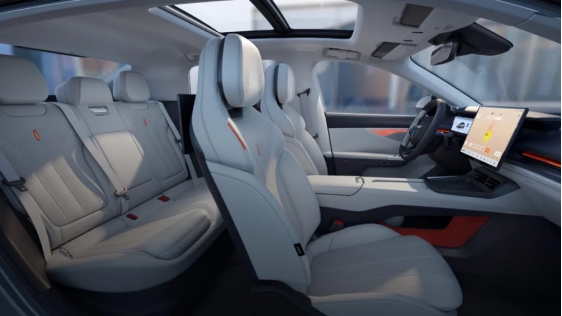
The seats carry the same message. All four main seats use full Nappa leather and offer heating, ventilation and massage. The massage function supports eight contact points, seven modes and three intensity levels. Mu Jun, deputy general manager of Lynk & Co Automobile Sales, described the product pitch in a deliberately punchy phrase: space comparable to German compact executives, comfort closer to larger luxury sedans, and audio that feels like a far more expensive car.
The technical package is also central to the value argument. The 07 EM-P uses Lynk & Co’s extended-range hybrid solution, pairing a 1.5-litre hybrid engine with dual motors. Combined output reaches 280kW and peak torque 615Nm. With a three-speed DHT Evo transmission, the car accelerates from 0-100kph in 6.5 seconds.
The system is not a conventional range extender or a simple single-speed plug-in hybrid. It can run as a pure EV, in extended-range mode, with direct engine drive, or with the engine and motor working in parallel. That gives it broader operating flexibility and helps address one of the main weaknesses of some extended-range and plug-in hybrid vehicles: poor energy use when the battery is depleted.
Lynk & Co says the 07 EM-P consumes 4.8 litres per 100km when running with a depleted battery and can deliver more than 1,400km of combined range. In a Chinese market where buyers increasingly want low running costs, long range and strong performance in one package, that combination is the point.
Original design remains part of the brand’s defence
Lynk & Co’s second principle is to avoid obsessing over rivals. Lin said customers at the brand’s user council often told him Lynk & Co should keep doing things its own way. For a brand originally designed with a global ambition, that means holding on to principles even when the market is moving quickly.
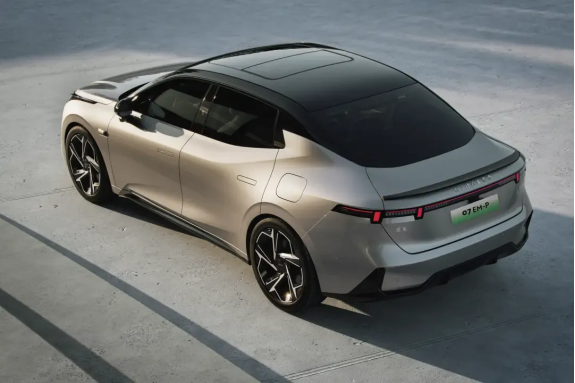
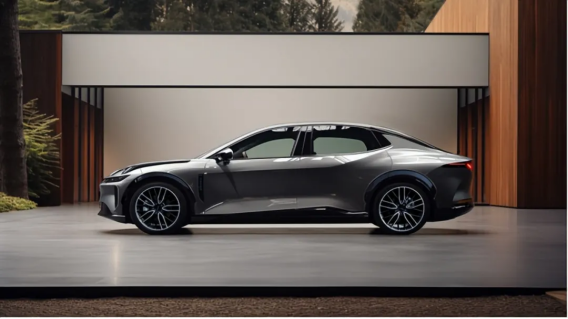
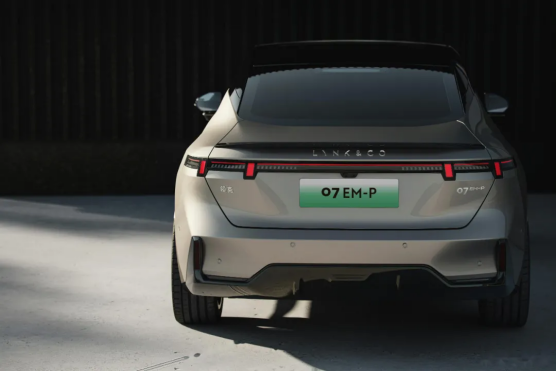
The first of those principles is original design. Wang Ying, executive vice-president of the Lynk & Co brand research institute, said the company’s users do not want products that look like everything else on the road. That has been part of the brand’s identity since the 01 and remains visible in the second-generation design language used by the 07 EM-P and 08 EM-P.
Lin framed the issue in broader terms. Copying successful designs might improve short-term hit rates, he suggested, but it would not help Chinese cars earn global respect. For Lynk & Co, originality is not just styling. It is part of the claim to being a premium brand.
Safety as luxury
The second principle is safety. Lin said the company’s view of safety goes beyond active and passive systems. Internally, Lynk & Co has what staff refer to as a safety law: regardless of personnel changes in technical teams, safety standards can only be raised, not reduced.
The 07 EM-P reflects that stance. More than 82 per cent of the body uses high-strength steel and aluminium. The A-pillars, B-pillars and four door anti-collision beams use 2,000MPa hot-formed steel, while the front crash beam uses aerospace-grade 7000-series aluminium alloy. The rear-seat backrest uses a metal backing plate.
Battery safety has also been emphasised. The battery pack uses Lynk & Co’s proprietary structural protection, including integrated frame beams and a cloverleaf-style force transfer path. The company says the 07 EM-P underwent more than 12,000 all-scenario safety simulation checks and over 200 vehicle and system-level safety validations, with more than half the conditions exceeding current industry standards.
For Lin, safety is Lynk & Co’s greatest luxury. He went further: without safety, he said, a car is not a Lynk & Co.
Performance and long-term brand building
Performance is the third part of the brand’s DNA. Lynk & Co’s six titles in five years of TCR competition have left a strong imprint on its image. Lin argued that sportiness cannot be abandoned simply because the industry is moving into hybrids and EVs.
He described Lynk & Co’s core identity as five highs: originality, strong design, high safety, high performance and high technology. Those pillars support its positioning as a higher-end Chinese brand rather than a pure value alternative.
The company also presents itself as a long-term player. Lin uses the idea that product is the boat, marketing is the sail and reputation is the wind. If the product and marketing are strong, and owners speak well of the car after purchase, then real development begins. The auto industry, he argues, is not a short-lived influencer economy.
That view extends to retail. While many Chinese carmakers are rushing into livestreaming and short-video platforms to drive attention, Lin has warned against relying too heavily on internet celebrity economics. Traffic matters, but it cannot compensate for weak products. A car can sell quickly at first through marketing, he said, but it is easily overturned if the product does not hold up.
Mu said Lynk & Co has built 20 direct-connection centres in 20 Chinese cities to support a newer retail model. The company uses an agency-like service structure and links channel commissions to customer satisfaction, aiming to make pricing more transparent and reduce poor terminal behaviour.
That long-term approach has begun to pay off. Lin said Lynk & Co owners show high loyalty. Even when they complain, many find it hard to identify a better product at the same price when they consider replacing their cars. Such trust is not created by a single campaign. It is the result of accumulated product credibility.