
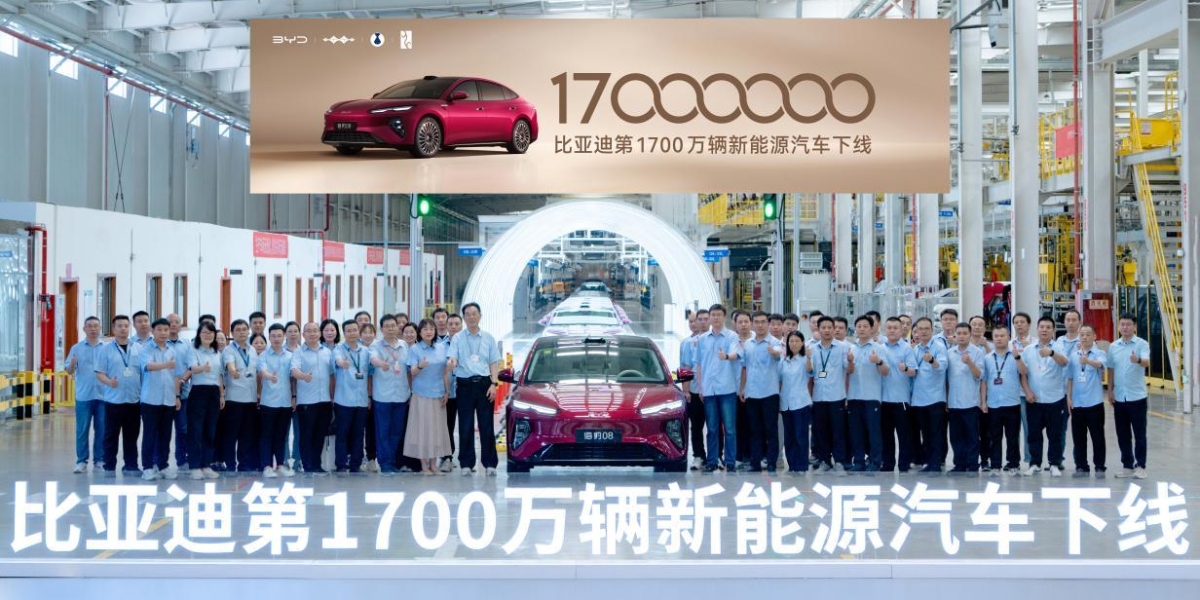
BYD has produced its 17 millionth new-energy vehicle, extending a manufacturing run that underlines the Chinese carmaker’s rapid rise into one of the world’s largest electrified-vehicle groups.
The milestone vehicle, a Seal 08 flagship family sedan, rolled off the production line at BYD’s Xi’an plant on July 8, 2026. The company said it was the first automaker globally to reach cumulative production of 17 million new-energy vehicles, a category that in China includes both battery-electric and plug-in hybrid models.
Overseas Growth Becomes a Bigger Part of the BYD Story
The production landmark comes as competition across the global electric-vehicle market intensifies and weaker manufacturers face growing pressure from price cuts, rising technology costs and increasingly crowded product segments.
BYD sold 1,808,511 vehicles in the first half of 2026, according to figures released by the company. Overseas sales of passenger vehicles and pickup trucks reached 789,367 units, an increase of 68% from a year earlier.
That international expansion is becoming central to BYD’s next phase of growth. The group has been widening its sales network, localising production and introducing more models outside China as it seeks to reduce its reliance on its home market and compete more directly with established global manufacturers.
Faster Charging and Driver Assistance Take Centre Stage
BYD has continued to invest heavily in batteries, charging systems and assisted-driving technology, areas that are emerging as key battlegrounds in the global electric-car industry.
In March 2026, the company introduced its second-generation Blade Battery and a new flash-charging system. BYD said the technology could provide a substantial charge in five minutes and reach a full charge in nine minutes. It also claimed that charging at minus 30 degrees Celsius would take only around three minutes longer than under normal conditions.
The company plans to build 20,000 flash-charging stations across China by the end of 2026, creating a dedicated network designed to make charging times closer to the refuelling experience offered by petrol vehicles.
BYD has also expanded the availability of its “God’s Eye B” driver-assistance system, including a lidar-equipped version intended for urban navigation. In May, the group announced a one-year safety guarantee covering selected urban assisted-driving functions, part of a wider effort by Chinese carmakers to reassure consumers as automated-driving features move into mass-market vehicles.
Seal 08 Becomes the Milestone Model
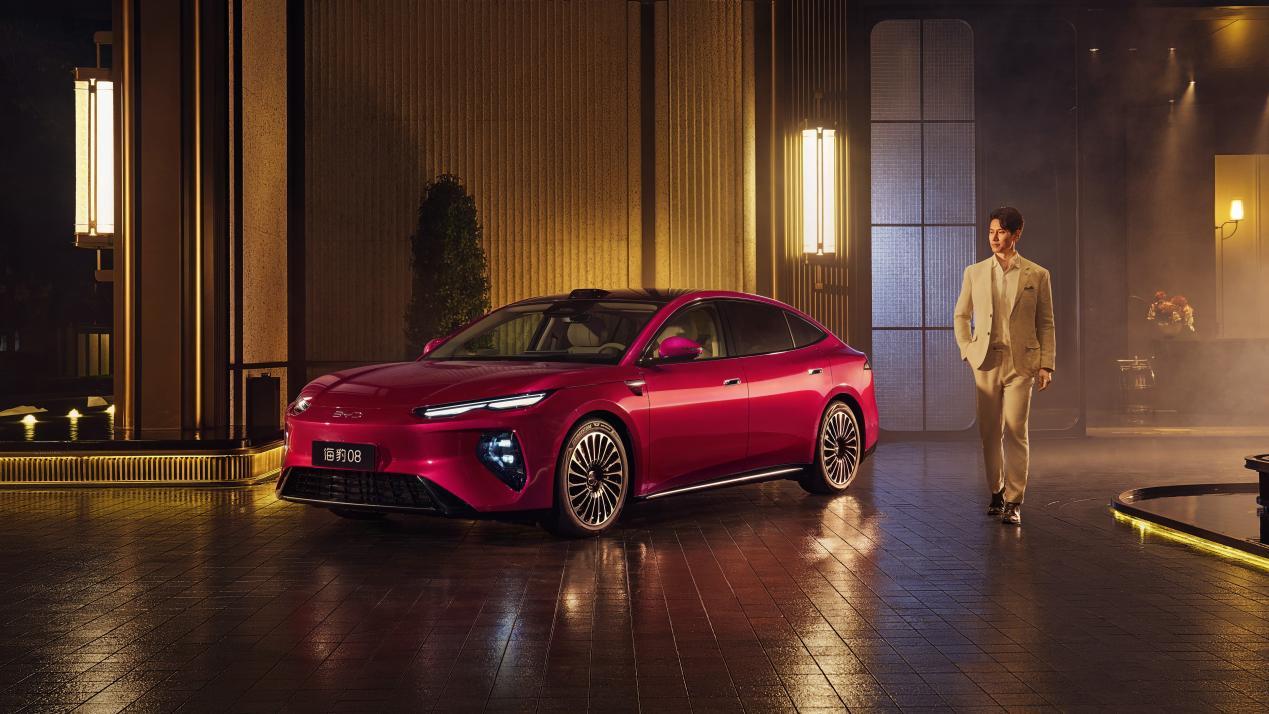
The 17 millionth vehicle was the Seal 08, a large flagship sedan developed for BYD’s Ocean Series. The model is priced at approximately $27,000 to $33,000, positioning it below the $42,000 level while offering specifications more commonly associated with higher-priced vehicles.
BYD says the Seal 08 combines its latest flash-charging technology with assisted-parking safeguards, a claimed all-electric driving range of 905 kilometres, the company’s DiSus-A body-control system and rear-wheel steering.
The carmaker also describes the model as incorporating 37 industry-leading or world-first features. Such claims will face scrutiny as the vehicle enters a segment already crowded with premium electric sedans from Chinese and international brands.
A Manufacturing Milestone With Global Implications
Reaching 17 million new-energy vehicles marks a sharp acceleration in BYD’s production scale and reflects the broader shift in the global car industry towards Chinese-led battery technology, vertically integrated supply chains and faster product-development cycles.
The milestone also highlights the challenge facing traditional manufacturers. BYD controls much of its battery and electric-powertrain supply chain, allowing it to bring new models to market quickly and compete aggressively on price while continuing to add technology.
The company says it will keep expanding its international industrial footprint and investing in higher-value products. Its ability to turn that scale into sustained global profitability will depend on how successfully it navigates tariffs, regulatory scrutiny, local manufacturing requirements and intensifying competition in overseas markets.