
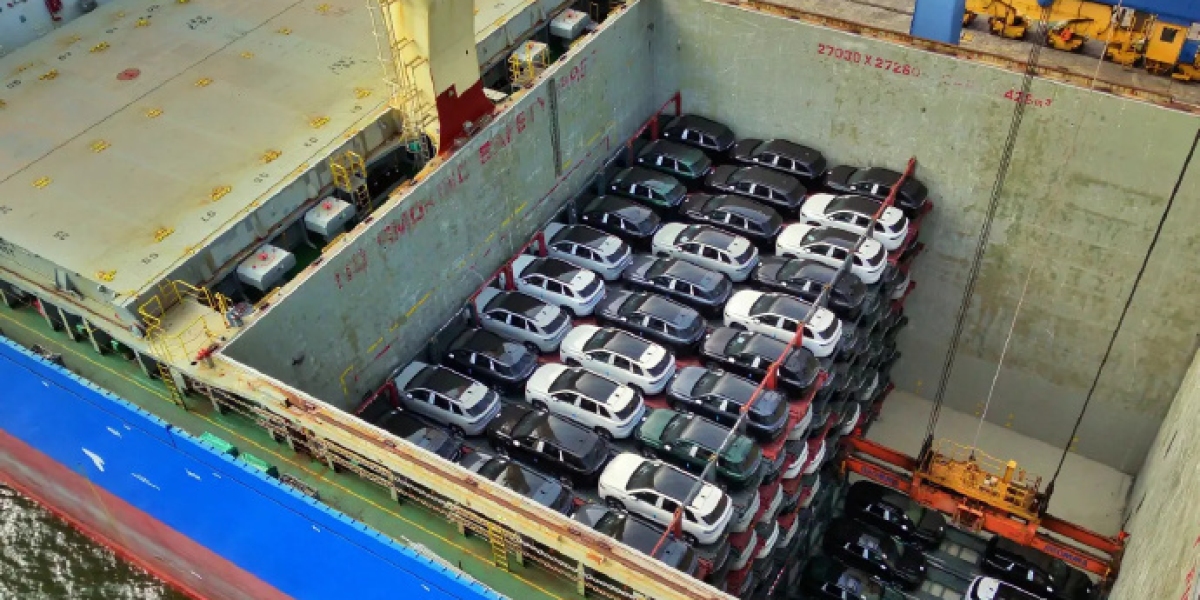
Leapmotor is turning to an unusual shipping solution as Chinese carmakers race to move vehicles into overseas markets faster.
A Logistics Problem Behind China’s Global EV Push
With global roll-on/roll-off vessel capacity under pressure, the company has begun using flat rack transport to ship vehicles to Brazil. Instead of relying entirely on specialised car carriers, complete vehicles are fixed onto metal frames and loaded onto conventional cargo ships.
Brazil Becomes a Test Case
According to reports, more than 1,800 Leapmotor vehicles have already been shipped to Brazil using the method. The approach also allows the company to draw on Stellantis’ logistics network for downstream delivery, giving Leapmotor a faster route into one of Latin America’s most closely watched auto markets.
The workaround underlines a bigger challenge facing China’s car exporters. Demand is no longer the only constraint. As Chinese EV brands expand abroad, shipping capacity, port handling and local delivery networks are becoming just as important as pricing, technology and brand recognition.
China’s Export Machine Meets Its Hardest Bottleneck
For Chinese automakers, Brazil is part of a wider push into emerging markets where EV adoption is still taking shape. But the strain on global vehicle transport is forcing companies to rethink how cars move across continents.
Leapmotor’s flat rack strategy may not replace traditional car carriers, but it shows how far Chinese manufacturers are willing to go to keep exports moving. In the next phase of China’s EV expansion, logistics may decide who reaches global buyers first.