
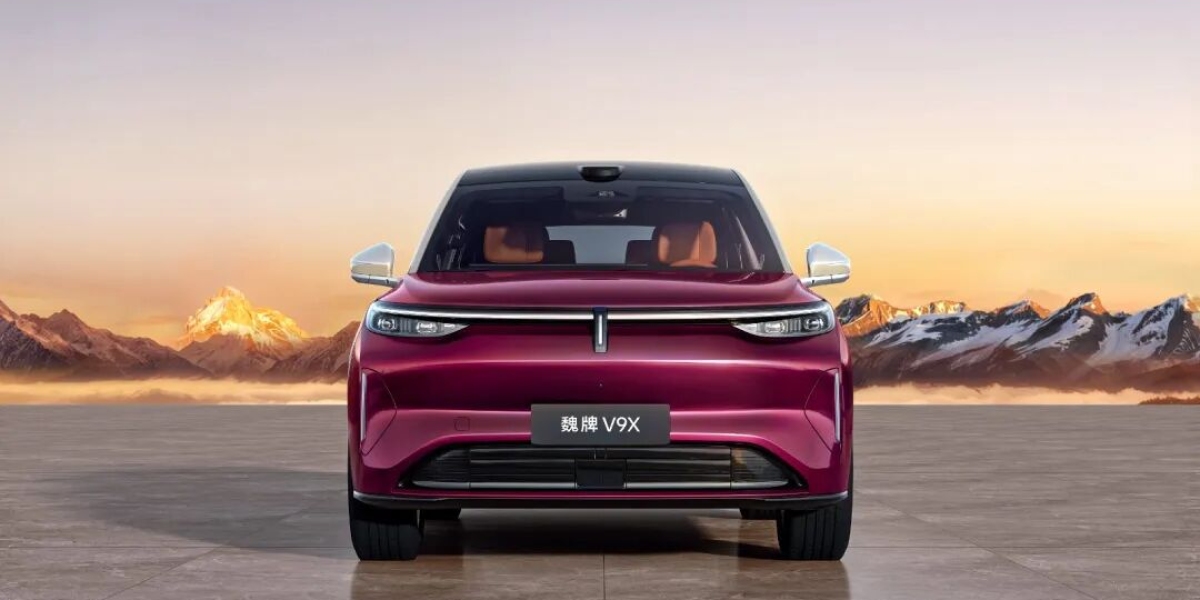
Two days after apologising, Wei Jianjun tried to plant a flag. On the evening of March 6, the Great Wall Motor chairman did something many auto executives would avoid.
A public apology becomes part of the brand story
He appeared on camera to apologise publicly for a poster promoting the Wei V9X after internet users pointed out that its creative concept closely resembled an advertisement for the Range Rover Sport.
There was no defensive corporate language and no attempt to bury the issue in process. Wei said the poster had indeed copied the original, that there was no excuse, and that he apologised to Land Rover, to the original designer and to internet users who trusted him.
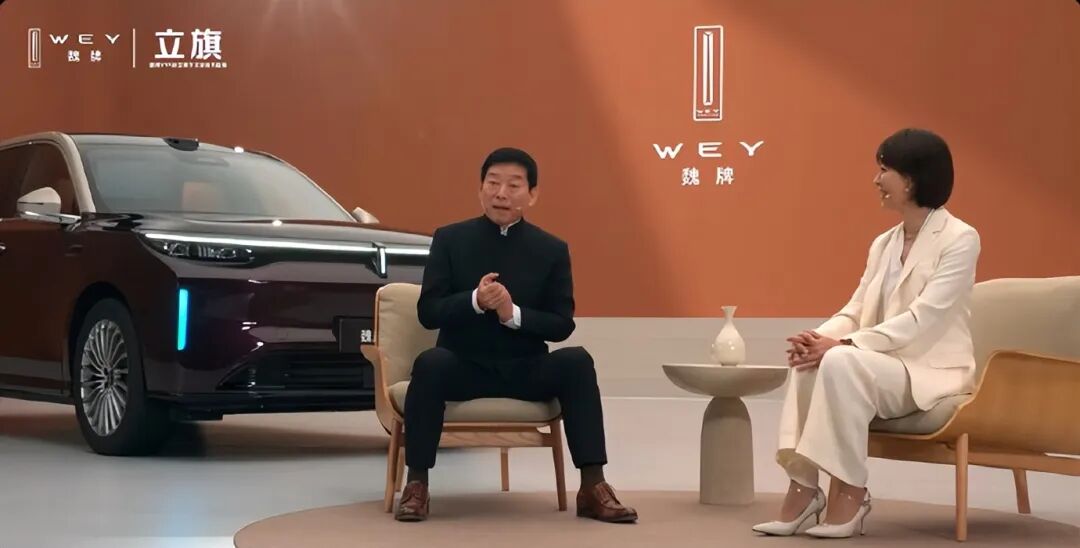
Two days later, Wei appeared again, this time as the public face of the Wei V9X at a livestream for the model’s global design debut. He did not dwell on the controversy, but the apology lingered in the background. The event was called “Planting the Flag”, a phrase that carried more than one meaning. In one sense it referred to the design theme. In another, the apology itself had already planted a different kind of flag: one of accountability.
Baoding as identity, not limitation
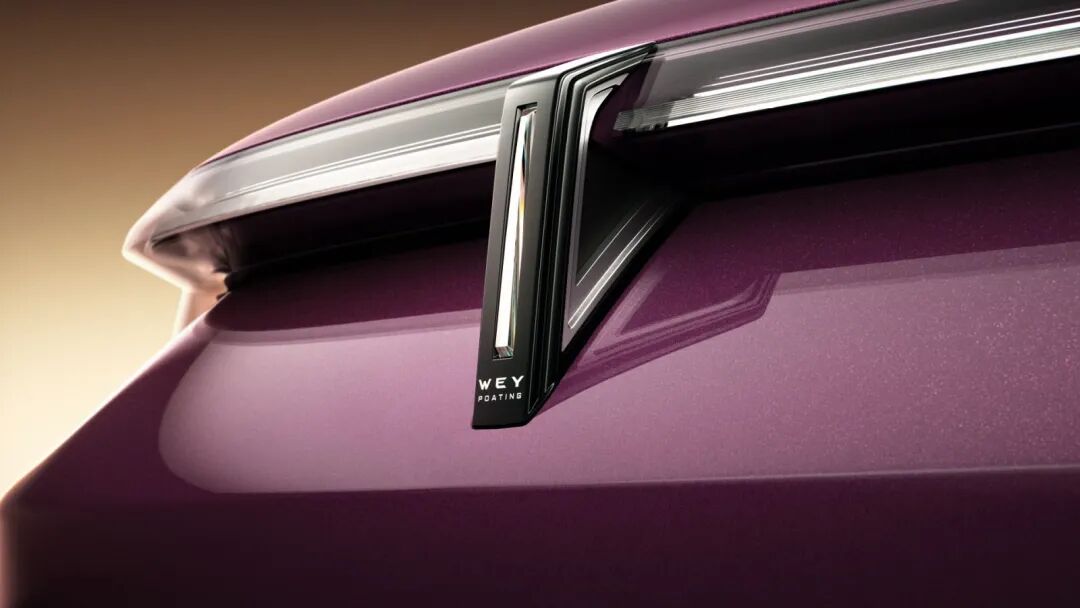
Wei Brand’s logo carries an unusual word: Poating. It is not an error. Because “Baoding” could not be registered as a public place name, the company adopted a phonetic variation and has used it for a decade. To outsiders it may look awkward. For Great Wall, it has become a quiet marker of identity.
That identity is rooted in Baoding, the northern Chinese city where Great Wall Motor grew up. The company presents the Wei V9X as a product shaped not by fashionable metropolitan branding, but by the industrial patience of a manufacturing city. Baoding has produced world champions and has long been associated with a workmanlike ethos: less talk, more doing.
The flagpole in front of the former Zhili Governor-General’s Office is abstracted into the Wei logo. The company assigns it three meanings: benchmark, direction and independence. In its own telling, Wei wants to become a benchmark for Chinese luxury, hold its direction amid industry noise and rely on core technologies rather than dependence or imitation.
Wei Jianjun has also challenged the assumption that a luxury car brand must be born in a global metropolis. Toyota grew out of Aichi and Mercedes-Benz and Porsche from Stuttgart, he has argued. Baoding, in that framing, is not a handicap. The real test is industrial standards, R&D investment and patience in a long-cycle industry.
Great Wall has tried to back that argument with physical infrastructure. It has built what amounts to an automotive city in Baoding, including China’s first self-built environmental wind tunnel laboratory at an investment of more than $42mn, a second high-end aeroacoustic wind tunnel, Asia’s largest independent vehicle safety crash laboratory at more than $70mn, and more than 100 specialist laboratories. A new whole-vehicle proving ground in Xushui is also planned, combining traditional performance testing with intelligent connected-vehicle validation.
Translating Chinese aesthetics for a global audience
The V9X design story is built around a clear ambition: do not follow others, and do not reduce Chinese culture to surface decoration. Instead, the brand wants to draw from classical Chinese architecture and art, then translate those references through industrial design that global users can understand.
The design was led by Andrew Dyson, a British designer with three decades of experience in international luxury brands. That combination of Chinese cultural material and global design experience is central to the V9X pitch. Emotion alone is not enough if Chinese aesthetics are to travel. They need a form language that can be read outside China.
The front of the V9X uses axial symmetry, a familiar cue in ultra-luxury design, while drawing its internal logic from the central axis of Chinese architecture. Its layered face is inspired by the double-eaved hip roof, aiming for a composed and ceremonial presence. The floating badge uses a diamond-shaped structure, with micro-level cutting and etching on glass to create a jewel-like refraction effect.
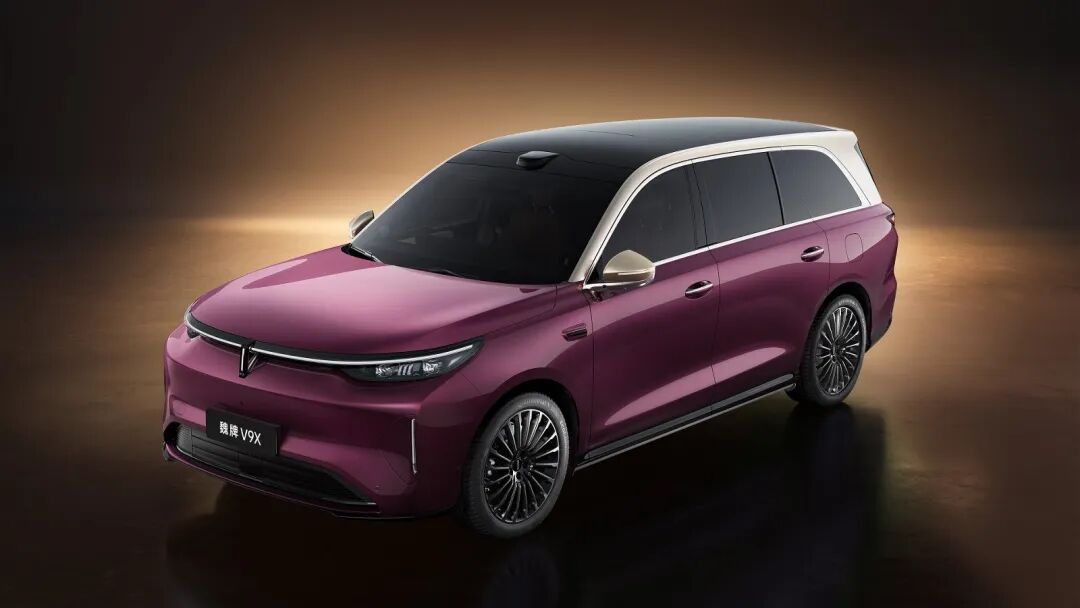
The side profile takes inspiration from Ding ware porcelain, seeking smooth surfaces and low visual distortion. A single-stroke skyline waistline was hand-finished by clay modellers over hundreds of hours, helping a full-size SUV avoid visual heaviness. The door handles reference the craft of gold-inlaid jade, but retain a mechanical structure for safety. Wei says that detail went through 115 design iterations.
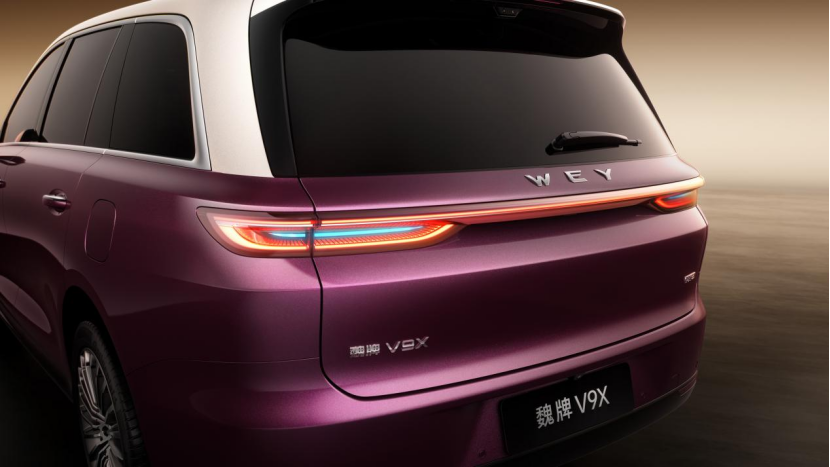
The rear continues the cultural thread. Slightly upturned tail lamps echo the eaves of traditional buildings, while the internal lamp structure takes inspiration from Great Wall watchtowers. The purple-and-gold colour scheme draws on ideas of auspiciousness, dignity and restraint rather than overt flash.
Luxury is pushed into family use
The interior is built around two ideas: ease and quiet elegance. A wraparound cabin gives both front occupants a similar sense of inclusion, while the layout is meant to make a family feel as if it is sitting together in a living room.
The space claims are substantial. The third row offers 1,230mm from carpet to roof, enough for passengers over 1.8 metres to sit without feeling compressed. A 192mm second-row aisle is intended to allow children and older passengers to move through easily.
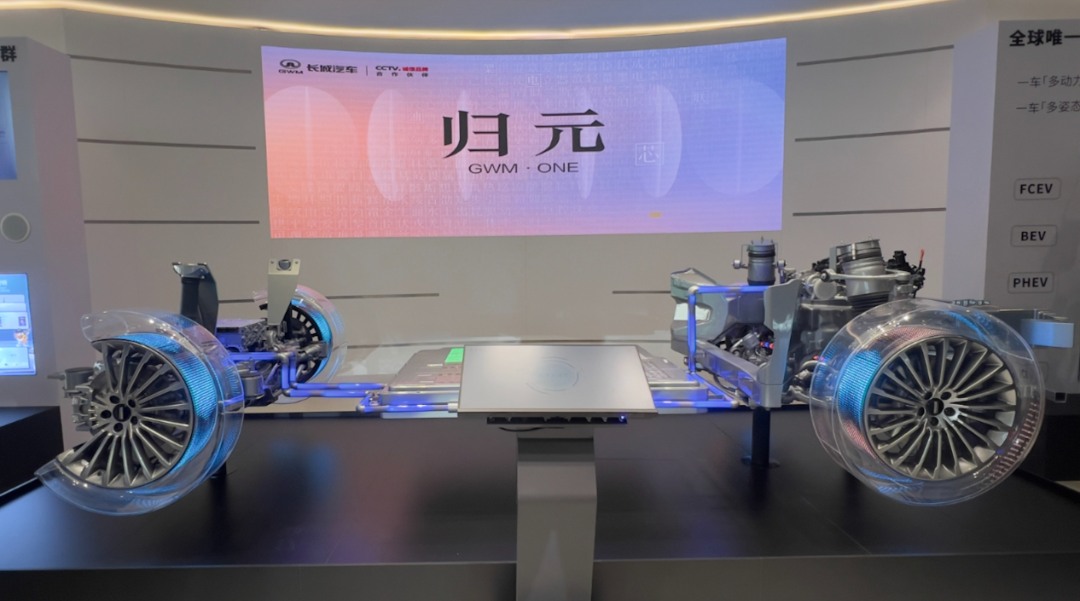
The equipment list is similarly ambitious: seats with 22 massage points, a 21.4-inch folding 4K entertainment screen, a self-developed audio system with 31 speakers and 3,080W output, plus eight headrest speakers for zoned sound. Other details include door-side wireless charging panels, 48 storage spaces, six window shades, B-pillar grab handles and a small second-row table.
The message is that Chinese luxury should not be limited to chauffeur symbolism or exterior scale. It should show up in the small daily interactions that make a large family SUV easier to live with.
Great Wall’s technology claim
The V9X is based on Great Wall’s Guiyuan S platform. The broader Guiyuan architecture is described by the company as a native AI all-powertrain platform, while Guiyuan S is its higher-end sequence for flagship models. It supports five powertrain forms and underpins the vehicle’s luxury, intelligence and safety functions.
The V9X uses Great Wall’s Super Hi4 hybrid architecture, combining a 2.0-litre engine, a four-speed dedicated hybrid transmission, an 800V high-voltage platform and 6C ultra-fast charging. It claims 470km of CLTC electric range and 363km on the WLTC cycle.
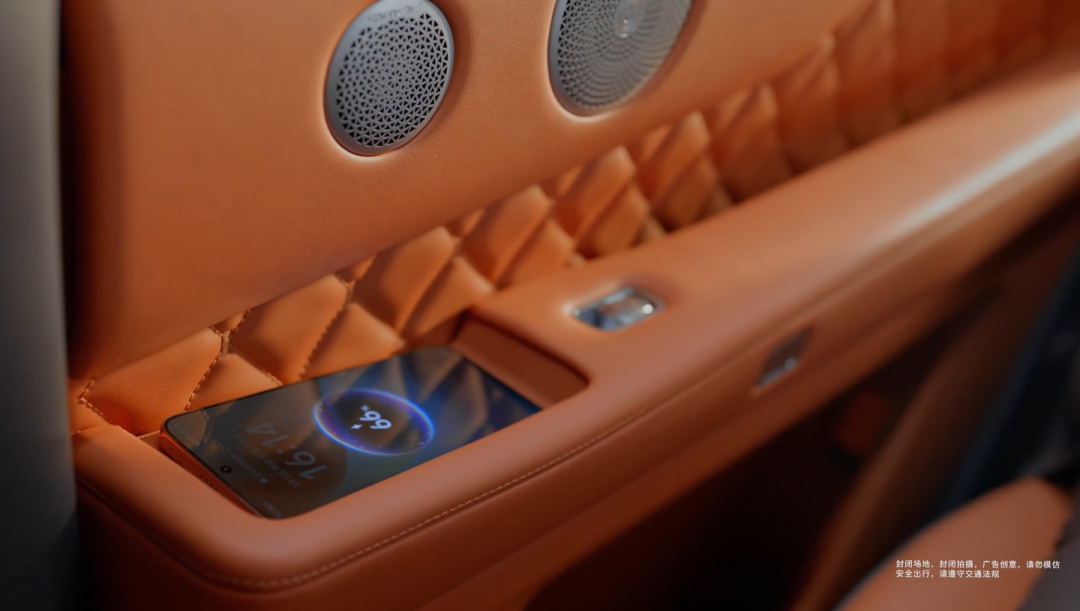
The company argues that this system addresses common weaknesses in hybrid vehicles, including shift hesitation and weak performance when the battery is depleted. It is designed to deliver efficiency and performance across a broader range of conditions.
Intelligence is another part of the pitch. Wei says the V9X carries the auto industry’s first native AI agent, split into two roles. “Driver Xiao Wei” focuses on assisted driving, moving from instinctive to cognitive decision-making. “Student Xiao Wei” handles smart-cabin interaction and is designed to recognise people, remember information and respond to cabin comfort needs.
Great Wall is keen to stress that these systems are not assembled from purchased modules. From the Super Hi4 hybrid system and AI chassis to the intelligent architecture and electric-drive systems, the company says core technologies are controlled in-house. That is the basis for Wei Jianjun’s larger claim: that a Chinese company can use Chinese culture and Chinese technology to build a luxury brand with global ambitions.
The real test is execution
The poster controversy gave the V9X story an unusual opening. Some online users praised Wei’s candour. Others warned that apologising is easier than maintaining discipline. Land Rover’s response was measured, saying sincerity and responsibility are the best endorsements and wishing Great Wall well in its commitment to originality.
That exchange gave the “Planting the Flag” event a sharper edge. A company willing to admit a mistake has more credibility when it talks about setting a standard. A brand that can reflect on itself has a better chance of building confidence around its own culture.
Wei Jianjun said during the livestream that building cars is a marathon, not a 100-metre sprint. That line applies both to the apology and to Wei Brand’s decade-long attempt to define Chinese luxury. The V9X cannot prove in one launch whether the idea will work. It does show a direction: Chinese luxury will be difficult to build, but if the direction is right, slower progress may still arrive at the destination.