
Huawei’s 2026 spring launch was less about a single car than about the widening reach of China’s automotive technology supply chain.
Huawei turns advanced driver technology into a volume-market pitch
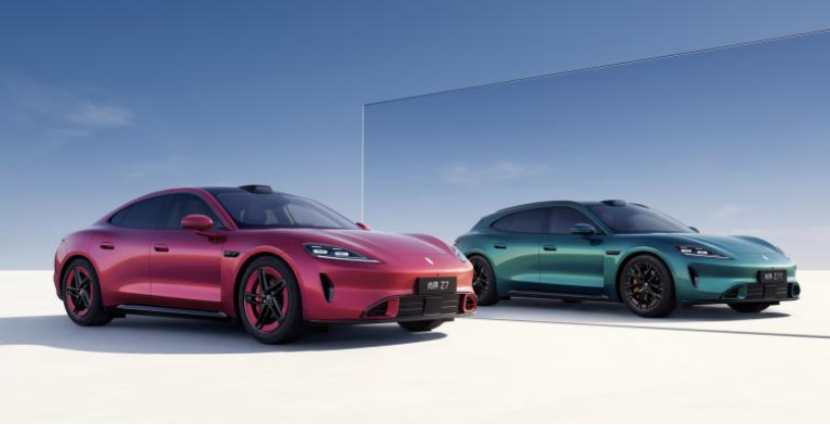
The company used the event to present a suite of systems for Harmony Intelligent Mobility Alliance vehicles, including an 896-line lidar, upgraded assisted-driving software, an intelligent chassis platform, an 800V battery architecture and a health-focused cabin package. For consumers outside China, the significance is not the technical branding itself. The more important point is that features once reserved for flagship electric vehicles are being pushed into broader segments of the market. That is the latest expression of a trend Chinese carmakers and suppliers increasingly describe as technology democratisation.
Chinese new-energy vehicles have moved far beyond the era when a large central screen and a few software slogans were enough to stand out. Buyers now want systems that can improve safety, range, charging, comfort and perceived intelligence in daily use. Huawei’s latest package is designed to answer that demand.
The 896-line lidar raises the sensor arms race
Lidar has long been described as the eyes of an intelligent vehicle. Huawei’s new 896-line dual-path image-grade lidar pushes the specification race further, claiming the highest line count yet for a mass-produced automotive lidar system.
The practical claim is clarity. Huawei says the system is four times sharper than ordinary production lidar products and can identify small road objects as low as 14cm at long range. That matters for items such as stones, fallen cones or tyres lying across the road, which can be hard for cameras or human drivers to detect in poor conditions.
The second claim is field of view. The dual optical-path design is intended to monitor both distant road conditions and surrounding blind spots, reducing the trade-off between seeing far ahead and watching the vehicle’s immediate environment.
Huawei says the system can detect a tyre lying across the road 122 metres away in total darkness. If that performance holds up in real-world use, the safety case is clear: better object detection at night, on unlit roads and in complex road conditions.
Sensor fusion and physical protection become part of the package
Lidar performance can deteriorate in difficult weather or dirty environments, so Huawei is pairing it with a larger sensing network. The system is designed to work with 36 to 38 high-precision sensors and exterior microphones, creating 360-degree coverage around the vehicle.
The company has also addressed a more basic consumer concern: durability. Its lidar uses what Huawei describes as an industry-first tempered-film glass window, improving hardness by 25 per cent. The aim is to reduce damage from everyday scratches, ageing and road debris. For buyers still unsure about mounting expensive sensors on the outside of a car, physical protection is not a small detail.
Huawei ADS moves toward door-to-door assistance
The upgraded Huawei Qiankun ADS assisted-driving system is being offered in tiered versions, allowing carmakers and customers to choose different capability levels rather than paying for unused functions. Built on Huawei’s WEWA architecture, the new system focuses on faster decision-making and broader scenario coverage.
That means more than highway cruising. Huawei says the system can handle narrow rural roads, awkward residential corners and difficult parking situations with greater confidence. Its parking-space-to-parking-space navigation assistance, known as P2P 2.0, is designed to take over much of the driving task from a starting parking space to a destination parking space.
In urban commuting, the system is designed to handle toll-gate passage, avoid bus lanes and manage complex intersections. Huawei also claims it can navigate rural roads without high-definition map coverage, a key challenge in China where advanced driving functions have often performed best in large cities.
The safety layer has also been expanded. Beyond collision alerts, the system can monitor driver fatigue or distraction. In an emergency, it can slow the vehicle, pull over, sound the horn, call for assistance and project rescue signals. Huawei is also promoting tyre-blowout stability control, saying a vehicle can remain stable and pull over even at 130kph after a sudden tyre or pressure failure.
Chassis and battery systems target confidence as much as performance
Huawei’s Tuling intelligent chassis platform and Giant Whale 800V high-voltage battery platform are aimed at two areas that matter to EV buyers: driving confidence and energy use.
The Tuling chassis platform uses body-coordination control and DATS dynamic adaptive torque control to read road conditions and adjust the vehicle’s behaviour. On rough surfaces and speed bumps, the system is designed to soften impacts. During high-speed cornering and lane changes, it increases lateral support to reduce body roll, giving even larger vehicles a more agile feel.
The platform also claims emergency wading capability of up to 700mm. Its closed dual-chamber air springs and EDC dampers have been upgraded, with Huawei citing a 25 per cent improvement in body-motion suppression and a 31 per cent gain in lateral support.
The 800V battery platform addresses charging and range. Huawei says the architecture uses an upright cell layout intended to reduce the structural risk of high-voltage thermal incidents. Pure EV models using the platform can reach up to 905km of CLTC range, while extended-range vehicles can exceed 1,500km combined range. Such numbers should be treated within the context of China’s testing cycle, but they show how aggressively Chinese suppliers are trying to reduce range anxiety.
The cabin becomes another technology battleground
Huawei also used the event to emphasise cabin health, an increasingly important selling point in China where the car is often marketed as a third living space. Its Harmony ALPS health-cabin technology uses MOF absorbent and degradable materials to capture and break down formaldehyde, odours and other harmful substances rather than merely filtering them.
The company says the cabin system can kill more than 99 per cent of coronaviruses and inhibit more than 96 per cent of mites. It also uses UVC ultraviolet sterilisation and front-and-rear negative-ion purifiers to improve cabin air quality.
Some models will also carry a water-ion air-conditioning system, designed to settle dust, maintain moisture and reduce bacteria and allergens. In marketing terms, the message is direct: Chinese EV buyers are no longer only comparing range and screens. Cabin health has become part of the premium technology package.
Why it matters beyond Huawei
Huawei is not a conventional carmaker, but its role in China’s auto sector keeps expanding. Its spring technology package shows how the competitive frontier is shifting from basic electrification to the integration of sensors, software, chassis control, battery systems and cabin experience.
The broader implication is that Chinese vehicles are moving faster in bringing high-spec technology into more accessible segments. If these systems perform as claimed in everyday use, global rivals will face pressure not only on price and battery cost but also on the speed at which advanced features reach mainstream buyers.