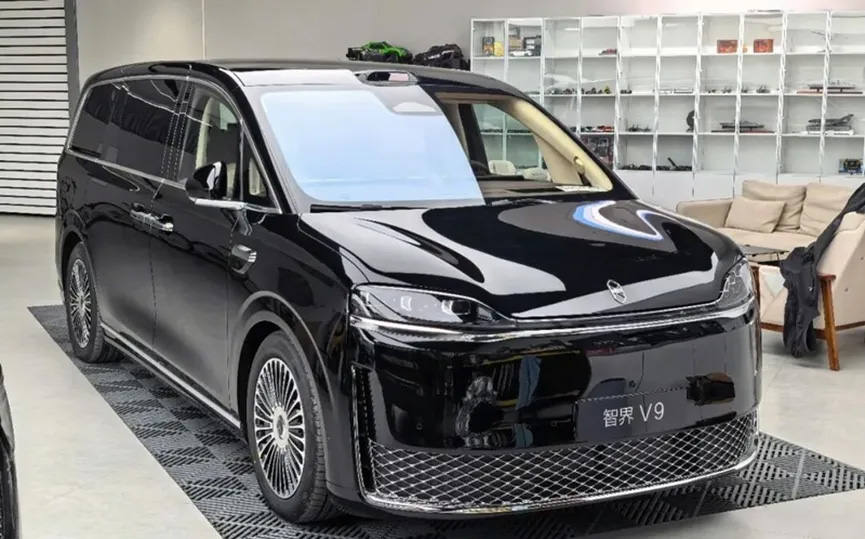
Luxeed, the electric-vehicle brand backed by Huawei and Chery, has changed the head of its marketing and sales system again.
A troubled Huawei-Chery brand changes leaders again
Wang Lei has stepped down, and Zhao Changjiang, best known for helping revive Denza with the D9 MPV, has taken over. Outside observers have cast Zhao as a crisis manager. The harder question is whether one executive can fix a brand built across two competing operating systems.
In the first five months of 2026, Luxeed sold 13,800 vehicles, down 67.5% year on year. Its full-year target is 300,000 units, meaning it had completed only 4.6% of the goal by the end of May. The new V9 appeared to offer relief: firm orders surpassed 18,000 units within 21 days of launch, and first deliveries began on June 6. Yet that gap between orders and deliveries captures the brand's current problem.
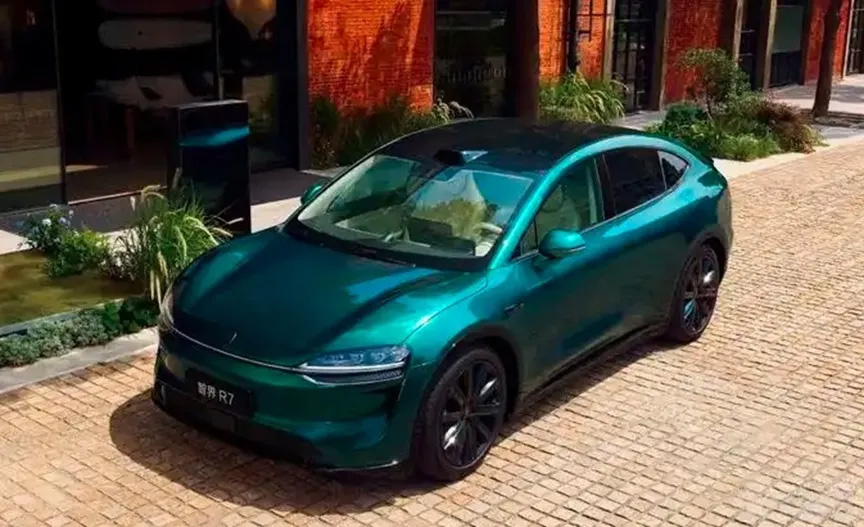
From the S7 to the R7 and now the V9, Luxeed has shown it can generate launch excitement. What it has struggled to do is turn that excitement into steady deliveries and sustained retail sales. The brand has posted six straight months of year-on-year sales declines and is losing visibility inside Huawei's broader HIMA retail system.
Zhao Changjiang does not inherit a closed loop
Zhao's reputation was built at Denza, where he oversaw a broad chain of product definition, channel development, retail sales and user operations. The D9 became a breakout MPV and pushed Denza from obscurity into volume. Luxeed is a different structure.
Under the Huawei-Chery arrangement, Chery owns much of the equity, manufacturing and heavy assets, while Huawei leads product definition, smart cockpit development and channel access. It is often described as a model in which Huawei handles the market and Chery handles manufacturing. That division creates three linked problems: decision speed, incentives and brand perception.
The first problem is decision-making. Huawei expects fast software iteration, with cockpit bugs patched within 72 hours and assisted-driving features upgraded monthly. Chery, as a traditional carmaker, runs software changes through multiple departments and approvals, which can stretch implementation to a month or more. Each time Huawei shortens an over-the-air update cycle, Chery's process is forced to accelerate. That pressure is hard to sustain, and the manufacturing side can push back to protect its own operating discipline.
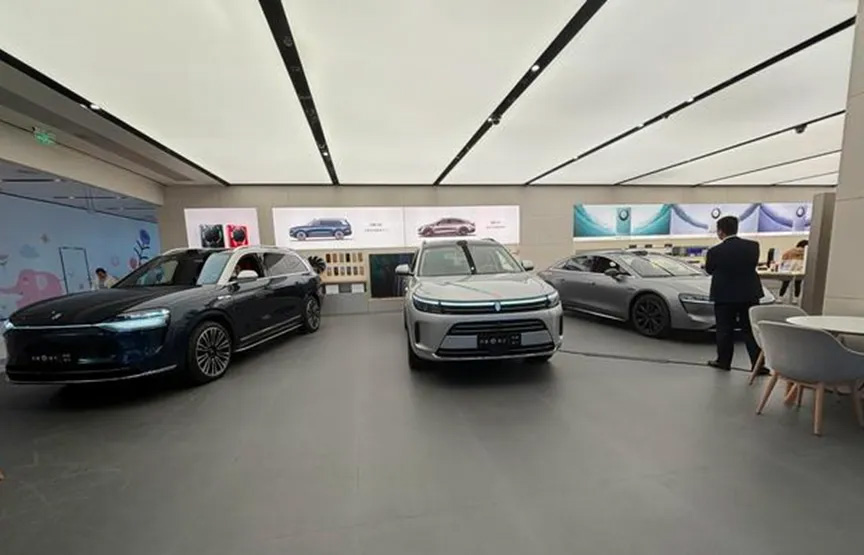
The second problem is the split between sales and production. Zhao may now carry responsibility for sales, channels and delivery, but he does not fully control capacity planning or the supply chain. The V9's 18,000 firm orders in 21 days show that Luxeed can attract buyers. The fact that first deliveries started only on June 6 shows the bottleneck sits beyond marketing. At Denza, production and sales sat inside BYD's own system; at Luxeed, the front line and factory line do not always move together.
The third issue is resource competition inside HIMA. Huawei's stores, marketing budgets and priority supply of advanced driver-assistance hardware appear to favour Aito, the best-performing brand in the alliance. In the first five months of 2026, Seres sold 145,000 new-energy vehicles, including 130,400 from Aito, almost 10 times Luxeed's volume. Luxeed can try to offset that by building 100 to 200 dedicated stores, but that would take money, time and a strategy that partly cuts against HIMA's shared-channel logic.
Hot orders have not become warm sales
Luxeed's defenders can point to strong order numbers. The V9 took more than 12,500 orders in the first hour of presales and more than 22,500 within 72 hours. Huawei's Richard Yu personally promoted it as a standout MPV. Yet Luxeed's history makes those figures difficult to read as proof of a turnaround.
The S7 launched in November 2023 with more than 20,000 reservations. Deliveries in its first three months were 115, 784 and 604 units. The promised six-week delivery period stretched beyond 14 weeks, forcing Huawei to offer compensation of about $28 a day, capped at roughly $1,000. The R7 then appeared to revive the brand with three consecutive months above 10,000 units in late 2024, only for sales to drop to 3,821 in January 2026 and total brand sales to fall to 945 in February.
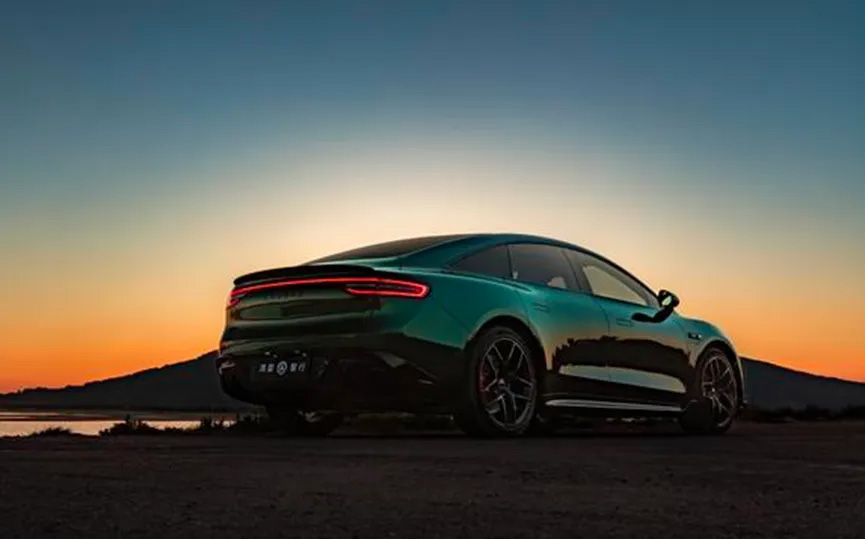
This pattern is more than a delivery problem. It is a trust problem. Complaints on third-party platforms have included chassis noises that remained unresolved after repeated repairs, lidar faults discovered on delivery day and sluggish reversing-camera response. Such issues occur across many brands, but Luxeed faces an added complication: consumers can be bounced between Chery service outlets and Huawei stores when problems involve software, hardware or brand responsibility.
Price cuts have also hurt early owners. The R7 and S7 saw several pricing adjustments in 2025, and first-wave buyers complained that their loyalty had been penalised. For a young brand, those customers should have become the core of its word-of-mouth base. Instead, frustration spread through owner groups.
The V9 now enters the high-end MPV market at about the $70,000 level, where buyers care deeply about reliability, reputation and service. It faces Denza D9, Zeekr 009 and Li Auto Mega, all of which already occupy the space Luxeed wants. Even if V9 monthly sales eventually reach an optimistic 5,000 to 8,000 units, that may not be enough to offset the holes left by the S7 and R7.
Denza's playbook may not travel
Zhao's Denza record is real. When he took charge in 2021, Denza sold fewer than 5,000 vehicles a year and had largely disappeared from the market. The D9 broke Buick GL8's long-standing grip on the premium MPV segment and lifted Denza annual sales above 120,000 units.
The conditions behind that success are harder to reproduce. BYD controlled Denza's product planning, manufacturing, channel sales and user operations. Zhao could coordinate research, production and supply-chain resources around one main product. At Luxeed, he must work across Huawei and Chery systems and may not have decisive influence over production scheduling.
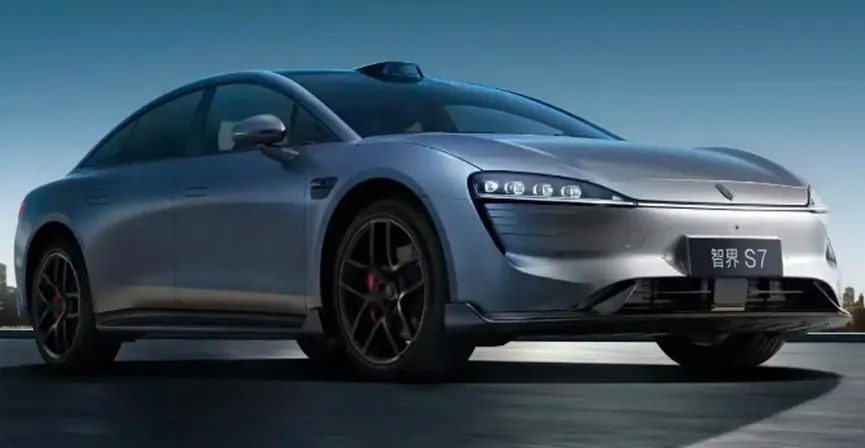
The market is also different. Denza D9 entered a segment with far less direct new-energy competition. Luxeed V9 enters a crowded battlefield that includes the very Denza D9 Zhao helped build, along with Li Auto Mega and Zeekr 009. Luxeed also needs to support multiple models at once, rather than concentrating its resources on a single flagship.
Even Zhao's later period at Denza carried a warning. After the D9, follow-up models such as the N7, N9 and Z9 GT did not achieve the same impact. That suggests his success was the result of the right product meeting the right market window, not a portable formula that can be dropped into any complex brand.
A management change can buy time, not solve the structure
Luxeed has cycled through several leaders in less than two years, from Chery-linked executives to Huawei-side managers and now a former BYD figure. Each change has been presented as a possible reset. None has stopped the sales decline.
The brand's central problems are structural: dual command between Huawei and Chery, limited control over production, competition for Huawei retail resources, weak after-sales accountability and damaged trust among early users. Zhao Changjiang may improve execution and give the brand a sharper sales voice. He cannot, by himself, make Luxeed a fully integrated company.
For Huawei and Chery, the choice is whether to give Luxeed clearer authority, firmer delivery discipline and a service system that does not leave customers caught between two partners. Without that, another capable sales chief may only slow the decline rather than reverse it.