
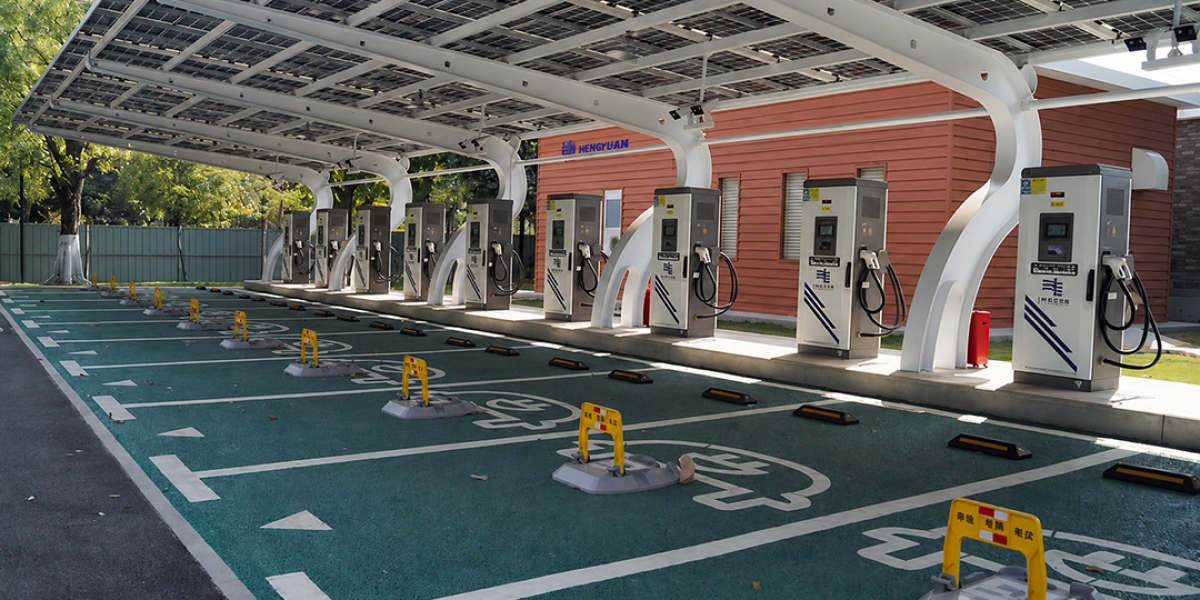
China’s electric-vehicle charging network has crossed another threshold, underscoring how quickly the country is building the physical backbone for its shift away from petrol cars.
On June 24, the National Energy Administration released its May 2026 figures for electric-vehicle charging facilities. By the end of May, China had 22.497 million EV charging connectors nationwide, up 44.9 per cent from a year earlier and above the 22 million mark for the first time.
Measured against an estimated fleet of 44 million new-energy vehicles, China now has roughly one charging connector for every two vehicles. On that basis, the density of EV energy supply has moved beyond that of petrol-refuelling infrastructure, a sign that the country’s EV transition is no longer constrained only by vehicle production or consumer demand.
Private Chargers Are Carrying the System
The headline number also shows the structure of China’s charging build-out. Private charging facilities have become the core of the network, outnumbering public connectors by more than three to one.
Of the 22.497 million charging connectors in place by the end of May, 4.951 million were public facilities, an increase of 25.9 per cent year on year. Private charging connectors reached 17.546 million, up 51.4 per cent.
That means private chargers account for the overwhelming share of the system. Their growth rate is roughly twice that of public infrastructure, reflecting the importance of residential parking, workplace charging and privately installed equipment in making EV ownership more practical.
The Build-Out Is Accelerating
The pace of construction has also changed. China’s charging network took just 18 months to grow from 10 million to 20 million connectors. It then added nearly another 2.5 million in only five months, bringing the national total close to 22.5 million.
This acceleration reflects a policy push as much as market demand. The expansion has been supported by the 2025–2027 action plan aimed at doubling the service capacity of China’s EV charging infrastructure over three years.
For automakers, battery suppliers and grid operators, the implication is clear: charging is moving from a perceived weakness of the EV market into a competitive infrastructure industry of its own.
Rural Coverage Remains the Next Test
China’s charging network is now vast in aggregate, but the next challenge is distribution. Public agencies are placing greater emphasis on improving service quality and extending coverage in rural areas, where access remains uneven compared with major cities and coastal provinces.
The National Energy Administration has said the next phase will focus on upgrading the network and improving charging coverage in the countryside. The aim is to reduce range anxiety and support the broader development of the new-energy vehicle industry.
That task may prove harder than the national totals suggest. Urban EV adoption has benefited from dense housing, stronger grid access and higher consumer purchasing power. Rural charging requires different economics, longer travel distances and more careful planning around grid capacity.
Why It Matters
China’s EV market has often been discussed through the lens of vehicle sales, battery prices and automaker competition. The latest charging data shows another part of the story: the infrastructure base is scaling at a speed few other markets can match.
A network of more than 22 million charging connectors does not eliminate every pain point. Public-charger reliability, rural availability, peak-hour congestion and payment fragmentation still matter. Yet the direction is increasingly clear. China’s EV ecosystem is no longer only about building cars. It is about building the system that allows those cars to be used at scale.